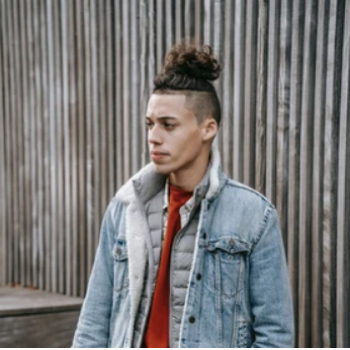

Attitude Hairdressers: Find Your Perfect Creative Stylist

TL;DR:
- Attitude hairdressers are creative stylists who shape hairstyles based on a client’s personality and lifestyle. They prioritize technical skill and authentic expression while providing honest advice and personalized trends. Finding the right stylist involves reviewing real client work, reading detailed reviews, and ensuring thorough consultation questions before booking.
Attitude hairdressers are professional stylists who specialize in building hairstyles around your personality, not just your face shape. The term is informal shorthand for what the industry calls creative or expressive stylists: technicians who combine advanced cutting and color skills with a genuine investment in who you are as a person. They ask different questions than a standard salon visit, push back on trends that won’t suit you, and treat every appointment as a collaboration. If you want a look that actually reflects your identity, finding the right one matters more than picking the trendiest salon on the block.
What makes attitude hairdressers different from standard stylists?
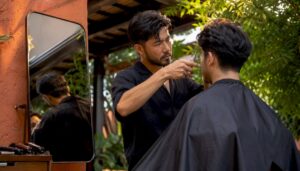
Creative hairdressers stand apart because they treat technical skill and personal expression as equally important. A standard stylist executes a service. A creative stylist interprets your lifestyle, hair history, and personality before picking up the scissors.

The best salons combine expert technical skills with a welcoming, no-attitude culture that prioritizes client comfort and authentic style expression. That phrase “no-attitude culture” is worth unpacking. It means the stylist’s confidence shows up in their work, not in making you feel judged for what you want. Clients leave feeling heard, not managed.
This approach also requires a broader skill set. Creative stylists work across balayage, precision cutting, textured cuts, and bold color placement. They understand how a disconnected undercut behaves on fine hair versus thick hair, and they tell you the truth about which version of a look is actually achievable for you. That honesty is a professional marker, not a personality quirk.
Joelcma at Joel C Ma Hair Studio in La Jolla exemplifies this model. With over 25 years of experience, the studio’s team treats every client as a style collaboration rather than a transaction. The result is a portfolio of genuinely distinctive looks, not a menu of repeated templates.
How do you identify attitude hairdressers who fit your needs?
Finding a stylist who matches your creative vision takes more than reading star ratings. The process requires looking at three specific signals: portfolio depth, review patterns, and consultation behavior.
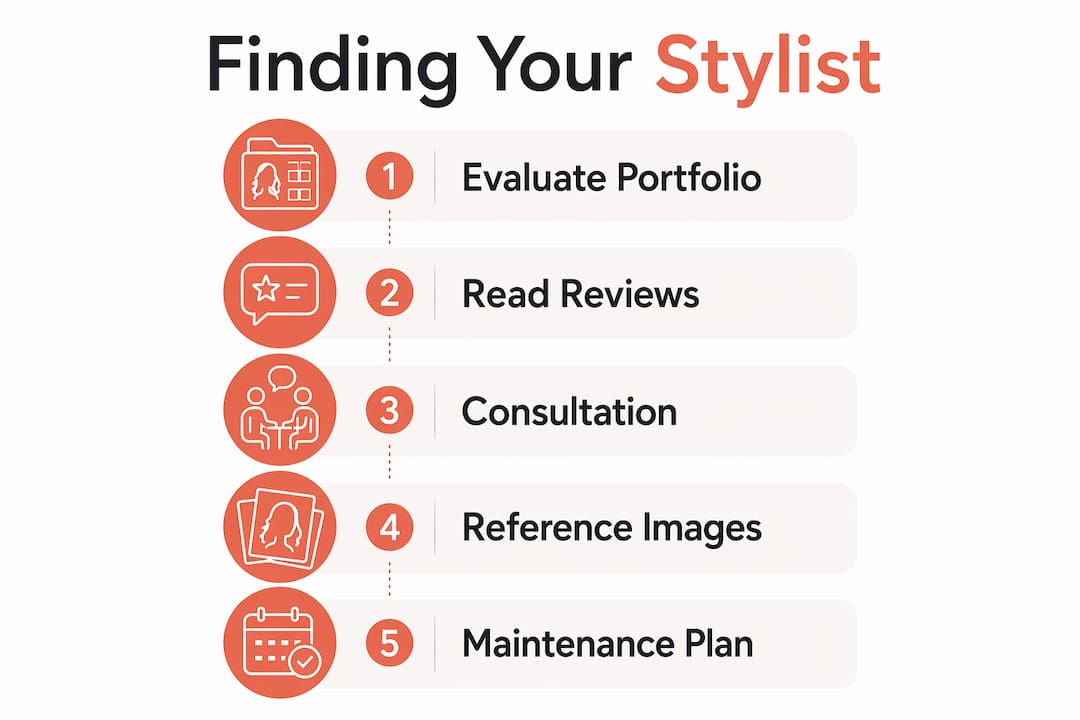
Check the portfolio for real client work
Verify a stylist’s specialization by checking their recent, consistent client portfolio for the specific style you want instead of relying on generic or stock images. A portfolio full of balayage on similar hair types tells you less than one showing varied textures, bold cuts, and color corrections across different clients. Look at their social media feed going back at least three months. Consistency across real client results is the strongest proof of skill.
Read reviews for communication signals
Review patterns indicating clients felt listened to and thoughtful salon responses to criticism are stronger quality indicators than a perfect star rating. A 4.7-star salon where reviewers repeatedly mention “she really understood what I wanted” outperforms a 5-star salon with vague praise. Look for at least 20 reviews mentioning specific services to confirm consistent quality rather than isolated great experiences.
Evaluate how they handle the first conversation
A stylist who asks about your morning routine, your gym schedule, and how much time you spend on your hair before discussing price is demonstrating exactly the right instinct. One who jumps straight to booking without asking questions is not.
- Look for portfolios showing edgy cuts, bold color, and textured styles on real clients
- Read reviews for phrases like “she listened,” “he pushed back on my idea but explained why,” or “they were honest about what my hair could handle”
- Check whether the salon’s social media shows recent work or mostly promotional graphics
- Ask directly whether the stylist has experience with the specific style you want
Pro Tip: Search the stylist’s name alongside the style you want (for example, “disconnected bob” or “lived-in color”) on Instagram before booking. Real results from real clients will appear if the specialization is genuine.
What should you expect during a consultation with a creative stylist?
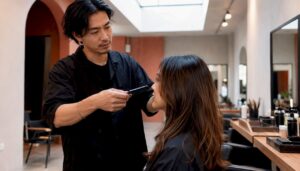
A consultation with a skilled creative stylist functions more like an interview than a sales pitch. The stylist listens first and quotes second.
Consultations typically last 15 minutes and are often free at professional salons. That time is enough to assess whether the stylist asks the right questions. If they spend the full 15 minutes talking about what they can do without asking about your life, walk out.
Award-winning salons treat consultations as holistic style conversations that consider lifestyle and hair goals before cutting. The goal is long-term satisfaction, not a one-time result that looks great in the chair and falls apart by day three.
The questions a good stylist asks reveal their priorities. Use this list to guide your own preparation:
- How much time do you spend on your hair each morning? This determines whether a high-maintenance cut is realistic for your life.
- How often do you wash your hair? Washing frequency affects how color fades and how cuts hold their shape.
- What has not worked in the past? Past failures tell a stylist more than inspiration photos do.
- What is your hair history? Chemical treatments, heat damage, and previous color all affect what is achievable now.
- What do you want to feel like when you leave? This separates clients who want a specific look from those who want a specific feeling, and the answer changes the approach entirely.
Bring multiple reference images, not just one. Include photos of what you like and photos of what you want to avoid. A stylist who pushes back gently against an unsuitable trend is showing expertise, not arrogance. That pushback, delivered with a clear explanation, is one of the clearest signs you are sitting with a professional.
For a deeper look at what to cover before your appointment, the essential hair consultation questions guide at Joelcma walks through every topic worth raising.
What are the most popular attitude hairstyles right now?
Creative stylists in 2026 are working across a wide range of bold, expressive styles. The common thread is personalization: each look is adapted to the client’s hair type, face shape, and maintenance capacity rather than copied directly from a trend board.
Edgy cuts with staying power
The disconnected undercut remains one of the most requested styles among clients who want visible attitude without committing to extreme color. It works on straight, wavy, and coily hair, and the contrast between lengths creates a strong silhouette. Textured shags with curtain bangs are equally popular, particularly for clients who want movement and edge without a dramatic length change.
Color as a personality statement
Bold color placement has shifted away from all-over vivid color toward targeted statements: a single panel of color at the face frame, a shadow root with a vivid mid-length, or a balayage technique applied in unconventional tones like copper, ash violet, or deep teal. These approaches let clients express personality while keeping the overall look wearable.
| Style | Best for | Maintenance interval |
|---|---|---|
| Disconnected undercut | Thick or medium hair, bold personality | Every 6 weeks |
| Textured shag with bangs | Wavy or curly hair, low to medium effort | Every 8–10 weeks |
| Face-frame color panel | All hair types, color-curious clients | Every 10–12 weeks |
| Precision bob | Straight or fine hair, clean aesthetic | Every 6 weeks |
| Lived-in balayage | All hair types, low maintenance preference | Every 12–16 weeks |
How stylists adapt trends to your hair
The difference between a creative stylist and a trend-follower is adaptation. A skilled stylist looks at a trending cut and asks what version of it works for your specific hair. Fine hair cannot hold the same disconnected undercut as thick hair. Coily hair needs a different shag structure than straight hair. Customizing trends to fit hair type and personality is the core skill that separates expressive stylists from those who simply replicate what they see online.
How do you maintain an attitude hairstyle long-term?
Maintenance is where most bold hairstyles succeed or fail. A great cut that grows out badly or color that fades unevenly within weeks signals a breakdown somewhere in the planning process.
Precision cuts require maintenance every 6 weeks, while textured styles can last 10–12 weeks before needing a refresh. Color-dependent looks vary more widely. Lived-in balayage can go 12–16 weeks between appointments. Vivid color on lightened hair typically needs attention every 4–6 weeks to stay saturated.
Pricing clarity matters as much as scheduling. Always request an all-inclusive price quote that covers toners and treatments before the appointment begins. Many quality salons also offer a 7–14 day adjustment period if the result does not match expectations. Knowing this upfront removes the anxiety of committing to a bold change.
The stylist-client relationship also deepens over time. A great stylist relationship develops over multiple visits, with the stylist learning how your hair behaves outside the salon. That knowledge improves every subsequent result. The first appointment is a foundation, not the finished product.
Pro Tip: Between appointments, send your stylist a photo of how your hair looks on day 10 or day 14. That real-world data helps them adjust the cut or color formula at your next visit far more accurately than any in-chair assessment.
Key Takeaways
Creative hairdressers who combine technical skill with genuine client focus consistently deliver more satisfying, longer-lasting results than stylists who prioritize speed or trend replication.
| Point | Details |
|---|---|
| Portfolio over reputation | Check recent, real client work for your specific style before booking any stylist. |
| Reviews reveal communication | Look for repeated mentions of being listened to, not just high star ratings. |
| Consultations are interviews | A 15-minute free consultation should involve lifestyle questions before any price discussion. |
| Maintenance drives longevity | Precision cuts need 6-week intervals; textured and color styles vary from 8 to 16 weeks. |
| Pricing clarity builds trust | Request an all-inclusive quote upfront and confirm whether an adjustment period is available. |
What I have learned after years of watching stylists work
The phrase “attitude hairdressers” gets used in two completely opposite ways, and that tension is worth naming directly. Some clients use it to describe stylists who intimidate them. Others use it to describe stylists who inspire them. The difference almost always comes down to one thing: whether the stylist’s confidence is directed at the client or at the work.
The best creative stylists I have observed are deeply opinionated about hair and completely relaxed about the client. They will tell you honestly that a certain cut will not work with your hair texture. They will explain why a trend you brought in looks different on the model because that model has three times the hair density you do. That honesty is not attitude in the negative sense. It is respect.
What I have also noticed is that clients who come in with multiple reference images, including images of what they do not want, get dramatically better results. A single inspiration photo gives the stylist one data point. Five photos, including two “not this,” give them a creative brief. The consultation becomes a real conversation instead of a guessing game.
The salons that get this right are not always the most expensive or the most Instagram-famous. They are the ones where the stylist asks more questions than you expected and where you leave feeling like the result was built for you specifically. That is the standard worth holding out for.
— Juiced
Creative hairstyling and personalized consultations at Joelcma
Joelcma at Joel C Ma Hair Studio in La Jolla brings over 25 years of artistic expertise to every client who walks through the door. The studio’s team specializes in creative haircuts that reflect individual personality, from precision bobs to textured shags and bold color placements. Every service begins with a thorough consultation designed to align the stylist’s vision with your lifestyle and hair goals.
Whether you are exploring bold haircut ideas for the first time or looking to refine a signature look you have worn for years, Joelcma’s team approaches every appointment as a collaboration. Book a consultation and experience what it means to have a stylist who listens before they cut.
FAQ
What does “attitude hairdresser” mean?
An attitude hairdresser is an informal term for a creative stylist who builds hairstyles around a client’s personality and lifestyle rather than following a standard service menu. The industry term is creative or expressive stylist.
How long does a consultation with a creative stylist take?
Consultations typically last 15 minutes and are often free at professional salons. That time covers lifestyle questions, hair history, and a review of reference images before any service is discussed.
How often should I maintain a bold or edgy hairstyle?
Precision cuts need maintenance every 6 weeks. Textured styles last 10–12 weeks, and lived-in color techniques like balayage can go 12–16 weeks between appointments depending on the formula used.
What should I bring to a stylist consultation?
Bring multiple reference images, including examples of what you like and what you want to avoid. This gives the stylist a complete creative brief and reduces the chance of miscommunication.
How do I know if a stylist is genuinely experienced with creative cuts?
Check their recent social media portfolio for consistent, real client results in the specific style you want. Repeated mentions in reviews of clients feeling heard and understood are a stronger quality signal than star ratings alone.