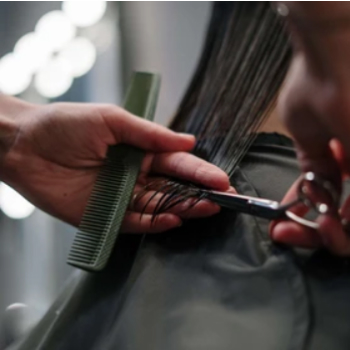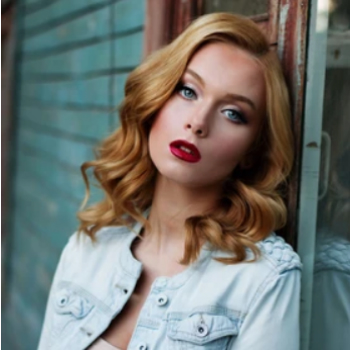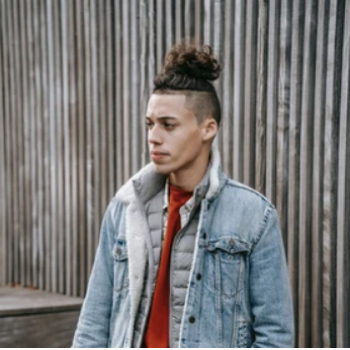

Artistic haircuts 2026: 85% personalized styles for you

Many people assume artistic haircuts demand endless maintenance, but over 60% of clients actually prefer low-maintenance customized styles. The reality is that artistic haircuts aren’t about complicated upkeep. They’re about creating personalized styles that work with your natural texture and lifestyle. This guide reveals how to choose and maintain artistic cuts that express your individuality while fitting seamlessly into your daily routine.
Table of Contents
- Introduction To Artistic Haircuts
- Technical Foundations Of Artistic Haircuts
- Consultation: The Creative Collaboration
- Common Misconceptions About Artistic Haircuts
- Choosing Your Artistic Haircut: A Practical Framework
- Maintaining And Styling Your Artistic Haircut
- Sustainability In Artistic Haircuts
- Elevate Your Style With Joel C Ma Hair Studio
- Frequently Asked Questions
Key takeaways
| Point | Details |
|---|---|
| Personalization matters | Artistic haircuts focus on tailoring cuts to your unique facial features and hair texture rather than following generic trends. |
| Consultations reduce dissatisfaction | Detailed consultations can reduce haircut dissatisfaction rates by 50% through collaborative planning. |
| Advanced techniques improve longevity | Precision cutting methods can improve style retention by up to 40% compared to basic blunt cuts. |
| Misconceptions create barriers | Common myths about maintenance demands and hair type limitations prevent people from exploring artistic options. |
| Framework simplifies selection | A practical approach matching lifestyle, face shape, and hair type helps you choose the right artistic haircut. |
Introduction to artistic haircuts
Artistic haircuts represent a shift from cookie-cutter styles to individualized designs that enhance your unique features and hair characteristics. Instead of applying the same trendy cut to every client, skilled stylists analyze your facial structure, hair texture, and personal preferences to create something distinctly yours. This philosophy prioritizes authentic expression over following fleeting trends.
Your hair texture and face shape play starring roles in artistic decisions. Coarse hair requires different cutting angles than fine hair. Oval faces accommodate different lengths than heart-shaped faces. Over 85% of professional stylists emphasize that customization is essential for creating styles that last and look natural.
Artistic haircuts bridge the gap between fashion-forward aesthetics and practical wearability. Here’s what sets them apart:
- Custom shapes designed around your bone structure and hair growth patterns
- Texture work that enhances natural movement rather than fighting against it
- Color integration that adds dimension without overwhelming your features
- Maintenance plans tailored to your styling abilities and time constraints
The result is a haircut that feels like an extension of your personality. You’re not wearing someone else’s style. You’re wearing yours.
Technical foundations of artistic haircuts
Behind every artistic haircut lies a toolkit of advanced techniques that transform hair from ordinary to extraordinary. Precision cutting methods improve style retention by up to 40% when stylists use texturizing, slide cutting, and point cutting strategically. These aren’t just fancy names. They’re specific approaches that create movement, dimension, and longevity.
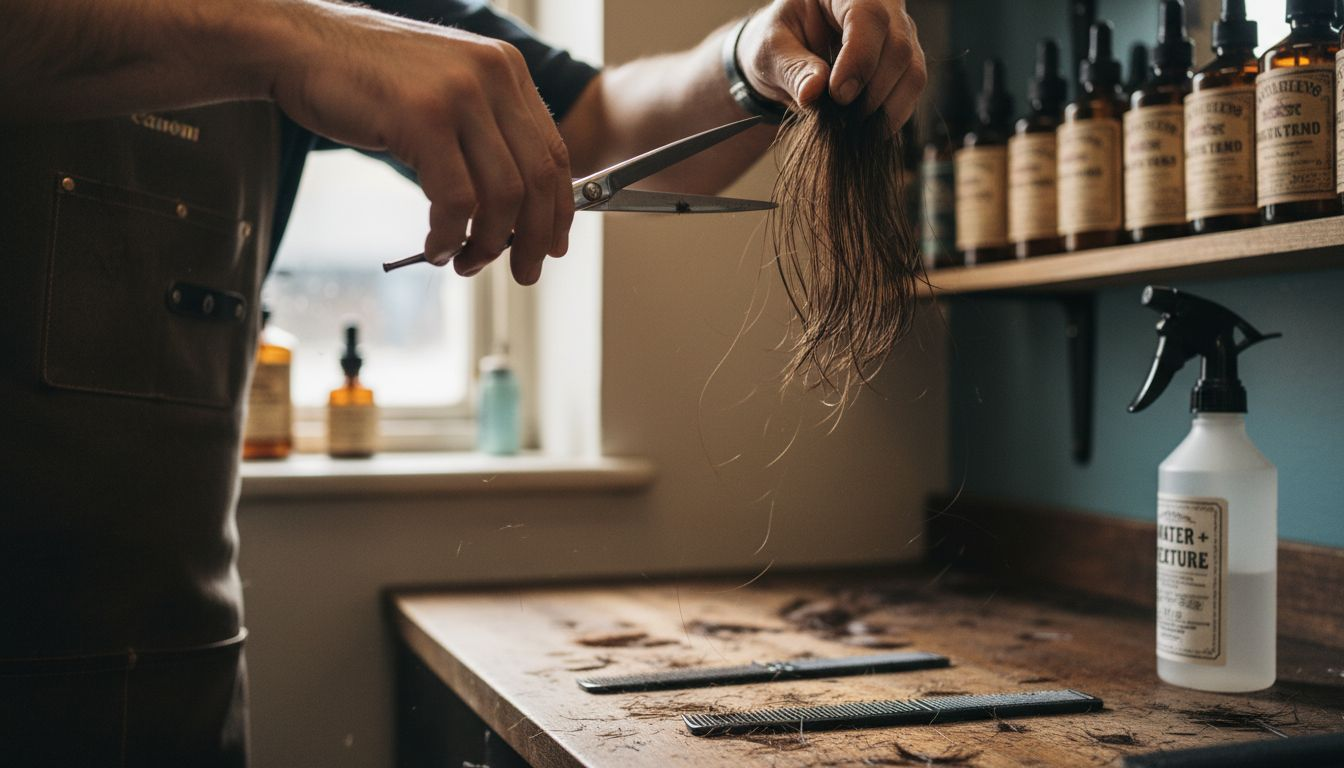
Texturizing removes bulk without sacrificing length, perfect for thick hair that needs to move freely. Slide cutting creates soft layers that blend seamlessly, avoiding harsh lines. Point cutting adds delicate texture to ends, preventing that blunt, heavy look. Each technique serves a purpose in crafting your final style.
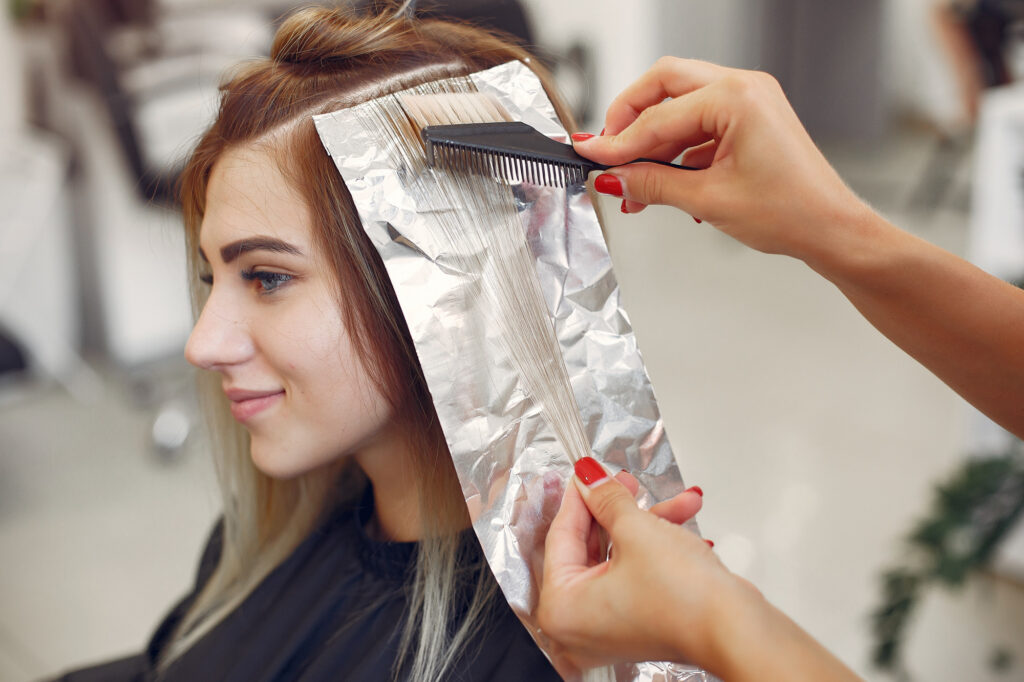
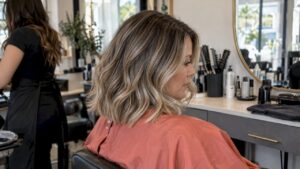
Color techniques like balayage amplify artistic expression by adding depth and dimension. Hand-painted highlights follow your hair’s natural fall, creating sun-kissed effects that grow out gracefully. Lowlights add richness and shadow, making your cut appear even more dynamic. The interplay between cut and color creates visual interest that flat, single-tone styles can’t match.
Layering and texturizing address different hair densities masterfully. Fine hair benefits from internal layering that creates volume without removing precious density. Thick hair thrives with strategic thinning that maintains body while improving manageability. Curly hair needs specialized styling approaches that honor curl patterns rather than working against them.
Pro Tip: Choosing the right combination of cutting methods can transform a 20-minute morning styling routine into a 5-minute one. Ask your stylist which techniques will make your specific hair type easiest to manage daily.
Consultation: the creative collaboration
Your consultation is where artistic vision meets practical reality. Detailed consultations reduce haircut dissatisfaction rates by 50% because they create alignment between what you imagine and what works for your hair. This isn’t a quick chat. It’s a thorough exploration of your needs, preferences, and lifestyle.
Experienced stylists gather specific information during comprehensive consultations:
- Face shape analysis to determine flattering proportions and angles
- Hair texture assessment including density, porosity, and curl pattern
- Lifestyle factors like exercise frequency, styling time, and maintenance commitment
- Previous haircut experiences, both positive and negative
- Style inspirations with realistic adjustments for your unique features
The co-design approach transforms you from passive recipient to active participant. You share your vision. Your stylist offers professional insight about what’s achievable and sustainable. Together, you create a plan that balances artistic ambition with daily practicality. This collaboration builds trust and ensures you’re both working toward the same goal.
Clear communication prevents disappointment. Bring photos of styles you love, but be open when your stylist explains adaptations needed for your hair type. Understanding why certain modifications make sense helps you appreciate the final result. Asking the right questions during your consultation sets the foundation for ongoing satisfaction.
Pro Tip: Prepare for your consultation by creating a digital folder of style inspirations and writing down your daily haircare routine. This helps your stylist understand both your aesthetic goals and realistic maintenance capabilities.
Common misconceptions about artistic haircuts
Myth 1: Artistic haircuts always demand high maintenance. Many people avoid artistic styles thinking they’ll spend hours styling daily. The truth? Properly executed artistic cuts often require less effort than generic styles because they work with your natural texture. When your cut enhances rather than fights your hair’s natural behavior, styling becomes intuitive.
Myth 2: They only suit specific hair types or face shapes. This misconception limits countless people from exploring artistic options. Skilled stylists adapt techniques to work with any hair type, from pin-straight to tightly coiled, and any face shape. The key is customization, not exclusion. Your artistic haircut looks different from someone else’s because it’s designed specifically for you.
Myth 3: Artistic haircuts are just trendy cuts with fancy names. There’s a real difference between chasing trends and creating artistic precision styles:
- Trendy cuts apply popular shapes regardless of individual features
- Artistic cuts use your unique characteristics as the design foundation
- Trendy cuts often look dated within months
- Artistic cuts evolve gracefully as they grow out
The distinction matters because artistic haircuts prioritize timeless principles of proportion and balance over fleeting fashion moments. Your cut might incorporate current elements, but it’s rooted in classic techniques that ensure longevity and wearability.
Choosing your artistic haircut: a practical framework
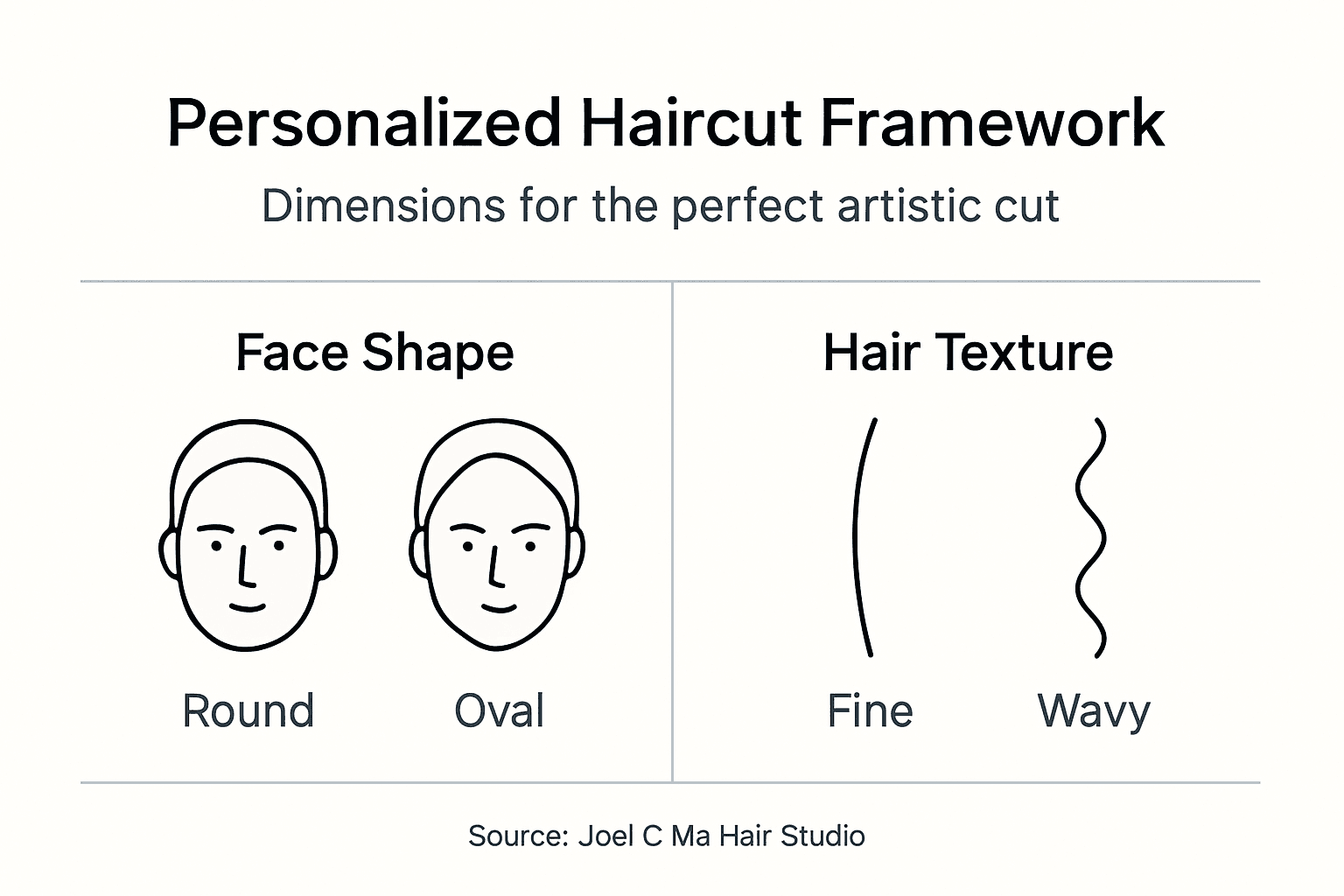
Selecting your ideal artistic haircut becomes straightforward when you consider three essential dimensions: face shape, hair texture, and lifestyle demands. This framework removes guesswork and creates clarity about which styles will truly work for you.
Face shape influences which proportions and angles flatter your features most. Different face shapes benefit from specific artistic approaches:
| Face Shape | Recommended Features | Styles to Consider |
|---|---|---|
| Oval | Balanced proportions suit most styles | Textured layers, blunt bobs, pixie cuts |
| Round | Angles and height create definition | Long layers, asymmetrical cuts, side-swept bangs |
| Square | Soft curves balance strong jawlines | Wispy layers, curved bobs, textured ends |
| Heart | Volume at jawline balances wider forehead | Chin-length bobs, side parts, fuller bottom layers |
| Long | Width and volume add balance | Blunt cuts, full bangs, horizontal layers |
Hair texture and density determine which cutting techniques will deliver the best results. Fine hair thrives with internal layering that creates volume. Thick hair needs strategic texturizing for movement. Curly hair requires specialized cutting methods that respect curl patterns. Coarse hair benefits from slide cutting that softens edges.
Lifestyle considerations ensure your artistic haircut fits your real life:
- Assess your daily styling time honestly
- Consider your comfort level with heat tools and products
- Factor in activities like swimming, exercise, or outdoor work
- Evaluate how often you can commit to salon maintenance
- Determine your budget for ongoing treatments and products
Matching these three dimensions creates a personalized selection process. A busy professional with fine, straight hair and an oval face has different optimal choices than a creative entrepreneur with thick, wavy hair and a square face. Your perfect artistic haircut emerges from this intersection of factors.
Maintaining and styling your artistic haircut
Preserving your artistic haircut’s integrity requires the right products and techniques. Color-treated hair needs sulfate-free shampoos that protect vibrancy. Textured cuts benefit from lightweight styling creams that define without weighing hair down. Your stylist can recommend professional products suited to your specific needs.
Your daily styling routine should enhance, not fight, your cut’s design:
- Apply products to damp hair for even distribution and better hold
- Use diffusers for curly styles to maintain definition while adding volume
- Employ round brushes strategically to direct hair in flattering directions
- Finish with texture sprays or serums depending on your desired effect
Regular professional follow-up treatments maintain your cut’s shape and hair’s health. Most artistic haircuts benefit from trims every 6 to 8 weeks, though this varies based on your hair’s growth rate and style complexity. Color touch-ups, deep conditioning treatments, and shape refinements keep everything looking fresh.
Pro Tip: Use heat protectants before any thermal styling and invest in color-safe products even if you don’t have obvious color. These products protect against environmental damage and preserve your cut’s integrity longer than standard formulas.
Between salon visits, small adjustments can extend your style’s lifespan. Dry shampoo refreshes roots and adds texture on non-wash days. Strategic pin placements create different looks from the same cut. Understanding how to work with your cut’s design multiplies your styling options without requiring new haircuts constantly.
Sustainability in artistic haircuts
Modern luxury salons increasingly embrace eco-friendly practices without compromising artistic quality. Sustainable cutting tools made from recycled materials perform identically to conventional options. Plant-based hair products deliver professional results while reducing environmental impact. Clients now actively seek environmentally conscious salons that align with their values.
Sustainable practices in artistic haircuts include:
- Water-saving techniques during washing and rinsing processes
- Energy-efficient styling tools that maintain performance standards
- Recyclable or compostable color application materials
- Natural, ammonia-free color formulations that protect hair and planet
- Product lines using sustainable sourcing and ethical manufacturing
Client interest in sustainable, high-end hair care continues growing as awareness increases. You don’t have to sacrifice style quality for environmental responsibility. Many eco-friendly products actually improve hair health compared to conventional alternatives because they avoid harsh chemicals that damage hair structure over time.
Salons implementing comprehensive sustainability policies demonstrate that artistic excellence and environmental stewardship complement rather than conflict with each other. From energy-efficient lighting to water recycling systems, these choices reduce ecological footprints while maintaining the luxury experience clients expect. Your artistic haircut can be both beautiful and responsible.
Elevate your style with Joel C Ma Hair Studio
Your journey to the perfect artistic haircut begins with expertise that understands your unique vision. Joel C Ma Hair Studio specializes in personalized haircuts that honor your individual features, lifestyle, and style preferences. With over 25 years of experience, our team transforms consultations into collaborative creative sessions where your goals become reality.
Explore our customized styling services designed to complement your artistic haircut perfectly. From precision cuts to balayage color techniques, we offer comprehensive solutions that keep your look fresh and manageable. Discover professional-grade products that extend your style’s vibrancy and protect your investment between visits.
Frequently asked questions
How often should I visit the salon to maintain an artistic haircut?
Most artistic haircuts need professional maintenance every 6 to 8 weeks to preserve their shape and integrity. This timeline varies based on your hair’s growth rate and style complexity, with shorter cuts often requiring more frequent trims.
Can artistic haircuts work with curly or coarse hair?
Absolutely. Artistic haircuts excel with curly and coarse textures because they’re designed around your natural hair characteristics. Specialized cutting techniques honor curl patterns and manage density for styles that enhance rather than fight your texture.
What should I prepare before my haircut consultation?
Bring inspiration photos showing styles you admire, but be open to adaptations. Write down your daily styling routine, time constraints, and any previous haircut experiences (positive or negative). This information helps your stylist design something perfectly suited to your life.
Are artistic haircuts compatible with hair coloring techniques?
Artistic haircuts and advanced coloring techniques complement each other beautifully. Methods like balayage add dimension that enhances your cut’s texture and movement. Many clients find that strategic color placement makes their artistic cuts even more dynamic and personalized.
How can I style my artistic haircut quickly on busy mornings?
Proper cutting techniques should make your hair fall naturally into place with minimal effort. Use styling products on damp hair, let it air dry or use a diffuser briefly, then finish with texture spray or serum. Well-executed artistic cuts often style themselves in under 10 minutes.
Recommended
- Haircut Design Mastery: 45% Higher Satisfaction Rates – Joel C Ma Hair Studio
- Customized Hair Styling: Defining Your Unique Look – Joel C Ma Hair Studio
- Professional Hair Services: 35% Longer Style Results 2026 – Joel C Ma Hair Studio
- Hair Consultation Role: 68% Prefer Personalized Styling – Joel C Ma Hair Studio