
Artistic haircut styles: Your La Jolla guide to personalized looks

TL;DR:
- Artistic haircuts must be tailored to individual hair texture, movement, and lifestyle for optimal results.
- Thorough consultations with skilled stylists ensure that the chosen style aligns with your daily routine and hair history.
Not every artistic haircut looks the way it does in a photo once it’s actually on your head. Your hair has its own texture, density, and natural movement, and the cut that looked stunning on someone else may fall flat or lose its shape entirely on you. That’s the real challenge behind choosing artistic haircut styles: the best ones are engineered around the person wearing them. In La Jolla’s premium salon scene, that means starting with an honest, thorough conversation about your hair, your life, and your actual morning routine before a single scissor touches your head.
Table of Contents
- How to evaluate artistic haircut styles for your hair and lifestyle
- The wolf cut: A textured hybrid with bold personality
- Butterfly layers: Sculpted lift for long hair with delicate dimension
- Sculptural buzz cuts: Hair as high-concept artistic expression
- Comparing artistic haircut styles: Wolf cut, butterfly layers, and sculptural buzz cuts
- How to choose and maintain your artistic haircut style in a premium La Jolla salon
- Why consulting and personalization are the true artistry behind great haircuts
- Discover your perfect artistic haircut at Joel C Ma Hair Studio in La Jolla
- Frequently asked questions
Key Takeaways
| Point | Details |
|---|---|
| Personalized consultation | Your haircut style should be chosen based on a professional consultation that considers your hair type and lifestyle. |
| Wolf cut texture | The wolf cut thrives on choppy layers and volume but needs natural waves or styling for straight hair. |
| Butterfly layers placement | Correct crown layer placement is crucial for butterfly layers to maintain lift and dimension over time. |
| Sculptural hair art | Sculptural buzz cuts use precise geometric patterns to transform hair into wearable art and statements of identity. |
| Maintenance and styling | Each artistic haircut requires specific care and styling commitment to keep the look fresh and intentional. |
How to evaluate artistic haircut styles for your hair and lifestyle
Before you fall in love with a photo on Instagram, there are a few non-negotiable factors to assess. Artistry in haircutting isn’t just about what a cut looks like freshly blown out in a salon. It’s about how it behaves on day three, after a morning swim, or after you’ve spent 30 minutes in La Jolla’s coastal humidity.
Here’s what to honestly evaluate before choosing a style:
- Hair texture and density. Fine hair and thick hair don’t hold the same shapes. A wolf cut on fine, limp hair needs extra product support. A blunt bob on very dense hair can puff outward without careful internal thinning.
- Natural movement. Does your hair wave, curl, or go straight? Cuts that rely on texture to look right, like shags or butterfly layers, need natural movement or significant styling effort to read correctly.
- Daily styling time. If your real-world routine is wash-and-go, a heavily layered cut that needs diffusing and product work will disappoint you within two weeks.
- Chemical and color history. Bleached or chemically processed hair behaves differently under tension and cutting pressure. This matters for how layers fall and hold.
- Maintenance commitment. Some of the most striking artistic haircut styles require trims every six weeks. Others hold their shape for ten or more weeks. Know which category your lifestyle supports.
Personalized artistic haircuts hinge on this kind of detailed evaluation. The consultation guidance emphasizes assessing how much time you spend styling and your chemical history to pick the right cut. That’s not a formality. It’s the foundation of whether an artistic cut actually works for you.
Think of it as architecture. A building designed without knowing the soil conditions will eventually shift and crack. A haircut designed without knowing your hair’s behavior and your real lifestyle will do the same.
The wolf cut: A textured hybrid with bold personality
The wolf cut is probably the most referenced example of artistic haircut styles over the last several years, and for good reason. It’s technically ambitious, visually striking, and surprisingly adaptable. At its core, the wolf cut is a shag and mullet hybrid with choppy, textural layers that add movement and volume, best suited for medium to thick hair with natural wave or curl.
What makes it “artistic” isn’t just the silhouette. It’s the layer architecture. The shortest layers sit at the crown and frame the face aggressively, while longer layers at the back and sides create a waterfall effect that moves when you move. That’s not accidental. A skilled stylist maps each section intentionally.
Key features of the wolf cut:
- Crown layers cut short for maximum lift and volume
- Curtain bangs or face-framing pieces that draw attention to your features
- Textured, uneven ends rather than blunt or polished finishes
- Visual weight distributed through the mid-lengths rather than the ends
- Works beautifully with diffusing and air-drying on wavy or curly hair
One critical caveat: the wolf cut isn’t suitable for super-straight hair unless you style with waves or bends. On completely straight hair, the layers can look disconnected and stringy rather than intentional and lived-in. This is where understanding texturizing becomes genuinely important: a stylist who knows how to build texture into the cut itself can compensate for straighter hair types and still deliver the look.
“The wolf cut is not a cut you can fake with styling alone. The layer placement itself has to be intentional from the first snip.” This is one of those styles where the skill of the cutter matters more than the skill of whoever blows it out.
Pro Tip: Ask your stylist about layers vs. texture before committing to a wolf cut. These are two different technical tools, and the right balance between them depends entirely on your hair’s natural weight and movement.
For styling, use a light-hold texturizing spray while hair is still damp, scrunch it through the mid-lengths and ends, and diffuse on low heat. Avoid heavy creams or serums, which will weigh down the volume that makes this cut worth having. Styling the wolf cut is a learnable skill, but it does require a few minutes of intentional effort.
Butterfly layers: Sculpted lift for long hair with delicate dimension
Butterfly layers are one of the more technically precise examples of artistic haircuts available for long hair. The visual effect, a lifted “winged” silhouette where shorter layers at the crown appear to fan outward, requires exact placement to work. The shortest crown layers must sit at or above the cheekbone for lift. Place them even slightly lower and the entire effect deflates.
This is not a style that forgives imprecision. It’s also one of the most rewarding when done correctly, particularly for fine to medium hair types that struggle to hold volume in longer lengths.
What makes butterfly layers distinctive:
- Short crown layers create visible lift and a “winged” shape from the side profile
- Bottom lengths remain relatively smooth and undisturbed, contrasting with the lifted crown
- Works beautifully with dimensional color techniques like balayage for added visual depth
- Suits fine to medium hair more than thick, dense hair (which can overwhelm the delicate silhouette)
- Air drying with a round brush bend at the crown preserves the upward curve
Unlike the wolf cut’s choppy, textured approach, butterfly layers keep the bottom lengths clean and smooth. The drama happens at the top, not throughout. This makes the style easier to wear across more formal and casual settings.
Pro Tip: Skip conditioner on your crown layers on wash days. Product buildup at the root kills the lift that makes this cut work. Apply conditioner from mid-length to ends only.
Here’s a quick comparison to orient your decision:
| Feature | Wolf cut | Butterfly layers |
|---|---|---|
| Best hair type | Medium to thick, wavy or curly | Fine to medium, any texture |
| Layer distribution | Throughout entire length | Concentrated at crown |
| Visual texture | Choppy, edgy, lived-in | Smooth, lifted, dimensional |
| Trim frequency | Every 6 to 8 weeks | Every 8 to 10 weeks |
| Styling time | 10 to 20 minutes | 10 to 15 minutes |
| Color pairing | Textured highlights | Balayage for dimension |
The benefits of layered hair extend beyond aesthetics. Layers reduce bulk, improve movement, and make hair easier to manage daily. Butterfly layers deliver those benefits while keeping long hair intact, which is exactly why they’ve become one of the most requested unique hairstyle inspirations in premium salons.
Sculptural buzz cuts: Hair as high-concept artistic expression
This is where artistic haircut styles cross into something closer to visual art. Sculptural buzz cuts use geometric precision to create patterns, shapes, and design elements shaved or cut directly into the hair. The result is a style that functions more like a statement than a haircut.
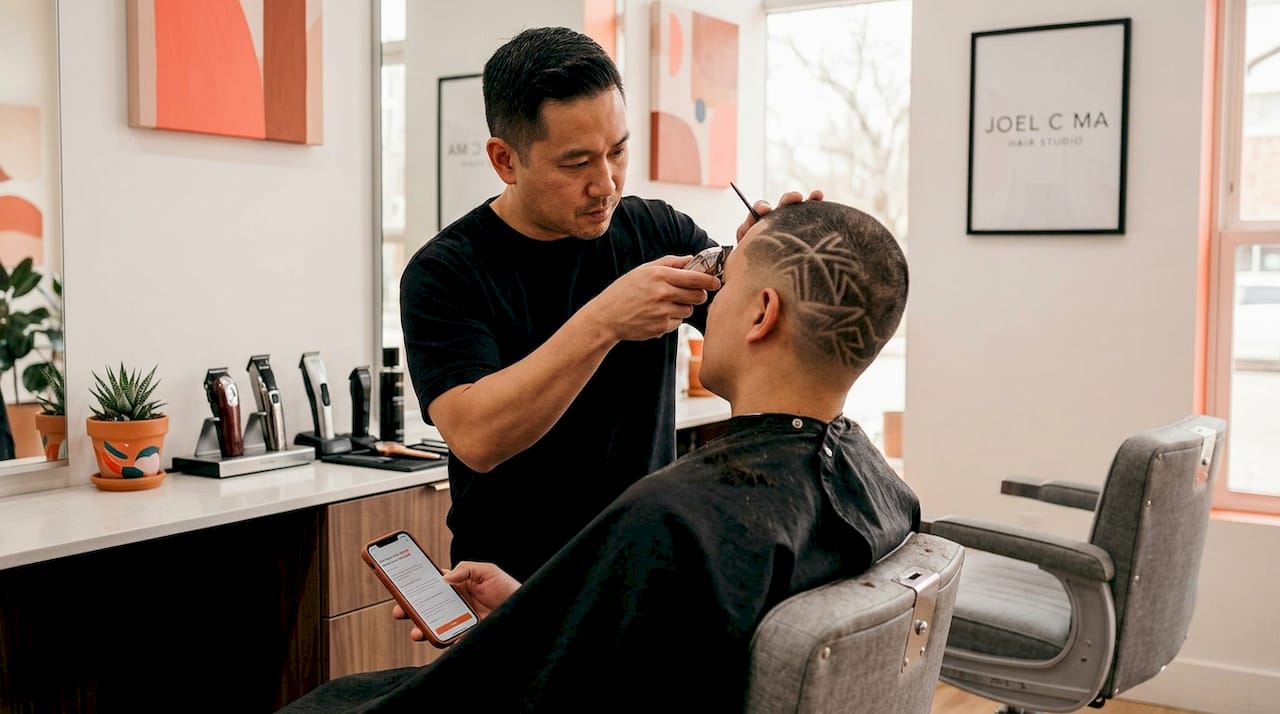
Solange Knowles’ sculptural buzz cut grid design is one of the most discussed examples in recent years, a precise geometric pattern that speaks to identity and artistic expression in hair simultaneously. What makes it compelling isn’t just the look. It’s the clarity of intention. This cut says exactly what it means to say.
What defines sculptural buzz cut artistry:
- Geometric or free-form patterns etched directly into the hair
- Natural hair texture softens sharp edges, creating contrast between geometry and organic curl
- Color contrast, particularly between natural color and bleached sections, amplifies the design
- Virtually no styling required daily, but high-precision maintenance to preserve the pattern
- Bold identity statement suited for those who want maximum visual impact with minimal length
“A sculptural buzz cut isn’t about the absence of hair. It’s about using the canvas differently. The hair that remains is deliberate.”
These are popular artistic hairstyles for people undergoing personal reinvention or those who want their appearance to lead a conversation. The artistry behind these cuts is in the precision. A fraction of a millimeter in the wrong direction collapses the design. This is not a style to attempt outside of a skilled, experienced stylist.
Comparing artistic haircut styles: Wolf cut, butterfly layers, and sculptural buzz cuts
Now that each style is clear, here’s a fuller side-by-side view to guide your decision. If you’re still weighing options based on your face shape, hair type, and schedule, this comparison makes the trade-offs concrete.
| Factor | Wolf cut | Butterfly layers | Sculptural buzz cut |
|---|---|---|---|
| Hair length required | Lob to long | Long (collar bone and beyond) | Any (cropped preferred) |
| Best for | Wavy, curly, medium to thick | Fine to medium, any texture | All textures |
| Maintenance interval | Every 6 to 8 weeks | Every 8 to 10 weeks | Every 3 to 5 weeks |
| Daily styling time | 15 to 20 minutes | 10 to 15 minutes | Under 5 minutes |
| Visual effect | Edgy, textured movement | Lifted, winged elegance | Bold, geometric impact |
| Ideal lifestyle | Active, casual, fashion-forward | Professional or versatile | High-concept, low maintenance |
| Maintenance and styling times | Moderate | Moderate to high | Low styling, high precision |
The pattern here is clear. If you want texture and movement with personality, the wolf cut is your starting point among modern haircut techniques. If you want dimension and femininity without sacrificing length, butterfly layers deliver. If you want the haircut to do the talking before you even say hello, the sculptural buzz cut is in a category of its own.
How to choose and maintain your artistic haircut style in a premium La Jolla salon
The decision process is easier when you walk into your consultation prepared. Here’s how to approach it:
- Gather inspiration photos. Collect three to five images that reflect the direction you want, not just one. Pattern recognition helps your stylist understand what visually appeals to you and identify the common thread.
- Describe your real morning routine. Be honest. If you realistically spend seven minutes on your hair, say that. Your stylist can engineer a cut that works within that window.
- Ask about AI visualization. La Jolla salons integrate AI previews, scalp diagnostics, and lifestyle assessments to tailor haircuts precisely. Seeing a virtual preview before the cut reduces second-guessing significantly.
- Discuss your hair history. Any bleaching, relaxing, or color work affects how your hair will hold a shape. Your stylist needs this information to select the right technique.
- Commit to a maintenance plan. Before you leave, confirm the recommended trim schedule and specific products for your cut. Following through on maintenance is what keeps personalized haircuts in La Jolla looking intentional rather than grown-out.
Pro Tip: Take a short video of your hair after your second wash post-cut, before you style. Send it to your stylist. This gives them a clear view of how the cut is behaving on your hair and allows them to fine-tune on your next visit.
The bottom line on consulting for artistic haircuts: what you tell your stylist is as important as what they do with the scissors. Preparation and honesty on your end, combined with technical skill on theirs, is what produces a result worth posting.
Why consulting and personalization are the true artistry behind great haircuts
Here’s an opinion worth sitting with: the most undervalued part of any artistic haircut isn’t the cut itself. It’s the conversation that happens before it.
We see clients come in with beautiful reference photos of edgy haircuts for women, and the cut is technically achievable. But when we dig into their actual lifestyle, it becomes clear that the style in the photo required 25 minutes of diffusing, two specific styling products, and hair that hadn’t been heat-damaged in two years. That’s not a mismatch you can solve with better scissors.
Layer shapes that look artistic in-salon may behave entirely differently if your routine is wash-and-go. Consultations exist to map styling time against cut design, so what you leave with actually works in your real life, not just in the chair.
The uncomfortable truth in this industry is that many stylists skip the deep consultation because it takes time and can be awkward when client expectations need adjusting. But the best artistic haircuts aren’t the most technically complex ones. They’re the ones you can reproduce at home, that still look intentional on day four, and that people notice and ask about.
Personalized hair consults that go beyond “what length do you want?” and actually assess your hair’s behavior, your product knowledge, and your honest time budget produce dramatically better outcomes. That’s where salon artistry actually lives. Not in the finished photo, but in the experience of wearing the cut every single day.
Discover your perfect artistic haircut at Joel C Ma Hair Studio in La Jolla
If this article has given you a clearer sense of what you want, the next step is a consultation that matches that vision to your actual hair.

At Joel C Ma Hair Studio, our stylists bring over 25 years of experience to every premium haircut in La Jolla. We use AI visualization tools, scalp diagnostics, and detailed lifestyle assessments to ensure the style you choose works for your hair, your schedule, and your life. Whether you’re drawn to the textured movement of a wolf cut, the lifted elegance of butterfly layers, or something entirely your own, we build it around you. Explore our artistic hair styling techniques and personalized artistic haircuts to see what’s possible. Book your consultation today and walk in with a photo, walk out with a plan.
Frequently asked questions
What hair types suit artistic haircut styles like the wolf cut?
Artistic styles like the wolf cut work best on medium to thick, wavy, or curly hair, since the wolf cut works well with natural texture and is not ideal for super-straight hair unless styled with waves or bends.
How important is a salon consultation for achieving an artistic haircut?
A personalized consultation is essential because consultations map styling time and hair health to your specific cut design, which is the difference between a style you love at six weeks and one you abandon at two.
What maintenance does a butterfly layered haircut require?
Butterfly layers require careful product use and specific drying techniques to maintain lift, with trims recommended every 8 to 10 weeks and conditioner kept away from crown layers on wash days.
Can artistic haircuts be adapted for different personal styles?
Yes. The layer placement and styling approach for any artistic cut can be customized to match your personality and daily routine, making the same base cut read as casual, polished, or high-concept depending on how it’s engineered and maintained.
Recommended
- Signature haircuts for La Jolla women: luxury tips – Joel C Ma Hair Studio
- Expert hair styling techniques for your unique look in La Jolla – Joel C Ma Hair Studio
- Explore types of haircuts for upscale La Jolla style – Joel C Ma Hair Studio
- Why Artistry in Haircutting Matters for Your Style – Joel C Ma Hair Studio