
Difference Between Layers and Texture in Haircuts
Most American women invest more in luxury hair services than nearly any other beauty treatment, yet many still feel uncertain about the role that layers and texture play in creating a truly personal look. For fashion-forward women in La Jolla, distinguishing between these two concepts can make all the difference in achieving a high-end, effortless style. This guide helps you uncover professional insights so you can choose the cutting and styling techniques that best showcase your natural beauty.
Table of Contents
- Defining Layers And Texture In Hair
- Types And Techniques For Layers
- Types And Techniques For Texture
- Visual Impact And Styling Outcomes
- Choosing The Right Approach For You
Key Takeaways
| Point | Details |
|---|---|
| Differentiate Between Layers and Texture | Understand that layers add volume and movement to hairstyles, while texture describes the feel and diameter of hair strands. |
| Consult Professional Stylists | Always seek advice from a stylist who can tailor layering and texturing techniques to your unique hair type and personal style. |
| Choose Techniques Based on Hair Type | Different hair types require specific layering and texturing techniques to achieve the best results; for instance, fine hair requires a delicate approach. |
| Consider Lifestyle in Hair Choices | Take your daily routine and maintenance preferences into account when deciding on your hairstyle to ensure sustainability and practicality. |
Defining Layers and Texture in Hair
Understanding the fundamental differences between layers and texture is crucial for creating a personalized hairstyle that complements your unique hair characteristics. Hair texture is fundamentally determined by genetics, influencing whether your strands are straight, wavy, or curly, and defining the inherent quality of individual hair strands.
When it comes to layers, stylists strategically cut hair at graduated lengths to create visual interest and movement. Layered haircuts involve cutting hair with top sections shorter than underlying lengths, which produces volume and can create an illusion of enhanced length. This technique allows for dynamic styling options that work harmoniously with your natural hair texture.
Hair texture encompasses more than just curl pattern – it describes the actual diameter and feel of individual strands. Textures range from fine and delicate to thick and coarse, which significantly impacts how a haircut will look and behave. Thin hair might require different layering techniques compared to dense, voluminous hair to achieve optimal shape and movement.
Pro tip: Consult with a professional stylist who can analyze your specific hair texture and recommend layers that enhance your natural hair characteristics and personal style.
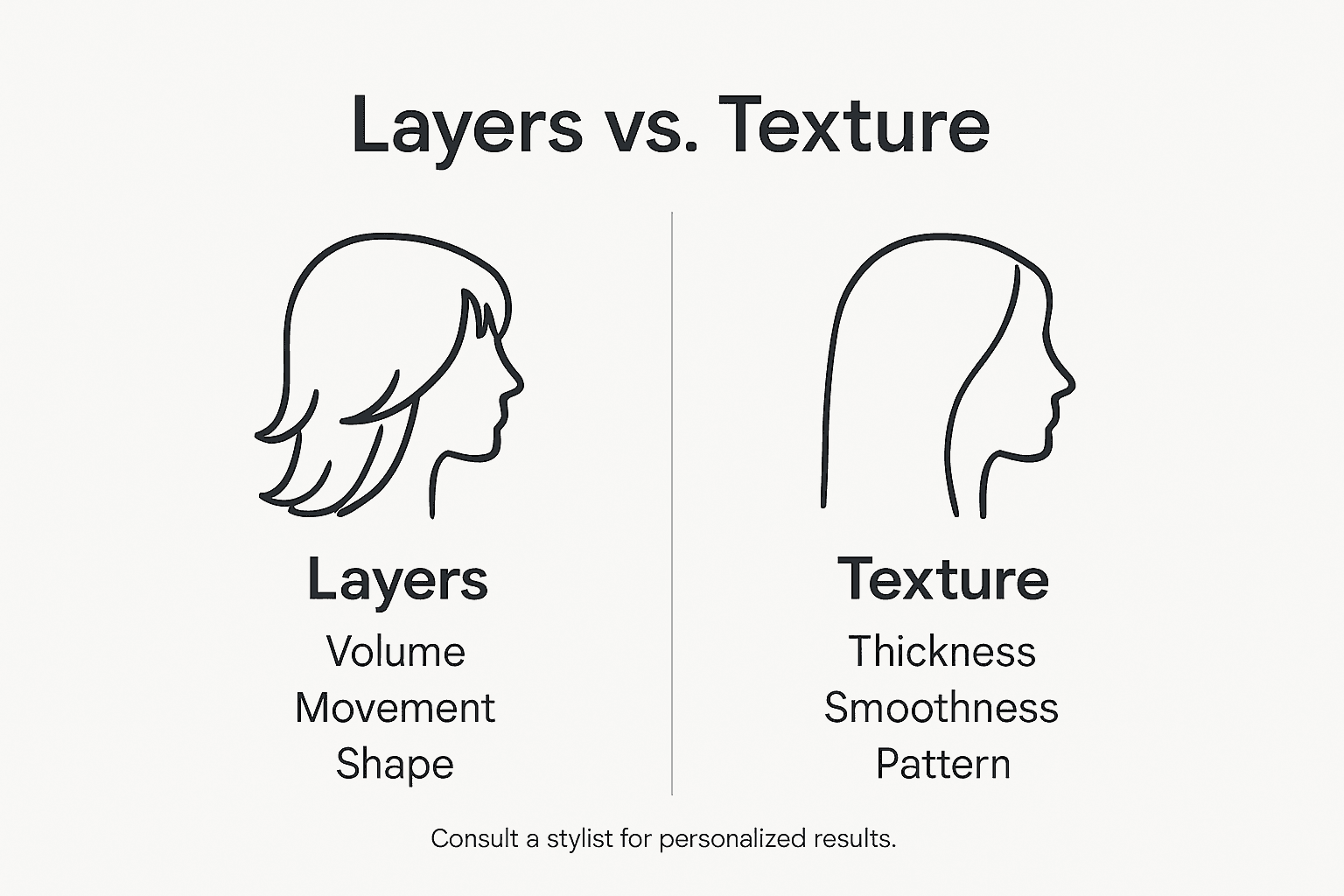
To help distinguish the effects of layers and texture, here is a comparison of their core characteristics:
| Aspect | Layers | Texture |
|---|---|---|
| Definition | Graduated lengths for movement | Diameter and feel of hair strand |
| Purpose | Adds volume and shape | Influences overall look and manageability |
| Created by | Cutting techniques | Genetics and texturizing methods |
| Styling impact | Enhances dimension and face shape | Affects how styles hold and reflect light |
Types and Techniques for Layers
Hair layering techniques are sophisticated approaches that transform haircuts from simple trims to artistic statements. Professionals utilize multiple cutting methods like sliding haircuts and blended elevation, each designed to achieve specific visual and structural effects based on individual hair characteristics.
Some primary layering techniques include radial cutting, which creates soft, graduated ends, and point cutting, a method where scissors are positioned at an angle to create textured, less uniform layers. Different layering approaches are specifically tailored to various hair textures, ensuring that straight, wavy, and curly hair receive customized treatment that enhances natural movement and volume.
Professional stylists often employ strategic sectioning techniques to create layers that complement facial structure and personal style. These techniques might involve cutting top layers shorter to create volume, using diagonal lines to soften harsh edges, or implementing long-layered cuts that provide movement without sacrificing overall length. The key is understanding how different cutting angles and techniques interact with individual hair texture and density.
Pro tip: Request a consultation where your stylist can analyze your specific hair type and recommend the most flattering layering technique for your unique hair characteristics.
Types and Techniques for Texture
Hair texture modification involves sophisticated techniques that go far beyond simple cutting, encompassing methods that can dramatically transform hair’s natural characteristics. Genetic factors determine baseline texture, but modern styling techniques offer extensive possibilities for personalization and enhancement.
Professional stylists employ multiple approaches to texture manipulation, including chemical treatments and precision cutting techniques. Perming represents a classic method of altering hair’s inherent texture), allowing individuals to introduce waves or curls to naturally straight hair. Texturizing techniques like razor cutting and point cutting can create soft, nuanced variations in hair strand thickness, adding depth and movement to different hair types.
The range of texture techniques is remarkably diverse, spanning from mechanical methods like thinning scissors to chemical treatments such as relaxers and wave-setting processes. These approaches allow stylists to either subtly enhance natural texture or create dramatic transformations, taking into account factors like hair density, curl pattern, and individual styling preferences. The goal is always to work harmoniously with an individual’s natural hair characteristics while achieving the desired aesthetic outcome.
Pro tip: Always schedule a detailed consultation before major texture treatments to ensure the technique matches your hair’s unique structural properties and desired style.
Below is a summary of common layering and texture techniques and when they are most effective:
| Technique | Ideal For | Result |
|---|---|---|
| Radial Cutting | Straight/fine hair | Soft, blended transitions |
| Point Cutting | Wavy/curly hair | Added texture, less uniform look |
| Razor Cutting | Thick/coarse hair | Lightweight, airy finish |
| Chemical Texturizing | Straight hair | Long-lasting waves or curls |
Visual Impact and Styling Outcomes
Layered haircuts fundamentally transform visual aesthetics by creating dynamic movement and depth that goes far beyond simple hair trimming. The strategic placement of layers can dramatically reshape facial contours, highlighting bone structure and creating an illusion of volume that complements individual features.
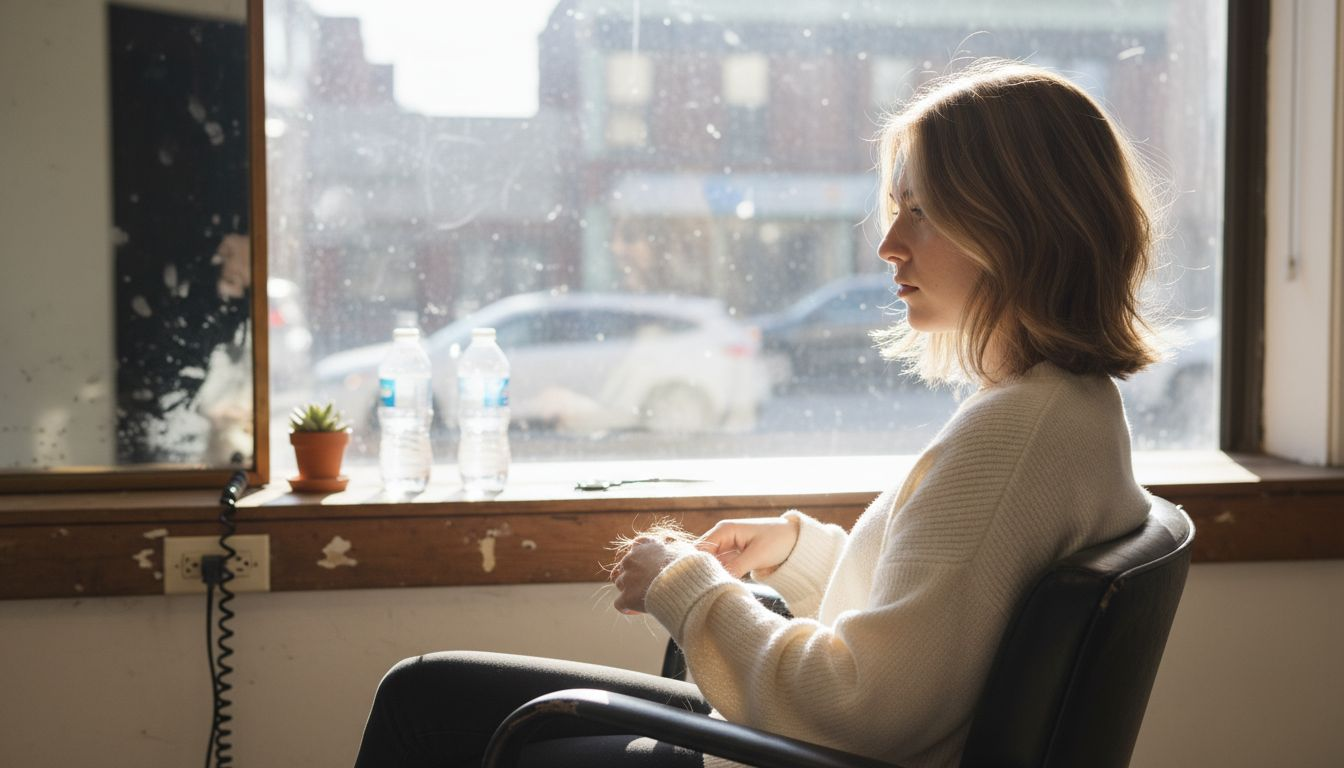
Professional stylists understand that layers and texture work synergistically to produce stunning visual outcomes. Creative color and layering techniques combine to enhance the overall styling impact, generating visual rhythm through carefully constructed variations in length and texture. This approach allows for personalized styling that can soften angular faces, add volume to fine hair, or create sophisticated movement in more dense hair types.
The interplay between layers and texture determines how light interacts with the hair, creating nuanced visual effects that can range from soft and romantic to bold and architectural. Different cutting techniques – such as point cutting, razor cutting, or precision scissor work – can produce varied textures that reflect light uniquely, adding complexity and dimension to the overall hairstyle. These subtle variations transform hair from a simple aesthetic element to a dynamic form of personal expression.
Pro tip: Request a professional consultation that includes a digital or hand-drawn visualization of how proposed layers and texturing will specifically enhance your unique facial structure and hair type.
Choosing the Right Approach for You
Selecting the ideal layering and texturizing technique requires careful consideration of multiple personal factors, ranging from your natural hair type to lifestyle demands and personal aesthetic preferences. Understanding the nuanced relationship between your unique hair characteristics and potential styling approaches is crucial for achieving a transformative and sustainable haircut.
Hair type plays a pivotal role in determining the most suitable layering strategy. Straight hair typically benefits from strategic layering to introduce volume and movement, while wavy and curly hair require more specialized texturing techniques that respect natural curl patterns. Fine hair demands a particularly delicate approach, with minimal layering to prevent excessive thinning and maintain structural integrity. Thick or dense hair, conversely, can accommodate more aggressive layering techniques that create significant shape and reduce overall weight.
Beyond physical hair characteristics, lifestyle considerations significantly influence the ideal haircut approach. Active individuals might prefer low-maintenance styles that require minimal daily styling, while those with more flexible schedules can explore more intricate layering and texturing techniques. Professional environments, personal styling preferences, and time availability for hair maintenance all factor into selecting the most appropriate cutting technique. The goal is to create a harmonious balance between aesthetic desire, natural hair properties, and practical daily management.
Pro tip: Bring reference images and be prepared to discuss your daily routine during your consultation to help your stylist craft the most personalized layering and texturing approach for your unique needs.
Elevate Your Look with Expert Layering and Texture Solutions
Understanding the difference between layers and texture is essential for achieving a hairstyle that truly enhances your natural beauty and personal style. If you struggle with finding the right balance to add volume or create movement in your hair, or if you want to embrace your unique texture with expert techniques, Joel C Ma Hair Studio offers tailored solutions designed just for you. Our skilled stylists use advanced cutting and texturizing methods to address challenges like fine or coarse hair and deliver a look that complements your facial features and lifestyle.
Unlock the power of professional layering and texture customization at Joel C Ma Hair Studio. With over 25 years of experience in artistic haircuts and individualized consultations, we ensure your hair not only looks stunning but feels vibrant and easy to manage every day. Book your personalized session today and experience the transformation that expert layering and texture techniques can bring to your style. Visit Joel C Ma Hair Studio to explore our services and schedule your appointment now.
Frequently Asked Questions
What is the difference between hair layers and texture?
Hair layers refer to the graduated lengths cut into the hair to create movement and volume, while hair texture describes the diameter and feel of individual hair strands, which can be fine, medium, or coarse.
How do hair layers affect styling?
Hair layers enhance dimension and help frame the face, adding volume and shape, which can make hair easier to style and maintain.
What are some common techniques used to create layers in hair?
Common layering techniques include radial cutting for soft transitions and point cutting for added texture. Each technique is chosen based on the hair’s natural texture and desired outcome.
How can texture modification enhance my hairstyle?
Texture modification techniques, such as chemical treatments and precision cutting, can dramatically transform hair’s natural characteristics, allowing for personalized styles that enhance movement and volume.