
How to Choose a Haircut Style That Suits You

TL;DR:
- Choosing a hairstyle effectively depends on understanding your features, hair type, and lifestyle. Knowing your face shape and natural hair behavior enables you to select styles that enhance your appearance and are manageable daily. Clear communication with your stylist, including reference photos and honest discussions, significantly improves your hairstyle outcome.
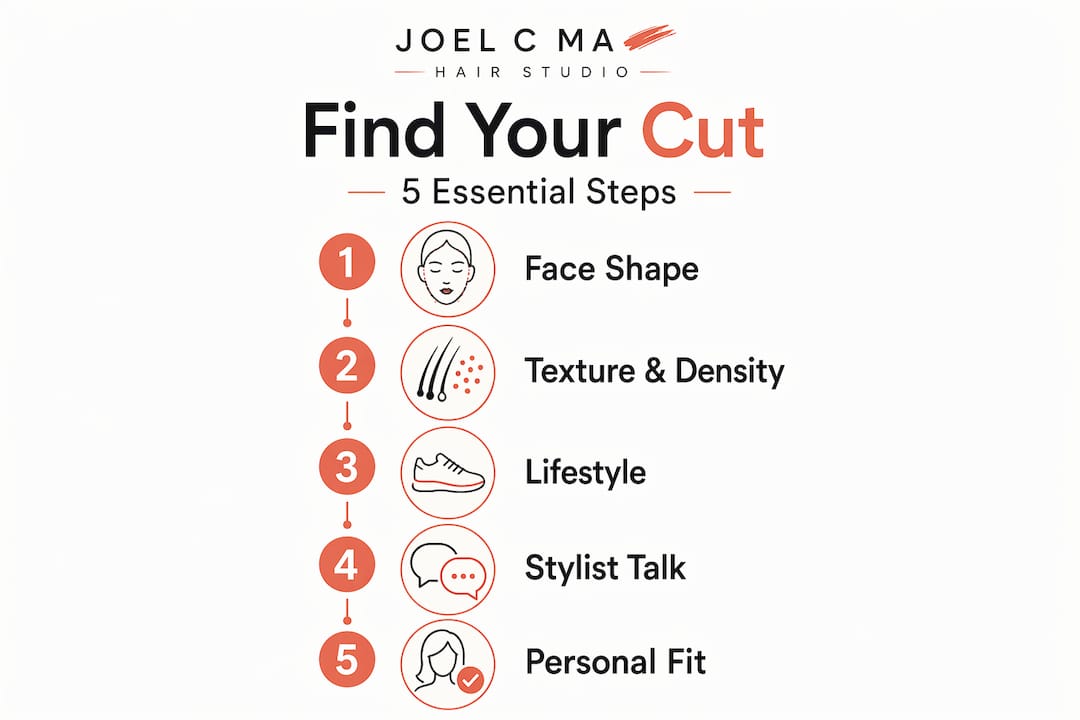
Walking out of a salon with a haircut you don’t recognize as yourself is one of the most avoidable disappointments out there. Yet it happens constantly, mostly because people choose haircuts based on what looks good on someone else rather than what works for their own face, hair, and life. Knowing how to choose haircut style that actually fits you comes down to three things: understanding your features, being honest about your hair, and communicating clearly with your stylist. This guide gives you all three.
Table of Contents
- Key takeaways
- How to choose haircut style: start with your face shape
- Hair texture, density, and natural behavior
- Aligning your haircut with your lifestyle
- Communicating with your stylist to get the cut you want
- Common mistakes and how to avoid them
- My honest take on choosing your haircut style
- Find your perfect cut with expert guidance
- FAQ
Key takeaways
| Point | Details |
|---|---|
| Face shape is a starting point | Use it as a guide for balance, not a rigid rule that overrides your preferences. |
| Work with your hair, not against it | Styles that suit your natural texture are easier to maintain and look better long-term. |
| Lifestyle determines practicality | A high-maintenance cut on a busy schedule leads to frustration faster than any bad trend. |
| Show your stylist what you dislike | Negative reference photos help stylists calibrate as effectively as photos of styles you love. |
| Speak up during the cut | Real-time feedback during your appointment prevents the final result from missing the mark. |
How to choose haircut style: start with your face shape
Most people can identify their face shape roughly, but there’s a difference between guessing and actually measuring. Pull your hair back and stand in front of a mirror. Look at three things: the width of your forehead compared to your jaw, the shape of your jaw (angular or rounded), and the overall length of your face compared to its width.
The most common face shapes break down like this:
- Oval: Forehead slightly wider than jaw, balanced proportions. Works with almost any cut.
- Round: Width and length are roughly equal, soft jaw. Benefits from cuts that add height or length.
- Square: Strong jawline, wide forehead, roughly equal width and height. Softer cuts and layers reduce sharpness.
- Heart: Wide forehead, narrow chin. Medium-length cuts or styles with width near the jaw create balance.
- Oblong/Rectangle: Long and narrow. Cuts with volume on the sides rather than height work best.
- Diamond: Narrow forehead and chin, wide cheekbones. Bangs or width at the forehead help balance the look.
Knowing your face shape enables you to choose styles that augment your features rather than work against them. That said, industry experts consistently note that face shape is a guideline, not a strict rule. Your hair texture, personal taste, and lifestyle deserve equal weight.
Pro Tip: Take a photo of your face with your hair fully pulled back. It’s much easier to assess your face shape from a photo than from a mirror, where you’re more likely to self-correct your perception.
Hair texture, density, and natural behavior
Here’s the thing most people skip: your face shape tells you what shape to aim for, but your hair texture tells you whether you can actually get there without fighting your hair every morning.
Hairstyles should reflect your hair type and density for realistic results and manageable upkeep. There are four main texture types to know:
- Straight hair lies flat naturally. It shows cuts cleanly but can look limp without the right layering.
- Wavy hair has natural movement and volume. Works beautifully with cuts that enhance rather than flatten the wave.
- Curly hair shrinks significantly when dry. Always account for shrinkage when deciding on length.
- Coily hair has the most shrinkage and the most definition. Cuts that respect the curl pattern keep the style healthy and consistent.
Density matters just as much as texture. Thick hair holds shape well but can get heavy without the right shaping. Fine hair moves easily but may not support bold sculptural cuts without consistent product use. The role of hair texture in luxury styling goes far beyond just picking a product. It defines which cuts are even viable for your hair in the first place.
The most important shift in recent years is away from forcing hair into unnatural shapes. Styles that embrace natural texture consistently result in better hair health and higher client satisfaction than styles that require constant heat or chemical manipulation to maintain their shape.

Pro Tip: Air-dry your hair one morning before your consultation appointment. Seeing your true natural behavior gives your stylist the most accurate starting point, far more useful than hair that’s been blown out or styled.
Aligning your haircut with your lifestyle
This is where a lot of people go wrong, and it’s the most fixable mistake. Choosing the right haircut on paper means nothing if you won’t maintain it in practice. High-maintenance cuts lead to dissatisfaction when your lifestyle doesn’t support the upkeep they require.
Before your next appointment, ask yourself:
- How many minutes do you spend on your hair each morning on average?
- Do you have access to a blow dryer, round brush, and styling products, and do you actually use them?
- Does your job or daily environment require a polished look, or is casual fine?
- How often are you realistically willing to come in for trims?
A well-chosen hairstyle simplifies your routine and complements your professional or casual setting rather than creating daily tension between how you look and how you live. If you’re a busy professional who travels frequently, a low-maintenance cut that grows out gracefully is almost always better than a precision cut that requires a trim every four weeks to stay sharp.
For those who enjoy styling, that calculus shifts. If you genuinely like spending time on your hair and see it as a form of self-expression, a more structured or detailed cut is a reasonable investment. The key is honesty about where you actually fall on that spectrum.
Communicating with your stylist to get the cut you want
Getting the right haircut is only half the challenge. The other half is getting your stylist to understand exactly what you want before the scissors come out. Most haircut disappointments trace back to a miscommunication, not a lack of skill.
Here’s how to have a genuinely productive consultation:
- Use plain language. Skip the technical terms unless you know them precisely. Saying “I want it shorter on the sides but not shaved” is clearer than misusing a term like “taper” when you mean something else entirely.
- Bring reference photos of styles you like. Reference photos should be discussion starters, not contracts. Use them to open a conversation, then ask your stylist directly: “Is this achievable on my hair type?”
- Also bring photos of styles you don’t like. This is the step most people skip. Showing what you dislike helps your stylist calibrate in both directions and dramatically narrows the gap between what you imagine and what they deliver.
- Discuss your texture, density, and daily routine honestly. Your stylist needs the full picture, not just what you want the end result to look like.
- Ask for feedback on feasibility. If your stylist tells you the style won’t hold on your hair type, take that seriously. They’re not dismissing your preference. They’re saving you six weeks of frustration.
- Speak up in real time. If the first few minutes of the cut feel off, say something immediately. Waiting until the end limits what can be corrected. Clear communication including real-time feedback consistently prevents unwanted results.
Reading more about how to prepare for a haircut before your appointment can help you organize your thoughts and walk in ready to have a productive conversation.
Common mistakes and how to avoid them
Even with good intentions, certain patterns show up repeatedly in people who end up unhappy with their cuts. Recognizing them ahead of time saves a lot of time growing out mistakes.
The biggest one is chasing trends over personal suitability. A cut that looks stunning on someone with thick, straight hair and an oval face may look completely different on fine, curly hair with a round face. Styling success comes from working with your unique features, not copying a look designed for someone else’s features.
Other patterns to watch for:
- Ignoring maintenance realities. Getting a precision cut and then not returning for eight weeks defeats the purpose. Be honest about your trim schedule when you choose a style.
- Vague instructions. “Take off a little” means something different to everyone. Use specific language about length, and if possible, reference a previous cut you liked.
- Not speaking up post-cut. If you’re not happy with a cut, contact your stylist promptly. Most reputable stylists will correct issues within a short follow-up window.
- Skipping consultations entirely. Jumping straight into a cut without discussing your goals, lifestyle, or hair type is how mismatches happen. A consultation is not an extra step. It’s the most important step.
Adapting over time matters too. The cut that suited you at 25 may not suit you at 40, and that’s fine. Hair density, texture, and lifestyle all shift over the years. Revisiting your preferences every year or two keeps your look fresh and genuinely suited to where you are now.
My honest take on choosing your haircut style
I’ve worked with clients long enough to see what actually separates people who love their hair from people who are always slightly frustrated with it. And it almost never comes down to the stylist’s skill. It comes down to the client’s self-awareness.
The clients who walk in having thought about their lifestyle, tested their natural hair, and prepared a clear picture of what they want and don’t want? Those appointments almost always land. The clients who show up with a photo of a celebrity and no other context? Those are the ones who leave with something close but not quite right, and then wonder why.
What I’ve learned is that honest conversations before and during appointments change outcomes more than any single technique. A good stylist wants that information. They’re not guessing what will look good on you. They’re problem-solving with the information you give them.
My other strong opinion: stop treating your face shape as the final answer. It’s one variable. Hair texture, density, the way your cowlicks sit, how much time you’ll spend styling each morning. all of it matters. The people who understand all those variables together are the ones who walk out looking genuinely themselves, not just a version of a trend.
Experiment thoughtfully. Trust a stylist who asks good questions. And give yourself permission to update your look as your life changes.
— Joelcma
Find your perfect cut with expert guidance
Choosing the right haircut is much easier when you have a professional who actually listens. At Joelcma, every appointment starts with a personalized consultation to assess your face shape, hair type, and daily routine before any decisions are made.
The team at Joel C Ma Hair Studio in La Jolla has spent over 25 years helping clients find cuts that fit their real lives, not just their inspiration boards. Whether you’re looking for professional haircut guidance or want to explore polished styles for professional settings, the studio offers the kind of tailored experience that makes choosing the right style feel straightforward rather than stressful. Book a consultation and walk in knowing you’ll walk out with something that genuinely suits you.
FAQ
How do I figure out my face shape?
Pull your hair back and compare the width of your forehead, cheekbones, and jaw, then assess whether your face is longer or wider. The widest point and overall proportions together indicate your face shape.
Which haircut suits me if I have curly hair?
Curly hair works best with cuts that are designed around the curl pattern rather than fighting it. Ask your stylist about cuts for natural texture that account for shrinkage and movement.
How often should I trim my haircut to maintain the style?
Most precision cuts need a trim every four to six weeks to stay sharp, while lower-maintenance styles can go eight to twelve weeks. Your stylist can give you a realistic schedule based on the specific cut.
What should I bring to my first consultation with a new stylist?
Bring two to three reference photos of styles you like and at least one of styles you dislike. Also be ready to describe your daily routine, how much time you spend styling, and any past cuts you loved or regretted.
Can I choose a men’s haircut based on face shape alone?
Face shape is a useful starting point when figuring out how to choose men’s haircut styles, but it should not be the only factor. Hair texture, density, and lifestyle maintenance commitments all shape which cuts will actually look and feel right on a daily basis.