
Avoid hair damage: expert guide to styling tools
TL;DR:
- Proper preparation and mindful use of heat tools are essential to protect hair’s health during styling. Avoid high temperatures on wet hair and always use a heat protectant to minimize damage. Consistent techniques and tailored routines help preserve the vibrancy and strength of luxurious hair in La Jolla’s environment.
You invest in exceptional hair care, but there’s a good chance the tools sitting on your vanity are quietly working against you. Across La Jolla’s most style-conscious homes, the same pattern appears again and again: clients arrive at the salon with beautiful color treatments and precision cuts, only for the health of those strands to erode between visits because of how they style at home. The problem is not always the tools themselves. It is how, when, and in what condition hair meets those tools. This guide lays out exactly what to avoid, what to do instead, and how to build a routine your hair will thank you for.
Table of Contents
- Understanding which styling tools pose the most risk
- Preparing your hair: Essential steps before styling
- Step-by-step: Safe styling routines luxury clients trust
- Troubleshooting: Recognizing and reversing early hair damage
- Our luxury perspective: Redefining safe hair styling in La Jolla
- Experience personalized luxury hair care at Joel C Ma Hair Studio
- Frequently asked questions
Key Takeaways
| Point | Details |
|---|---|
| Avoid high-heat tools | Flat irons and curling wands at high temperatures pose major risk to healthy hair. |
| Dry hair before styling | Styling on damp hair increases breakage due to structural weakness and swelling. |
| Prioritize technique and timing | Proper preparation and low-heat routines protect luxury hair far more than tool type alone. |
| Look for early warning signs | Damage often starts at the tips—spot dryness and brittleness early for best results. |
| Expert routines matter | Pre-wash oil treatments and evidence-backed practices help to maintain hair health. |
Understanding which styling tools pose the most risk
Now that we have identified the problem, let us clarify which styling tools in particular can put your hair at risk.
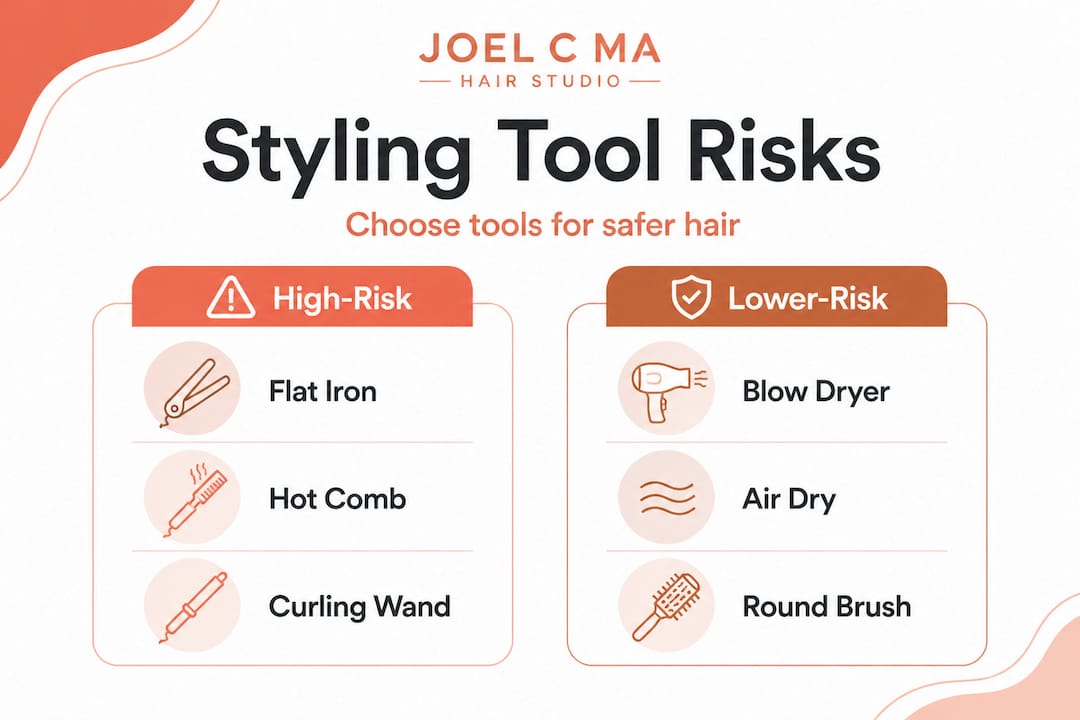
Not all styling tools carry the same level of danger, but the most commonly used ones are also the most commonly misused. Heat-styling tools like blow dryers, flat irons, curling irons, wands, and hot combs can all damage hair, especially when used at high temperatures or on wet hair, leading to dryness, brittleness, and breakage. Understanding why this happens makes it easier to make smarter choices.
Hair is made largely of a protein called keratin, arranged in overlapping scales along the strand. Heat disrupts the hydrogen bonds that keep those scales lying flat and aligned. When temperatures climb above 300°F, even a single pass from a flat iron can alter the hair’s internal structure, causing those scales to lift, crack, and eventually break off. The visible result is frizz at first, then split ends, then serious breakage over time.
Here is how common tools compare in terms of risk level:
| Tool | Typical temperature range | Key risk factor | Relative damage risk |
|---|---|---|---|
| Hot comb | 300°F to 500°F | Direct scalp and strand contact | Very high |
| Flat iron | 250°F to 450°F | Extended contact time | High |
| Curling wand | 250°F to 430°F | Wrapping hair tightly | High |
| Blow dryer | 120°F to 200°F | Moisture loss + repetition | Moderate |
| Diffuser attachment | 80°F to 140°F | Minimal when used correctly | Low |
One of the least discussed risks is styling on damp or wet hair. When heat is applied to hair that still holds moisture, the water inside each strand can actually boil. This creates tiny bubbles inside the hair shaft, a condition some professionals call “bubble hair.” Those bubbles weaken the fiber from within, making the strand dramatically more prone to snapping. For anyone who has ever quickly run a flat iron through almost-dry hair after a shower, this explains a lot.
Key risks to keep on your radar:
- Using flat irons above 380°F on fine or color-treated hair
- Curling with a wand without a heat protectant layer
- Repeat passes over the same section within seconds
- Using a blow dryer held stationary instead of moving it constantly
- Skipping a cool-down period between styling sessions
Our protecting hair from heat guide goes deeper on tool settings for specific hair types, and our breakdown of how to reduce hair breakage gives you a practical starting framework.
Preparing your hair: Essential steps before styling
With the most risky tools identified, let us move to preparation: what should you do before styling to maximize hair protection?
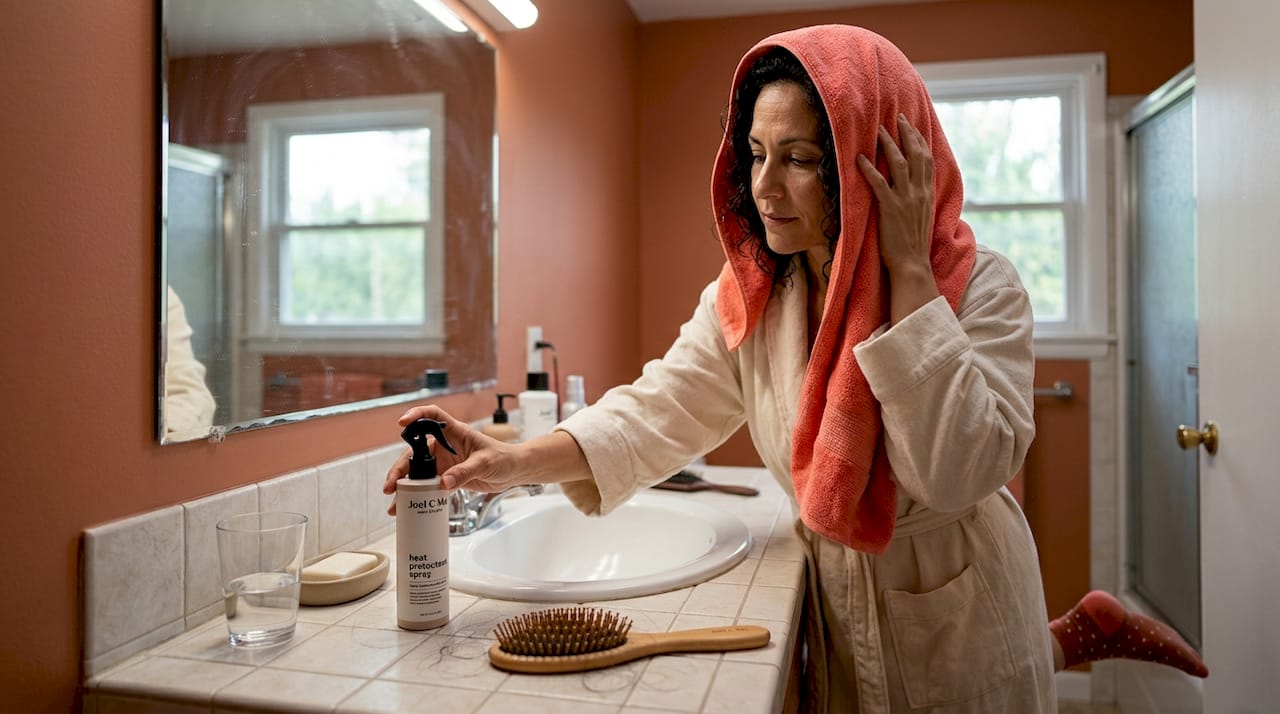
This is where most routines fall short. People invest in premium tools and quality products, then skip the steps that would actually make those tools safe. Preparation is not a bonus step. It is the foundation.
One critical point that so many clients overlook: styling hair before it is fully dry significantly increases risk. Hair is structurally weaker when wet, and repeated swelling from slow drying or applying heat before the strand is ready compounds damage over time. Even 10% residual moisture in the strand changes how heat interacts with the fiber.
Here are the three most important preparation steps, in order:
-
Dry gently with a microfiber towel or soft cotton cloth. Standard terry cloth towels create friction against the cuticle (the outer layer of the hair shaft), which causes micro-tears even before any tool is involved. Pat, do not rub.
-
Apply a quality heat protectant to every section. Heat protectants work by forming a barrier on the strand that slows heat transfer. This does not make high-heat styling safe, but it meaningfully reduces the damage at moderate temperatures. Spray or cream protectants should be distributed evenly through towel-dried hair, not applied in one spot.
-
Consider an oil pre-wash routine once or twice a week. Coconut oil and similar penetrating oils applied 30 minutes before shampooing can shore up the strand’s internal protein bonds, making it more resilient to the heat it will encounter during styling. This is not a quick fix but a preventative practice with measurable long-term benefits.
| Preparation step | When to do it | Why it matters |
|---|---|---|
| Microfiber dry | Immediately after washing | Reduces cuticle friction |
| Heat protectant | Before any heat tool | Creates a thermal barrier |
| Pre-wash oil treatment | Night before or 30+ min pre-wash | Strengthens internal hair bonds |
| Detangle gently when wet | Before heat styling | Prevents mechanical breakage |
Pro Tip: If you are short on time, prioritize the heat protectant over any other prep step. It is the single easiest intervention and the one with the most immediate impact on damage prevention.
Our detailed breakdown on how to prevent hair damage covers product recommendations and technique details, and if you are already dealing with compromised strands, our repair damaged hair guide is a strong next resource.
Step-by-step: Safe styling routines luxury clients trust
Once your hair is prepared, here is the step-by-step routine to ensure every style is safe and damage-free.
Getting the order of your routine right matters just as much as the tools or products you choose. Many clients use great products but apply them in the wrong sequence, which cancels out their effectiveness entirely.
-
Wash and condition with products suited to your hair type. Leave-in conditioners are especially valuable for those who style frequently, as they maintain internal moisture through the heat process.
-
Blot dry, do not rub. As described in the preparation section, gentleness at this stage sets the tone for everything that follows.
-
Apply your heat protectant while hair is still slightly damp but not wet. This is the window where the product absorbs most effectively.
-
Blow dry to fully dry, using a nozzle attachment on medium heat. Do not hold the dryer stationary. Keep it moving in a downward direction along the strand to encourage the cuticle to lie flat.
-
Style with your flat iron or wand at the lowest effective temperature. For fine or color-treated hair, this is typically no higher than 300°F to 330°F. Thick, coarse hair may need up to 380°F, but rarely more.
-
Finish with a light serum or oil to seal the cuticle and add shine. This also gives you a visual indicator of healthy styling: smooth, reflective strands signal closed cuticles.
One topic worth addressing directly is the air-drying debate. Proper technique and timing matter more than whether you use a tool at all. Leaving hair wet for extended periods can actually cause structural swelling and mechanical damage from friction against pillowcases or clothing. The idea that air-drying is always the “healthy” choice is an oversimplification that can lead to its own form of damage.
Warning: Making multiple high-temperature passes over the same section is one of the fastest ways to destroy hair integrity. If your style is not holding after two passes, the issue is usually the wrong product or wrong technique, not insufficient heat.
Pro Tip: Watch for steam rising from the strand when you apply a flat iron. A small amount on damp hair is normal, but persistent steam on what you believe to be dry hair means moisture is still present and you are cooking the strand from the inside.
Our guides on how to reduce breakage and how to prevent split ends offer additional detail on protecting specific areas of the strand that are most vulnerable during styling.
Troubleshooting: Recognizing and reversing early hair damage
Even with careful routines, damage can happen. Here is what to watch for and how to respond before things get worse.
Early intervention is everything. Most clients wait until they see significant breakage or split ends before changing their routine, but damage begins at the microscopic level and becomes visible only after it has already progressed. Catching it early is a real advantage.
Research into hair fiber assessment confirms that hair tips show higher variability and vulnerability to damage than mid-shaft sections, and that pre-wash oil routines can produce measurable reductions in damage metrics compared to untreated hair. This is not a cosmetic fix. It is a structural one.
Warning signs of early heat and mechanical damage:
- Ends feel rough or straw-like to the touch, even after conditioning
- Hair dries faster than it used to (a sign of damaged, porous strands)
- Increased frizz that was not present before
- Snapping sound or sensation when combing through the mid-shaft
- Color fading faster than your colorist expects
- More tangles than usual, particularly at the tips
Checklist for reversing early damage:
- Switch to a sulfate-free shampoo immediately to reduce further stripping
- Start a weekly oil pre-wash treatment using coconut or argan oil
- Lower your heat tool temperature by at least 30°F
- Add a bond-building treatment, such as Olaplex or a comparable product, to your monthly routine
- Trim the ends: no amount of treatment restores structurally compromised tips
Pro Tip: Run a single strand gently between your fingers from root to tip after washing. Healthy hair feels smooth in both directions. If you feel a rough, raised texture when you move toward the roots, your cuticles are lifted and your hair is in a vulnerable state.
Explore our resources on how to repair damaged hair and the most common reasons for hair breakage to develop a recovery plan tailored to your specific situation.
Our luxury perspective: Redefining safe hair styling in La Jolla
Having covered troubleshooting and safe practices, let us share a perspective that goes beyond the usual advice.
After more than 25 years working with clients in La Jolla, we have noticed a pattern that rarely gets discussed in mainstream hair care content: the clients who obsess over tool brands and price points are often the ones whose hair suffers most. Meanwhile, the clients with the healthiest, most vibrant hair are usually not the ones with the most expensive blow dryers. They are the ones who are consistent, methodical, and honest about their habits.
Conventional wisdom says to avoid heat tools as much as possible. We would reframe that. The real issue is not heat. It is unmanaged heat, used without preparation, at the wrong temperature, on the wrong hair condition, at the wrong time. Our view is that a well-executed blow dry on fully prepped, protected hair does less cumulative damage than three days of air-drying that leaves hair wet during sleep or packed under a gym bag.
What actually protects luxury hair is a commitment to technique and timing, not a blanket rule about avoiding tools. La Jolla’s climate, the sun exposure, the ocean air, the active lifestyles here all factor into how hair behaves and degrades. That context matters. A routine built for someone in a humid inland city does not automatically serve a client spending time at the beach or on the water.
Our expert heat protection guide reflects this localized, nuanced approach. True luxury hair care is thoughtful and personal. It is not about following trends or brand marketing. It is about understanding your specific hair, your environment, and building a routine that serves both.
Experience personalized luxury hair care at Joel C Ma Hair Studio
After mastering the basics and expert guidance, here is where luxury clients can elevate their hair care even further.
Reading the right guidance is a strong start, but applying it to your specific hair type, color history, and lifestyle is where the real transformation happens. At Joel C Ma Hair Studio in La Jolla, our team of skilled hair artists brings over 25 years of experience to every consultation and every chair.
We specialize in customized hair styling that accounts for your actual hair structure, your daily routine, and the results you want to protect. Our personalized styling consultations go beyond a typical appointment by helping you understand exactly which tools and techniques suit your hair at this moment. And for clients who want to take precision-level care home with them, our expert hair styling tips provide a professional framework to keep results looking their best between visits. Book your consultation with us today and let your hair reflect the care it deserves.
Frequently asked questions
What are the most damaging styling tools for luxury hair?
Blow dryers, flat irons, curling wands, and hot combs used at high temperatures are the most damaging, causing dryness, brittleness, and breakage. The risk increases significantly when these tools are used on wet or damp hair.
Is air-drying always safer than using styling tools?
Air-drying is not automatically the safest option, as leaving hair wet too long causes its own structural stress and friction damage. Proper technique and timing matter more than whether a tool is used at all.
How can I avoid heat damage when styling my hair?
Always ensure hair is fully dry and apply a heat protectant before any styling tool touches your strands, then use the lowest effective temperature setting for your hair type.
Are there products or routines that reduce hair damage more effectively?
Pre-wash oil routines using penetrating oils like coconut oil have shown measurable reductions in damage metrics versus hair that receives no pre-treatment, making them one of the most effective preventative habits.
What warning signs show my hair is being damaged by styling tools?
Watch for rough, straw-like texture at the ends, faster drying than usual, and increased snapping during combing, since hair tips show the highest vulnerability to cumulative heat and mechanical damage.
Recommended
- Protecting Hair From Heat: The Essential Guide – Joel C Ma Hair Studio
- Essential sun protection for vibrant, healthy hair – Joel C Ma Hair Studio
- How to Prevent Hair Damage for Luxurious, Healthy Locks – Joel C Ma Hair Studio
- How to Protect Hair from Sun: Luxurious Salon Tips – Joel C Ma Hair Studio
- Undgå hårplejeforbrydelser: Din guide til sunde krøller