
Scalp exfoliation: Real benefits for healthier hair
TL;DR:
- Scalp exfoliation effectively removes buildup of dead skin cells, excess oil, and styling residue, which regular washing cannot fully clear. It improves scalp health by unblocking follicles, reducing dandruff and itchiness, and enhancing product absorption for healthier hair growth. Proper, personalized exfoliation routines are essential, especially when living in humid coastal environments, to maintain scalp vitality and promote strong, shiny hair.
Most people trust that a good shampoo does everything their scalp needs. But if you live near the coast, you already know that sea salt, humidity, and the styling products required to manage both can create a layer of buildup that regular washing simply can’t clear. That residue sits at the scalp level, clogging follicles and dulling hair before it even grows past the root. Scalp exfoliation directly addresses what shampoo leaves behind, and understanding how it works, who it helps most, and how to do it safely can genuinely change the condition of your hair.
Table of Contents
- Why scalp exfoliation matters: More than just clean hair
- Core benefits of scalp exfoliation: Healthier scalp, better hair
- Is scalp exfoliation for everyone? Myths, risks, and expert advice
- How to exfoliate your scalp: Step-by-step and best practices
- What most guides miss: Personalization is the secret to scalp vitality
- Experience expert scalp care with our personalized salon treatments
- Frequently asked questions
Key Takeaways
| Point | Details |
|---|---|
| Removes buildup | Scalp exfoliation effectively clears away dead skin, oil, and product residue for a cleaner scalp. |
| Reduces flaking and itch | Regular exfoliation helps decrease dandruff and itchiness—especially for buildup-prone scalps. |
| Personalized approach is best | Tailored exfoliation routines deliver the best results for your unique scalp and hair needs. |
| Not for everyone | Those with sensitive or compromised scalps should consult an expert before exfoliating. |
| Boosts hair vitality | A healthy scalp builds the foundation for stronger, shinier hair. |
Why scalp exfoliation matters: More than just clean hair
Shampooing is excellent at clearing sweat, loose dirt, and surface oil. What it doesn’t fully address is the compacted layer of dead skin cells, excess sebum (the natural oil your scalp produces), and styling product residue that accumulates over time. In coastal areas like La Jolla and the broader San Diego coastline, salt air and high humidity accelerate this buildup, creating a scalp environment that even daily washing struggles to fully correct.
Scalp exfoliation works by physically or chemically loosening and removing this compacted layer. As noted by dermatologists, scalp exfoliation removes dead skin cells, excess oil, product buildup, and debris, unclogging hair follicles to promote a healthier environment for hair growth. This is why understanding the benefits of scalp treatments goes well beyond surface-level hygiene.
A clean scalp isn’t just about aesthetics. The follicle environment directly influences how your hair grows, how strong the strand is at the root, and how well your scalp holds moisture.
There are two main methods of scalp exfoliation. Physical exfoliation uses fine particles, brushes, or textured tools to manually loosen buildup. Chemical exfoliation uses acids or enzymes to dissolve dead skin cells without scrubbing. Here’s a quick comparison:
| Feature | Physical exfoliation | Chemical exfoliation |
|---|---|---|
| How it works | Mechanical scrubbing with particles or tools | Dissolves dead cells using acids or enzymes |
| Best for | General buildup, oily scalps | Flaky skin, dandruff, deeper follicle care |
| Risk of irritation | Moderate if too abrasive | Low to moderate depending on acid strength |
| Frequency | Once per week maximum | Once per week or as directed |
| Common ingredients | Sugar, salt, charcoal, silica | Salicylic acid, glycolic acid, lactic acid |
Healthy scalp barrier research confirms that a functioning scalp barrier depends on ceramide levels and a balanced microbiome, both of which get disrupted when buildup goes unaddressed. Regular scalp analysis for hair health can reveal what type of buildup you’re dealing with and which exfoliation method suits your scalp best.
The common misconception is that washing more frequently solves buildup problems. It doesn’t. Over-washing can actually strip the scalp of beneficial oils, triggering even more sebum production and worsening the cycle. Targeted exfoliation, done correctly and at the right frequency, is far more effective than daily shampooing for addressing this specific issue.
Core benefits of scalp exfoliation: Healthier scalp, better hair
Understanding the basics sets the stage. Now let’s get into what you actually gain from making scalp exfoliation part of your routine, and who sees the biggest improvement.
The most immediately noticeable benefit for many people is a reduction in flaking, itchiness, and dandruff. These symptoms often stem from a disrupted scalp barrier, excess dead cell accumulation, or fungal overgrowth. Exfoliation reduces dandruff, flaking, and itchiness and can be beneficial for conditions like psoriasis or eczema when done under medical guidance. For anyone dealing with persistent flaking, learning how to reduce dandruff naturally is a practical starting point before moving to more intensive treatments.
Clinical studies support the power of targeted scalp care. Research on scalp barrier function and microbiome shows that dandruff scalps display disrupted barriers, and that keratolytic ingredients (those that soften and loosen dead skin) in anti-dandruff formulas reduce visible flakes by 69 to 78 percent. That’s a significant shift, not a marginal one.
Here are the core benefits you can realistically expect from regular, consistent scalp exfoliation:
- Reduced flaking and itchiness through removal of dead skin accumulation and rebalancing of the scalp surface.
- Clearer follicle openings that allow hair strands to emerge without obstruction or thinning at the base.
- Better product absorption because serums, masks, and treatments penetrate more effectively when the surface layer isn’t blocked.
- Improved scalp oil balance as regular exfoliation prevents the sebum buildup that signals the scalp to overproduce oil.
- Shinier, more manageable hair because hair that emerges from a clean, healthy follicle has a stronger cuticle structure.
- A more balanced scalp microbiome which supports long-term scalp resilience and reduces sensitivity.
| Benefit | Who notices it most | Timeline |
|---|---|---|
| Flake reduction | Oily, dandruff-prone scalps | 2 to 4 weeks |
| Less itchiness | Sensitive, product-heavy scalps | 1 to 2 weeks |
| Better hair shine | All hair types | 3 to 6 weeks |
| Improved product absorption | Color-treated or chemically processed hair | Immediate |
| Balanced oil production | Oily scalp types | 4 to 6 weeks |
Pro Tip: Exfoliation works best for people whose scalps tend toward buildup, oiliness, or chronic flaking. If your scalp is already relatively balanced and flake-free, a light monthly exfoliation may be all you need. Consistency matters more than intensity.
For more foundational guidance on building a scalp care routine, the tips for healthy scalp resource offers practical steps you can take between professional treatments.
Is scalp exfoliation for everyone? Myths, risks, and expert advice
The benefits above are real, but they come with an important qualifier: scalp exfoliation isn’t one-size-fits-all, and doing it wrong can cause more harm than good. This section addresses the nuances, because your scalp deserves better than a generic routine.
Among professionals, there’s genuine debate about whether scalp exfoliation is universally necessary. Some experts consider it essential for buildup-prone scalps but unnecessary or even risky for scalps that are already healthy and well-maintained. The key word is “targeted.” People who use heavy styling products, live in environments with high salt and pollution exposure, or have naturally oily scalps tend to benefit the most. Those with a clean bill of scalp health may not need to add exfoliation at all.
It’s also worth noting that there are no large randomized controlled trials (the gold standard for clinical research) directly evaluating standalone scalp exfoliation efficacy. The benefits are largely extrapolated from broader skin exfoliation research and dermatology principles. That doesn’t make them invalid. It just means your personal response to exfoliation is the best indicator of whether it’s working for you.
Who benefits most from scalp exfoliation:
- People with oily or buildup-prone scalps
- Anyone who uses dry shampoo, hairspray, or heavy styling products regularly
- Those experiencing chronic dandruff or mild scalp flaking
- Individuals with fine hair who notice their scalp becomes greasy quickly
- People living in coastal or high-humidity environments where salt and moisture accelerate buildup
Who should avoid or limit scalp exfoliation:
- Anyone with open sores, cuts, or active scalp infections
- People with highly sensitive skin or reactive scalp conditions
- Individuals currently experiencing eczema or psoriasis flares (consult a dermatologist first)
- Anyone who has recently had chemical treatments that irritated the scalp
- Those who already wash daily with abrasive formulas
The risk of over-exfoliation is real. Scrubbing too hard, using products with harsh particles, or exfoliating more than twice a week can strip the scalp’s natural moisture barrier, cause micro-tears, trigger inflammation, or worsen the very conditions you’re trying to address. Pair your exfoliation practice with good scalp massage benefits to promote circulation without irritation.
Pro Tip: Start with once a week using a mild formula and give yourself four to six weeks before assessing results. If you have any existing scalp condition, consult a dermatologist before starting. Less is genuinely more when it comes to scalp exfoliation.
How to exfoliate your scalp: Step-by-step and best practices
If you’ve decided that scalp exfoliation is right for your hair type and lifestyle, here’s how to do it correctly. A structured approach avoids the pitfalls that turn a beneficial practice into a damaging one.
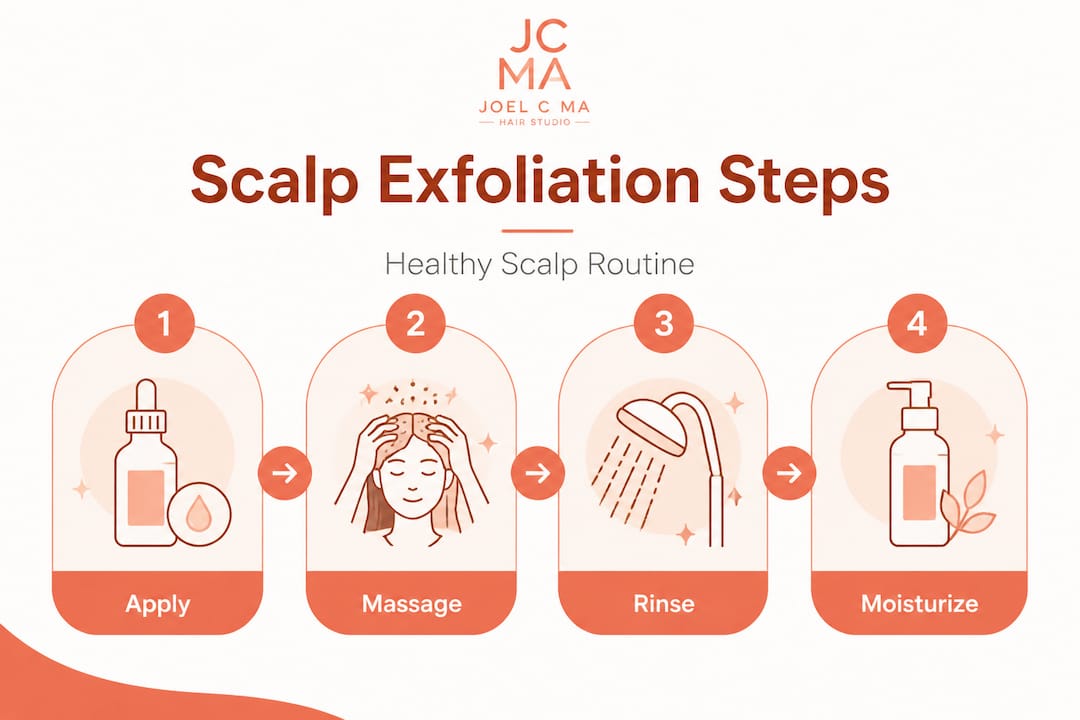
Step-by-step guide to safe scalp exfoliation:
- Start with damp, not dripping wet, hair. Wet the hair and scalp thoroughly in the shower, then gently squeeze out excess water. This helps the exfoliant spread evenly without sliding off.
- Apply the exfoliant directly to the scalp, not the lengths of your hair. Use a small amount and section your hair to reach the scalp in multiple zones.
- Massage gently with your fingertips, not your nails. Use slow, circular motions across the entire scalp, spending about 30 to 60 seconds per section. Don’t press hard.
- Let it sit for two to three minutes if you’re using a chemical exfoliant like salicylic acid. Physical scrubs can be rinsed immediately after massaging.
- Rinse thoroughly until all product residue is gone. Follow with a hydrating conditioner applied only to the mid-lengths and ends, not the scalp.
- Avoid heat styling immediately after exfoliating if your scalp feels any sensitivity. Give it a few hours before using a blow dryer on high heat.
For chemical exfoliants, salicylic acid is recommended by the National Psoriasis Foundation for softening scales and clearing follicle blockages. It’s oil-soluble, which means it penetrates through sebum better than water-based ingredients, making it particularly effective for oily scalp types.
If you’re exploring product options, reviewing a curated list of top scalp exfoliants can help you find formulas matched to specific scalp conditions. Look for gentle physical exfoliants like finely milled sugar or bamboo charcoal, or chemical options containing low concentrations of glycolic or salicylic acid.
Warning signs that you’re over-exfoliating:
- Scalp feels tight or raw after washing
- Increased redness or visible inflammation
- New patches of flaking that weren’t there before
- Hair feels brittle or breaks more easily near the root
- Scalp produces more oil than before you started exfoliating
Pairing exfoliation with a gentle sulfate-free shampoo makes a real difference. Sulfate-free formulas clean without stripping, which means your scalp retains more of its natural moisture barrier between exfoliation sessions.
Pro Tip: Avoid combining exfoliation day with color treatments or chemical services. Give freshly exfoliated skin at least 48 hours before applying dye or relaxers to reduce sensitivity and potential irritation.
What most guides miss: Personalization is the secret to scalp vitality
Here’s the honest truth that most scalp care content glosses over: the difference between a scalp routine that actually transforms your hair and one that just feels like effort is personalization. Generic advice about “exfoliate once a week with salicylic acid” can work for some people and completely backfire for others.
Scalp biology varies enormously. Some people naturally produce three times the sebum of others. Some have a dense, tightly packed follicle structure that traps product differently than a wider follicle pattern. Add in the specific conditions of coastal California living, including constant salt air exposure, high UV intensity, and the reliance on hold-strong styling products to manage humidity-affected hair, and you have a scenario where a routine built on general advice is almost guaranteed to miss the mark.
Living on the California coast means your scalp faces a daily combination of salt water residue, mineral-heavy tap water, and UV exposure that accelerates the breakdown of the scalp’s protective lipid layer. That context changes everything about what your scalp needs and how often. Someone using the same coastal routine as an inland client will almost certainly see different results.
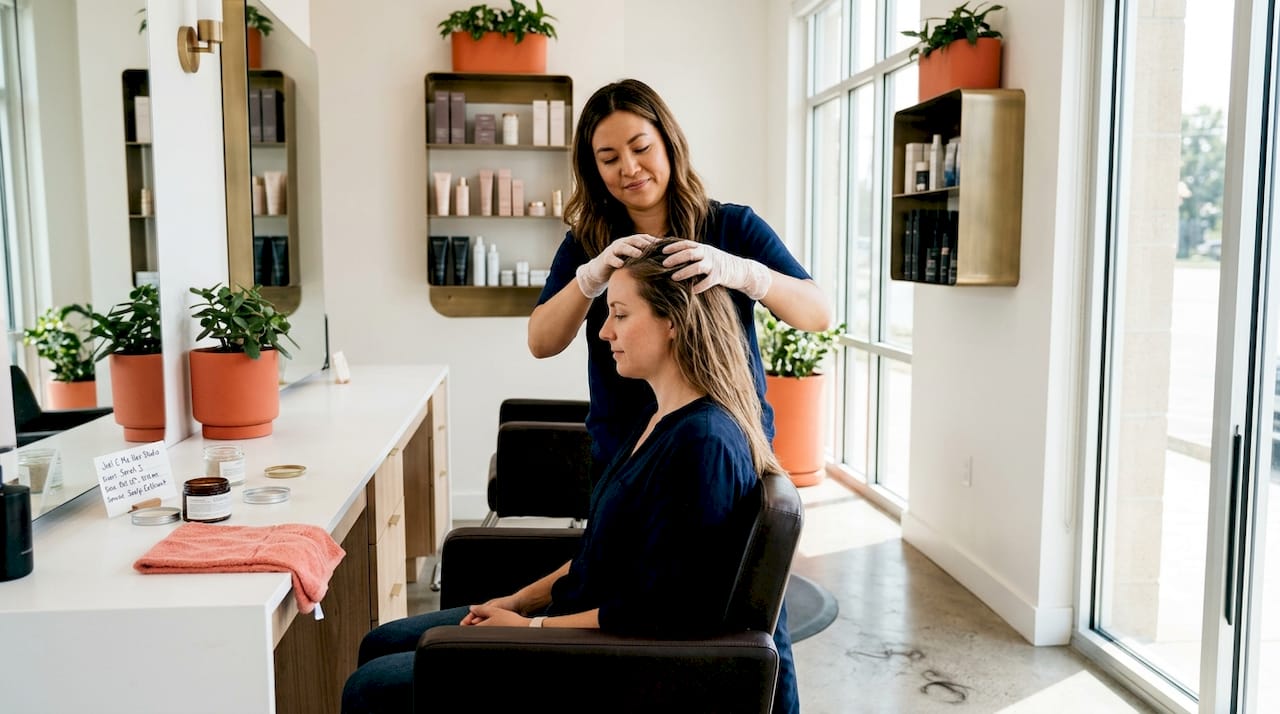
This is exactly why professional scalp analysis and personalized hair consultations change the game. When an experienced stylist can visually assess your scalp, review your product use, and understand your environment, they can recommend an exfoliation frequency and product type that actually fits your biology. That’s not a luxury, it’s efficiency. It means fewer wasted products, fewer bad reactions, and faster results.
The best scalp care routines aren’t complicated. They’re just specific. One client may need a monthly professional exfoliation treatment plus a weekly gentle home routine. Another may need nothing more than switching to a clarifying shampoo every 10 days. The answer is always in the details.
Experience expert scalp care with our personalized salon treatments
Scalp exfoliation is a powerful tool when it’s matched to your specific scalp type, lifestyle, and environment. For coastal California clients who are serious about hair health, a professional starting point makes the entire process more effective and far less guesswork.
At Joel C Ma Hair Studio in La Jolla, our approach to scalp health starts with understanding your individual scalp’s needs before recommending anything. Our team offers in-depth consultations that assess buildup patterns, scalp sensitivity, and hair condition so that every scalp treatment service we provide is genuinely tailored to you. From there, we can build a home routine and in-salon schedule that works with your hair’s natural biology, not against it. Whether you’re looking for expert haircuts that work with your hair’s current health or a full personalized styling consultation, our studio is designed to deliver results that last.
Frequently asked questions
How often should you exfoliate your scalp?
Most people benefit from scalp exfoliation once per week, though oily or product-heavy scalps may benefit from twice weekly, while dry or sensitive scalps should limit it to once or twice per month.
Can scalp exfoliation help with hair growth?
Exfoliation supports a cleaner follicle environment, which can allow hair to grow more freely, but there is no clinical proof of faster growth directly caused by scalp exfoliation alone.
What ingredients should I look for in a scalp exfoliant?
Look for finely milled physical exfoliants like sugar or charcoal, or chemical options such as salicylic acid for scales and glycolic acid for general cell turnover.
Are there risks to scalp exfoliation?
Yes, over-exfoliating or using harsh formulas can damage the scalp barrier, and exfoliation is risky for sensitive scalps or those with active scalp conditions without professional guidance.
How does scalp exfoliation compare to regular shampooing?
Shampooing removes surface dirt and loose oil, while exfoliation targets buildup that clogs follicles at a deeper level that shampoo alone cannot reach.
Recommended
- Scalp Massage Benefits: Boosting Hair Health Naturally – Joel C Ma Hair Studio
- Discover the benefits of scalp treatments for healthier hair – Joel C Ma Hair Studio
- Benefits of Scalp Massage for Hair Health and Stress – Joel C Ma Hair Studio
- Tips för bättre hår: Kosttillskott och matvanor för starkare hår