
How to reduce dandruff men: 2026 scalp care guide
Dandruff affects nearly 50% of men at some point, leaving visible flakes on shoulders and an itchy, irritated scalp. If you’re a man in La Jolla striving for a polished appearance, those white specks undermine your grooming efforts. This isn’t just about hygiene. Dandruff stems from a fungal overgrowth requiring targeted treatment. This guide reveals practical, science-backed steps to reduce flakes effectively within weeks and restore your confidence.
Table of Contents
- Understanding Dandruff And Its Causes In Men
- Prerequisites: What You Need To Start Your Dandruff Treatment
- Step 1: Adjust Hair Washing Frequency And Water Temperature
- Step 2: Use Antifungal Shampoos For Targeted Treatment
- Step 3: Incorporate Scalp Exfoliation And Moisturization
- Lifestyle Tips To Control Dandruff
- Warnings And Common Mistakes To Avoid
- Expected Results And Outcomes
- Explore Expert Grooming Services To Complement Your Dandruff Treatment
- How Often Should I Wash My Hair To Reduce Dandruff?
- What Is The Best Way To Use Antifungal Shampoos For Dandruff?
- Can Lifestyle Changes Really Impact Dandruff Severity?
- How Long Does It Take To See Results From Dandruff Treatment?
Key takeaways
| Point | Details |
|---|---|
| Fungal root cause | Malassezia yeast overgrowth drives dandruff, requiring antifungal treatment. |
| Washing frequency matters | Shampoo 2-3 times weekly with lukewarm water to balance oil and control yeast. |
| Medicated shampoos work | Ketoconazole or zinc pyrithione used twice weekly reduces flakes significantly. |
| Exfoliate and moisturize | Weekly scalp scrub with salicylic acid removes buildup; conditioning prevents dryness. |
| Results take time | Consistent treatment shows noticeable improvement in 2-3 weeks with ongoing maintenance. |
Understanding dandruff and its causes in men
Malassezia yeast overgrowth is the primary culprit behind dandruff. This fungus lives naturally on your scalp but feeds on sebum, your skin’s natural oil. When it multiplies excessively, it speeds up skin cell turnover, causing clumps of dead cells to shed as visible flakes.
Two main types affect men. Oily dandruff, also called seborrheic dermatitis, produces yellowish, greasy flakes with redness and inflammation. Dry dandruff creates smaller white flakes and a tight, itchy scalp. Identifying your type helps target treatment effectively.
Common triggers worsen the condition:
- Chronic stress elevates cortisol, increasing scalp inflammation
- Seasonal weather changes dry skin or boost oil production
- Overproduction or insufficient sebum disrupts the scalp’s natural balance
- Heavy styling products like waxes and gels trap oils and irritate skin
Dandruff impacts more than physical comfort. Flakes on dark clothing during meetings or social events lower confidence and distract from your polished appearance. Men in professional settings face added pressure to maintain a clean, well-groomed image. Understanding these causes empowers you to take control with targeted solutions rather than guessing at remedies.
Prerequisites: what you need to start your dandruff treatment
Before diving into treatment, assess your scalp and gather necessary tools. Start by identifying whether you have oily dandruff with yellow, greasy flakes and redness, or dry dandruff with white flakes and tightness. Check if flakes worsen after washing or appear between washes. This determines which products work best.
Acquire medicated antifungal shampoos containing active ingredients proven to kill Malassezia yeast. Look for ketoconazole 1%, zinc pyrithione, or selenium sulfide on labels. These target the fungal root cause rather than just masking symptoms. Drugstores and online retailers stock multiple brands.
Gather supporting scalp care products:
- Exfoliating scalp scrub with 3% salicylic acid to remove dead cells and buildup
- Moisturizing conditioner or natural oils like jojoba or argan to rehydrate scalp
- Soft-bristle brush for gentle scalp stimulation without scratching
Understand your natural hair and scalp type. Oily scalps may tolerate more frequent antifungal use, while dry scalps need extra moisturization. Our men’s grooming basics guide helps you assess your hair type and adjust care routines accordingly.
| Product Type | Active Ingredient | Best For |
|---|---|---|
| Antifungal shampoo | Ketoconazole 1% | Moderate to severe dandruff |
| Antifungal shampoo | Zinc pyrithione | Ongoing control, sensitive scalps |
| Scalp scrub | Salicylic acid 3% | Product buildup, oily dandruff |
| Conditioner | Natural oils | Dry scalp, post-treatment hydration |
Set realistic expectations. Treatment requires consistency over weeks, not overnight miracles. Having the right products and knowledge prepares you for sustainable success.
Step 1: adjust hair washing frequency and water temperature
Overwashing strips your scalp of natural oils, paradoxically worsening dandruff. These oils regulate Malassezia growth and maintain skin barrier integrity. Limit shampooing to 2-3 times per week to preserve this balance while removing dirt and excess oil.
Use lukewarm water instead of hot. High temperatures dry out your scalp, triggering more flaking and irritation. Lukewarm water cleanses effectively without damaging your skin’s protective layer. Rinse thoroughly to remove all shampoo residue, which can build up and worsen symptoms.
When shampooing, massage gently with fingertips in circular motions. Avoid scratching with nails, which inflames the scalp and creates micro-abrasions that Malassezia exploits. Spend 60-90 seconds massaging to distribute product evenly and stimulate circulation.
Pro Tip: Schedule your shampoo days consistently, like Monday, Wednesday, and Friday. This routine prevents the temptation to overwash on busy days or skip treatments when flakes seem better.
Maintaining natural oils is critical. Your sebum production adjusts to washing frequency over time. If you currently wash daily, gradually reduce to every other day for a week, then to three times weekly. Your scalp will adapt, producing less excess oil as it rebalances.
Our men’s grooming basics resource explains how to recognize signs your scalp is adjusting properly versus needing more moisture. Most men notice less greasiness between washes after two weeks of consistent frequency.
Step 2: use antifungal shampoos for targeted treatment
Medicated antifungal shampoos directly attack the Malassezia yeast causing your dandruff. Unlike regular shampoos that only clean, these contain ingredients proven to kill fungi and reduce flake formation. Selecting the right type and using it correctly determines treatment success.
Ketoconazole 1% shampoo delivers the strongest antifungal effect. Use twice weekly for 4 weeks as initial treatment, then reduce to once weekly for maintenance. Clinical studies show this schedule significantly reduces flakes and itching. Apply to wet hair, massage into scalp, and leave on for at least 60 seconds before rinsing. Contact time matters. The active ingredient needs time to penetrate and work.
Zinc pyrithione shampoo offers gentler ongoing control. It slows fungal growth rather than killing aggressively, making it suitable for sensitive scalps or longer-term use. Many dermatologists recommend it 2-3 times weekly for moderate dandruff. It also reduces inflammation and redness.
Selenium sulfide shampoo is reserved for severe seborrheic dermatitis with thick, greasy scales. It has a cooling effect but stronger odor than other options. Use as directed, typically twice weekly, and rinse extremely well to avoid residue.
| Shampoo Type | Frequency | Contact Time | Best Use Case |
|---|---|---|---|
| Ketoconazole 1% | Twice weekly (4 weeks), then once weekly | 60+ seconds | Moderate to severe dandruff, initial treatment |
| Zinc pyrithione | 2-3 times weekly | 60 seconds | Ongoing control, sensitive scalps |
| Selenium sulfide | Twice weekly | 2-3 minutes | Severe seborrheic dermatitis, thick scales |
Follow this process for optimal results:
- Wet hair thoroughly with lukewarm water
- Apply quarter-sized amount of medicated shampoo to scalp (not just hair)
- Massage gently with fingertips for 60-90 seconds, covering entire scalp
- Leave on for required contact time while you wash your body
- Rinse completely until water runs clear
Pro Tip: Avoid using medicated shampoo more than recommended. Overuse increases dryness risk and can irritate your scalp, slowing progress. If sensitivity occurs, reduce to once weekly and add extra moisturizing.
Our men’s best shampoos guide reviews top antifungal options and explains ingredient differences to help you choose based on your specific dandruff type and scalp sensitivity.
Step 3: incorporate scalp exfoliation and moisturization
Even with medicated shampoos, dead skin cells and product residue accumulate on your scalp. This buildup traps oils, feeds Malassezia, and prevents treatment products from penetrating effectively. Weekly exfoliation clears this debris while moisturization maintains your scalp’s protective barrier.
Use a 3% salicylic acid scalp scrub once weekly before your regular shampoo. Salicylic acid dissolves the bonds between dead skin cells, lifting them away without harsh scrubbing. Apply to damp scalp, massage gently in circular motions for 2-3 minutes, then rinse thoroughly. This removes buildup that regular shampooing misses.
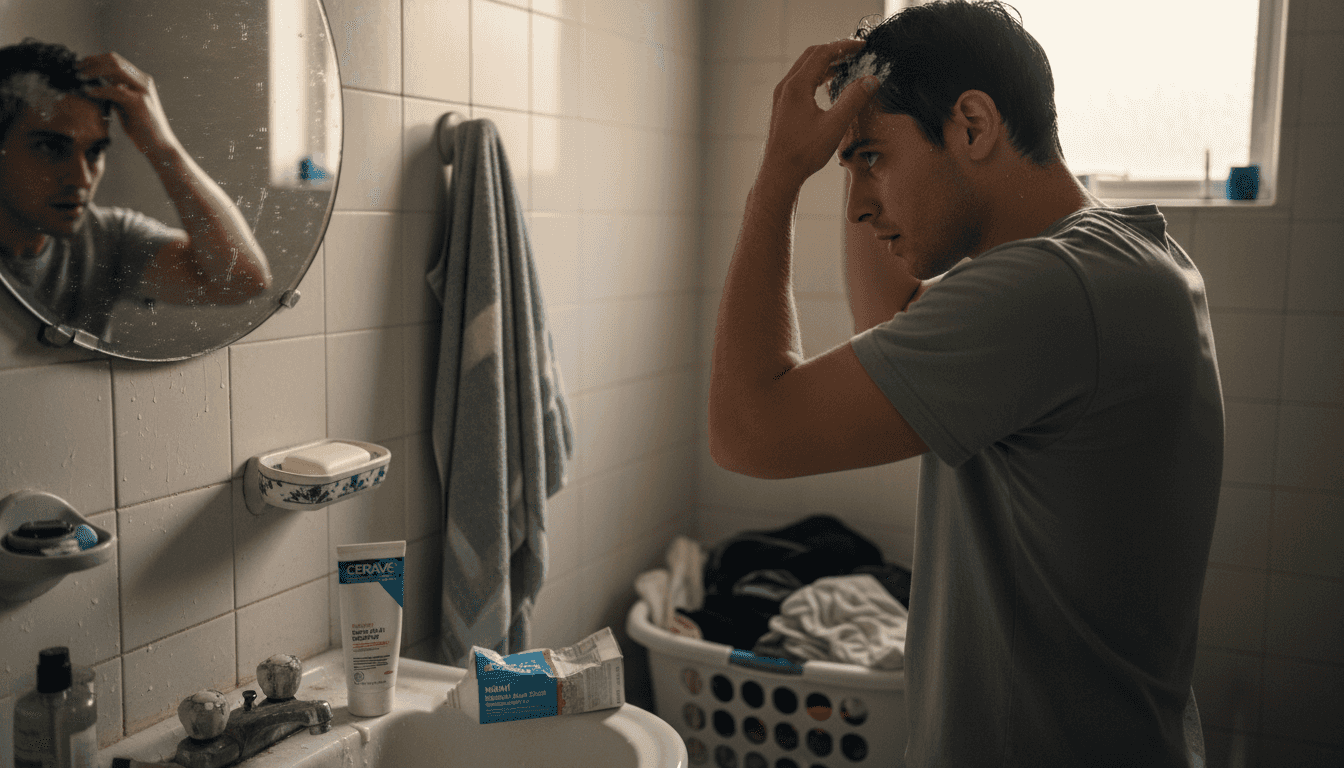
After exfoliating or using medicated shampoo, apply a moisturizing conditioner or natural oil immediately. This step rehydrates your scalp and prevents the tight, dry feeling that worsens flaking. Focus on your scalp rather than just hair lengths. Jojoba oil mimics natural sebum and absorbs quickly without greasiness. Argan oil provides vitamins and antioxidants that soothe inflammation.
Avoid over-exfoliating or using harsh scrubs with large granules. Scrubbing more than once weekly or too aggressively strips protective oils and irritates skin, triggering more flake production. Gentle, consistent exfoliation works better than aggressive occasional treatments.
Key steps for exfoliation and moisturization:
- Exfoliate once weekly with salicylic acid scrub before medicated shampoo
- Massage gently for 2-3 minutes, avoiding scratching motions
- Rinse completely to remove all dead cells and product
- Apply lightweight conditioner or natural oil to scalp while still damp
- Choose fragrance-free, hypoallergenic products to minimize irritation risk
Pro Tip: Choose gentle, fragrance-free moisturizers specifically labeled for sensitive or dandruff-prone scalps. Fragrances and dyes can trigger allergic reactions that worsen itching and flaking.
Our men’s grooming basics guide and men’s shampoo guide explain how to build a complete scalp care routine that integrates exfoliation with daily grooming without overwhelming your schedule.
Lifestyle tips to control dandruff
Treatment products work best when supported by lifestyle adjustments that address dandruff triggers. Small daily changes reduce scalp inflammation, balance oil production, and prevent flare-ups between treatments.
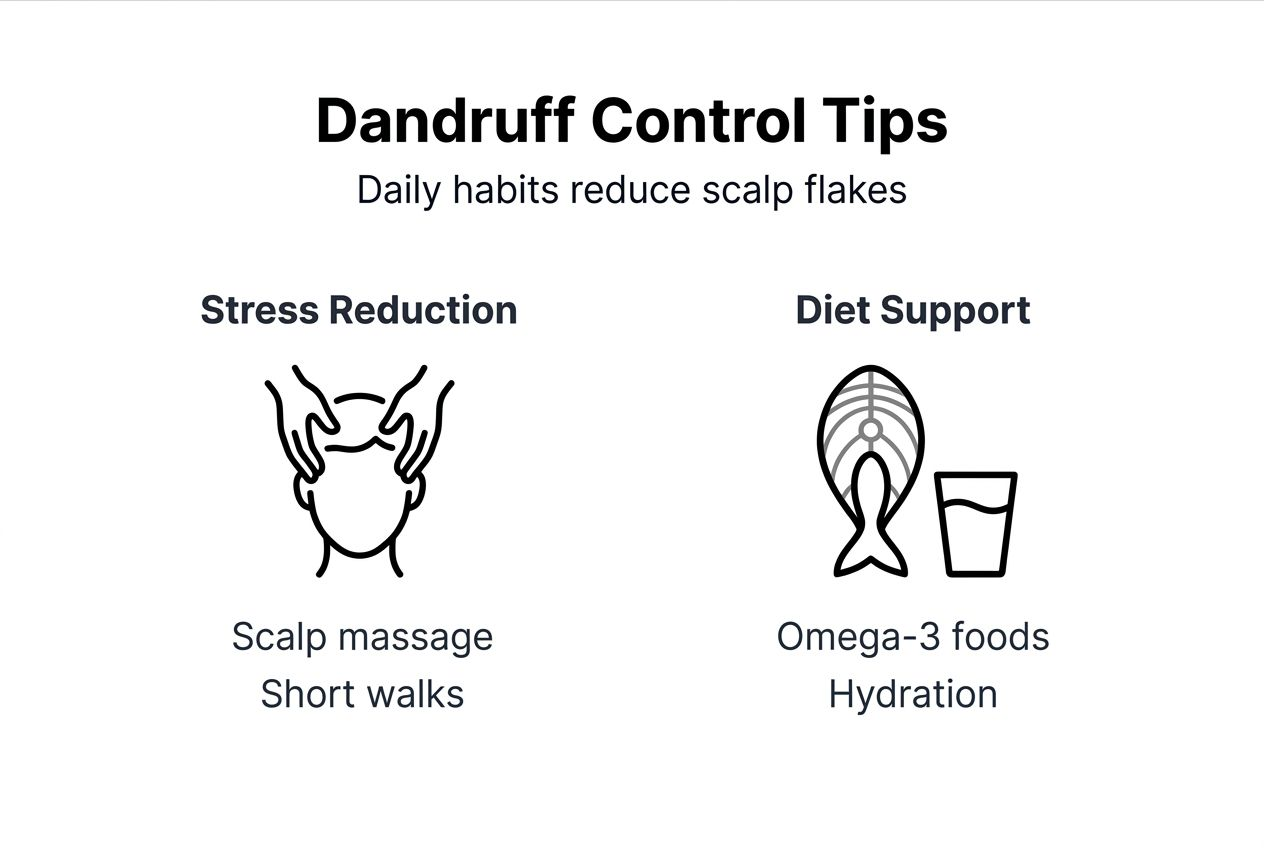
Stress increases scalp inflammation and dandruff severity by elevating cortisol levels. This hormone triggers more oil production and weakens skin barrier function. Adopt stress reduction techniques like regular exercise, adequate sleep, or brief meditation sessions. Even 10 minutes of daily walking improves stress hormones and circulation to your scalp.
Diet impacts scalp health significantly. Omega-3 fatty acids from salmon, walnuts, or flaxseed reduce inflammation throughout your body, including your scalp. Zinc supports immune function and helps control fungal growth. Foods rich in B vitamins and vitamin E promote healthy skin cell turnover. Stay hydrated by drinking water throughout the day to maintain skin moisture from within.
Limit use of heavy styling products. Waxes, clays, and gels trap oils against your scalp, creating an environment where Malassezia thrives. Product buildup also blocks medicated shampoos from reaching your skin. When you do style, choose water-based, non-comedogenic products that rinse out easily. Apply only to hair lengths, avoiding the scalp area.
Other helpful habits:
- Change pillowcases weekly to prevent reinfecting your scalp with oils and dead cells
- Avoid harsh chemical treatments like perms or relaxers during active dandruff treatment
- Get regular scalp massages to improve circulation and reduce tension
- Protect your scalp from extreme weather with hats in winter and sunscreen in summer
Our stress and hair loss guide details how chronic stress affects scalp health beyond dandruff. The scalp massage benefits article explains proper techniques that complement your treatment routine without irritating sensitive skin.
Warnings and common mistakes to avoid
Even with the right products and knowledge, common errors sabotage treatment success. Avoiding these mistakes keeps your progress on track and prevents frustration.
Overwashing remains the most frequent error. Daily shampooing strips natural oils your scalp needs to regulate Malassezia growth. Stick to 2-3 times weekly even if flakes seem worse initially. Your scalp needs time to rebalance oil production after years of overwashing.
Using medicated shampoos more than recommended causes dryness and irritation rather than faster results. Antifungal ingredients are potent. Exceeding labeled frequency damages your skin barrier and can worsen flaking. If your dandruff persists after 4 weeks of proper use, consult a dermatologist rather than increasing shampoo frequency.
Failing to rinse thoroughly leaves shampoo residue that irritates your scalp and promotes new flakes. Spend an extra 30 seconds rinsing until water runs completely clear. Residue buildup mimics dandruff symptoms, making you think treatment isn’t working.
Ignoring your specific dandruff type delays effective treatment. Dry dandruff needs more moisturization and gentler antifungals. Oily dandruff requires stronger exfoliation and oil control. Using products meant for the wrong type wastes time and money.
Other mistakes to avoid:
- Scratching your scalp with fingernails instead of massaging with fingertips
- Skipping maintenance treatment once flakes disappear, allowing recurrence
- Switching products every few days without giving each one time to work
- Using hot water that strips protective oils and dries skin
Proper shampoo use and rinsing are just as important as the products you choose for effective dandruff control.
Consistency matters more than perfection. Missing one treatment day won’t ruin progress, but frequently skipping or changing your routine prevents your scalp from stabilizing.
Expected results and outcomes
Realistic expectations keep you motivated during treatment. Most men notice reduced flakes and less itching within 2-3 weeks of consistent antifungal shampoo use combined with proper washing frequency. Initial improvements include fewer visible flakes on shoulders and decreased scalp tightness.
By week four, scalp health improves noticeably. Redness and inflammation diminish. Flakes become smaller and less frequent. Itching subsides significantly, allowing you to focus on work and social interactions without distraction.
Ongoing maintenance prevents recurrence. After initial 4-week treatment, continue using medicated shampoo once weekly even when symptoms clear completely. Malassezia remains on your scalp permanently. Maintenance treatment keeps populations controlled at healthy levels.
Some men see faster results while others need 6-8 weeks for significant improvement. Severity, consistency, and individual scalp chemistry affect timelines. Patience and adherence to the full routine deliver better outcomes than sporadic intense treatment.
Monitor progress by tracking visible flakes, itching frequency, and scalp appearance weekly. Take photos if helpful for comparison. If no improvement occurs after 4 weeks of consistent treatment, consult a dermatologist. Persistent dandruff may indicate seborrheic dermatitis requiring prescription-strength treatment or underlying conditions like psoriasis.
Explore expert grooming services to complement your dandruff treatment
While home treatment controls dandruff effectively, professional grooming elevates your overall appearance and confidence. Men in La Jolla balancing demanding careers and social lives benefit from expert services that maintain style between treatments.

Joel C Ma Hair Studio specializes in professional haircuts tailored to your hair type and scalp condition. Our stylists understand how scalp health impacts hair appearance and growth. We provide personalized advice integrating dandruff control with daily grooming, ensuring your style looks sharp without aggravating sensitive skin.
Custom hair consultations address your specific concerns, from product recommendations to styling techniques that avoid buildup. With over 25 years of experience, we combine artistic vision with scalp health expertise to deliver results that enhance both appearance and comfort. Our men’s grooming basics guide offers additional tips you can implement between salon visits.
How often should I wash my hair to reduce dandruff?
Wash your hair 2-3 times per week using lukewarm water to maintain natural oils that control Malassezia yeast growth. Daily shampooing strips these protective oils, paradoxically worsening dandruff by drying your scalp and triggering increased flake production.
What is the best way to use antifungal shampoos for dandruff?
Apply ketoconazole or zinc pyrithione shampoo directly to your scalp twice weekly, massaging gently with fingertips. Leave the product on for at least 60 seconds before rinsing thoroughly to allow active ingredients time to penetrate and kill fungi effectively.
Can lifestyle changes really impact dandruff severity?
Yes, reducing stress lowers cortisol levels and decreases scalp inflammation directly linked to dandruff flare-ups. Eating foods rich in omega-3 fatty acids and zinc while limiting heavy styling products improves scalp health significantly and reduces flaking.
How long does it take to see results from dandruff treatment?
Visible improvement typically occurs within 2-3 weeks of consistent medicated shampoo use combined with proper washing frequency and scalp care. Maintenance treatment once weekly after initial improvement is necessary to sustain a flake-free scalp long term.