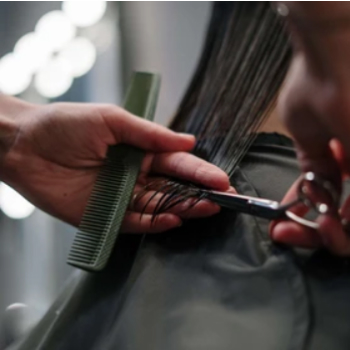

Why haircuts matter for health, style, and confidence

TL;DR:
- Regular haircuts prevent split ends and promote healthy hair growth.
- A well-chosen cut enhances personal style, face framing, and overall confidence.
- Scheduling trims regularly based on hair type maintains shape and reduces damage.
Skipping your next haircut might feel like a smart way to save time or money, but it’s one of the most common mistakes that quietly works against healthy, beautiful hair. Most people assume letting hair grow unchecked is the fastest path to length, or that a trim is purely cosmetic. The truth runs much deeper. Regular, well-chosen haircuts actively protect your hair’s structure, define your personal style, and shape the way you feel walking into a room. Whether you have fine, curly, colored, or chemically treated hair, understanding what a great cut actually does will completely change how you approach your routine.
Table of Contents
- The health benefits of regular haircuts
- Haircuts as a foundation for personalized style
- How professional cuts boost confidence and lifestyle
- Practical guidelines: Choosing your perfect haircut schedule
- Why the right haircut truly transforms your look and mindset
- Discover expert haircuts and personalized styles in La Jolla
- Frequently asked questions
Key Takeaways
| Point | Details |
|---|---|
| Healthier hair | Regular trims prevent split ends and keep your hair looking strong and manageable. |
| Signature style | A tailored haircut creates a foundation for your personal look and confidence. |
| Confidence boost | Fresh, professional cuts make daily styling easier and help you feel your best. |
| Customized schedules | The right trim timetable depends on hair type, goals, and professional advice. |
The health benefits of regular haircuts
A lot of people underestimate how much damage builds up at the ends of hair over time. Split ends are exactly what the name suggests: the protective outer layer of the hair shaft, called the cuticle, breaks down at the tip, causing the strand to split into two or more fragments. Once that split forms, it travels upward along the shaft if left untreated. This means the damage doesn’t just stay at the ends. It spreads, creating frizz, tangling, breakage, and a dull, rough texture throughout the length of your hair.
Regular trims every 10-12 weeks prevent split ends and breakage, maintaining a healthy appearance especially for damaged, curly, or chemically treated hair. That timeline isn’t arbitrary. It aligns with how quickly the average hair strand develops visible wear from heat styling, environmental exposure, friction, and product buildup.
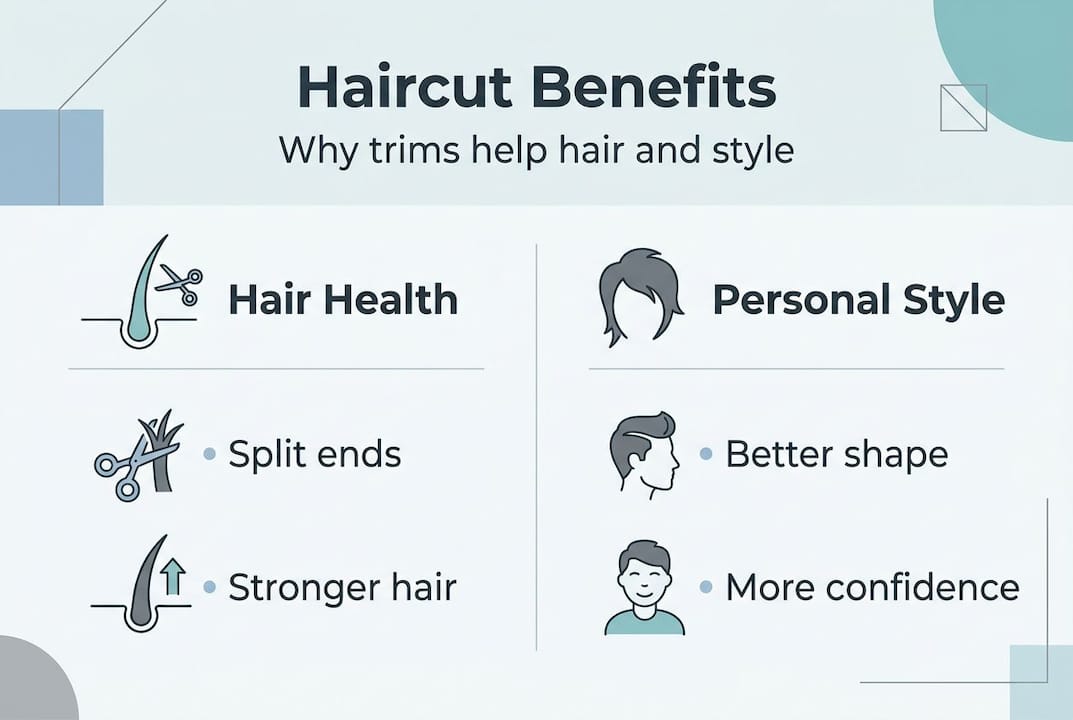
Think of it this way: removing a small amount of damaged hair regularly is far less disruptive than waiting until the damage is severe and requires cutting off several inches. Understanding how often to trim hair based on your specific hair type is one of the smartest things you can do for long-term growth and appearance.
Here are the core health benefits you gain from routine trims:
- Reduces breakage by removing weakened ends before they snap mid-shaft
- Eliminates frizz caused by frayed cuticles catching on each other
- Improves manageability so detangling takes less effort and causes less stress on strands
- Enhances shine because intact cuticles reflect light more evenly
- Supports length retention by keeping hair strong enough to actually reach your goals
If your goal is to repair damaged hair that’s already compromised, a trim is often the first step a professional will recommend before any treatment or conditioning plan.
Pro Tip: Fine hair tends to show split ends and breakage more quickly than thick hair, so it benefits from trims closer to every 8 weeks. Coarse or thick hair can often extend to 12 weeks or slightly beyond. Curly hair, which is naturally more prone to dryness and breakage, typically needs consistent trimming to hold its shape and prevent mid-shaft splits from forming.
Knowing how to prevent split ends through both lifestyle habits and salon visits gives you a real long-term advantage. Trims aren’t a setback to growth. They are one of the most direct ways to protect it.
Haircuts as a foundation for personalized style
Once you understand why trims matter for health, it becomes easier to see why the shape of your cut matters just as much. A haircut isn’t just maintenance. It’s architecture. The right cut creates structure, frames your face, and determines how every other style element behaves, including color, texture, volume, and movement.
Regular haircuts especially benefit curly or chemically treated hair by maintaining shape and reducing breakage. For curly hair specifically, this is crucial because curl patterns can become uneven, weighed down, or misshapen when the ends are uneven or damaged. A skilled cut restores definition and bounce.
The difference between a generic cut and a customized one is significant. Here’s a direct comparison:
| Feature | Generic cut | Custom cut |
|---|---|---|
| Face framing | Standard layers or blunt ends | Shaped specifically to your features |
| Hair type consideration | One-size approach | Adjusted for texture, density, and curl pattern |
| Style longevity | Grows out awkwardly | Maintains shape as it grows |
| Color compatibility | Not considered | Cut to enhance highlights or balayage placement |
| Lifestyle fit | Not discussed | Designed around how you actually style daily |
A custom cut supports everything else you do with your hair. If you’re planning a color service, the right shape ensures that highlights fall exactly where they flatter you most. If you rely on dry cutting explained techniques, the result is even more precise because the stylist sees exactly how your hair behaves in its natural state before a single drop of water is applied.
Style goals a great haircut helps you achieve include:
- Volume through strategic layering or graduation that lifts fine hair
- Definition for curl patterns by removing weight in the right places
- Balance between face shape and hair shape so neither competes with the other
- Dimension so color services like balayage read more naturally
- Ease so your daily styling routine takes minutes rather than an hour
The approach to cutting curly hair is fundamentally different from cutting straight hair, and getting this wrong can cost you months of regrowth time. Similarly, long hair maintenance requires a different trim strategy than short or medium styles. Length doesn’t mean avoiding the scissors. It means using them intelligently.
How professional cuts boost confidence and lifestyle
There’s something that happens when you leave a salon after a genuinely great cut. Your posture shifts. You catch yourself in reflections. You feel more prepared. This isn’t vanity. It’s the very real psychological effect of looking aligned with how you want to present yourself to the world.
Hair is one of the most immediately noticeable aspects of your appearance, and first impressions form within seconds. A cut that works with your features and lifestyle communicates intention and confidence without a word. For clients in La Jolla, where active, social, and professional lifestyles intersect constantly, a cut that looks polished whether you’re at a board meeting or on the beach holds enormous practical value.
“A great haircut doesn’t just change how others see you. It changes how you carry yourself throughout your entire week. That shift in confidence is something we witness with every client who sits in the chair.” — Stylist perspective at Joel C Ma Hair Studio
Here’s how the confidence-building effect of a fresh, well-designed cut plays out from the salon to your everyday life:
- In the salon: You and your stylist discuss your lifestyle, face shape, and styling habits. The cut is designed around you, not a template.
- Walking out: The immediate visual change reinforces a sense of being put-together. Even a subtle trim does this.
- Day two and beyond: A cut designed to work with your natural texture and growth patterns requires less manipulation, reducing styling time significantly.
- Week two to four: You notice the cut holds its shape. It doesn’t require constant intervention to look intentional.
- By week eight: You’ve settled into a routine that’s easier and more consistent because the foundation is right.
Precision cutting techniques are what make this durability possible. When angles are clean and weight is distributed correctly, the cut doesn’t fall apart as it grows. Instead, it evolves with you. Pairing this with habits that reduce hair breakage extends the period between appointments while keeping the look strong.
Regular trims every 10-12 weeks maintain a healthy appearance, and for busy La Jolla clients, this consistency means never having to start from scratch after a long gap between visits.
Practical guidelines: Choosing your perfect haircut schedule
Knowing that you should trim regularly is one thing. Knowing how often based on your specific hair is what turns good intentions into real results. The right schedule depends on your hair’s current condition, your texture, whether you use heat tools, and how you want your style to look at all times.
| Hair type | Recommended trim frequency | Key reason |
|---|---|---|
| Fine or thin hair | Every 6-8 weeks | Split ends and limpness show quickly |
| Medium, straight | Every 10-12 weeks | Standard maintenance keeps shape intact |
| Thick or coarse | Every 12-14 weeks | Slower visible damage, more weight to manage |
| Curly or coily | Every 8-10 weeks | Curl definition suffers without regular shape maintenance |
| Chemically treated | Every 8-10 weeks | Chemical processing weakens the cuticle faster |
| Color treated (highlights/balayage) | Every 10-12 weeks | Trim timing aligns with color refresh appointments |
Trimming every 10-12 weeks is beneficial, but this varies by hair type and condition. Use the table above as a starting point, not a rigid rule.
Beyond the calendar, your hair will give you clear signals that it’s time for a visit. Watch for these signs:
- Ends feel rough or look transparent and thin
- Hair tangles far more than usual, especially at the ends
- Your style no longer holds its shape even on freshly washed hair
- Flyaways and frizz have significantly increased
- You’re using more product than usual just to get the same results
Reviewing the trim hair frequency that suits your hair type helps take the guesswork out of scheduling. And when you’re unsure, consulting your stylist at your next appointment can clarify exactly where you are in your hair’s growth and damage cycle.
If you’re dealing with visible damage already, a dedicated split ends guide can bridge the gap between appointments with protective habits that slow down further wear.
Pro Tip: Book your next appointment before you leave the salon. Most people wait until they’re frustrated with their hair to book, which means more time in that uncomfortable in-between phase. Scheduling ahead locks in your ideal timing and gives your stylist a clearer picture of your goals over multiple visits.
Why the right haircut truly transforms your look and mindset
After more than 25 years of working with clients across every hair type, texture, and goal imaginable, one truth stands out above all others: the haircut people think they don’t need is almost always the one that changes everything.
Most clients arrive thinking they want a color refresh or a new styling product. But when we examine the hair honestly, it’s the cut that’s been holding back the result. A beautifully toned balayage on hair with damaged, misshapen ends will never look the way it could. The cut is the canvas.
What’s rarely discussed is the cumulative effect of consistently great cuts over months and years. Clients who commit to a personalized schedule and work with a stylist who understands their lifestyle don’t just look better on appointment days. They spend less time styling, experience less frustration, and carry themselves differently in everyday life. The investment is not just in that one hour in the chair. It’s in every morning that follows.
Discount or DIY cuts can remove length, but they rarely address the real structural needs of your hair. The artistry in haircutting that separates an expert from a quick trim is built on understanding how hair moves, grows, and responds uniquely to each person. That’s not something a mirror and a YouTube video can replace.
Discover expert haircuts and personalized styles in La Jolla
If this article has shifted how you think about your haircut schedule or your current cut, the next step is a conversation with someone who can actually see your hair and your goals together.

At Joel C Ma Hair Studio in La Jolla, every appointment begins with a thorough consultation designed to match your cut to your lifestyle, texture, and vision. From customized hair styling to precision expert haircuts in La Jolla, each service is built around you specifically, not a general template. Our team brings decades of experience and genuine passion for artistic expression in hair to every client who sits in the chair. Ready to experience the difference? Reach out and book your consultation today.
Frequently asked questions
How often should I really get a haircut?
Most people benefit from trimming every 10-12 weeks, but the ideal frequency depends on your hair type, damage level, and style goals.
Will my hair really grow faster if I cut it more often?
Trimming doesn’t speed up hair growth at the root, but removing damaged ends regularly prevents breakage so your hair actually retains the length it grows.
What is the best haircut for my face shape?
The best cut works with your specific facial structure and fits into how you actually live day to day, so a one-on-one consultation with a skilled stylist is always the most reliable path to finding it.
Are professional haircuts worth the price compared to DIY?
Professional cuts account for your texture, face shape, lifestyle, and future styling plans in ways that a DIY approach simply cannot replicate, making the upkeep easier and the results more consistent over time.