
How to Treat Split Ends: Expert Steps for Healthy Hair
TL;DR:
- Split ends result from cuticle breakdown and cannot be permanently repaired without trimming.
- Regular professional trims and bond-building treatments help prevent and manage split ends effectively.
- At-home care like deep conditioners and gentle detangling prolong hair health between salon visits.
You invest in quality shampoo, condition religiously, and still catch yourself staring at frayed, frizzled ends that refuse to behave. It’s one of the most common frustrations in hair care, and it happens to everyone from time to time, even those with the most dedicated routines. Split ends are not a sign of failure. They’re a sign you need a smarter strategy. This guide walks you through what actually causes them, what tools and treatments make a real difference, and how expert stylists approach the problem for results that last well beyond your next wash day.
Table of Contents
- Understanding split ends: Causes and why they matter
- What you need: Salon tools, treatments, and at-home essentials
- How to treat split ends: Step-by-step process
- Verifying results and avoiding common mistakes
- A stylist’s perspective: What matters most for lasting results
- Book your split end solution with La Jolla’s hair care experts
- Frequently asked questions
Key Takeaways
| Point | Details |
|---|---|
| Trimming is essential | The only truly effective way to eliminate split ends is by cutting them off. |
| Personalize your routine | Your hair type and history determine how often you need trims and treatments. |
| Products are temporary | Repair serums and oils can smooth and protect but don’t permanently fix splits. |
| Salon expertise matters | Regular professional trims and personalized advice help maintain healthy hair. |
| Ongoing prevention | Combine expert trims with smart at-home care and gentle styling to keep damage at bay. |
Understanding split ends: Causes and why they matter
Split ends, known scientifically as trichoptilosis, occur when the protective outer layer of your hair strand, called the cuticle, breaks down and exposes the inner cortex made of keratin (the protein that forms the structural foundation of each strand). Once that cuticle cracks and peels away from the tip, the underlying fibers separate and fray. What you see as a single “split” is actually a structural failure at the molecular level, and it only gets worse over time if left alone.
What causes them?
The main culprits behind split ends fall into a few key categories:
- Heat styling: Flat irons, curling wands, and blow dryers strip moisture from the hair shaft, leaving it brittle and prone to snapping.
- Chemical processing: Color treatments, bleaching, perming, and relaxing alter the hair’s internal protein bonds, weakening overall integrity. The impact of chemical treatments on hair tensile strength is well documented and significant.
- Physical stress: Aggressive brushing, tight ponytails, rough towel drying, and even cotton pillowcases create friction that wears away the cuticle layer.
- Environmental factors: UV exposure, hard water, saltwater, and dry climates all dehydrate and erode the hair surface over time.
| Cause | Damage type | Risk level |
|---|---|---|
| Heat styling (daily) | Moisture loss, cuticle cracking | High |
| Chemical processing | Protein bond disruption | Very High |
| Physical friction | Mechanical breakage | Moderate |
| Environmental exposure | Surface oxidation, dryness | Moderate |
The ripple effect is real. Once splits form at the tips, they travel up the shaft, leading to frizz, dullness, and breakage. Your hair feels rough to the touch, loses its shine, and becomes increasingly hard to manage. Even the best styling products struggle to smooth hair that is structurally compromised from the inside out.
“The only permanent treatment for split ends is trimming them off, as no product can fuse damaged keratin fibers back together; regular trims every 6 to 12 weeks prevent splits from traveling up the shaft.”
That’s the foundation everything else builds on. Addressing preventing split ends before they get out of control is always the most efficient path, but knowing how to treat them once they appear is just as valuable.
What you need: Salon tools, treatments, and at-home essentials
Understanding the science behind split ends, let’s review the expert-approved tools and treatments you’ll need for optimal results. The good news is that the most effective solutions combine professional intervention with smart at-home maintenance, and the combination is far more powerful than either approach alone.
Salon tools and professional treatments
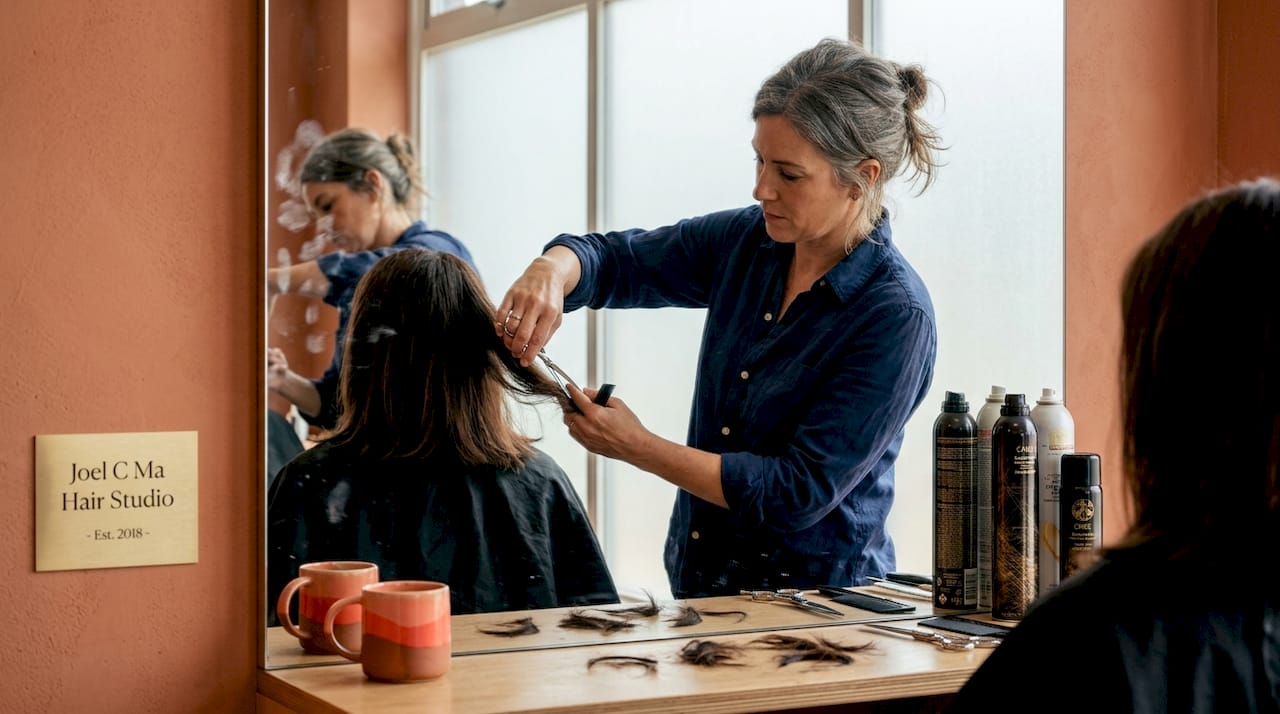
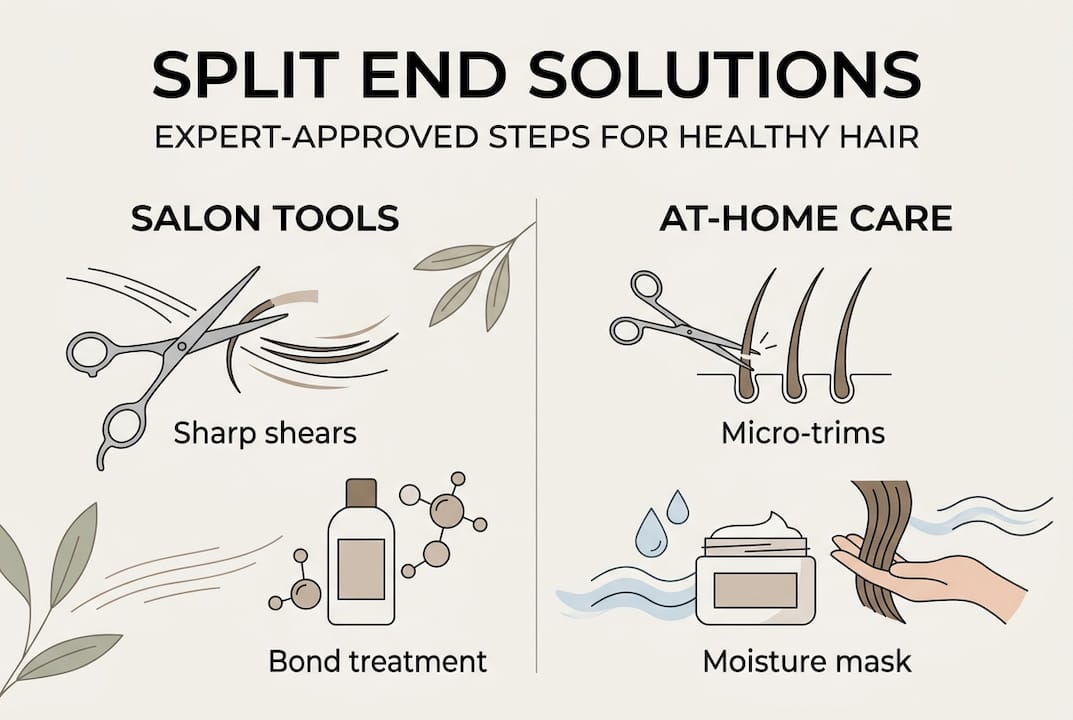
Sharp professional shears are non-negotiable. Dull scissors crush and compress the hair shaft as they cut, actually triggering new splits right at the cut line. A clean, precise cut with professional shears creates a sealed edge that resists fraying far longer. Bond-building treatments, such as those using itaconic acid or arginine-based formulas, work at the protein level to temporarily reinforce the hair’s internal structure after a trim.
At-home care essentials
Your daily routine either extends or undermines what your stylist does. Here’s what actually supports hair structure between appointments:
- Deep conditioners with ceramides or hydrolyzed proteins: These penetrate the cortex and reinforce the cuticle from within.
- Microfiber towels: Far gentler than regular terrycloth, these reduce friction dramatically during the drying process.
- Wide-tooth combs: Always detangle from the ends upward, never from root to tip, to minimize mechanical breakage.
- Silk or satin pillowcases: Reduce overnight friction, which is one of the most underrated sources of cumulative damage.
- Heat protectant sprays with thermal polymers: Create a barrier between your strand and styling tools at high temperatures.
Comparing popular repair products
| Product type | How it works | How long it lasts | Best for |
|---|---|---|---|
| Silk fibroin treatments | Re-binds splits at protein level | Over 72 hours | Fine, chemically processed hair |
| Coconut oil | Smooths surface, reduces irregularity | 1 to 2 washes | Dry, coarse hair |
| Commercial bond builders | Temporarily seals cuticle | 1 to 1.5 hours | Post-color maintenance |
| Protein masks | Reinforces cortex structure | Up to 2 weeks | Bleached or damaged hair |
Research comparing these options is telling. Chemically treated hair shows up to a 30% reduction in tensile strength, and while silk fibroin nanoparticles can re-bind splits for over 72 hours compared to commercial products’ roughly 1.5 hours, coconut oil reduces surface irregularity by 30%. None of these, however, permanently restore severed ends.
Pro Tip: If your hair is color-treated or chemically processed, prioritize bond-repair treatments over standard conditioning masks. Protein and bond-building formulas directly address the structural damage that chemical services leave behind, buying you more time between trims while keeping your hair manageable and resilient. Look for ingredients like best hair mask ingredients such as hydrolyzed keratin, olaplex bond builders, or amino acid complexes.
Trusted treatments focus on temporarily managing what cannot be permanently fixed without scissors. Advanced hair treatments in professional settings often use a layered approach, combining bond-building chemistry with sealing agents for compounded short-term results. That’s a far cry from a one-step at-home mask, and the difference shows in how your hair holds up between visits.
How to treat split ends: Step-by-step process
Once you’ve gathered the best tools and treatments, here’s how to put them into practice for noticeably healthier ends. The following method is what experienced stylists use to systematically address split ends while protecting the overall integrity of your hair.
Step-by-step treatment method
-
Assess your damage level honestly. Run your fingers down your strands from root to tip. If the ends feel rough, catch on your fingers, or look frayed under direct light, you have active splitting. Determine how far up the shaft the damage has traveled before deciding how much length needs to go.
-
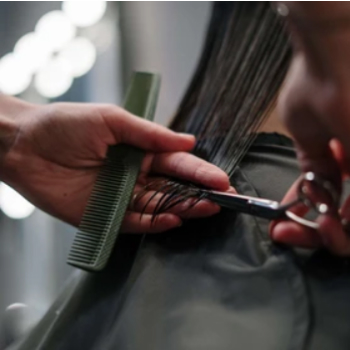
Book a micro-trim with a professional stylist. A micro-trim removes just a quarter to half an inch of length, enough to eliminate the split without sacrificing significant length. This is different from a full trim and requires a skilled eye. Amateur cuts with kitchen scissors usually create new splits immediately.
-
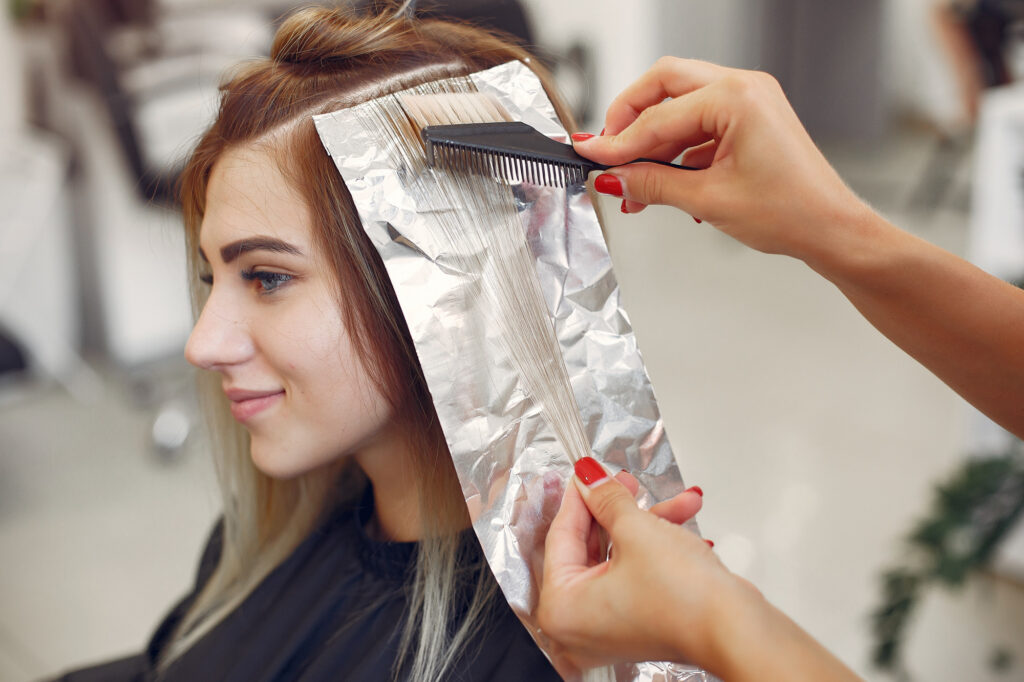
Follow with a bond-building or protein treatment in-chair. Immediately after trimming, applying a bond-building treatment seals the fresh cut edge and reinforces the surrounding hair fibers. This is the step most people skip at home, and it’s the one that extends the benefit of your trim the longest.
-
Adjust your at-home routine before your next visit. Use a deep conditioner twice weekly for the first two weeks post-trim. Switch to a microfiber towel and start detangling from the ends upward.
-
Plan your next appointment. How often to trim hair depends on your hair type, texture, and chemical history. For most clients, every eight to ten weeks is the sweet spot.
Adjustments by hair type
Not every head of hair responds the same way. Fine and bleached hair needs more frequent trims in the six to eight week range, while curly and textured hair benefits from dry cutting, a technique where the stylist cuts hair in its natural curl pattern instead of while wet and stretched. Chemically processed hair requires bond-builders like itaconic acid or arginine-based treatments integrated directly into the post-trim care routine.
For those with cutting curly hair needs, dry cutting preserves the curl’s shape while removing damage without distorting the final result. It takes more time and skill, but the difference in curl definition and bounce afterward is immediately visible.
Statistic callout: Regular trims every 6 to 12 weeks prevent splits from traveling up the hair shaft, but fine or bleached hair may need attention as frequently as every 6 to 8 weeks to stay ahead of structural breakdown.
Pro Tip: Between salon visits, do a strand inspection in natural light once a month. Early stage splits are much easier and cheaper to manage than splits that have traveled several inches up the shaft. Catching them early means you lose less length overall over the course of a year.
Verifying results and avoiding common mistakes
With your split ends addressed, ensuring long-term results requires both knowing what success looks like and steering clear of the habits that invite splits back.
Signs your treatment is working
After a proper trim and treatment session, your hair should feel smoother to the touch within the first wash. The ends should no longer snag on each other or on your fingers. Shine returns because a sealed cuticle reflects light evenly instead of scattering it. Over the following weeks, you should notice less frizz, especially in humidity, and significantly less breakage when detangling.
| Indicator | What to look for | Timeline |
|---|---|---|
| Texture | Smooth, no snagging | Within first wash |
| Shine | Reflective, even gloss | Within 1 to 2 weeks |
| Frizz reduction | Less flyaway in humidity | 2 to 3 weeks |
| Breakage | Fewer strands on comb | Ongoing |
Common mistakes that bring split ends back
- Skipping heat protectant. Even one session with an unprotected flat iron at high heat can undo weeks of careful maintenance.
- Rough towel drying. Vigorous rubbing with terrycloth creates massive amounts of friction-based damage, particularly when hair is wet and most vulnerable.
- Ignoring scalp health. A dry or inflamed scalp affects the quality of new growth, meaning strands are weaker from the moment they emerge.
- Trusting product marketing over facts. Some products claim to repair splits. Reducing hair breakage is achievable with the right approach, but actual split repair through products is not.
- Waiting too long between trims. The longer you wait, the more the split travels, and the more length you lose at the next appointment.
“Some products claim repair, but experts confirm temporary sealing only. No empirical evidence supports permanent fusion without a trim.”
Understanding the difference between truly repairing damaged hair and temporarily masking the damage is what separates people with consistently healthy hair from those stuck in a cycle of frustration. Some products work beautifully as part of a maintenance routine. They just cannot do the one thing a good pair of shears can. Hair restoration services that focus on scalp and strand health together often see the most durable long-term outcomes, because you’re addressing both structure and origin simultaneously.
A stylist’s perspective: What matters most for lasting results
After more than 25 years behind the chair, one thing is clear: most clients underestimate how profoundly their daily habits determine what’s possible in the salon. Products do not fix structural damage. They buy time. The real goal is building a routine where your hair’s tensile strength, or its ability to stretch under stress without snapping, stays high enough that damage accumulates slowly rather than quickly.
Healthy hair stretches 50% when wet without breaking. That’s the benchmark we work toward with every micro-trim and every bond-building treatment. Surface appearance can be deceiving. Hair can look shiny and feel soft while being structurally fragile from the inside. We prioritize tensile strength and structural integrity, not just how the hair looks in the mirror on the day of the appointment.
The other thing stylists wish clients understood: consistency matters more than any single treatment. Skipping two appointments in a row, then coming in expecting a single session to undo months of accumulated damage, doesn’t work that way. Think of it like preventing hair damage as part of a long-term relationship between you, your stylist, and your hair. The results compound over time when you show up regularly and communicate openly about what your hair has been through.
Book your split end solution with La Jolla’s hair care experts
Ready for the next step to your healthiest hair yet? Here’s how the experts can help.
At Joel C Ma Hair Studio in La Jolla, our stylists specialize in personalized micro-trims, bond-building treatments, and restorative care tailored to your specific hair type, texture, and chemical history. Whether you’re managing fine, color-treated strands or thick, curly hair prone to dryness, we build a plan around your actual needs, not a generic template.

You can book a haircut or schedule a consultation to discuss the right approach for your hair goals. If you’re pairing your treatment with a better at-home routine, ask us about salon shampoos for colored hair that complement professional split end care. The right products, combined with consistent expert attention, are what create results that hold.
Frequently asked questions
Can split ends ever be permanently repaired without trimming?
No, trimming is the only permanent solution because no product can fuse damaged keratin fibers back together. Everything else is temporary management.
How often should I trim my hair to keep split ends away?
Most stylists recommend a trim every 6 to 12 weeks, and fine or bleached hair may need attention as frequently as every 6 to 8 weeks to prevent splits from traveling up the shaft.
Do coconut oil or protein treatments really help with split ends?
Coconut oil reduces surface irregularity by about 30% and protein treatments offer short-term binding benefits, but neither option repairs or eliminates splits over the long term.
Is there a difference in how split ends should be treated for curly or color-treated hair?
Yes. Curly hair benefits from dry cutting techniques that preserve the curl pattern, while color-treated hair responds best to bond-building treatments and more frequent trim intervals.
Are split end mending products a waste of money?
They’re not useless, but they are limited. Dermatologists confirm these products offer only temporary sealing with no evidence of permanent split repair, so they work best as a complement to regular trims, not a replacement.