
Hair Coloring Terms: A Beginner’s Guide to Color Vocabulary
TL;DR:
- Knowing specific hair coloring terms helps clients communicate clearly and achieve predictable results in salons. Understanding base color, hair level, and undertones is essential for selecting the right formula and ensuring desired outcomes. Techniques like balayage offer low maintenance, while products such as bleach, developer, and toner determine how lightening and color neutralization are achieved effectively.
Hair coloring terms are the specific words and phrases that describe the colors, techniques, and products used to achieve your desired hair look. Knowing this vocabulary before you sit in a stylist’s chair changes everything. You stop pointing at photos and hoping for the best. You start asking for balayage instead of “that sun-kissed thing,” or requesting a toner instead of complaining about brassiness. This guide organizes hair coloring terminology into four clear categories so you can walk into any salon consultation with confidence.
What are the core hair coloring terms every client should know?
Every color service starts with three foundational concepts: base color, hair level, and undertone. Get these right, and every other term in this guide will click into place.
Base color is your natural hair color before any chemical treatment. Colorists use it as the starting point for every formula decision. If your base is dark brown, lifting it to platinum blonde requires a completely different approach than lifting medium blonde to icy silver.
Hair level is the lightness or darkness of your hair measured on a scale from 1 to 10. Level 1 is the deepest black, and level 10 is the lightest blonde. Hair colorists use this scale alongside undertone categories to select the right formula. This matters because two people can both be “level 6” but have completely different results from the same color if their undertones differ.
Undertones are the secondary hues beneath your visible hair color. Colorists classify them into three groups:
- Warm undertones include gold, red, and orange. These appear naturally in most brunettes and cause the brassiness you see after lightening.
- Cool undertones include ash, violet, and blue. These create that smoky, muted finish popular in modern color trends.
- Neutral undertones balance both warm and cool, making them the most flexible base for a wide range of color formulas.
Pro Tip: Ask your stylist what level and undertone your hair currently sits at before agreeing to any color service. That single question will tell you whether your goal is achievable in one appointment or requires a multi-session plan.
Understanding your undertone is not just academic. It directly determines which toner your stylist reaches for, which developer volume they choose, and how long the color will last before fading.
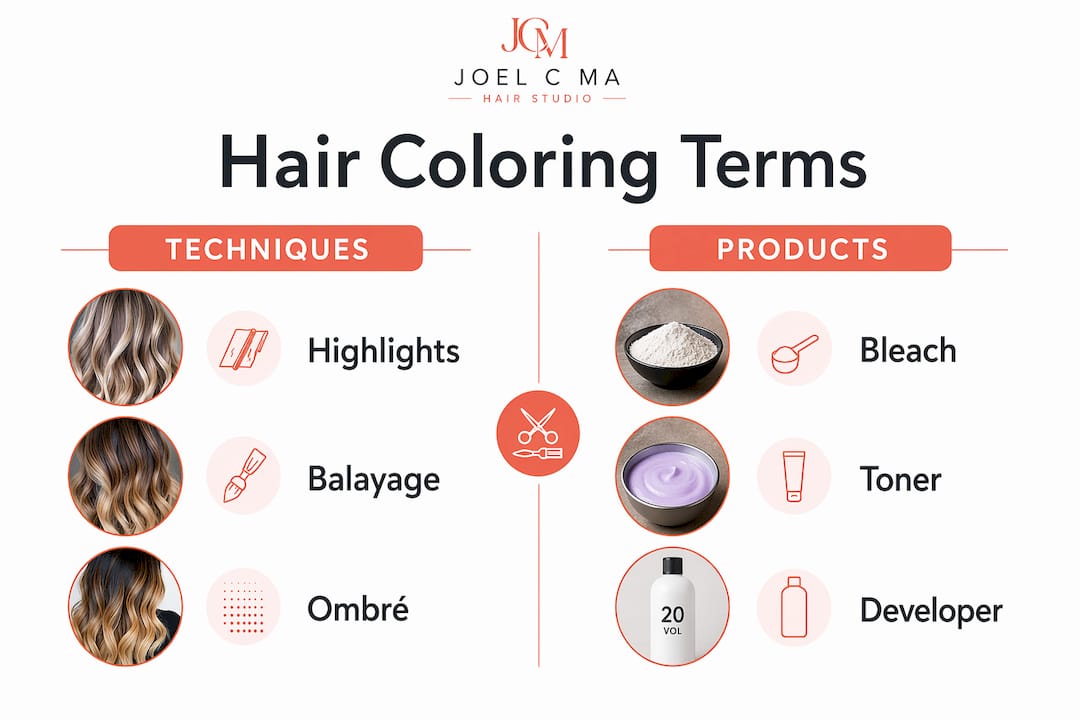
How do highlights, balayage, ombré, and lowlights actually differ?
These are the terms clients mix up most often. Each describes a specific application technique with a distinct visual result and maintenance schedule.
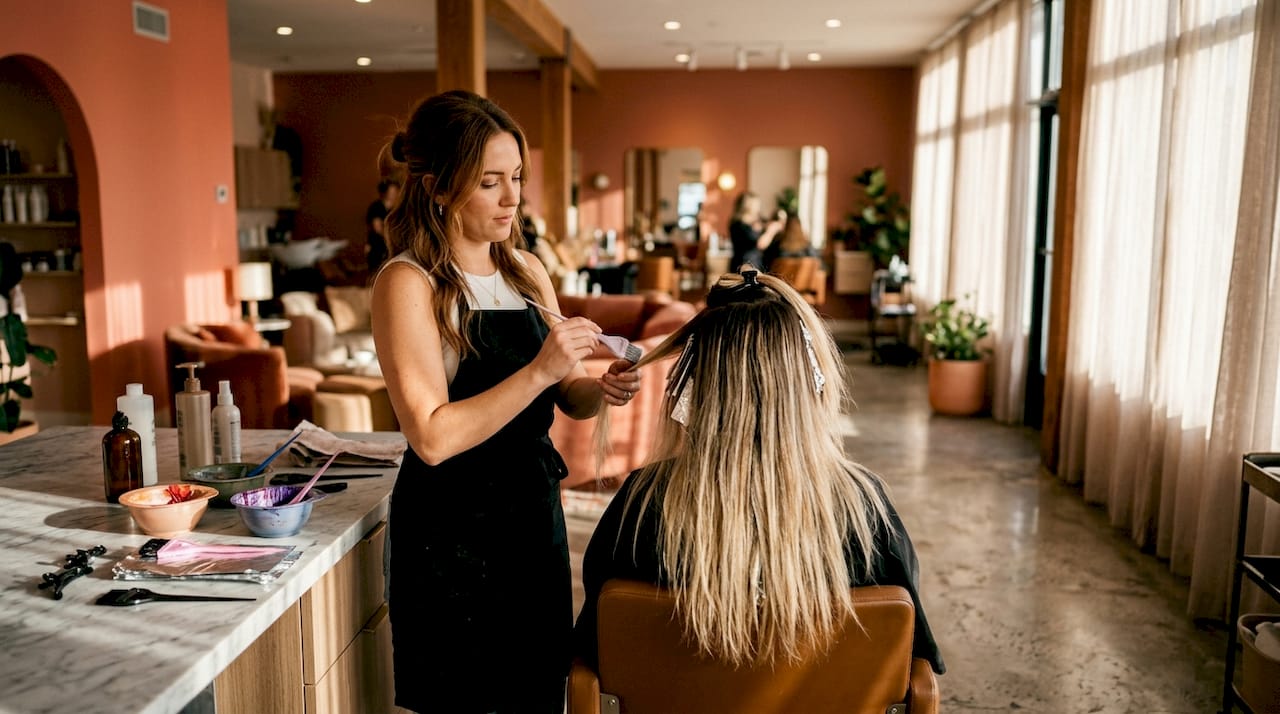
Foil highlights vs. balayage
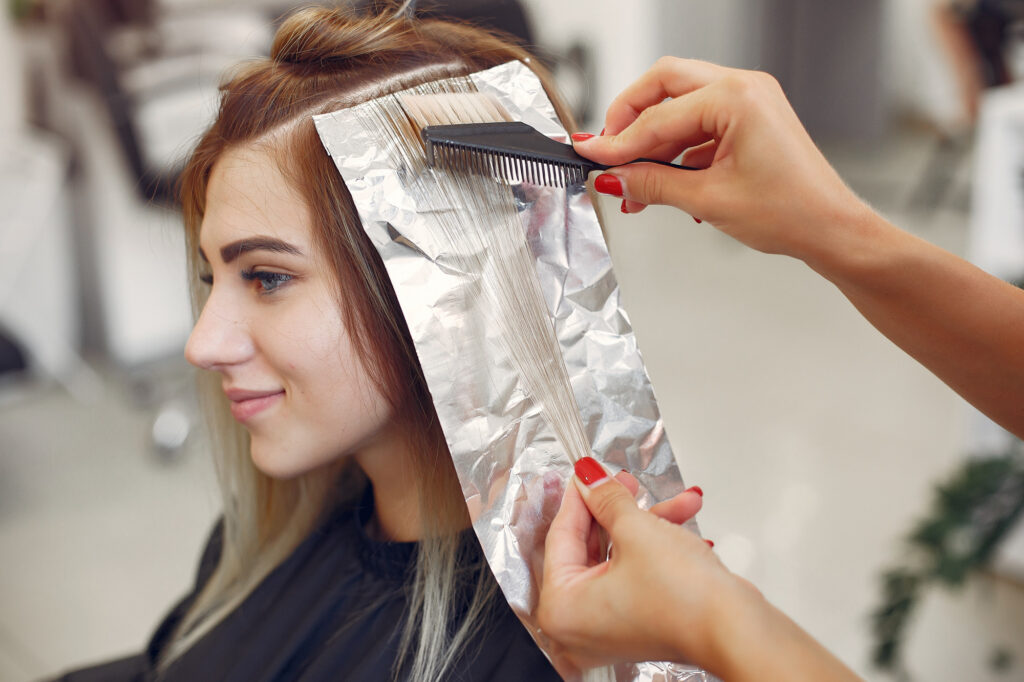
Foil highlights use sectioning and foil wrapping to trap heat, creating precise, high-contrast results. The tradeoff is that regrowth lines appear within 6 to 8 weeks, making maintenance appointments non-negotiable for a polished look.
Balayage is a French freehand painting technique where color is swept onto the surface of the hair without foils. The result is a softer, more natural gradient. Balayage clients can often go 4 to 6 months between appointments without a noticeable regrowth line. That low-maintenance quality is the main reason balayage became the dominant color technique of the past decade.
| Technique | Application method | Regrowth visibility | Upkeep interval |
|---|---|---|---|
| Foil highlights | Sectioned foils with heat | Visible at 6 to 8 weeks | Every 6 to 8 weeks |
| Balayage | Freehand painting, no foils | Soft grow-out, minimal line | Every 4 to 6 months |
| Ombré | Gradient from dark root to light ends | Intentional grow-out look | Low maintenance |
| Babylights | Very fine, scattered foils | Subtle, natural-looking | Every 8 to 12 weeks |
| Lowlights | Darker tones added via foils | Blends naturally with base | Every 8 to 12 weeks |
Ombré, babylights, and lowlights
Ombré is a color effect, not just a technique. It describes a gradient transition from a darker root to lighter ends. The word comes from the French for “shadow.” Ombré is intentionally grown out, which is what separates it from highlights that require constant touch-ups.
Babylights are ultra-fine highlights applied in very thin sections to mimic the natural highlights children have. The result is subtle and dimensional rather than bold or striped. They work especially well on fine hair where chunky highlights would look overdone.
Lowlights add darker tones back into the hair to create depth and shadow. Combining highlights and lowlights creates dimension, which is the variation in color depth that makes hair look multi-tonal and natural rather than flat. Professional stylists consistently point to dimension as the difference between a color that photographs beautifully and one that looks one-note in person.
Pro Tip: If you want a low-maintenance color but still crave contrast, ask for balayage with a few lowlights woven in. You get the soft grow-out of balayage plus the depth that prevents the color from looking washed out.
What do bleach, developer, toner, and color types mean?
This is the product vocabulary that separates informed clients from confused ones. Each term refers to a specific chemical or service with a distinct purpose.
Bleach is an oxidative lightener that breaks down the natural melanin inside the hair cortex. Oxidative bleaching uses hydrogen peroxide and persulfates to enter the hair shaft and permanently remove pigment. Bleach is the only agent capable of true lightening. It also damages the disulfide bonds in hair proteins, which is why bleached hair feels more porous and fragile than untreated hair.
Developer is the hydrogen peroxide solution mixed with color or bleach to activate the formula. It comes in different volumes:
- 10 volume deposits color with minimal lift, ideal for toning or darkening.
- 20 volume lifts 1 to 2 levels and is the standard for most permanent color applications.
- 30 volume lifts 2 to 3 levels and is used for significant lightening on medium to dark hair.
- 40 volume lifts 3 to 4 levels and carries the highest risk of damage. Professionals use it sparingly.
Toner is applied after lightening to adjust or neutralize unwanted tones. Purple and blue toners work on color theory principles: violet pigment cancels yellow, and blue pigment cancels orange. This is why a toner transforms brassy, yellow-orange bleached hair into a clean, cool blonde.
Gloss treatments are semi-permanent shine services that refresh color, add tone, and smooth the cuticle. They do not lift hair. A gloss is the go-to service between full color appointments to keep color vibrant and hair looking healthy.
The four main color types differ in how long they last and whether they require developer:
- Permanent color uses developer to open the cuticle and deposit color into the cortex. It does not wash out.
- Demi-permanent color uses a low-volume developer. It lasts 4 to 6 weeks and fades gradually rather than growing out with a hard line.
- Semi-permanent color contains no developer. It coats the outside of the hair shaft and fades within 4 to 8 washes.
- Temporary color sits on the surface and washes out in one shampoo. Think color sprays and rinses.
Pro Tip: If you are nervous about commitment, start with a demi-permanent gloss in your target shade. It gives you a preview of the color without the permanence, and it fades gracefully if you change your mind.
What causes brassiness, and what other post-color terms should you know?
Understanding what can go wrong after coloring is just as useful as knowing the techniques themselves. These terms describe the most common post-color challenges.
Brassiness is the warm, orange or yellow cast that appears in lightened hair over time. It happens because bleach removes pigment in stages, and warm pigments are the last to go. Sun exposure, hard water, and heat styling all accelerate brassiness. A purple or blue toning shampoo used once or twice a week slows the process between salon visits.
Hair porosity describes how well your hair absorbs and retains moisture and color. Low porosity hair resists absorption and can be difficult to color evenly. High porosity hair absorbs color quickly but fades faster because the cuticle cannot hold pigment effectively. Porosity is the single most overlooked factor in why two people with the same color formula get different results.
Root touch-up is the targeted application of color to new hair growth near the scalp. Touch-ups are typically done every 3 to 6 weeks for gray coverage or to maintain a uniform color line. The frequency depends on how fast your hair grows and how much contrast exists between your natural color and the applied color.
Color correction is a professional service that fixes unwanted color results. This includes removing box dye, correcting uneven color, or lifting hair that was colored too dark. Color correction can take multiple appointments and carries a higher cost than standard color services. It is the reason colorists at Joelcma always recommend a consultation before attempting any significant color change.
Patch testing is a skin allergy test performed 48 hours before a color service. A small amount of color is applied behind the ear or on the inner elbow to check for reactions. Skipping a patch test is the most common shortcut that leads to serious allergic responses.
Key takeaways
Knowing your hair coloring terms before a salon visit directly reduces miscommunication, sets realistic expectations, and leads to better color results every time.
| Point | Details |
|---|---|
| Base color and hair level | Your natural starting point determines what is achievable in a single appointment. |
| Balayage vs. foil highlights | Balayage lasts 4 to 6 months between visits; foil highlights need touch-ups every 6 to 8 weeks. |
| Developer volume matters | Higher developer volumes lift more but cause more damage; match volume to your goal. |
| Toner neutralizes brassiness | Violet toner cancels yellow; blue toner cancels orange, based on color theory. |
| Porosity affects results | High porosity hair fades faster; low porosity hair resists absorption and needs longer processing. |
Why terminology is the most underrated part of getting great color
I have spent over 25 years watching clients walk in with a photo and walk out disappointed. Almost every time, the disconnect was not the stylist’s skill. It was language. The client said “highlights” and meant balayage. The stylist heard “highlights” and delivered foil-wrapped, high-contrast results. Both parties did exactly what they thought was agreed upon.
Confusing color families with techniques is the most common version of this problem. “Brunette” is a color family. “Balayage” is a technique. You can have brunette balayage, blonde balayage, or red balayage. When a client says “I want brunette balayage,” that is a complete request. When they say “I want balayage,” the stylist has to guess the color goal.
The other pattern I see constantly is clients attempting at-home color after learning half the vocabulary. They buy a box dye, apply it over previously lightened hair, and end up with uneven, muddy results that require professional color correction to fix. Color correction costs significantly more than the original service would have. Learning the terms is not just about sounding knowledgeable. It is about protecting your hair and your budget.
My honest advice: read this guide, write down three to five terms that apply to your current hair and your color goal, and bring them to your next consultation. Ask your stylist to confirm or correct your understanding. That five-minute conversation will do more for your color outcome than any inspiration photo ever could.
— Juiced
Get expert color guidance from Joelcma
Joelcma’s team at Joel C Ma Hair Studio in La Jolla, California brings over 25 years of color expertise to every consultation. Whether you are exploring balayage for the first time or trying to decode what your current color needs, the studio offers personalized styling consultations designed around your specific hair type, level, and goals. For clients maintaining color at home between appointments, the best shampoos for colored hair comparison page breaks down which salon-grade products actually protect your investment. Great color starts with the right knowledge and the right team behind it.
FAQ
What is balayage in simple terms?
Balayage is a freehand hair painting technique that creates a soft, natural-looking gradient without foils. Clients typically need touch-ups only every 4 to 6 months because the grow-out blends naturally with no hard regrowth line.
What is the difference between permanent and semi-permanent color?
Permanent color uses a developer to deposit pigment inside the hair cortex and does not wash out. Semi-permanent color contains no developer, coats the outside of the hair shaft, and fades within 4 to 8 washes.
What causes brassiness after coloring?
Brassiness occurs because bleach removes pigment in stages, leaving warm orange and yellow tones behind. A toner with violet or blue pigment neutralizes these tones based on color theory principles.
What does hair porosity mean for color results?
Hair porosity measures how well your hair absorbs and holds color. High porosity hair takes color fast but fades quickly; low porosity hair resists absorption and may need longer processing time to achieve even results.
How often do you need a root touch-up?
Root touch-ups are typically done every 3 to 6 weeks, depending on how fast your hair grows and how much contrast exists between your natural color and the applied shade.
Recommended
- Hair Coloring Definition: What Every Type Really Means – Joel C Ma Hair Studio
- Hair Coloring Meaning: What Your Color Choice Says – Joel C Ma Hair Studio
- Hair Coloring Terminology: A Stylist’s Guide for Every Level – Joel C Ma Hair Studio
- Should You Color or Cut First? Understanding Your Hair Choices – Joel C Ma Hair Studio