
Hair Coloring Meaning: What Your Color Choice Says
TL;DR:
- Hair coloring reflects deeper identity, cultural signals, and emotional connections beyond aesthetics.
- Choosing the right technique and commitment level communicates personal messages and influences perception.
Most people think of hair coloring as a purely cosmetic decision. Pick a shade, apply it, and move on. But the hair coloring meaning behind every choice runs far deeper than that. Your hair color communicates identity, signals cultural belonging, and triggers psychological responses in others before you speak a single word. This article unpacks the chemical definition of hair coloring, explores its cultural and emotional symbolism, explains what different techniques signal about personality, and gives you a practical framework for making choices you won’t regret.
Table of Contents
- Key takeaways
- What hair coloring meaning actually starts with: the definition
- Culture, psychology, and the social life of hair color
- Commitment levels and what they signal
- Hair coloring techniques and their visual messages
- Making intentional choices with hair coloring meaning in mind
- My take on why hair color is never really “just hair”
- Bring your hair color meaning to life with expert support
- FAQ
Key takeaways
| Point | Details |
|---|---|
| Hair color signals identity | Color choices function as visible markers of personal transition, group membership, and emotional state. |
| Chemistry shapes commitment | Temporary, semi-permanent, and permanent formulas each carry different symbolic weight and emotional stakes. |
| Culture filters perception | Hair color meanings are learned, not universal. The same shade reads differently across social contexts. |
| Technique controls the message | Single-process, highlights, and double-process each deliver distinct visual messages beyond the color itself. |
| Intent prevents regret | Aligning your color choice with your identity goals, not just aesthetics, leads to greater satisfaction. |
What hair coloring meaning actually starts with: the definition
Before you can understand what a hair color communicates, you need to understand what hair coloring actually does at a chemical level. The word “color” in everyday speech blurs an important distinction. Not all color-adding substances work the same way, and that difference carries real meaning.
There are two categories worth knowing: dyes and pigments. According to chemical science, dyes are soluble substances that bond chemically to the material they are applied to, while pigments generally do not form those chemical bonds. This is why hair dye is not the same as, say, painting your walls. The dye penetrates the hair shaft and becomes part of the structure. That penetration is what makes the color last and what makes removal complicated.
Merriam-Webster defines dyeing as a process of imparting new color by impregnating hair with dye rather than merely coating the surface. That word “impregnating” matters. You are not decorating the outside of your hair. You are changing what your hair is, at least chemically.
Here is what makes this relevant to meaning:
- Temporary color sits on the outside of the hair shaft and washes off because it has not bonded to anything
- Semi-permanent color partially penetrates the shaft, creating a change that fades over weeks rather than days
- Permanent color opens the hair cuticle, deposits new pigment deep inside, and bonds chemically, creating a lasting structural change
The hair coloring definition you use matters because it shapes realistic expectations. When people say “I just want to try something,” they often reach for a product that behaves permanently because the packaging looks approachable. Understanding what you are actually doing to your hair shifts the decision from impulsive to considered.
Pro Tip: Read the product label before you buy, not after. The words “permanent,” “demi-permanent,” and “temporary” have specific chemical meanings that determine how long your color decision lasts and how much effort reverting it will require.
Culture, psychology, and the social life of hair color
Hair color does not exist in a vacuum. The moment you walk into a room, other people process your hair color and draw conclusions, often instantly and often unconsciously. This is not vanity. It is social psychology in action.
Research confirms that hair color perceptions are culturally constructed rather than inherent. There is no biological reason that blonde hair signals youth and openness or that red hair signals fierceness. These associations were learned over generations through media, storytelling, and social reinforcement. The significance of hair color depends entirely on who is reading it and where.
This matters practically. What reads as “professional” in one cultural context reads as “eccentric” in another. Jet black hair signals elegance in many East Asian professional environments while the same shade might carry goth connotations in some American workplaces. Neither reading is correct. Both are real.
“Hair color meanings are learned cultural constructions, not inherent symbols. The same shade can signal opposite things depending on audience, environment, and historical context.” — Hair Colour Psychology: What Research Actually Shows
So why do people change their hair color? The psychological motivations are more layered than most admit:
- Identity transition: Research shows that significant color changes most often mark internal shifts. A breakup, a new city, a job change. The external transformation makes the internal one visible.
- Group membership: Unconventional colors, vivid blues, greens, silver, function as social badges. They signal belonging to creative, counterculture, or progressive communities.
- Control: When life feels unpredictable, changing your hair is one of the few things you can fully control. The act of choosing matters as much as the result.
- Dream psychology: Some researchers note that dreaming of dyeing hair symbolizes a desire for self-redefinition and personal agency. Even unconsciously, we connect hair color to identity control.
Understanding the hair dye symbolism at play in your own motivations is not overthinking it. It is the difference between a choice you feel confident about and one you regret six weeks later.
Commitment levels and what they signal
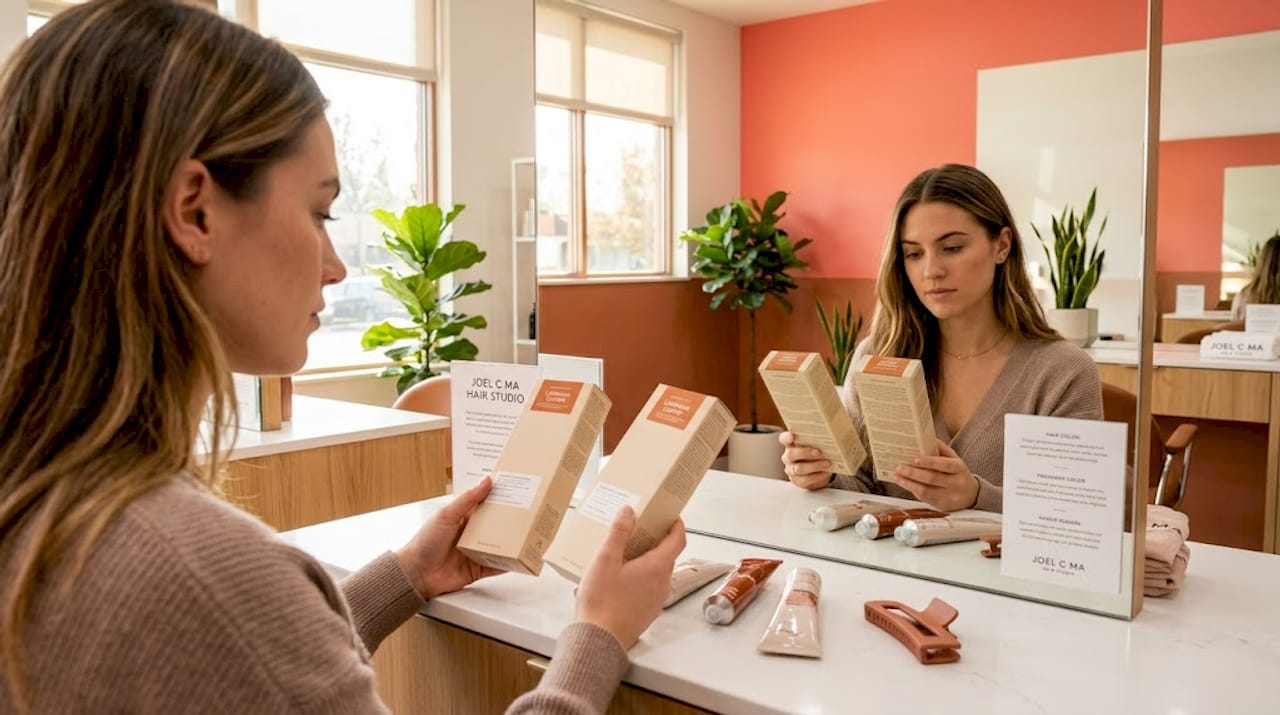
Not all hair coloring is created equal, and the type of product you choose carries its own symbolic meaning before anyone even sees the resulting color. Choosing a temporary rinse communicates something different about your relationship to change than committing to a permanent formula.
| Product type | Duration | Symbolic meaning | Best for |
|---|---|---|---|
| Temporary | Washes out in one shampoo | Playful experimentation, low stakes | Special events, testing a shade |
| Semi-permanent | Fades over 6 to 8 weeks | Considered change, reversible commitment | First-time color changers |
| Permanent | Lasts until new growth appears | Strong identity statement, high investment | Long-term color goals |
| Demi-permanent | Sits between semi and permanent | Moderate commitment, adds depth without full lift | Refreshing or enhancing natural color |
Product type implies different durations of identity signaling. A temporary color says “I’m curious.” A permanent one says “I’ve decided.” The chemistry matches the emotional register.
Color depth also plays a role in commitment. Hair is organized into 10 levels, ranging from level 1 (black) to level 10 (lightest blonde). Moving more than two levels in either direction requires more aggressive chemistry, more processing time, and more potential for damage. The further you stray from your natural base, the more technically demanding and emotionally significant the change becomes.
Pro Tip: If you are coloring for the first time, treat semi-permanent as a rehearsal. It gives you a realistic preview of how the shade works with your skin tone and lifestyle, without locking you into a six-month commitment.
Hair coloring techniques and their visual messages
Choosing a color is only half the equation. How that color is applied shapes the entire visual outcome, and that outcome determines what your hair communicates. The technique is the grammar of hair color. The shade is just the vocabulary.
Here are the most common techniques and what they signal:
-
Single-process color applies one uniform shade across all the hair. It is the most direct, most affordable option. Visually, it creates a clean, solid statement. Think of it as a declarative sentence: clear, unambiguous, committed to one idea. The trade-off is that single-process color can read as one-dimensional, lacking the depth and movement that natural hair has.
-
Highlights and balayage add lighter pieces throughout the hair, creating dimension that mimics how sunlight naturally interacts with strands. This technique signals nuance. It says something more layered than a single-process application. Balayage in particular has become culturally associated with effortless, natural-looking beauty rather than an obviously “done” appearance.
-
Double-process color is a two-step procedure: the hair is first lightened (often to near-white), then toned to the desired shade. This is the most technically demanding, most costly technique, and it produces the most dramatic transformation. Choosing double-process is itself a statement. It signals that you are willing to invest significantly in a specific aesthetic, not just experimenting around the edges.
-
Color blocking and vivid placement use deliberate, graphic areas of color to create a designed, artistic effect. This technique leans fully into self-expression and is typically chosen by people who want their hair to function as visible art rather than a neutral backdrop.
The technique choice in hair coloring functions like a design decision. It links your visual outcome to your intended identity message. A skilled colorist reads both the color you want and the technique that will actually deliver the meaning you are after.
Making intentional choices with hair coloring meaning in mind
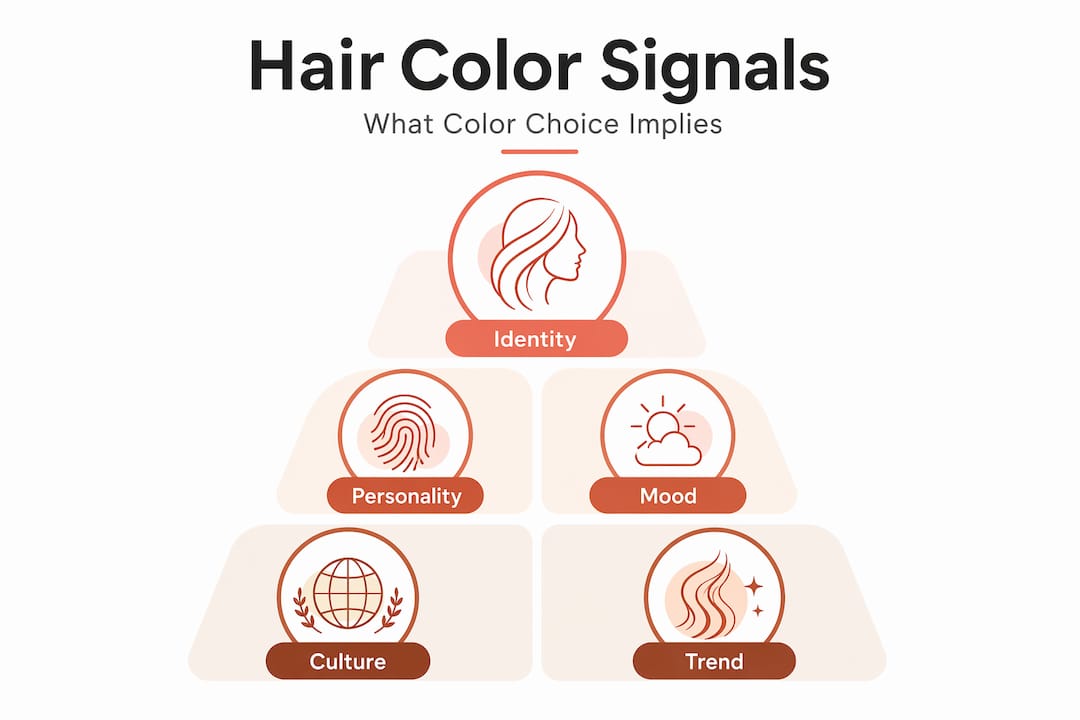
Knowing all of this, how do you actually apply it to choosing your next color? The answer is to treat the decision as a communication exercise before it becomes a chemistry one.
Start by asking what you want your hair to say. Not just “I want to look good” but something more specific:
- Are you marking a transition or reinforcing an existing identity?
- Do you want the change to be legible to others or primarily meaningful to yourself?
- How does the color you’re considering land in your specific social and professional environment?
- What is your tolerance for maintenance, and does that match the commitment level of the product and technique?
Staying close to your natural color reduces the gap between expectation and result, and that gap is where most dissatisfaction lives. The further you move from your natural base, the more the outcome depends on the skill of the person applying it and the condition of your hair going in. For picking hair color that genuinely fits your goals, matching intention to chemistry is non-negotiable.
Cultural context is not something to ignore, either. If you work in a creative field or a progressive urban environment, unconventional colors may reinforce your identity without social cost. In more conservative contexts, that same choice may create friction you did not intend. Neither outcome is wrong. But knowing the difference before you sit in the chair prevents regret.
My take on why hair color is never really “just hair”
I have watched clients sit down in the chair and describe what they want in purely aesthetic terms: a shade, a look, a photo they found online. But in over two decades of work, I have come to recognize that the color someone chooses almost always says something about where they are in their life, not just what they want to look like.
What I find most misunderstood is the idea that caring about the meaning of your hair color is somehow excessive. It is not. The interpretation of hair coloring decisions is woven into how we all process social information. Pretending that your hair choice exists in a vacuum is what actually leads to regret.
The hardest lesson I have seen clients learn is that chemistry is not infinitely flexible. You cannot always get to the color in your head in one appointment, and when people skip past the technique conversation to focus only on the shade, they often end up with a result that looks right in the photo but wrong on them. The connection between technique and intended personal meaning is not optional. It is the whole job.
What I have found is that clients who understand even a fraction of what their color choice communicates, culturally, psychologically, and chemically, make better decisions. They ask better questions. They are more satisfied with the results. And they come back knowing exactly what they want to build on. Hair color is not superficial when you understand what it is actually doing.
— Joelcma
Bring your hair color meaning to life with expert support

At Joelcma, we have spent over 25 years helping clients in La Jolla translate personal meaning into hair color that actually delivers. Understanding what you want to say with your hair is the starting point. Getting the chemistry and technique right is what makes it real. Whether you are exploring a first color change or refining a long-term look, our team of color specialists works through every layer of intention, technique, and maintenance with you before a single product is applied. Protect your investment with the right aftercare by exploring our guide to salon-grade shampoos for color, and discover how a luxury salon experience can make the difference between a color you settle for and one you love.
FAQ
What does hair coloring meaning refer to?
Hair coloring meaning refers to both the chemical process of changing hair color and the cultural, emotional, and psychological significance that color change carries. It covers everything from the technical definition of dyeing to the social signals a specific shade sends.
Why do people change their hair color?
Research shows that identity transition is the primary motivation for significant color changes. People use visible changes in hair color to signal internal shifts like major life events, new beginnings, or evolving self-perception.
What is the difference between temporary and permanent hair color?
Temporary color washes out after one shampoo because it does not bond chemically to the hair shaft. Permanent color opens the cuticle and bonds inside the hair structure, lasting until new growth appears.
Does hair color really affect how others perceive you?
Yes. Hair color perceptions are culturally constructed and can trigger social stereotypes that affect real-world treatment, though those reactions vary widely depending on cultural context and environment.
What hair coloring technique is best for a first-time color change?
Semi-permanent color or a soft highlight technique offers the most forgiving entry point. Both allow you to see how a shade works with your skin tone and lifestyle before committing to a permanent or double-process treatment.
Recommended
- How to Choose a Hair Color for a Stylish Transformation – Joel C Ma Hair Studio
- Should You Color or Cut First? Understanding Your Hair Choices – Joel C Ma Hair Studio
- How to Pick Hair Color: Expert Steps for Stunning Results – Joel C Ma Hair Studio
- Signature Hair Coloring Techniques: Elevating Personal Style – Joel C Ma Hair Studio