
Healthy Hair Care Tips: Habits That Work for Every Hair Type

Healthy hair comes from a handful of habits done consistently: wash on a schedule that fits your hair type, handle wet hair gently, limit and buffer heat, trim before ends split, feed your body well, and have a stylist check in regularly. None of it needs a 12-step routine. Below is what dermatology bodies recommend, plus what we see every day at our La Jolla studio.
TL;DR
- Learn your hair type first. Wash frequency, products and styling all follow from it, per the American Academy of Dermatology.
- Shampoo the scalp, condition the lengths, and detangle wet hair gently with a wide-tooth comb, starting at the ends.
- Use heat tools on low to medium settings with a heat protectant, and never every day.
- Trim every two to four months to keep split ends from traveling up the strand.
- Persistent shedding or thinning is a medical question: see a board-certified dermatologist.
Table of Contents
- Start with your hair type
- How often to wash your hair
- Handle wet hair gently
- Heat styling without the damage
- Trim on a schedule
- Color, chemical services and sun
- Choose products for your hair, not for the label
- Nutrition and when to see a doctor
- A simple weekly routine
- Our perspective on healthy hair
- Let us take care of the hard part
- FAQ
- Sources
Start with your hair type
Every good routine starts here. The AAD tells readers to identify their hair type, such as straight, curly, coarse or fine, and then choose products and habits made for it. A fine, straight head with an oily scalp and a coarse, tightly coiled head need nearly opposite things.
There is a simple reason for that. A Cleveland Clinic dermatologist explains that on curly, coarse hair natural scalp oils struggle to travel down the corkscrew-shaped strand, so the ends tend to be drier. Straight hair lets oil slide to the ends easily, so the scalp gets greasy faster.
A quick self-check:
- Straight or fine: gets oily at the roots within a day or two, can look flat, shows damage as limpness.
- Wavy: a mix, often oily at the roots and dry at the ends.
- Curly or coily: dry, prone to frizz and tangles, shows damage as lost curl pattern.
- Color-treated or chemically treated: treat it as its own category, since processing changes how hair absorbs moisture and handles heat.
If you are not sure, ask your stylist. A consultation at the chair is the fastest way to get an honest read on texture, density and condition.
How often to wash your hair
There is no universal number. The AAD says straight hair with an oily scalp may need daily washing, while curly, textured or thick hair should be shampooed as needed, at least once every two to three weeks. The Cleveland Clinic source adds that washing too often can lead to breakage, and that coarse, coiled or tightly curled hair should be washed at least every two weeks.
A practical starting point:
| Hair type | Starting rhythm | Note |
|---|---|---|
| Straight, oily scalp | Daily to every other day | Per AAD, daily may be needed |
| Wavy | Every two to three days | Adjust to how the scalp feels |
| Thick, textured, curly | As needed, at least every two to three weeks | Per AAD |
| Curly or coily, dry | Sulfate-free or conditioning shampoo about once weekly | Society for Pediatric Dermatology |
Washing less is not a license to skip entirely. The AAD notes that going very long between washes can cause dandruff from oil overproduction. If you use a dandruff shampoo on curly hair, apply it to the scalp only and use a moisturizing shampoo on the rest, since medicated formulas can dry curls.
Shampoo the scalp, condition the length
The Canadian Dermatology Association recommends focusing shampoo on the scalp and avoiding aggressive scrubbing. The suds that rinse down the lengths are enough to clean them. For conditioner, the AAD suggests covering the entire length of curly hair. Leave it on for a minute or two while you finish the shower rather than rinsing right away.
Handle wet hair gently
Wet hair stretches more than dry hair, but it also breaks more easily, which is why the Canadian Dermatology Association says to treat it gently. Three habits make the biggest difference:
- Use a wide-tooth comb, and start at the ends, working upward. The AAD describes this for wet-hair detangling.
- Let hair partly air dry before combing or styling. Less time under a dryer and less mechanical stress.
- Pat, do not rub. Blot with a soft towel or a cotton T-shirt instead of scrubbing the strands.
At night, Verywell Health suggests a satin or silk pillowcase to reduce friction. It is a cheap change, and it helps most for long, curly or color-treated hair.
If breakage is your main frustration, our guides on reasons for hair breakage and how to reduce hair breakage go deeper.
Heat styling without the damage
Heat is one of the habits readers most want to keep, and the good news is you can. The AAD advises minimizing heat tool use, always applying a heat protectant, and keeping settings low to medium. For flat irons, it recommends dry hair, low or medium heat, and no more often than every other day.
For curly and coily hair, the Society for Pediatric Dermatology explains that thermal straightening temporarily rearranges hair proteins and that intense heat can further weaken the hair, so it recommends lower temperatures and less frequent straightening.
A heat-smart routine looks like this:
- Start with hair that is dry, or at least mostly dry, on the tool.
- Apply a heat protectant evenly.
- Choose the lowest setting that works, and make one pass rather than five.
- Give your hair days off between hot styling sessions.
Our step-by-step guide to protecting hair from heat covers products and technique, and the one on choosing styling tools helps if you are shopping for a new dryer or iron.
Watch the tension, too
Heat is not the only stress. The Canadian Dermatology Association warns that regularly wearing tight ponytails, braids and buns can cause traction alopecia, and that when it recurs for months the hair loss can become permanent. For braids on curly or coily hair, the Society for Pediatric Dermatology advises keeping them loose at the scalp edge and not wearing them longer than two months. Switch up where your part falls and your ponytail sits, and loosen anything that stings.

Trim on a schedule
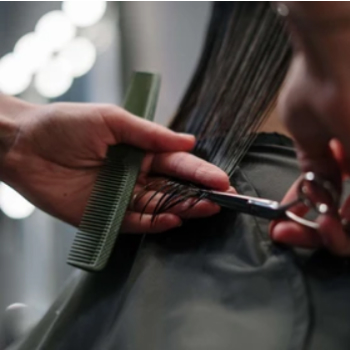
Split ends do not heal, and they keep splitting upward. The Society for Pediatric Dermatology recommends trimming every two to four months to reduce split ends and prevent breakage in the oldest, most damaged part of the hair. Shorter styles that need a defined shape, such as a bob or a men’s fade, usually want visits at the shorter end of that range. Long, one-length hair can often stretch toward the longer end.

Trims also keep growing out a cut from turning into a guessing game. If you are letting hair grow, tell your stylist. A small dusting of the ends protects length instead of costing it. Our walkthrough of low-maintenance haircuts and what to ask your stylist can help you choose a shape that grows out well.
Color, chemical services and sun
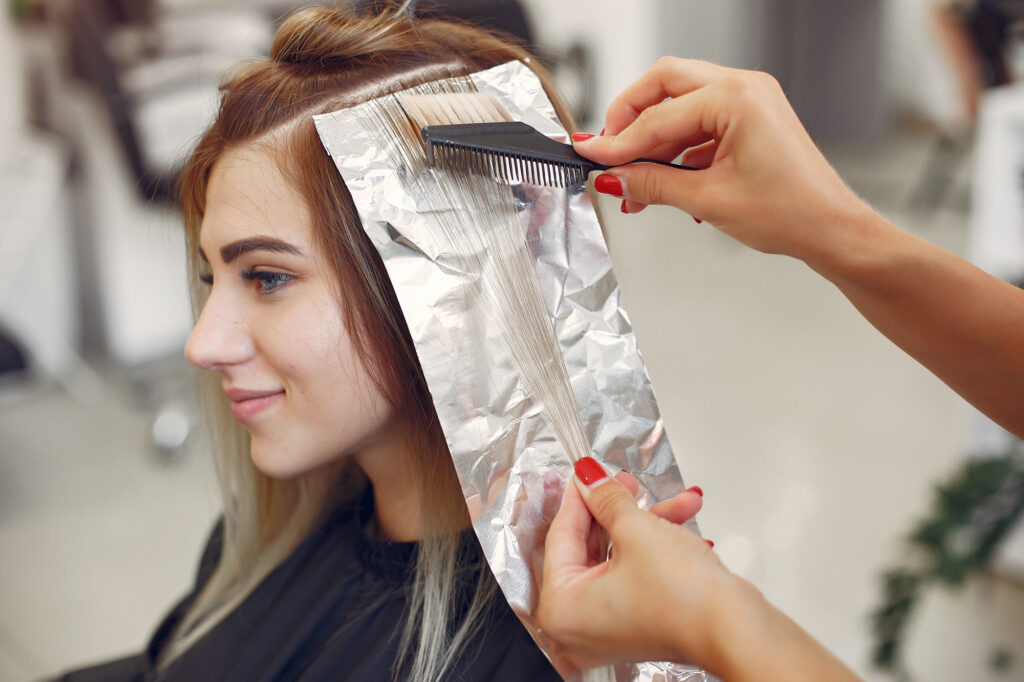
Coloring, perming and relaxing change the hair’s structure, so the timing and the condition of your hair matter. The Canadian Dermatology Association advises against applying these products to hair that is already damaged. In practice that means building a break in between services, adding conditioning in the weeks before a big change, and being honest with your colorist about what has been on your hair, including box color and past straightening.
Tips for keeping color-treated hair in good shape:
- Ask your colorist what is realistic for your starting point before you commit to a big lift.
- Book regular conditioning treatments between color appointments. Our guide to deep conditioning treatments explains what they do.
- Protect against sun and pool exposure with a cover-up or a leave-in made for it. See our piece on sun protection for hair.
- Read up on hair coloring safety precautions before trying anything new, especially if you have a history of scalp sensitivity.
Choose products for your hair, not for the label
The single most reliable rule is the AAD’s: pick products made for your specific hair type. A short, effective kit for most people:
- A shampoo suited to your scalp (oily, dry, flaky or sensitive).
- A conditioner suited to your hair’s lengths.
- A heat protectant if you use hot tools.
- A weekly or biweekly deep conditioner if your hair is dry, curly or color-treated.
- A wide-tooth comb and a brush that does not snag.
More products do not equal healthier hair. If you have a drawer of half-used bottles, bring them in or describe them, and a stylist can tell you which ones are doing a job.
Nutrition and when to see a doctor
Hair is a living product of what your body has to work with. The AAD notes that falling short on nutrients such as iron or protein can lead to hair loss, and that eating too few calories can cause significant shedding. It also advises finding out through a blood test whether you are low on any vitamin or mineral before taking a supplement to grow your hair.
That is where a salon’s role ends and a doctor’s begins. If you notice increased shedding, a widening part, bald patches, or a sore or itchy scalp, the AAD says to see a board-certified dermatologist, because hair loss has many causes and finding the cause sooner improves your odds. Hair care habits protect the hair you have. A dermatologist works out why it is falling out.
For general reading on the styling side of the topic, see our guide to preventing hair loss naturally and to preventing hair damage.
A simple weekly routine
Putting it together, here is what a realistic week might look like for someone with medium-length, color-treated hair. Adjust the wash days to your hair type using the table above.
- Wash day: shampoo the scalp, condition the lengths, detangle with a wide-tooth comb from the ends up.
- Drying: blot with a soft towel, let hair partly air dry, then style with a heat protectant on low to medium.
- Between washes: loosen ponytails, vary your part, sleep on satin or silk.
- Once a week or every other week: deep conditioning treatment.
- Every two to four months: trim.
- Whenever something feels off: book a consultation instead of experimenting.
Our perspective on healthy hair
After more than 25 years behind the chair, we have found that healthy hair is rarely about one miracle product. It is about a cut that suits your texture, color done with care for the hair’s condition, and a routine that you will actually follow.
That is why we start every visit with a conversation. Your hair type, your lifestyle, how much time you want to spend in the morning, and what you have done to your hair in the past all change what we recommend. A balayage on one client calls for a different aftercare plan than a men’s cut on another.
Our team is handpicked for technical skill and for a client-centered approach, and we pay attention to hair health and safety protocols in every service. When you come in regularly for trims and treatments, we can see small problems early, before they become big ones.
If you are planning a change, tell us about your hair’s history. We will build the look around hair that stays strong, not just hair that looks good on the day.
Juiced
Let us take care of the hard part
A good routine at home works best alongside regular salon care. At Joel C Ma Hair Studio in La Jolla, we offer personalized consultations, women’s and men’s haircuts, color, and conditioning and smoothing treatments. Published prices on our services page include a women’s haircut at $60-75, a men’s haircut at $45-50, a deep conditioning blow dry style at $80-85, and an Opaplex colored deep conditioning blow dry style at $115.

If you want a plan built around your hair, book a visit and tell us about your hair goals. For color, our coloring page shows what we do, and for a fresh shape, see our haircuts page.
FAQ
How can I make my hair healthier fast?
There is no overnight fix, but the quickest wins are a trim to remove split ends, a deep conditioning treatment, and cutting back on daily heat. Switching to products made for your hair type also helps. Lasting change comes from keeping those habits for a few months.
Is it bad to wash my hair every day?
It depends on your hair. The AAD says straight hair with an oily scalp may need daily washing, while curly or thick hair does better washed as needed, at least every two to three weeks. Washing too often can cause breakage in some hair types, so match the rhythm to your texture.
How often should I get a haircut to keep hair healthy?
The Society for Pediatric Dermatology suggests every two to four months to reduce split ends and breakage. Shorter, shaped cuts usually need visits sooner than long, one-length hair. Your stylist can set a schedule that fits your cut.
Can diet affect hair health?
Yes. The AAD says low intake of nutrients like iron or protein, or eating too few calories, can lead to hair loss. Ask a doctor for a blood test before starting a supplement. If you are shedding more than usual, see a board-certified dermatologist.
Does heat styling ruin hair?
Not if you use it carefully. The AAD recommends a heat protectant, low to medium settings, and flat irons on dry hair no more than every other day. Giving your hair breaks between sessions keeps damage down.
Sources
- Tips for healthy hair, American Academy of Dermatology
- 6 curly hair care tips from dermatologists, American Academy of Dermatology
- Hair styling without damage, American Academy of Dermatology
- Hair loss: Tips for managing, American Academy of Dermatology
- How Often Should You Really Wash Your Hair? Cleveland Clinic
- Hair Care, Canadian Dermatology Association
- Curly/coily hair care, Society for Pediatric Dermatology
- How to Build the Perfect Hair Care Routine, Verywell Health