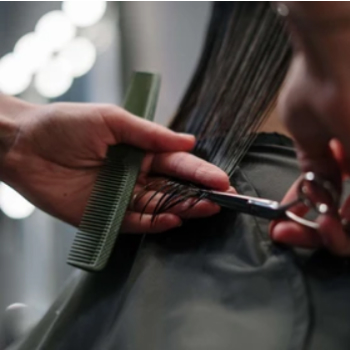

Fine Hair Styles: The Cuts That Add Volume and Body

The best fine hair styles build weight where hair looks thinnest and keep structure at the ends. That means blunt bobs, lobs, pixies and soft, long layers, not heavy layering or razored edges. Fine hair is not a problem to hide. It responds very well to the right shape, and most of the work happens in the cut, before you pick up a blow dryer.
Below you will find the cuts that work at each length, what to avoid, how to style fine hair so it holds, and what to say in the consultation so your stylist cuts for fullness.
TL;DR
- Blunt perimeters make fine hair look denser. Bobs, lobs and blunt-ended long cuts are the safest starting point.
- Keep layers soft and few. Heavy layering, razor finishes and very long shapeless lengths can emphasize thinness.
- Pixies and French bobs give structure and a thicker feel, if you like short hair.
- Volumizing products, a root-lifting blow dry and dry shampoo do the rest, but the cut is what makes them work.
- If you notice significant thinning, see a doctor as well as a stylist.
Table of Contents
- Why fine hair needs a different kind of cut
- Short fine hair styles
- Medium-length styles: the lob and the layered midi
- Long fine hair styles
- Bangs and fringes
- Quick comparison: which cut fits which goal
- Choosing based on texture and face shape
- What if your hair is thinning, not just fine?
- How to style fine hair so the cut holds
- Keeping fine hair healthy between visits
- Color can add the look of density, too
- Our perspective
- What to say in your consultation
- Book a fine-hair consultation with us
- FAQ
- Sources
Why fine hair needs a different kind of cut
Fine hair has thin individual strands. It often lies flat at the root, loses shape by afternoon and can look stringy when it is cut with too many layers. The goal is the illusion of volume: weight at the bottom, lift at the crown, and movement that does not remove bulk.

That is the common thread in what stylists say. Vogue’s guide to haircuts for thin hair points to blunt cuts and soft, strategic layers as ways to make hair look fuller. Celebrity stylist Clariss Rubenstein, quoted by Harper’s Bazaar, says the aim for fine hair is a “strong bottom” so it does not look stringy, with a soft dusting of layers instead of aggressive thinning.
The same idea shows up in an InStyle stylist roundup: gentle structure and movement suit thin hair, while heavily layered cuts, razor finishes and ultra-long shapeless lengths can make thinness more obvious.
Short fine hair styles
Short hair is often the most flattering option for fine hair. There is less length for gravity to pull down, and the cut itself provides shape.
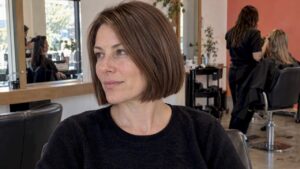
Blunt bob
A blunt bob is the classic answer. Vogue notes that blunt bobs and pixie cuts give fine hair structure and can create the look of thickness. One-length cuts paired with a strategic side part can also build heaviness at the bottom, a point stylist Devin Toth makes in Allure’s stylist guide.
Ask for a clean line at the jaw or chin and minimal internal layering. A graduated or slightly stacked back can add lift at the crown without removing weight from the front.
French bob
The French bob is short, often tucking in under the ear, and Harper’s Bazaar describes it as a refined way to add instant density. It suits straight and slightly wavy fine hair and looks polished with very little styling.
Pixie
Pixies shape the hair close to the head, which often gives a thicker feeling and plenty of styling options, according to Vogue. Stylists in the InStyle piece recommend a soft, textured pixie with volume at the crown and slightly longer top layers, while keeping density at the sides and crown.

If a full pixie feels like a leap, a grown-out “trixie” is a middle ground. Elle describes it as a pixie-bob hybrid with a longer layered neck, a swept-back or pushed fringe and a choppy perimeter, and quotes stylist Tobias Bell on precision cutting to create short textured layers that frame the face.
If you are weighing the options, our guide to short hair styles for women walks through how to choose between them.
A note on the Italian bob
The Italian bob is popular, but its construction matters. It is a rounded, chin-to-collarbone shape, and many versions rely on internal layering to create movement. Brands that describe it generally place it on medium-to-thick or wavy hair. On fine hair, ask your stylist to keep the internal layers minimal and the perimeter dense, or choose a blunt bob instead.
Medium-length styles: the lob and the layered midi
Mid-length cuts give you the most versatility: you can tie hair back, curl it or wear it straight. They also hold weight well.
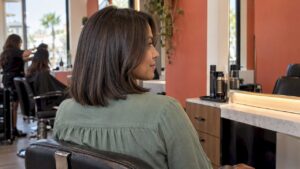
- Collarbone-length cut. Elle quotes stylist Samantha Cusick saying that collarbone-length cuts keep enough weight for hair to look fuller. For fine hair she suggests longer, subtler face-framing layers, a longer bob or lob, and minor internal layering through the top.
- Lob with face framing. InStyle’s featured colorist Min Kim recommends blunt bobs, face-framed lobs or layered pixies for thin hair.
- Soft layered mid-length. Healthline describes soft, blended layers starting around the chin or collarbone, which give volume and movement without over-thinning the ends.
The layers are the part to watch. Layers that start high and are cut lightly lift the roots. Layers that are cut short and choppy through the middle can make the ends look wispy. Our post on layered hair benefits explains how placement changes the result.
Long fine hair styles
Long hair can work, but it needs maintenance. Vogue’s advice is simple: soft long layers can keep most of the hair’s thickness while allowing volume and shaping around the face, and long ends should stay blunt and healthy with regular trims.

Healthline notes that long layers should begin below the chin to preserve fullness. Anything much shorter than that, and you are trading density at the ends for lift at the top.
If you love length, a few practical rules:
- Keep the bottom inch or two blunt, not feathered.
- Trim on a regular schedule so the ends never thin out.
- Ask for face-framing pieces rather than layers all over.
- Part your hair to the side. A deeper side part makes the hair at the top look fuller.
Bangs and fringes
Fine hair and bangs can work together, with a caveat. Vogue recommends side-swept fringes over straight-across bangs, because they tend to stay cleaner and help hair look thicker. A blunt, full fringe takes a lot of hair from the crown, which is exactly the area you want to protect.
Quick comparison: which cut fits which goal
| Cut | Best for | What to ask your stylist |
|---|---|---|
| Blunt bob | Maximum density at the ends | One-length perimeter, minimal layering |
| French bob | Polished, low-effort fullness | Ear-to-chin length, soft ends |
| Textured pixie | Volume at the crown, easy styling | Longer top, density kept at the sides |
| Lob | Versatility and weight | Collarbone length, subtle face framing |
| Layered midi | Movement and root lift | High, light layers, full perimeter |
| Long, blunt ends | Keeping length | Soft long layers below the chin, regular trims |
Choosing based on texture and face shape
Texture changes the answer. Vogue’s advice is that curly hair suits rounded, layered cuts, while pin-straight hair suits sharp, symmetrical shorter styles. Fine, wavy hair often does best with a soft shoulder-length cut. Cusick recommends layers beginning at the cheekbone for that texture.
Face shape matters too. If you have a rounder face, a lob with face-framing pieces can add length visually. Our guide to haircut ideas for round faces covers this in detail, and our look at volume-boosting haircuts rounds up more shapes to bring to your consultation.
What if your hair is thinning, not just fine?
Fine and thinning are different things. Fine describes the width of each strand. Thinning means you have fewer strands, or you are losing them. The haircut advice overlaps: prioritize blunt shapes such as bobs that create density at the ends, and talk to your stylist about keeping the perimeter strong.
But thinning can have causes beyond the hair itself. According to Allure’s guide, aging, diet and heredity can all play a part, and if the change is significant, it is worth seeing a doctor to identify and address underlying causes. A stylist can change how your hair looks, but a doctor, such as a primary care physician or dermatologist, is the person to work out why it is changing.
For styling help in the meantime, see how to style thinning hair for a fuller look.
How to style fine hair so the cut holds
A good cut gets you most of the way. The rest is technique.
Use the right products, sparingly
Volumizing products work by coating the hair. According to Marie Claire, they deposit positively charged proteins and conditioning agents onto the hair’s negatively charged surface, which makes strands look and feel thicker. The same piece suggests dry shampoo at the roots for lift.
A light hand matters. A small amount of mousse at the roots does more than a lot of heavy cream through the lengths.
Blow-dry for lift
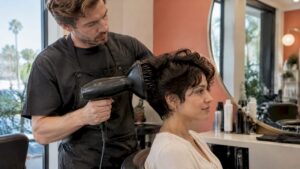
Blow-drying is where fine hair gets its shape. Healthline notes that drying with your head flipped upside down, or using a round brush, encourages root lift and body. Marie Claire also recommends blow-drying upside down. Stylist Lund, quoted in Good Housekeeping, describes blow-drying as a setting step that adds longevity and volume, especially when you move the hair in several directions as it dries.
A simple routine:
- Towel-dry gently and apply a volumizing product at the roots.
- Rough-dry the roots first, lifting them in different directions.
- Flip your head over for a minute or two of drying.
- Finish sections with a round brush, only at the end.
- Cool the style with a short blast of cool air to set it.
We go deeper in how to style fine hair for volume, and if you prefer to skip the dryer, try heatless styling techniques.
Add grit at the end
Dry shampoo does more than absorb oil. Healthline says it adds grit and texture to fine hair, which helps hold volume and extend the life of a style. Backcombing a small section at the crown is another traditional way to get instant lift.
Keeping fine hair healthy between visits
Fine strands are delicate, and damage shows quickly. Healthline’s guidance is practical:
- Get regular trims to prevent split ends.
- Avoid tight hairstyles, which can cause breakage or hair loss.
- Use a detangler on wet hair, since wet strands can snap when brushed.
- Go easy on heat, because too much can weaken fine strands.
A conditioner is still worth using, just keep it away from the scalp and roots. If your hair is color-treated, a color-safe conditioner helps keep it light but protected, and a periodic deep conditioning treatment can restore softness without weighing it down.
Color can add the look of density, too
Flat, single-tone color can make fine hair look thinner. Dimensional color, such as soft balayage or well-placed highlights, creates depth and the look of more hair. If you are curious, read what balayage is and why it transforms hair color and the difference between balayage and highlights. Ask your colorist to be gentle with the lightener, since fine hair is more vulnerable to damage.
Our perspective
At Joel C Ma Hair Studio, we treat fine hair as a design brief, not a limitation. With more than 25 years behind the chair, our founder has seen the same pattern again and again: clients come in asking for more volume, and what they actually need is a better perimeter and a smarter placement of layers.
That is why we start every visit with a style consultation. We look at how your hair grows, where it lies flat, how much time you will really spend styling it and what you want to feel when you look in the mirror. Then we choose the shape, the length and the finish together. Our team works with precision cutting, so a blunt line stays blunt and a soft layer does its job without stealing weight.
We also think color and cut should be planned together. A fine-hair cut with dimensional balayage often reads as fuller than the same cut in one flat shade, and our colorists plan lightening with hair health and safety in mind.
The best result is a cut you can recreate at home in ten minutes. That is what we build toward.
Juiced
What to say in your consultation
Bring photos, but also bring information. These questions help your stylist cut for your hair rather than for the picture:
- “My hair is fine and lies flat at the roots. How can the cut add lift?”
- “Can we keep the perimeter blunt and dense?”
- “Where should my layers start, and how many do I really need?”
- “How often should I come in to keep this shape?”
- “What can I do in under ten minutes each morning?”
Note how much time you will spend styling, and whether you use heat. If you are not sure about a big change, a blow dry style or a trim is a low-risk way to see how a stylist works.
Book a fine-hair consultation with us
At Joel C Ma Hair Studio in La Jolla, we cut and style fine hair with these principles in mind. Women’s haircuts are $60-$75, men’s haircuts are $45-$50 and a blow dry style is $45-$75. For an event, a special occasion updo starts from $100, and a deep conditioning treatment with blow dry is $80-$85.

See our full service menu and pricing, or learn about our special occasion styling, then book a consultation and tell us what you want your hair to do.
FAQ
What is the best haircut for fine hair?
For most people it is a blunt cut at bob or lob length. A dense perimeter makes hair look thicker, and soft layers or a side part add lift without removing weight. Pixies and French bobs are strong options if you prefer short hair.
Do layers make fine hair look thinner?
Heavy layering can. Stylists quoted by InStyle say heavily layered cuts and razor finishes can emphasize thinness. Soft, long or high light layers with a full perimeter are usually safer for fine hair.
Is long hair a bad idea if my hair is fine?
Not necessarily. Long hair works when the ends stay blunt and healthy, and when you trim regularly. Soft long layers starting below the chin can preserve fullness while adding movement.
How do I make fine hair look fuller every day?
Start with a volumizing product at the roots, blow-dry the roots first and try drying with your head flipped over. Finish with a little dry shampoo for grit. Avoid heavy conditioners near the scalp, and keep heat moderate.
Should I see a doctor about thin hair?
If you notice significant thinning or a sudden change, yes. Aging, diet and heredity can all play a part, and a doctor can identify underlying causes. Your stylist can help you choose a cut that works while you do.
Sources
- The Best Haircuts to Try if You Have Thin Hair, Vogue
- Have Thin, Fine Hair? Discover the Best Haircuts for You, Healthline
- The 48 Best Haircuts for Thin Hair, According to Stylists, Allure
- 25 Best Hairstyles for Fine Hair, Harper’s Bazaar
- 21 Volumizing Haircuts for Thin Hair, According to Stylists, InStyle
- Layered Haircuts for Mature Hair, Elle
- Summer 2025 hair trends, Elle UK
- 51 Best Hairstyles for Fine Hair, Marie Claire
- 26 Best Hairstyles to Make Thin Hair Look Fuller, Good Housekeeping