
Organic Hair Color Salon Near Me: A Health-First Booking Guide
Book a consultation, not a color appointment, as your first step. A salon that uses verified low-PPD or plant-based professional color, requires a mandatory patch test, and can show you what’s actually in the bottle is worth your time. One that gets vague about ingredients or skips the patch test is not, no matter how good its Instagram looks.
Here’s how to move fast on this:
- Search “organic hair color salon near me” and call two or three results directly instead of just reading their websites.
- Ask which professional brand they use. Lines like Natulique publish reduced-PPD formulations by name, so a stylist who knows their product line will answer without hesitation.
- Ask if they carry certified or independently verified clean formulas (COSMOS/ECOCERT-style standards are the industry’s actual proof points, not marketing copy).
- Confirm a patch test is required, not optional, before your first color service.
If your local search comes up thin, salons like Joel C Ma Hair Studio in La Jolla work directly with clients on ingredient questions and patch-test scheduling before booking a full color appointment.
Pro Tip: Call the salon and ask one specific question: “What professional color line do you use, and does it list PPD concentration?” A stylist who answers instantly knows their products. One who says “it’s all natural” and stops there probably hasn’t read the label either.
Key Takeaways
Verifying a salon’s organic or non-toxic claims takes one direct phone call: ask for the product brand name, confirm the patch-test policy, and request to see the ingredient data sheet.
| Point | Details |
|---|---|
| Ask for brand names, not buzzwords | “Organic” alone means nothing; ask which professional line they use and whether it’s PPD-reduced or ammonia-free. |
| Patch tests are mandatory, not optional | Reputable salons schedule a patch test 24 to 48 hours before your first color service, no exceptions. |
| Watch gray-coverage tradeoffs | Lower-chemical formulas often cover gray well but resistant gray may need more frequent touch-ups. |
| Henna isn’t automatically safer | Some henna mixes contain metallic salts that can damage hair and clash with future chemical services. |
| Joel C Ma Hair Studio offers a vetted local option | The La Jolla studio pairs personalized consultations, mandatory patch tests, and product transparency for clients seeking organic-conscious color. |
Table of Contents
- What “Organic” Actually Means in a Color Bowl
- What Organic and Lower-Chemical Color Services Actually Look Like
- How Do You Verify a Salon’s Organic Claims?
- What Does Organic Hair Color Cost, and How Long Does It Take?
- What Should You Ask, and What’s a Red Flag?
- What If There’s No Certified Organic Salon Near You?
- How Joel C Ma Hair Studio Approaches Organic-Conscious Color
- Why Ingredient Transparency Should Be Non-Negotiable
- Ready to Book Your Organic-Conscious Color Consultation?
- Sources
What “Organic” Actually Means in a Color Bowl
“Organic” on a salon sign is marketing language, not a regulated cosmetic standard, at least in the U.S. hair color world. No federal certification requires a colorist to prove a formula is organic before using that word in a service menu. That doesn’t mean the term is meaningless. It means the burden is on you to ask what’s actually in the tube.
A few phrases show up constantly, and they don’t all mean the same thing:
- Plant-based: contains botanical extracts or oils, but usually still relies on synthetic dyes for actual color deposit.
- Ammonia-free: swaps ammonia for an alternative lifting agent, often monoethanolamine (MEA), which can still irritate sensitive skin.
- PPD-reduced: lowers paraphenylenediamine concentration rather than eliminating it. Natulique’s professional formulas are built around this approach, cutting PPD levels significantly while still delivering gray coverage.
- Vegan: no animal-derived ingredients or animal testing, which is about ethics, not chemical safety.
The ingredients that genuinely matter for health are PPD, formaldehyde and formaldehyde-releasing preservatives, and persulfates used in lightening powders. The National Cancer Institute classifies formaldehyde as a human carcinogen, which is exactly why checking for it in salon products isn’t paranoia. It’s basic due diligence.
Pro Tip: Ask to see the salon’s technical data sheet for the color line they use, not just the box. A stylist who pulls one up on their phone or points to a binder behind the desk is showing you real transparency.
What Organic and Lower-Chemical Color Services Actually Look Like
Once you’re past the marketing terms, the services themselves fall into a handful of categories, each with real tradeoffs. No formula, organic or otherwise, escapes the basic chemistry of hair color: lift and longevity generally come at the cost of using stronger active ingredients.
- Ammonia-free permanent color: full gray coverage and lasting color, using alternatives like MEA instead of ammonia. Products like Dénuée from Montibello use water-based AQUAGEL technology to deposit pigment without ammonia, marketed as a vegan option with a high concentration of natural ingredients.
- PPD-reduced professional permanent: similar performance to standard permanent color but formulated with lower PPD concentrations, a middle ground for clients who need full coverage but want reduced exposure.
- Demi-permanent and toners: shorter-lived color with no ammonia and less structural change to the hair shaft. Great for refreshing tone between full-color appointments.
- Semi-permanent color: deposits pigment on the hair’s surface without lifting, ideal for anyone easing into lower-chemical routines.
- Plant and henna-based options: genuinely botanical in many cases, but not automatically safer. More on that below.
- Balayage and highlights with lower-tox formulas: hand-painted techniques that use lightener only where needed, often paired with an ammonia-free base color to limit overall chemical exposure.
Gray coverage is where tradeoffs get real. Lower-PPD and ammonia-free formulas can cover gray effectively, but stubborn resistant gray sometimes needs a slightly stronger formula or more frequent touch-ups to hold. A stylist experienced in gray blending techniques can usually get you there with the gentler option first.
How Do You Verify a Salon’s Organic Claims?
Anyone can put “organic” in a business name. Verifying it takes about ten minutes, either on the phone or in a first visit.
- Ask for the professional brand name, by name. “We use organic products” is not an answer. “We use Natulique” or a comparable named line is.
- Request the ingredient list or safety data sheet (SDS). Legitimate salons keep these on hand for staff safety compliance anyway, so producing one isn’t a burden.
- Confirm the patch test policy is mandatory, not optional. Reputable salons require one 24 to 48 hours before your first color service, every time, with no exceptions for “I’ve never had a reaction before.”
- Look at the physical space. Good ventilation, visible PPE for staff mixing color, and a recycling or refill station for foil and product containers signal a salon that treats “eco-conscious” as a practice, not a slogan.
- Check staff training and certifications. Ask how long the colorist has worked with the specific low-chemical line they’re recommending for you.
- Review the before-and-after gallery. Consistent, varied results across different hair types and colors say more than five-star review counts alone.
A peer-reviewed review of occupational exposures in hairdressing notes real limitations in the existing research, which is exactly why the industry leans on precaution rather than certainty. Patch tests and ingredient transparency aren’t theater. They’re the practical response to genuine unknowns.
Pro Tip: A legitimate product list sounds like this: “We use [specific brand], it’s ammonia-free with reduced PPD, and here’s our SDS if you want to see it.” A greenwashed answer sounds like: “Oh, it’s all natural, don’t worry about it.” If you hear the second version, ask again, more specifically.
What Does Organic Hair Color Cost, and How Long Does It Take?
Organic and lower-chemical color services generally run close to standard professional color pricing, sometimes slightly higher, since specialty lines and extra consultation time add cost. What drives the price is less about the “organic” label and more about technique complexity, product volume, and who’s holding the brush.
- Root touch-up with ammonia-free or PPD-reduced color: shortest appointment, lowest product volume, fastest turnaround.
- All-over color: more product and processing time than a touch-up, moderate complexity.
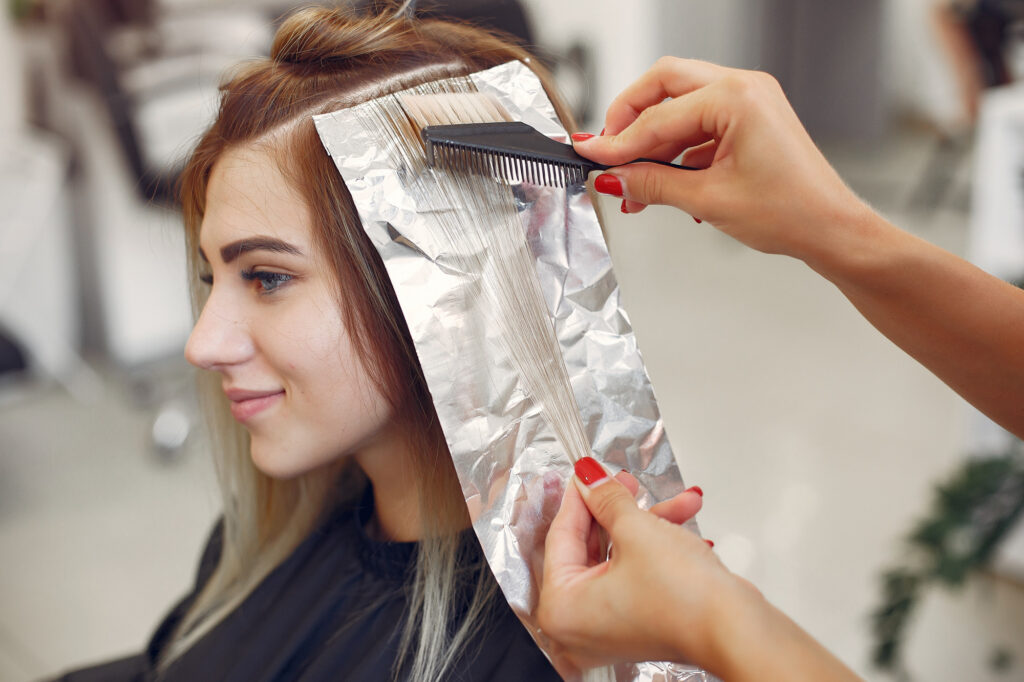
- Balayage or highlights with foil work: longest appointment on this list, given the hand-painting or foiling technique plus toning.
- Corrective or high-lift color: most complex, often requiring multiple sessions regardless of formula type.
Expect your first visit to include a consultation and a patch test scheduled in advance, not squeezed into the same appointment. Processing time for lower-chemical formulas can run slightly longer than conventional dyes since some plant-based and reduced-ammonia lines develop more gradually. Budget extra time at your first appointment specifically for this, and expect touch-up frequency to be comparable to conventional color depending on your regrowth and gray coverage.
What Should You Ask, and What’s a Red Flag?
A good consultation answers these without you having to push:
- What professional brand do you use for organic or low-chemical color, specifically?
- Is a patch test required, and how far in advance do we need to schedule it?
- What result can I realistically expect, and how will maintenance differ from conventional color?
- What aftercare products do you recommend to protect the color and my scalp?
Watch for these warning signs during the conversation:
- Refusal or reluctance to do a patch test, especially for a first-time client.
- Vague, single-word answers about ingredients (“it’s clean,” “it’s natural”) with no brand or specifics offered.
- No documentation of professional certifications or the product lines they carry.
- A before-and-after portfolio that looks suspiciously uniform, or unavailable when you ask to see more.
If a stylist gets evasive, ask directly for the SDS or a copy of the patch-test record from a recent client (redacted, obviously). A salon with nothing to hide produces this without friction. One that stalls or changes the subject is telling you something.
What If There’s No Certified Organic Salon Near You?
Not every area has a dedicated organic or clean-beauty salon, and that’s a real problem for a lot of searchers. The fallback isn’t to skip professional color altogether. It’s to apply the same vetting standard to a trusted full-service salon.
- Book a consultation at a reputable full-service salon and ask specifically whether they carry a PPD-reduced or ammonia-free professional line, even if it’s not their primary marketing angle.
- Prioritize patch tests and visible ventilation regardless of whether the salon brands itself as “organic.”
- Consider demi-permanent or semi-permanent color as a lower-exposure option if you don’t need dramatic lift, since these skip the strongest lightening chemistry entirely.
- Not all “natural” claims hold up under scrutiny, either. Some henna-based dyes contain metallic salts that can damage hair and interfere badly with future chemical services, so ask exactly what’s in any henna product before committing.
Pro Tip: If you’re still researching longer-term plant-based options, ask about a gloss or toner service in the meantime. It refreshes your color with minimal chemical exposure while you keep looking for the right permanent solution.
How Joel C Ma Hair Studio Approaches Organic-Conscious Color
Joel C Ma Hair Studio, based in La Jolla, built its reputation on personalized consultations and advanced color technique, backed by more than 25 years of experience on the team. That experience matters most when a client asks specific, health-focused questions before committing to a formula.
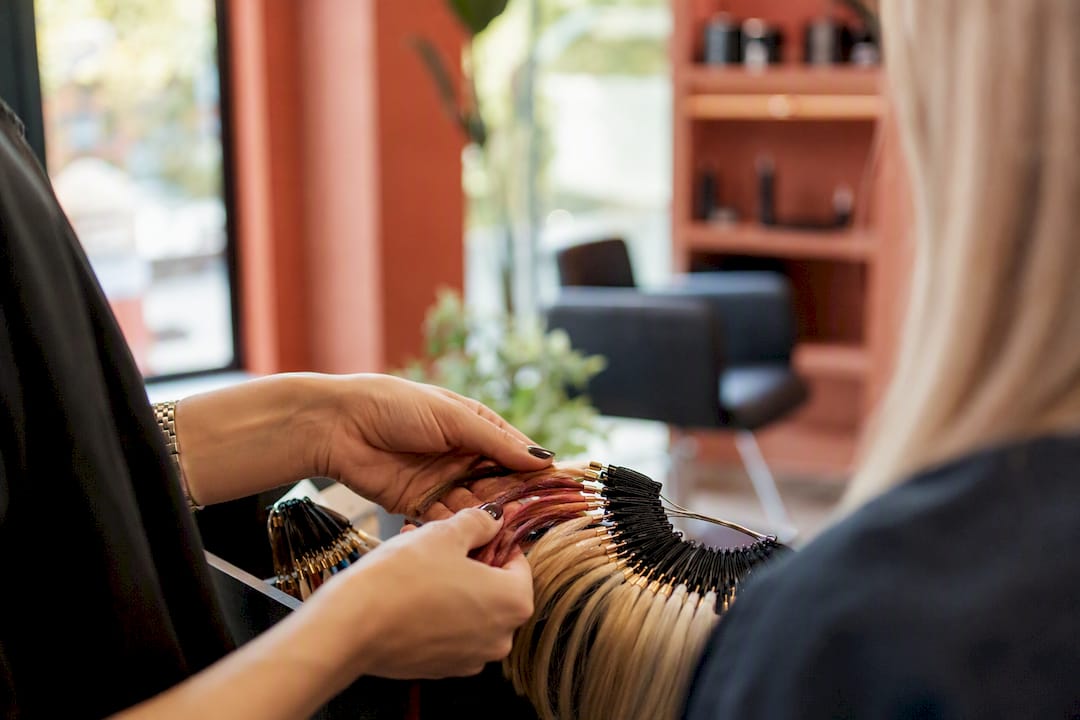
Booking here starts with a real consultation, not a rushed intake form. Expect a conversation about your color history, any past reactions, and your goals, followed by a scheduled patch test before your first color service. The team can walk you through the professional lines they use and how those formulas compare on PPD content and ammonia alternatives.
What you get on appointment day:
- A stylist who explains the color technique being used and why it fits your hair and goals.
- Aftercare recommendations tailored to color-treated hair, not a generic handout.
- Straight answers about product transparency, since a client who asks about ingredients should get a real answer, not a brush-off.
If you’re ready to ask these questions in person, request an organic-conscious consultation and bring your color history with you.
Why Ingredient Transparency Should Be Non-Negotiable
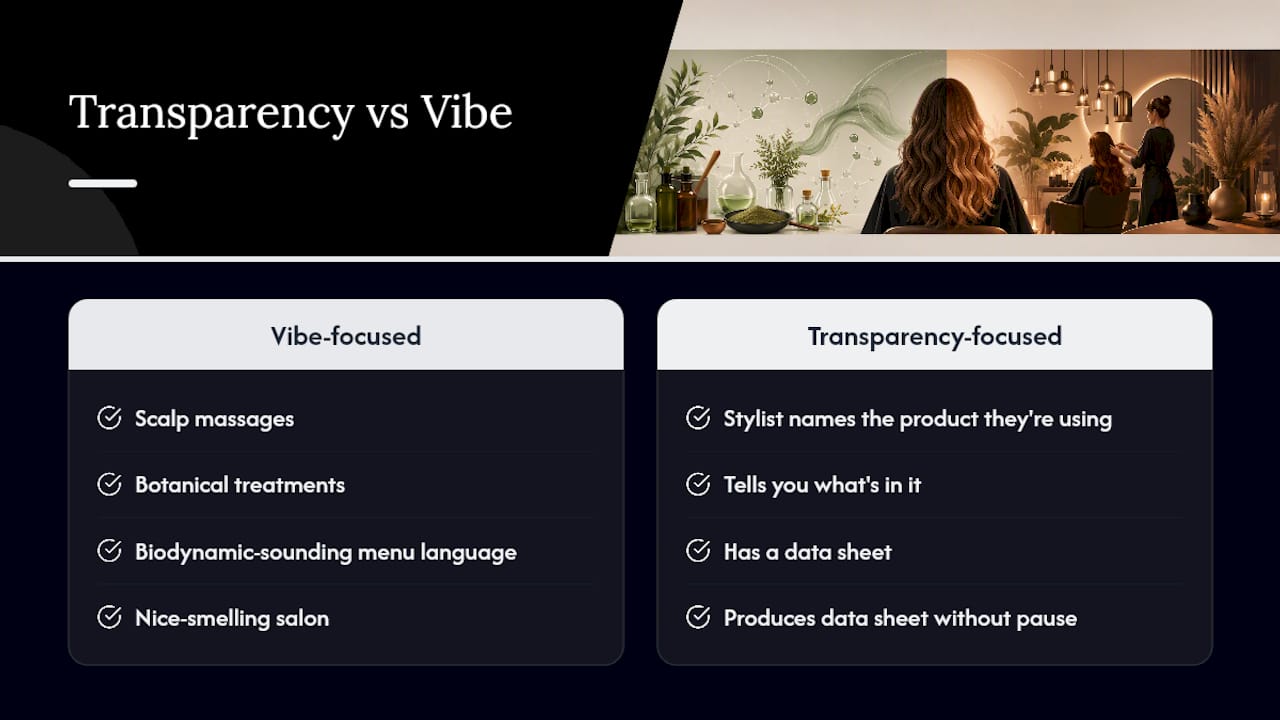
Clean-luxury salon culture has leaned hard into wellness rituals lately, scalp massages, botanical treatments, biodynamic-sounding language on the menu. Some of that adds genuine value to the guest experience. None of it substitutes for a stylist who can name the product they’re using on your scalp and tell you what’s in it.
The gap between a nice-smelling salon and a genuinely low-chemical one is a data sheet, not a vibe. If a salon can produce one without a pause, trust the rest of what they’re telling you.
Ready to Book Your Organic-Conscious Color Consultation?
Joel C Ma Hair Studio approaches organic-conscious color the way it should be handled: a real consultation first, a scheduled patch test, and a straight answer about which professional line is going on your hair and why. That’s the difference between a salon that markets “clean” and one that can actually back it up in the chair.
Before your visit, put together a short list: your color history for the last year or two, any known allergies or past reactions, and a few reference photos of the tone you’re after. Mention up front that you’ll need a patch test scheduled ahead of your color appointment, since Joel C Ma Hair Studio builds that into the process rather than treating it as an afterthought. If you’re coming in for a full color transformation, ask about pairing it with a personalized styling consultation so your cut and color work together instead of being planned separately.
Book your consultation and haircut appointment directly through the studio’s booking page, and bring your questions. A stylist who’s confident in their products will welcome them.
Sources
- Natulique — Natural hair colours
- National Cancer Institute — Formaldehyde fact sheet
- NCBI PMC — review on hairdressing exposures (PMC3212879)
Recommended
- Hair Salons Near Me That Dye Hair: Where To Book – Joel C Ma Hair Studio
- Hair Coloring Safety Precautions: What You Need to Know – Joel C Ma Hair Studio
- Best Color Salons Near Me: A Local, Luxury Shortlist – Joel C Ma Hair Studio
- Mobile Hair Stylists Near Me: Find and Book Fast – Joel C Ma Hair Studio