
Haircut Etiquette for Men: The Complete 2026 Guide
TL;DR:
- Proper men’s haircut etiquette includes preparing with hygiene and punctuality to ensure quality results. Clear communication with specific references and respectful in-chair behavior helps build trust and achieve desired styles. Maintaining good grooming habits and consistent tipping fosters long-term relationships with barbers.
Haircut etiquette for men is defined as the set of social and professional behaviors that govern how a man prepares for, communicates during, and conducts himself throughout a barbershop or salon visit. Getting this right is not about being polite for politeness’s sake. It directly determines the quality of the cut you walk out with. Men who follow clear grooming etiquette get better results, build stronger relationships with their barbers, and project more confidence in professional settings.
What is haircut etiquette for men, and why does it matter?
Barbershop etiquette is the unwritten code that makes the entire service work. It covers hygiene, punctuality, communication, tipping, and behavior during the cut itself. When you ignore any one of these, you create friction that affects the final result.
The stakes are real. A barber working on a client who arrives late, smells bad, or gives vague instructions cannot do their best work. The men’s grooming standards that professionals expect are not arbitrary. They exist because close-contact services require mutual respect to function well.
Grooming etiquette for men also matters outside the chair. How you present yourself at a barbershop signals how you handle professional interactions generally. Men who communicate clearly, tip appropriately, and respect the barber’s time tend to get prioritized, remembered, and served better on every return visit.
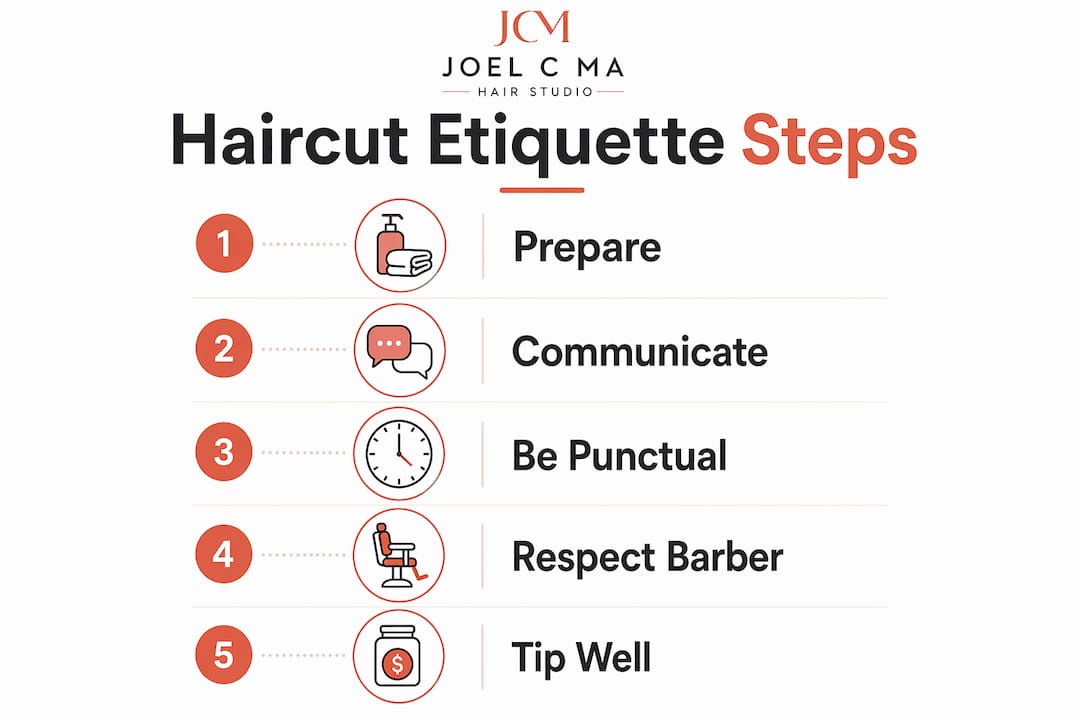
How should you prepare before a haircut appointment?
Preparation is the most overlooked part of men’s haircut manners. Most men show up and expect the barber to handle everything. The barbers who deliver the best cuts consistently say the opposite is true.
The non-negotiables before any appointment:
- Shower beforehand. Barber professionals advise showering before your visit and avoiding body odors. Close-contact work is uncomfortable for everyone when basic hygiene is skipped.
- Arrive on time. Arriving late compresses your appointment and puts pressure on the barber to rush. That pressure shows up in the final cut.
- Bring reference photos. Pull 2–3 images from different angles that show the style you want. Vague descriptions like “short on the sides” mean different things to different people.
- Know your payment method. Some shops are cash-only. Checking in advance avoids an awkward moment at the register.
- Come with a clear idea of your style. If you are unsure, that is fine. But say so upfront so the barber can guide the consultation rather than guess.
Pro Tip: Wash your hair but skip the heavy styling products before your appointment. Product buildup makes it harder for the barber to assess your natural texture and growth patterns.
One often-missed step is thinking about your lifestyle before you sit down. A cut that looks great in a reference photo but requires 20 minutes of daily styling is a bad fit if you spend 5 minutes getting ready each morning. Knowing your actual routine before the appointment saves you from a cut you will not maintain.
How do you communicate your desired haircut clearly?
Clear communication is the single biggest factor in haircut satisfaction. Bringing 2–3 reference photos and covering your professional needs and maintenance schedule during the consultation produces consistently better outcomes. Most disappointments trace back to vague or incomplete instructions.
Follow this sequence for a productive consultation:
- Show your reference photos first. Let the barber see the goal before you describe it in words. Images remove ambiguity faster than any verbal explanation.
- Describe what you disliked about your last cut. Discussing previous haircut problems helps the barber set realistic expectations for both the day-one look and how it grows out over three weeks.
- Use specific terms for fades. Ask for a fade by guard number and start point. Saying “a number two fade starting at the parietal ridge” is clearer than “faded on the sides.” Effective consultations use numbered guards and defined start points, which cuts misunderstandings significantly.
- Be honest about your daily grooming time. Barbers emphasize tailoring cuts to real grooming routines rather than aspirational ones. A style that needs pomade and a blow dryer every morning is not practical for everyone.
- Give feedback during the cut with specific language. Use terms like “weight” or “bulk” when pointing out areas that feel off. A polite request to pause and check the mirror is always acceptable.
Pro Tip: If you are visiting a new barber, bring a photo of a previous cut you loved. It tells the barber more about your preferences than any description can.
Barber Cane Kilshaw notes that clients who speak up early during a cut using collaborative phrasing get better results. “Does this look right to you?” works better than “That’s wrong.” The goal is a conversation, not a correction.

You can also explore current men’s haircut styles before your appointment to arrive with a clearer picture of what suits your face shape and hair type.
How should you behave during the haircut itself?
Proper behavior during the appointment is where most men’s haircut manners break down. The chair is not a passive experience. It requires active but measured participation.
The core rules of in-chair behavior:
- Trust the process after the consultation. Constantly checking the mirror mid-cut disrupts the barber’s rhythm and degrades the final result. Once you have communicated your preferences clearly, let the barber work.
- Keep your head still. Moving your head to check your phone or respond to someone in the room is one of the most common causes of uneven cuts.
- Speak for yourself. If you bring a friend, do not let them direct the barber on your behalf. The barber needs to hear from you directly.
- Silence is appropriate during close work. Straight razor shaves and detailed line work require concentration. Save the conversation for less technical moments.
- Tip appropriately. Tipping is standard in Western barbershop culture as a sign of respect and appreciation. A typical tip runs $5–$20 depending on the service cost and complexity.
“The best clients are the ones who communicate clearly before the cut starts and then trust you to execute. Mid-cut second-guessing is the fastest way to end up with a result nobody wanted.”
Tipping also builds rapport over time. Tipping etiquette varies by market, but consistent tipping signals that you value the service. Barbers remember clients who treat them well, and that memory pays off in the quality of attention you receive on future visits.
How do you maintain your haircut and grooming habits between visits?
The period between appointments is where most men lose the shape of a good cut. Proper grooming etiquette extends beyond the chair.
- Build a daily hair care routine. Washing your hair with the right products for your hair type preserves the cut’s shape and keeps your scalp healthy. A clean, well-maintained cut looks intentional. A neglected one looks accidental.
- Know when to book your next appointment. Most men’s cuts need a trim every 3–5 weeks to stay sharp. Waiting too long means the barber spends more time correcting growth than refining the style.
- Limit at-home touch-ups. Trimming your own neckline or sideburns is acceptable if you know what you are doing. Attempting to adjust the fade or top length at home almost always creates more work for the barber on your next visit.
- Communicate changes to your barber. If your lifestyle, job, or styling routine changes between visits, tell your barber at the start of your next appointment. Consistent communication with your barber over time produces more personalized and consistent results.
48% of men express strong loyalty to their regular barber. That loyalty is not sentimental. It reflects the real improvement in cut quality that comes from a barber who knows your hair’s behavior, growth patterns, and personal style over time.
A hair consultation for men at the start of a new barber relationship accelerates this process. It gives the professional the context they need to deliver a personalized result from the first visit rather than the fifth.
Key Takeaways
Haircut etiquette for men works because preparation, clear communication, and respectful in-chair behavior together determine the quality of every cut you receive.
| Point | Details |
|---|---|
| Prepare before every visit | Shower, arrive on time, and bring 2–3 reference photos to set the barber up for success. |
| Use specific language | Name guard numbers, fade start points, and exact areas of concern to eliminate ambiguity. |
| Trust the barber mid-cut | Avoid constant mirror checks and let the barber maintain their rhythm after the consultation. |
| Tip consistently | A $5–$20 tip signals respect and builds the rapport that improves your results over time. |
| Maintain between visits | Book trims every 3–5 weeks and communicate lifestyle changes at the start of each appointment. |
What I have learned from years of watching men get haircuts wrong
The most common mistake I see is men treating the consultation as a formality. They sit down, say “just clean it up,” and then express frustration when the result is generic. The consultation is not a preamble. It is the most important part of the entire visit.
The second mistake is loyalty to the wrong barber. Men will return to a barber who consistently underdelivers because switching feels awkward. The reality is that building a long-term relationship with one skilled professional produces compounding returns. Every visit adds context. Every cut gets better. But that only works if the barber is genuinely skilled and genuinely listening.
The third mistake is ignoring hair type when choosing a style. Successful haircuts depend on matching styles to lifestyle, hair type, and honest communication. A man with fine, straight hair who asks for a voluminous textured look will be disappointed every time unless the barber knows the truth about his hair’s behavior.
Good etiquette is not about being deferential. It is about being a good collaborator. The men who walk out looking best are the ones who showed up prepared, communicated clearly, and trusted the professional they chose.
— Juiced
Joelcma’s approach to men’s haircuts and consultations
At Joelcma, every men’s haircut begins with a structured consultation designed to surface exactly what you want and what your hair can realistically deliver.
The team at Joel C Ma Hair Studio in La Jolla brings over 25 years of experience to every appointment. That depth means your barber understands how to match a cut to your face shape, hair texture, and daily routine from the first conversation. Whether you are booking your first professional cut or refining a style you have worn for years, the studio’s men’s haircut services are built around personalized results. You can also use Joelcma’s complete hair styling checklist to arrive at your appointment fully prepared and ready to get the most from your visit.
FAQ
What should I say when I sit down at the barbershop?
Start by showing your reference photos and describing what you disliked about your last cut. Then confirm your maintenance schedule so the barber can tailor the style to your real routine.
How much should I tip my barber?
A standard tip runs $5–$20 depending on the cost and complexity of the service. Consistent tipping builds rapport and improves the quality of attention you receive on future visits.
How often should men get a haircut?
Most men’s cuts need a trim every 3–5 weeks to maintain their shape. Waiting longer than five weeks typically means the barber spends more time correcting growth than refining the style.
Is it rude to check my phone during a haircut?
Checking your phone moves your head and disrupts the barber’s work. Keep your head still and save the phone for before or after the appointment.
What is the best way to describe a fade to my barber?
Use a clipper guard number and a specific start point, such as “a number two fade starting at the parietal ridge.” Specific terms reduce misunderstandings and produce results that match your reference photos.