
Advance Hair Cutting Techniques for a Personalized Look

TL;DR:
- Advanced hair cutting combines precise techniques, structural planning, and professional tools to achieve high-quality results. It requires careful mapping of growth patterns, elevation angles, and weight distribution, not improvisation or simple trims. Skilled stylists use specialized shears and multi-step methods like hybrid cutting to tailor styles that suit individual features and textures.
Advance hair cutting is one of those crafts that looks effortless from the outside. Watch a skilled stylist work and the precision appears almost casual. Attempt it yourself, and the gap between vision and reality becomes obvious fast. Complex haircut transformations require specialized training and tools most people simply do not have at home. This guide breaks down the tools, planning methods, and professional techniques that separate truly polished results from guesswork, so you understand exactly what goes into every cut worth booking.
Table of Contents
- Key takeaways
- The right tools for advance hair cutting
- Structural planning before the first cut
- Advanced cutting techniques and their applications
- Creative styles and choosing what fits your look
- My honest take on mastering advanced cuts
- Experience advanced cuts at Joelcma
- FAQ
Key takeaways
| Point | Details |
|---|---|
| Tools define your precision | Professional shears, combs, and clips are not optional extras. They directly control cut quality. |
| Map the cut before you start | Structural planning through sectioning and elevation prevents uneven layers and shape errors. |
| Technique selection matters | Blunt, point, slide, and dry cutting each serve distinct purposes and produce different finishes. |
| Style must match your features | Face shape, hair texture, and lifestyle all influence which advanced styles will actually work for you. |
| Visualization reduces risk | AI try-on tools help you commit to bold changes with confidence before a single snip is made. |
The right tools for advance hair cutting
Most people assume a sharp pair of scissors is all you need to cut hair well. That assumption is responsible for a lot of uneven bobs and botched layers. Professional hair cutting techniques demand tools built specifically for the job.
Shears: the most misunderstood tool
For precision geometric cuts, straight blades with beveled or semi-convex edges are the standard. The preferred length sits between 5.5 and 6.0 inches. That range gives you enough leverage for clean lines without sacrificing control. Curved blades, while available, reduce the linear accuracy that Sassoon method cutting depends on.
Point cutting shears are a different animal entirely. These feature micro-serrated teeth or sharp convex blades designed to create soft texture and remove visible cut lines. Using standard office scissors for this produces torn ends, not textured ones.
Why combs and clips are non-negotiable
- Tail combs with fine teeth allow you to create clean, consistent sections. A section that drifts half an inch throws off your entire guide line.
- Wide tooth combs are used for detangling and working through wet hair without disrupting curl pattern or natural texture.
- Sectioning clips hold previously cut sections away from your working area. Without them, stray hair crosses your guide, and your length reference becomes unreliable.
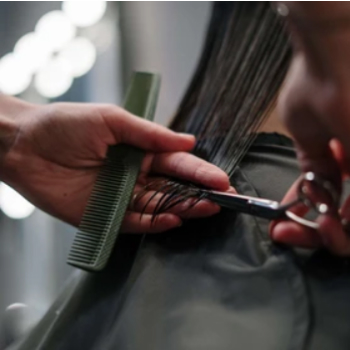
- A barber comb gives you the tension control needed for clean scissor-over-comb work on short styles.
Pro Tip: Invest in ergonomic shears if you plan to cut regularly. Tension-related hand fatigue causes cutting angles to drift, which shows up directly in the finished shape.
Structural planning before the first cut
Picking up shears without a plan is the most common mistake in advance hair cutting. Professionals do not improvise the shape. They build it from a blueprint mapped directly onto the head.
Haircut mapping involves four interconnected factors: strategic sectioning, elevation angles, weight distribution, and growth pattern assessment. Together, these create a blueprint that tells you exactly where to cut, at what angle, and how much weight to remove in each zone.
How to map a haircut step by step
- Assess the growth patterns first. Cowlicks, double crowns, and strong natural partings all affect how the finished style will behave. Ignoring them leads to sections that lift or fall in unexpected directions.
- Divide the head into working sections. A standard division separates the crown, sides, nape, and fringe. Complex cuts often require more detailed subsections within each zone.
- Establish your guide lines. A guide line is the first cut in each section that all subsequent cuts reference. If your guide is off, every cut that follows it compounds the error.
- Decide elevation for each zone. Elevation is the angle at which you hold hair away from the head before cutting. Zero degrees produces a blunt weight line. Ninety degrees creates maximum layering. Everything between builds graduated shapes.
- Plan weight distribution. Heavy weight creates bulk and structure. Removed weight creates movement and softness. Map where you need each before you start.
| Planning element | What it controls | Common error when skipped |
|---|---|---|
| Sectioning | Consistency across the cut | Uneven lengths, missed guide lines |
| Elevation | Layer distribution and shape | Unexpected bulges or flat sections |
| Weight distribution | Volume and movement | Overcutting, loss of shape definition |
| Growth pattern review | Behavior of finished style | Sections that lift or part incorrectly |
Pro Tip: Before cutting, wet the hair and comb it completely smooth. This reveals the true natural fall and growth patterns that styling products often hide.
Advanced cutting techniques and their applications
Understanding which professional hair cutting techniques to use, and when, is what separates a technically skilled stylist from someone just holding shears. Each method produces a distinct result, and many advanced haircut styles require combining two or three of them.
Blunt, layered, and geometric cuts
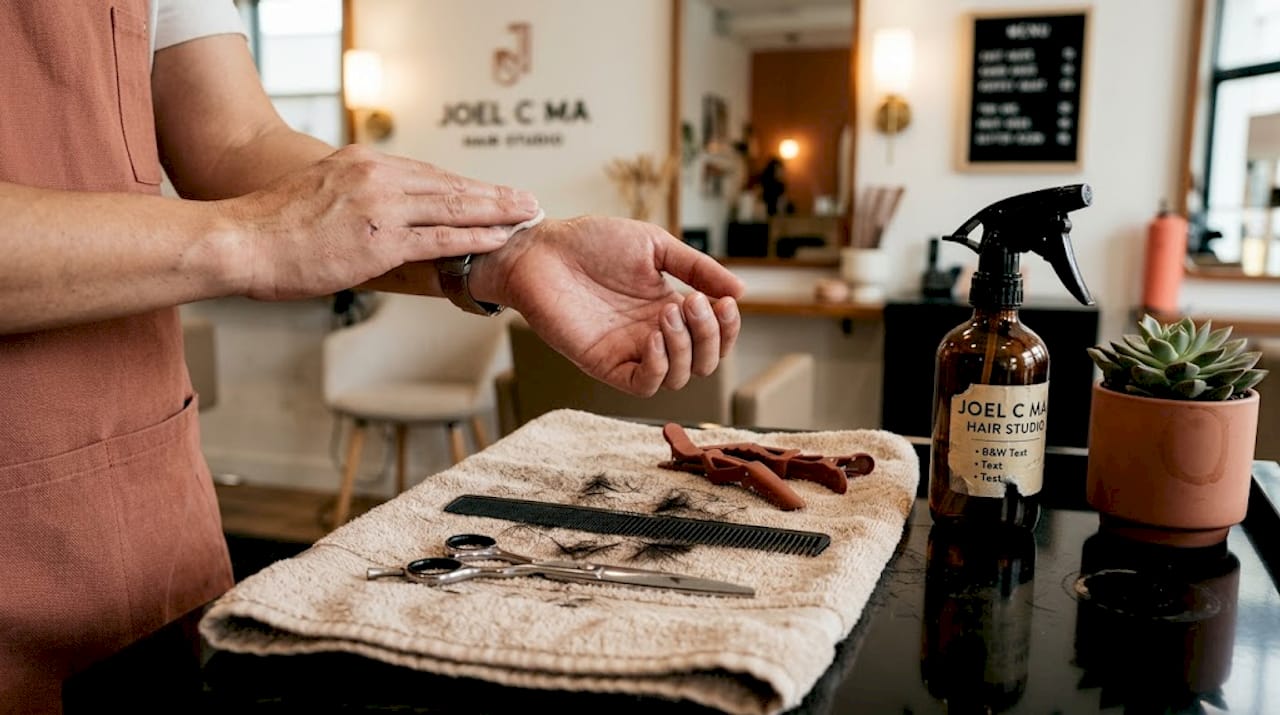
Blunt cutting produces a sharp, defined edge with maximum weight. It is the foundation for classic bobs and one-length looks. Layered cutting removes weight progressively through the interior to create movement without sacrificing perimeter length. Geometric cutting, as developed through the Sassoon method, uses precise angles and solid sections to build architectural shapes that hold their form without styling products.
Dry cutting and why it changes everything
Dry haircuts give stylists a real-time view of how hair actually falls and moves. Wet hair stretches, which hides its natural shrinkage and curl pattern. When you cut dry, you see natural movement and density as they truly exist. This is especially effective for curly hair, where wet cutting can result in significantly more length being removed than intended. Dry cutting is the primary technique for refining layers, managing curl-by-curl customization, and face-framing work that needs to fall in a very specific way.
Point cutting, slide cutting, and texturing
- Point cutting removes the blunt line from a cut’s edge by angling the shears into the hair at roughly 45 degrees. The result is a soft, diffused finish that looks lived-in rather than freshly cut. Adjusting the angle, spacing, and depth of each cut gives fine control over the final texture.
- Slide cutting moves open shears down a section of hair in a gliding motion. This thins and tapers simultaneously, creating a flowing, graduated finish ideal for long layers.
- Texturizing shears remove bulk from the interior of thick hair without reducing visible length. Used sparingly, they add movement. Overused, they create puffiness and unpredictable volume.
The hybrid approach for complex textures
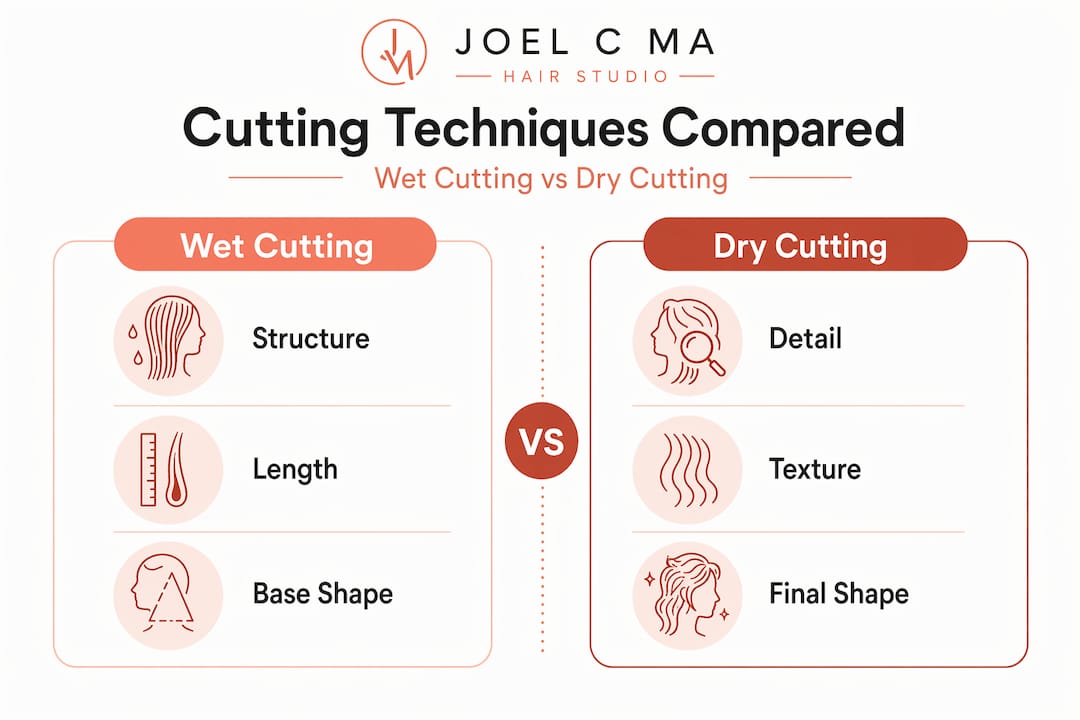
The hybrid cutting method combines wet and dry cutting in sequence. Wet cutting establishes the structural base, length, and perimeter. Dry cutting then handles the detail refinement. For curls and highly textured hair, this approach delivers both controlled shape and true-to-life movement in the finished result.
| Technique | Best for | Key advantage |
|---|---|---|
| Blunt cutting | Bobs, one-length looks | Maximum weight, clean edges |
| Point cutting | Softening any cut | Removes harsh lines naturally |
| Dry cutting | Curls, layers, face-framing | Accurate length due to natural fall |
| Slide cutting | Long graduated layers | Tapers and thins simultaneously |
| Hybrid method | Complex textures, curls | Combines structural and refined detail |
Creative styles and choosing what fits your look
Advanced haircut styles range from the sharply geometric to the deliberately undone. Knowing which one to pursue requires more than just liking how it looks on someone else.
Bobs are one of the most technically demanding short styles. A well-executed bob requires precise face-framing and controlled weight distribution to suit the client’s face shape. Rounded bobs soften angular features. Asymmetric bobs add drama to symmetrical faces.
Buzz cuts strip the hair down to its structural minimum and reveal facial symmetry directly. They work best when the face shape is well-defined. The technical demand comes from blending guard lengths smoothly and managing hairline cleanup.
The Shawk is a more recent statement style that balances structured volume with soft face-framing. Creative director Andy Heasman describes the difference between a professional Shawk and a messy one as exactly this balance. Volume without framing reads as unfinished. Framing without volume reads as flat.
When choosing a style, consider these factors:
- Face shape: Oval faces work with almost any silhouette. Round faces benefit from height at the crown and reduced width at the sides. Heart-shaped faces need weight at the jaw or below.
- Hair texture: Fine hair needs weight retention for structure. Thick hair needs internal weight removal for manageability. Curly hair requires dry cutting expertise to avoid overcutting.
- Lifestyle: A geometric bob requires regular trims every 5 to 6 weeks to maintain its shape. A layered mid-length cut grows out with far less maintenance.
Pro Tip: AI-powered virtual try-on tools now let you preview bobs, pixies, and edgy cuts before committing. Client confidence in bold changes increases significantly when you can see the result first.
For anyone considering major haircut transformations, preparation and realistic expectations matter as much as the technical execution.
My honest take on mastering advanced cuts
I’ve spent years watching clients come in after attempting complex cuts at home, and the results follow a predictable pattern. The technical demands that look simple from the outside are not simple at all. Structural planning gets skipped. Wrong tools get used. And the margin for error compounds with every section.
What I’ve learned from experience is that the consultation step is just as important as the cut itself. Knowing the right questions to ask before picking up shears, whether as a professional preparing to cut or a client preparing to sit in the chair, shapes the entire outcome. A cut without a conversation is just guesswork with shears.
The technique-versus-creativity tension is real. I’ve seen technically perfect cuts that look sterile and lifeless. I’ve seen creative vision undermine the precision that makes a style hold up past day two. The best advance hair cutting work lives in the space between both. You need the structure, and you need the eye. Neither alone is enough.
Respect the craft. Appreciate the skill behind what looks effortless. And if you want a style that genuinely fits your features, texture, and life, work with someone who treats personalized styling as the foundation, not an afterthought.
— Joelcma
Experience advanced cuts at Joelcma
At Joelcma, the team at Joel C Ma Hair Studio in La Jolla brings over 25 years of expertise to every chair. Advanced cutting, precise shaping, balayage, and personalized style consultations are not add-ons here. They are the core of what the studio does.

Whether you are considering a dramatic bob, a textured geometric cut, or a complete transformation, the studio pairs technical precision with genuine creative vision. Explore modern hair styling techniques tailored specifically to your texture and lifestyle, or book a custom consultation where a personalized hair consultation sets the foundation for a result you will actually love. For clients maintaining color alongside their cut, the best salon shampoos guide helps protect your investment between appointments.
FAQ
What makes advance hair cutting different from a basic trim?
Advance hair cutting involves precision techniques like point cutting, dry cutting, and geometric shaping that require structural planning, specialized tools, and trained skill. A basic trim adjusts length without fundamentally altering shape or texture.
Can I do advanced haircut styles at home?
Complex haircut transformations require specialized training and tools not available to most people at home. Professional skill and proper shears are necessary for layered, geometric, or drastic style changes.
What is the hybrid cutting method?
The hybrid method uses wet cutting to establish structure and perimeter, then switches to dry cutting for detail refinement. It is especially effective for curly and textured hair where natural movement must be seen to be accurately managed.
How do I know which advanced style suits my face shape?
Oval faces suit most silhouettes. Round faces benefit from height at the crown. Heart-shaped faces need length or weight at the jaw. A professional consultation helps match your specific texture and growth patterns to the right style.
What is point cutting and when is it used?
Point cutting removes blunt cut lines by angling shears into the hair’s edge at roughly 45 degrees. It is used to create a soft, natural finish on any haircut where a harsh perimeter line would look too rigid.
Recommended
- Advanced hair cutting techniques for a personalized look – Joel C Ma Hair Studio
- Master Cutting Curly Hair Techniques for Stunning Styles – Joel C Ma Hair Studio
- Customized Hair Styling: Defining Your Unique Look – Joel C Ma Hair Studio
- Precision Cutting: Sculpting Sleek, Elegant Hair – Joel C Ma Hair Studio