
Alternative Hair Salons Near Me: San Jose Picks & Vetting Guide
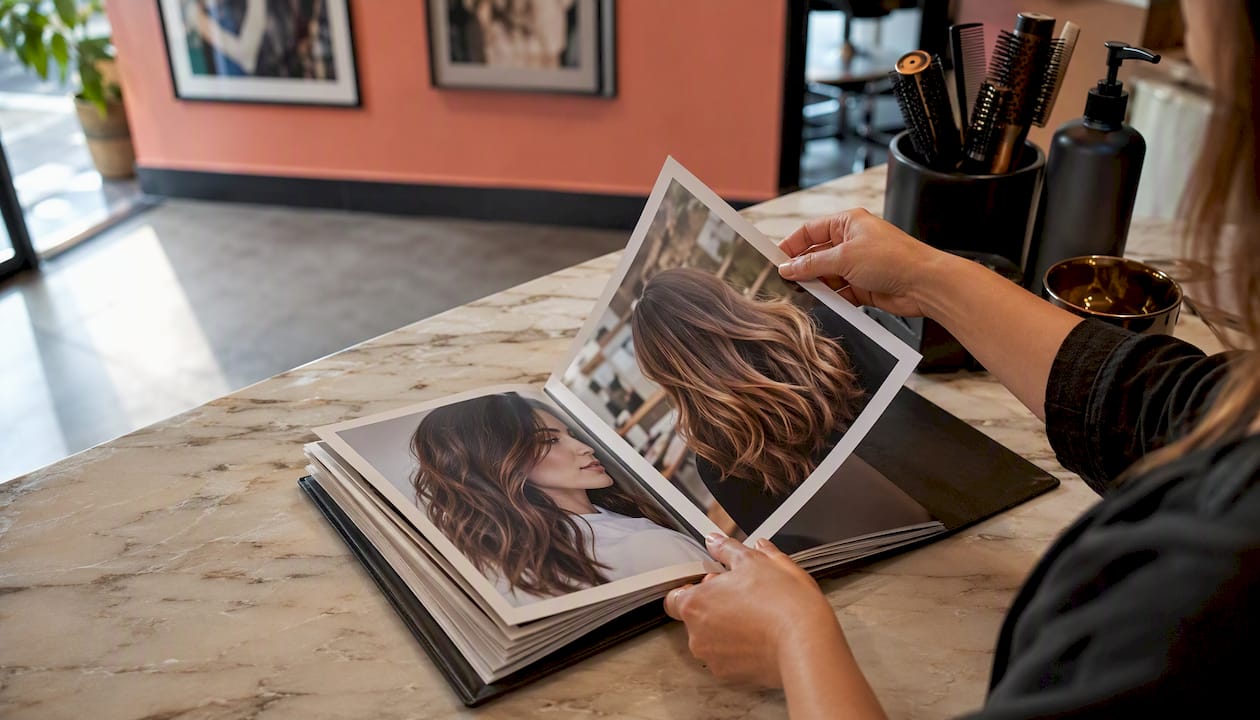
The fastest way to find alternative hair salons near you in San Jose is a targeted Google Maps search (“edgy hair salon San Jose” or “vivid color stylist San Jose”) combined with a quick Instagram portfolio check before you book anything. Three things to confirm before you go further:
- Portfolio recency: The stylist’s last post should be recent. Older work doesn’t tell you what they can do now.
- Hair-type match: Find at least two photos on their feed that show your hair texture (fine, thick, coil) in a style close to what you want.
- Clear pricing and booking info: If the bio or pinned post doesn’t mention pricing tiers or a booking link, that’s a gap worth noting before you commit.
Starter search terms to paste directly into Google, Instagram, or Yelp:
- “wolf cut San Jose”
- “vivid color stylist San Jose”
- “undercut salon Willow Glen”
- “alternative haircut Japantown San Jose”
- #SanJoseHair, #SJstylist, #VividColorSanJose
Key Takeaways
Finding the right alternative stylist in San Jose comes down to targeted local searches, portfolio vetting by hair type, and a structured consultation before any chemical work begins.
| Point | Details |
|---|---|
| Search with specific terms | Use “vivid color stylist San Jose” or “wolf cut Willow Glen” on Google Maps and Instagram for precise results. |
| Vet portfolios by texture match | Find at least two portfolio photos on your hair type before shortlisting a stylist. |
| Ask staged process questions | Confirm bleach sessions, toner, and maintenance frequency during the consultation, not after. |
| Budget for multi-session color | Full bleach-and-vivid-color transformations often run $200–$400+ and span two or more appointments. |
| Joelcma for specialist work | Joel C Ma Hair Studio offers documented, process-first consultations for complex color and creative cuts. |
Table of Contents
- Where can you find alternative hair salons near you in San Jose?
- Common alternative styles and what to call them with your stylist
- How do you evaluate a stylist’s portfolio for alternative looks?
- What questions should you ask during a consultation?
- What does alternative color and cut work typically cost and how long does it take?
- How do you use community recommendations safely and verify them?
- When is it worth booking a specialist studio for alternative work?
- What stylists wish you’d bring to every consultation
- Joelcma: personalized artistry for readers who want more than a standard cut
- Sources
Where can you find alternative hair salons near you in San Jose?
Different platforms surface different information, and knowing which one to use for what saves real time.
| Platform | Best for | Exact query or hashtag to use |
|---|---|---|
| Google Maps | Proximity, hours, ratings, booking links | “alternative hair salon San Jose,” “edgy haircut near me San Jose” |
| Portfolio quality, style range, recency | #SanJoseHair, #VividColorSJ, location tag “San Jose, California” | |
| Reddit r/SanJose | Community recs with before/after context | Search “stylist” or “hair” in the subreddit; post your own request |
| Yelp | Written reviews, cancellation policies, pricing notes | Filter by “Hair Salons,” sort by “Newest” reviews |
| Facebook Groups | Neighborhood-specific word of mouth | “San Jose Beauty & Hair Recommendations,” “Willow Glen Community” |
On Instagram, filter by location tag rather than hashtag alone. Tap the location “San Jose, California,” then switch to “Recent” posts. That surfaces work done in the last few days, not the most-liked posts from two years ago. On Yelp, sort by “Newest” reviews rather than “Highest Rated” to catch recent complaints about scheduling or color fading.
Community threads on Reddit r/SanJose are especially useful because people post actual before/after photos alongside stylist names, which cuts through the guesswork of reading a generic five-star rating.
Common alternative styles and what to call them with your stylist
Knowing the right terminology makes your consultation faster and reduces the chance of walking out with something you didn’t ask for. These are the styles most commonly requested at creative salons right now, with the short phrase to use when you describe what you want. For a broader visual reference, 2026’s boldest creative haircut ideas cover the full range of current shapes and terminology.
- Wolf cut: Long layers with a shaggy crown and curtain bangs; heavy texture throughout. Say “wolf cut with face-framing layers.”
- Shag: Similar to the wolf cut but with more uniform layers and less volume at the crown. Say “shag with razored ends.”
- Mullet: Short on top and sides, longer in the back. Modern versions are textured, not blunt. Say “textured modern mullet.”
- Textured pixie: Short all over but with deliberate weight and movement, not a classic tapered pixie. Say “disconnected pixie with texture.”
- Undercut: Shaved or very short section beneath longer hair. Say “undercut with [length] on top.”
- Vivid color: Any non-natural tone (blue, pink, orange, green). Say “vivid color with [technique]” and specify whether you want it all over or placed.
- Curtain bangs: Center-parted, face-framing bangs that blend into layers. Say “curtain bangs, grown-out length.”
When you move into technique territory, a few words carry real weight: texturizing (removing bulk without shortening), slice layering (cutting into the hair at an angle for movement), root shadow (darker pigment at the root to reduce grow-out visibility), and balayage for vivid blends (hand-painted color placement for a gradient effect).
Pro Tip: Fine hair and thick hair behave completely differently in the same cut. A wolf cut on fine hair tends to go flat within a day without product; on thick hair, it holds shape naturally. Tell your stylist your texture upfront and ask specifically how the cut will perform on your hair type, not just how it looks in the reference photo.
How do you evaluate a stylist’s portfolio for alternative looks?
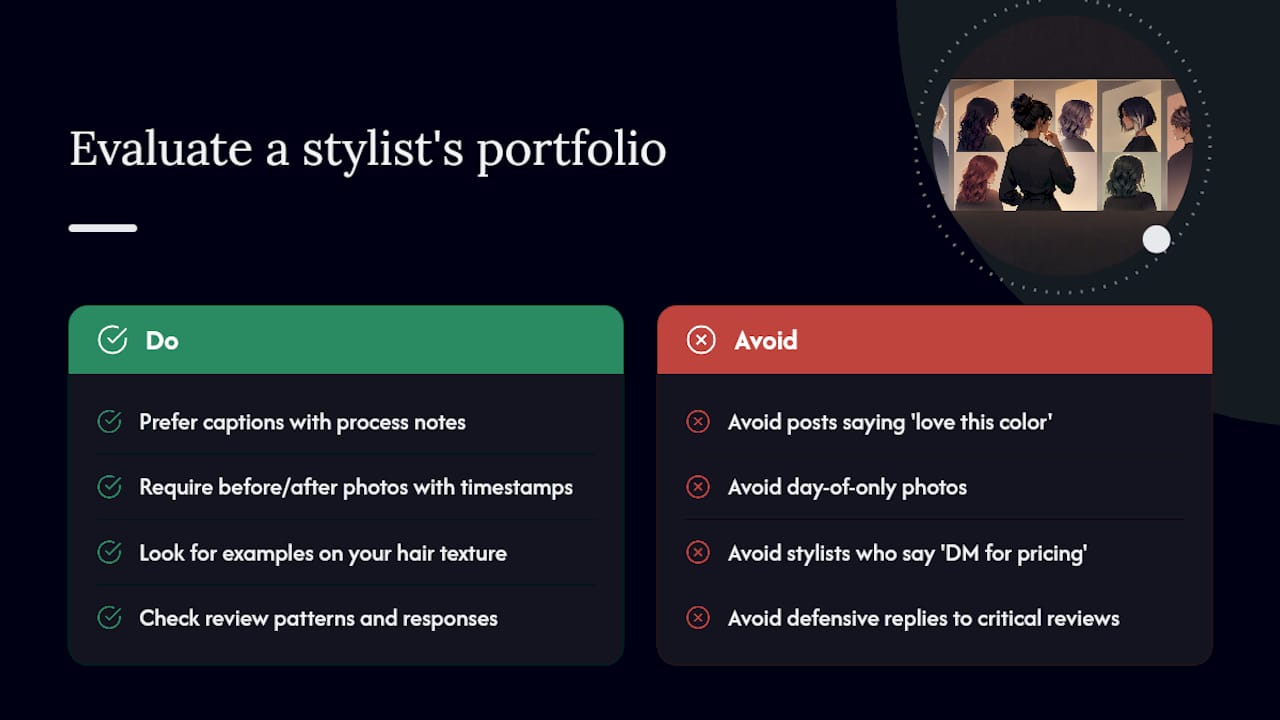
The most reliable signal is a stylist who captions their work with process notes, not just the finished result. A post that says “two bleach sessions, toned with violet, sealed with a bond treatment” tells you the stylist understands what they’re doing and isn’t hiding steps. A post that just says “love this color 💙” tells you almost nothing.
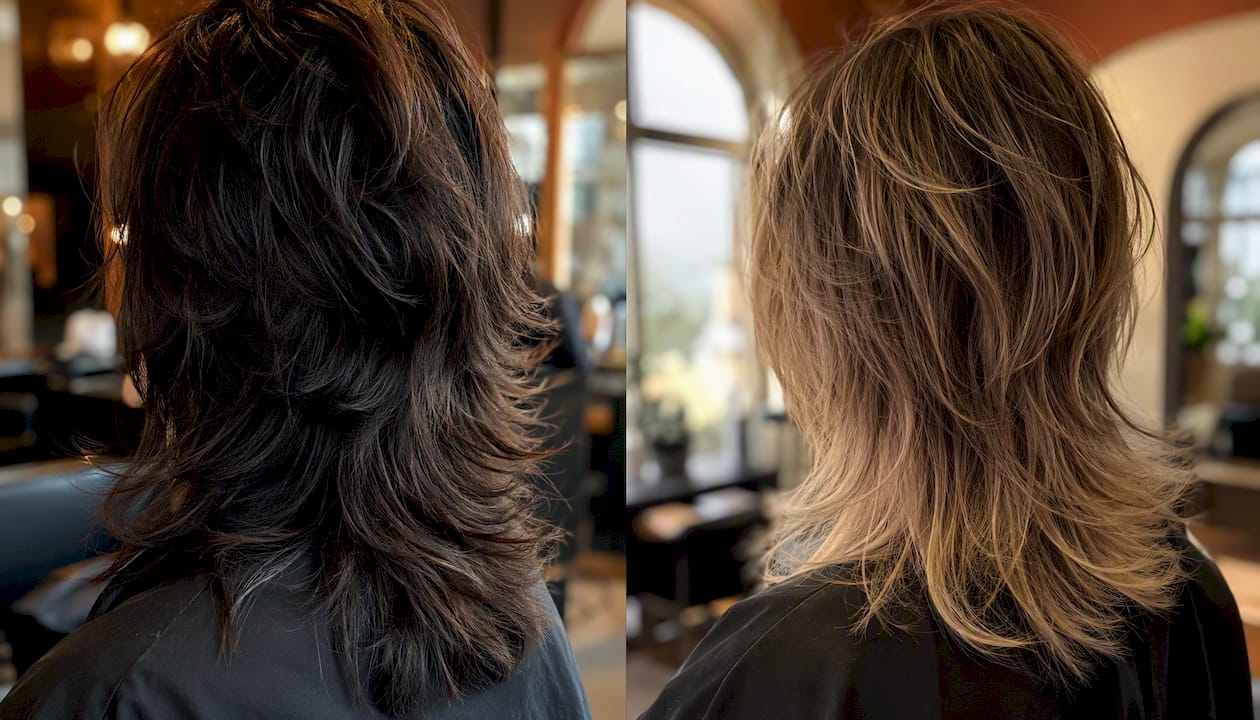
What to look for in a portfolio: Before/after photos with visible timestamps, at least two examples on your hair texture, captions that describe bleach or processing steps, and evidence that the color still looks clean in photos taken weeks after the appointment (not just day-of shots).
Beyond individual posts, check the review pattern. A stylist with 40 reviews where three of them mention “had to rebook twice” or “color faded in two weeks” is a pattern, not a coincidence. Also look at how the stylist responds to critical reviews. A defensive or dismissive reply is a red flag; a calm, specific response that explains what happened signals professionalism.
Transparent booking posts are another trust signal. Stylists who post their pricing tiers, deposit policies, and cancellation windows publicly are generally easier to work with than those who say “DM for pricing.” For guidance on finding a creative stylist who specializes in unconventional looks, look for portfolios that label stylist specializations explicitly rather than showing a mix of everything.
What questions should you ask during a consultation?
Ask these in order. The sequence matters because each answer shapes the next question.
- “What outcome is realistic for my hair in one appointment?” This immediately tells you whether the stylist is honest about your starting point or just agreeing with whatever you say.
- “How many bleach or processing sessions will this take?” A vivid color on dark hair almost never happens safely in one visit. If the answer is “we can do it today,” ask follow-up questions.
- “What toner or color brand do you use, and why?” Stylists who know their products can answer this without hesitation.
- “How often will I need to come back to maintain this?” Vivid colors typically require touch-ups every 6–10 weeks. Vague answers here usually mean higher long-term costs than you expected.
- “Can you show me before/after photos of a similar hair type and starting color?” If they can’t, that’s worth noting.
- “What aftercare products do you recommend, and what’s the cost?” Salon-grade shampoos for colored hair make a real difference in how long vivid color lasts.
Red flags: vague descriptions of the bleaching process (“we’ll just lighten it a bit”), no photos of comparable hair types, and any resistance to discussing maintenance costs upfront. Customized styling depends on clear consultation notes, so a stylist who rushes this step is one to reconsider.
What does alternative color and cut work typically cost and how long does it take?
Pricing for creative and edgy work in the San Jose Bay Area varies based on four main factors: bleach stages required, hair length, color complexity, and stylist seniority. A single-process vivid color on pre-lightened hair runs less than a full bleach-and-color transformation on dark, long hair.
General ranges (not guarantees, since every head of hair is different):
- Edgy cut only (wolf cut, shag, mullet): pricing varies based on salon tier and stylist experience
- Single vivid color on pre-lightened hair: costs vary
- Full bleach and vivid color (one session): typically more expensive than single-process color
- Multi-session color correction: usually involves multiple appointments with higher costs
Timeline from consultation to final appointment: a straightforward cut can happen same-day or next-day. A major color transformation on dark hair typically requires a consultation, then a first bleach session, then a second session for color, spaced 2–4 weeks apart. Budget 3–5 hours per color appointment, not 90 minutes.
Maintenance is where costs compound. Vivid colors fade faster than natural tones, especially reds and pastels. Heatless styling techniques and sulfate-free color-safe shampoos extend the life of the color between appointments.
Pro Tip: Ask for a written or texted breakdown of the service plan after your consultation. A stylist who sends you a note that says “Session 1: bleach to level 8, Session 2: vivid blue placement, estimated total $380” is giving you something you can hold them to. That’s the standard to expect.
How do you use community recommendations safely and verify them?
Reddit and local Facebook groups are genuinely useful, but the quality of a recommendation depends entirely on how specific the post is. A post that says “anyone know a good hair salon?” gets vague answers. A post with details gets useful ones.
Copy-ready post template for Reddit r/SanJose or a local Facebook group:
- Hair type and texture: (e.g., “thick, dark brown, shoulder-length”)
- Style goal: (e.g., “wolf cut with vivid blue highlights”)
- Budget: (e.g., “$150–$250 for cut and color”)
- Neighborhood: (e.g., “near Downtown San Jose or Willow Glen”)
- What you’ve already tried: (e.g., “checked Yelp, found two options but can’t tell if they do vivid color”)
After you get a recommendation, verify it before booking:
- Search the stylist’s Instagram for posts from the last 60 days showing your style type.
- Call the salon to confirm they take new clients, ask about deposit requirements, and check their cancellation policy.
- Ask the person who recommended them for a recent photo of their own result, not a photo from the stylist’s page.
When is it worth booking a specialist studio for alternative work?
A generalist salon can handle a clean wolf cut or a single-process color without issue. The cases where specialist expertise genuinely changes the outcome are color corrections, multi-stage transformations, and major style rebuilds on compromised hair.
Luxury staged treatment workflows are specifically designed for situations where rushing the process risks damage or unpredictable results. If you’re going from box-dyed black to vivid pink, that’s a multi-session job that benefits from a stylist who documents each stage and adjusts based on how your hair responds.
Practical signals that you need a specialist: the stylist offers a detailed consultation before quoting a price, they show documented before/after case studies for hair similar to yours, and they explain the process in steps rather than just the end result. Personalized, artistic hair styling at this level treats the consultation as part of the service, not a formality before it.
Pro Tip: For staged transformations, ask the studio to give you a written timeline and cost estimate for the full process, not just session one. Knowing that the total will be three sessions at $200 each is more useful than being surprised after session two.
What stylists wish you’d bring to every consultation
The single thing that changes a consultation from vague to productive is multiple reference photos, not one. Bring three to five images that show different angles, lighting conditions, and hair textures close to yours. One photo of a wolf cut on fine blonde hair doesn’t help a stylist understand what you want on thick dark hair.
Show your hair history too: photos of past colors, any chemical treatments in the last year, and the current state of your ends. That context lets a stylist assess your hair’s condition honestly before committing to a process plan.
Joelcma: personalized artistry for readers who want more than a standard cut
Joelcma (Joel C Ma Hair Studio) is built for clients who want a stylist to actually think about their hair, not just execute a template. With over 25 years of experience in artistic cuts and signature color techniques, the studio’s approach starts with a detailed consultation and ends with a documented plan you can follow between appointments. For anyone coming from this article who wants vivid color, a creative cut, or a full style rebuild, that process-first approach is what separates a result you love from one you tolerate. Book a consultation to get a personalized plan for your hair type, starting color, and style goal.
Sources
- Alternative hairstylist in San Jose? : r/SanJose – Reddit
Always verify recency and hair-type match before committing to any recommendation, whether it comes from a community thread or a stylist’s own feed.