
How to get personalized, chic layers at the salon

TL;DR:
- Thoughtful layering enhances personalized hair design by considering face shape, texture, and style goals. Clear communication, preparation with reference photos, and understanding technique choices ensure lasting, natural-looking results. Active dialogue with your stylist transforms a luxury salon experience into a truly tailored and satisfying outcome.
Walking out of a luxury salon with layers that look nothing like your inspiration photo is one of the most frustrating experiences in beauty. It happens more often than it should, and almost always for the same reason: the conversation between client and stylist stayed too vague, too brief, or too polite. This guide walks you through exactly how to approach a layering appointment at a high-end salon so the result is as specific and intentional as you are. You’ll learn what to bring, what to ask, how to decode your stylist’s technique, and how to keep the look going strong once you’re home.
Table of Contents
- Why thoughtful layering design matters in luxury salons
- What to know (and bring) before your appointment
- Layering techniques: Salon methods explained
- Post-cut care: Making your salon layers last
- The reality of luxury layering: Why communication and customization matter most
- Experience expert layering at Joel C Ma Hair Studio
- Frequently asked questions
Key Takeaways
| Point | Details |
|---|---|
| Personalized layering | Luxury results come from customized techniques and clear communication with your stylist. |
| Salon prep essentials | Bringing reference photos and knowing your hair history leads to better consultation results. |
| Understand techniques | Recognize the difference between soft, blended layers and sharper face framing for your goals. |
| Home care is key | Using the right product order keeps salon layers fresh and defined between appointments. |
Why thoughtful layering design matters in luxury salons
Layering is one of the most misunderstood services in a salon menu. Most clients think of it as a simple “lightening up” of dense hair or adding a bit of bounce to a flat cut. But in a truly luxury setting, layering is a design problem. Your stylist is making decisions about where to place weight, how to sculpt the shape around your face, and how to work with the natural behavior of your specific hair texture.
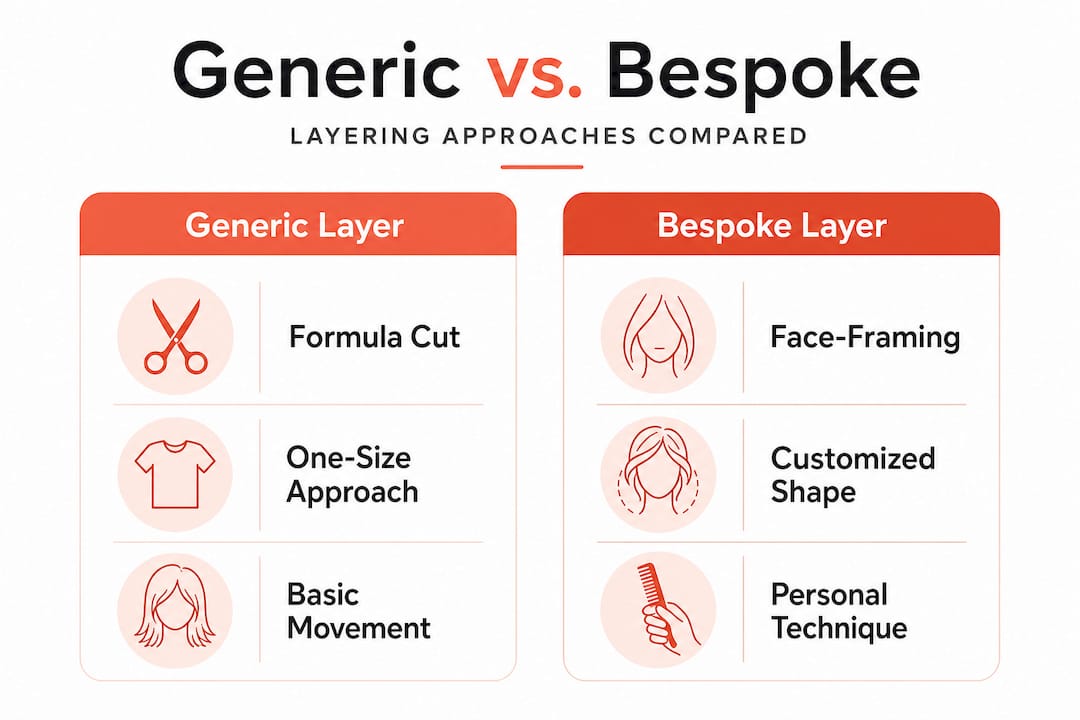
The difference between a generic layer and a bespoke one is this: a generic layer follows a formula. A bespoke layer starts with you. As a principle, face-framing layers require your stylist to treat the cut as both an artistic and technical problem, factoring in where weight needs to be redistributed and how the frame around your face should be sculpted. That’s not a one-size decision.
Understanding the difference between layers vs texture is also key here. Texture refers to how hair is finished or broken up at the ends. Layers refer to structured graduation in length throughout the cut. Both serve distinct purposes and can be combined or kept separate depending on your goals.
Here’s a quick comparison to clarify what different layering approaches produce:
| Layering style | Effect | Best for |
|---|---|---|
| Soft blended layers | Seamless, fluid movement | Fine to medium hair, natural styles |
| Defined internal layers | Visible shape, more dramatic | Thick, dense, or voluminous hair |
| Face-framing only | Contours the face, minimal interior change | Clients wanting subtle refinement |
| Over-directed layers | Controlled fullness, reduced bulk | Clients wanting shape without volume |
| Natural-fall layers | Graphic, deliberate lines | Clients with strong style identity |
The technique your stylist selects will shape your entire result. That’s why the consultation is not just a formality. It is, in fact, the most important part of the appointment. Use it fully.
Key questions to raise during your consultation:
- Will these layers be face-framing, interior, or both?
- How will my hair type affect the finished shape?
- Will the layers be cut wet or dry, and why?
- What will this look like when I wear my hair naturally versus styled?
Pro Tip: If your stylist doesn’t ask about your daily routine before picking up the scissors, that’s your cue to volunteer it. The goal of customized hair styling is always the look that fits your real life, not just looks great in the salon chair.
What to know (and bring) before your appointment
Preparation is everything. Women who get the best results from luxury salon appointments come in ready. That doesn’t mean knowing all the technical terms. It means knowing yourself: your frustrations, your hair history, and your clearest vision of what you want.

Reference photos are non-negotiable. Bring at least three. Ideally, choose photos of women with a similar hair type and texture to yours. A silky, fine-haired photo as a reference for thick, coarse waves creates a gap between expectation and reality from the start. Choose references that match your hair’s natural density and curl pattern for the most precise outcome.
Your hair care history is equally important. Be ready to share:
- Any chemical treatments in the past 12 months (color, relaxers, perms, keratin)
- How often you currently trim
- Problem areas you’ve struggled with (frizz zones, areas that won’t hold a style, sections that always look flat)
- Products you use daily and how much effort you put into styling
This information changes how your stylist approaches sectioning, where they place layers, and how aggressively they remove weight. A how to prepare for haircut checklist before your appointment will help you organize your thoughts so nothing important gets missed in the moment.
One thing worth understanding before you sit in the chair: restraint is a virtue with layering. A common mistake is cutting front sections too short on the first pass, which creates a disconnected frame that doesn’t blend into the rest of the cut. Starting conservative and refining later is always the smarter approach.
Here’s a practical guide to what to bring and why:
| Item | Why it matters |
|---|---|
| 3+ reference photos | Clarifies your vision better than words alone |
| List of styling frustrations | Helps stylist diagnose the real issue |
| Hair history notes | Reveals any structural limitations |
| Your go-to styling tool | Helps stylist demo a finish for your specific tools |
And the layered hair benefits you’re hoping to achieve (more movement, less bulk, better face framing) should be spelled out clearly. Don’t assume your stylist will guess.
Pro Tip: Send your reference photos to the salon before your appointment if possible. Many high-end salons allow you to email or message photos in advance so your stylist can study them before you even sit down.
Layering techniques: Salon methods explained
Knowing a little about what your stylist is doing while they work helps you communicate better in real time. You don’t need to know every technical term, but understanding the broad strokes lets you ask better questions and recognize when something isn’t going the way you envisioned.
Here’s how a typical luxury layering appointment unfolds:
- Consultation. The stylist assesses your hair’s density, texture, growth patterns, and face shape before deciding on a plan.
- Sectioning. Hair is divided into workable sections, which may be vertical, horizontal, or diagonal depending on the result.
- Interior or face-framing layers. These are addressed differently. Interior layers focus on removing bulk and adding movement throughout. Face-framing layers sculpt the perimeter that sits around your face.
- Elevation and angle decisions. The angle at which hair is held away from the head (called elevation) determines how dramatic or subtle the layering will be.
- Wet or dry finish. Some stylists prefer to check their work on dry hair, since wet hair can mask the true length and behavior of layers.
The two major philosophical approaches to layering are:
- Over-direction: Hair is pulled away from its natural fall before cutting, creating a softer, blended result with controlled fullness. This is often the better choice for clients who want refined movement without a dramatic shape change.
- Natural-fall: Hair is cut in the direction it naturally falls, producing more graphic, defined lines. This works beautifully for clients with a clear, strong aesthetic identity.
As technique selection in face-framing makes clear, the placement philosophy for face-framing is entirely different from interior bulk removal. It’s about sculpting a frame using tension, angle, and elevation, and whether you want a soft blend or a more defined line will directly change how your stylist works.
“Ask your stylist to explain their approach before they begin cutting. Understanding why they’re making a specific technique choice for your hair makes you a true partner in the result.”
Understanding precision cutting and how it interacts with layering will deepen your appreciation for what skilled stylists do. Precision isn’t about rigid uniformity. It’s about intentional, controlled decisions made for your specific hair. The luxury hair treatment workflow at a high-end salon is also worth reviewing so you know what to expect from the full experience, not just the cut itself.
Post-cut care: Making your salon layers last
The effort your stylist puts into your layers deserves to be honored at home. The biggest mistake women make after a great cut is skipping the right product routine or using products in the wrong order.
Product order after washing directly affects how your layers behave. Start light and build. Applying a heavy oil before a leave-in, for example, can weigh down the very movement you paid for. The correct sequence matters more than most people realize.
Here’s the routine that keeps layered hair looking intentional:
- Cleanse with a shampoo appropriate for your hair type (volumizing for fine hair, moisturizing for thick or coarse).
- Condition from mid-lengths to ends. Avoid the root area to prevent buildup that flattens layers.
- Apply a mask once a week if your hair is color-treated or prone to dryness.
- Work in a lightweight leave-in while hair is damp. This is the foundation product for frizz control and moisture balance.
- Finish with a serum or oil on the ends only to add shine and seal the cuticle without heaviness.
Pro Tip: For fine hair, skip the oil step entirely and use a light mist instead. For thick or coarse hair, a few drops of argan or marula oil on damp ends before diffusing or air-drying makes a significant difference in how smooth and defined the layers look.
Additional tips for maintaining your layers:
- Use a microfiber towel or a soft cotton T-shirt to blot, not rub, wet hair
- Diffuse on a low heat setting to encourage natural movement in the layers
- Sleep on a silk or satin pillowcase to reduce friction and frizz overnight
- Avoid heavy creams near the root area, which can collapse the lift and movement your stylist created
Signs your layers need a refresh:
- The face-framing pieces feel too long and no longer contour your face
- Ends feel scraggly or look frayed rather than clean and defined
- Your hair has lost its bounce and started to feel heavy again
- Layers appear to be growing together into one length
A good quality hair treatment workflow between appointments will extend the life of your cut significantly and mean less corrective work at your next visit.
The reality of luxury layering: Why communication and customization matter most
Here’s something we’ve seen in over 25 years of working with clients in La Jolla: the women who leave happiest are not always the ones with the most complex or dramatic requests. They’re the ones who communicated clearly and allowed us to respond honestly.
Luxury layering has nothing to do with following what’s trending on social media right now. It has everything to do with co-creating something that fits your face, your lifestyle, and your sense of yourself. The clients who bring in a trending cut photo and ask to replicate it exactly are often the ones most likely to feel let down, not because the stylist failed, but because the trend wasn’t designed for their specific face shape or hair texture.
The highest value in a high-end salon comes from a stylist who asks you the questions you didn’t know to ask yourself. What does your hair look like on day three without styling? Do you want to wear it up and have the layers still visible? Are you more bothered by bulk or by flatness? These are the questions that lead to layers you’ll still love three months later.
Your voice shapes the outcome, even in the most elevated salon setting. A beautifully designed luxury salon experience doesn’t mean being passive in the chair. It means being an active co-creator. The best result isn’t the stylist’s vision imposed on your hair. It’s the product of genuine dialogue, mutual trust, and technical skill working together.
Don’t be afraid to ask questions mid-cut. Don’t be too polite to say “that feels like a lot of length” before the scissors close again. Your confidence in speaking up is what transforms a good cut into a truly personal one.
Experience expert layering at Joel C Ma Hair Studio
If this guide has clarified what you want from your next layering appointment, you’re already ahead. The next step is finding the right team to bring it to life.
At Joel C Ma Hair Studio in La Jolla, every layering appointment starts with a real conversation. Our stylists draw on decades of technical expertise to design layers that work with your face shape, hair type, and daily routine, not against them. Browse our full range of haircut services to see what a truly personalized cut looks like. If you want to understand more about how we approach each client’s individuality, explore our philosophy around customized hair styling. And for women who want to arrive fully prepared, our professional hairstyle tips offer the kind of insider guidance that makes every salon visit count.
Frequently asked questions
What should I ask my stylist before getting layers?
Ask whether the layering will be face-framing, interior, or a combination, and how the technique will be tailored to your hair type. Knowing upfront that face-framing layers require different placement than bulk-removing layers helps you understand the approach your stylist is taking and why.
How often should I get my layers trimmed to maintain the look?
Most stylists recommend visiting every 6 to 8 weeks for layered cuts to preserve the shape and prevent split ends from traveling up the hair shaft.
Is there a risk of layers not blending well with my hair?
Yes, especially if front sections are cut too aggressively on the first pass. Cutting too much upfront can leave a disconnected frame that doesn’t integrate cleanly into the rest of the cut.
Which products help maintain layered styles?
Use a lightweight leave-in conditioner on damp hair, then finish with a serum or oil on the ends. This layering order controls frizz, supports movement, and keeps your layers looking intentional rather than scattered between salon visits.