
Expert Tips for Growing Hair Longer Naturally

Many American women dedicate months to growing their hair, yet the average person struggles to achieve more than half an inch of growth each month. For health-conscious women in La Jolla, long hair is more than a goal, it is a reflection of personal care and refined style. Discover expert strategies for evaluating your hair’s health, creating the right growth environment, and mastering luxury salon techniques tailored for noticeable results.
Table of Contents
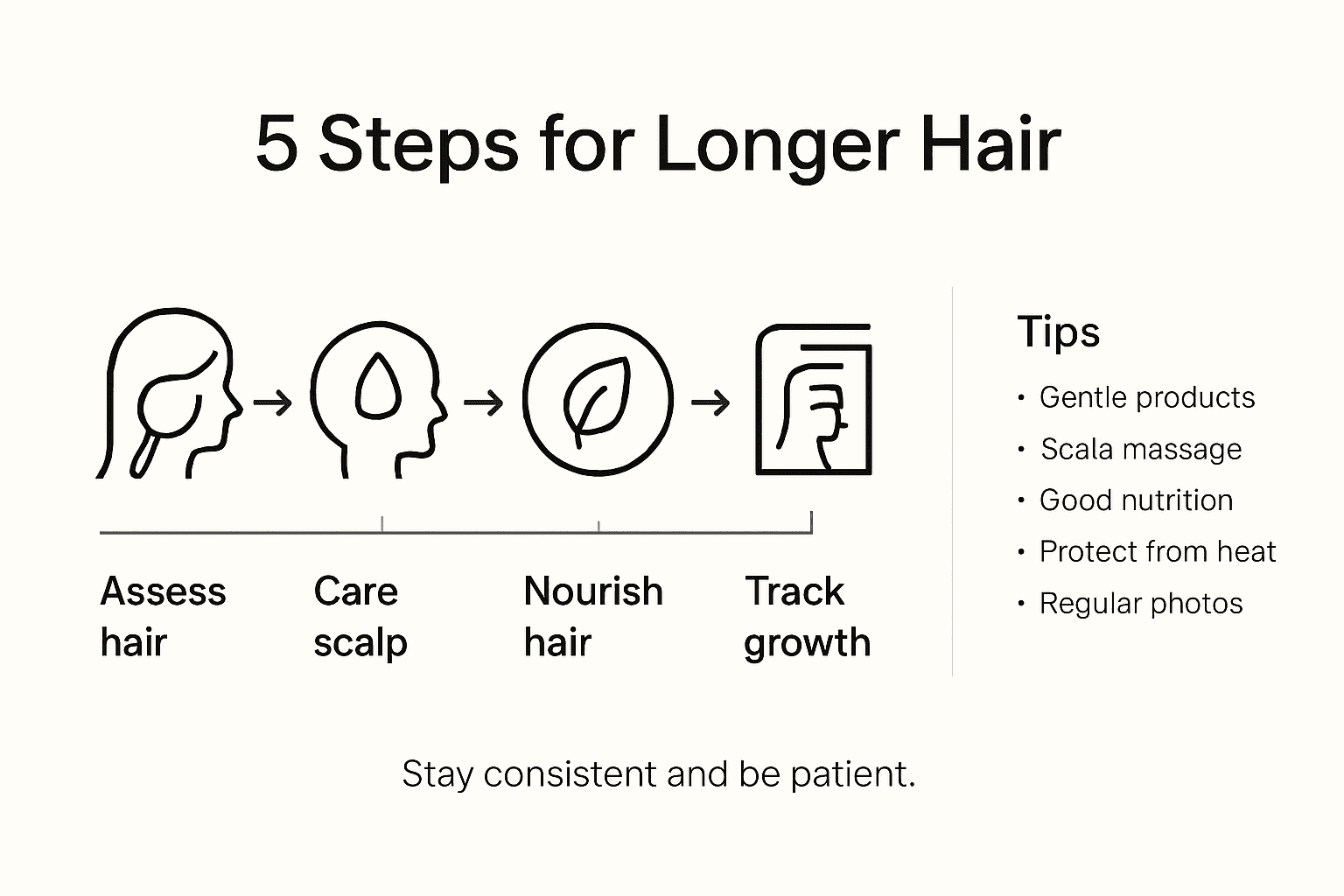
- Step 1: Assess Hair Condition And Set Growth Goals
- Step 2: Create An Optimal Scalp Environment
- Step 3: Nourish Hair With Targeted Treatments
- Step 4: Protect Hair From Damage During Styling
- Step 5: Verify Growth Progress And Adjust Care
Quick Summary
| Key Insight | Explanation |
|---|---|
| 1. Assess your hair condition | A thorough evaluation helps set realistic growth goals and identify issues affecting hair health. |
| 2. Create a healthy scalp | Maintaining scalp hygiene and balance is essential for supporting hair growth and follicle function. |
| 3. Use targeted hair treatments | Nutritional supplements and specific topical treatments can significantly enhance hair strength and growth. |
| 4. Protect hair while styling | Minimize damage by using the right tools and protective techniques to maintain hair integrity. |
| 5. Track hair growth progress | Regular monitoring and documentation of hair condition aid in adjusting care strategies effectively. |
Step 1: Assess Hair Condition and Set Growth Goals
Successfully growing longer hair starts with understanding your current hair health and establishing realistic expectations. By carefully evaluating your hair’s unique characteristics and growth cycle phases, you can develop a personalized strategy for optimal length and strength.
Begin by conducting a comprehensive scalp and hair examination. This involves analyzing several key factors including hair density, texture, current length, and overall scalp condition. Examining your hair and scalp requires a systematic approach that considers multiple aspects of hair health. Look for signs of breakage, split ends, scalp dryness, or excessive shedding which might indicate underlying issues preventing optimal growth. Perform a gentle hair pull test to assess your hair’s current shedding phase and understand its resilience.
Carefully document your initial hair measurements and condition to track progress effectively. Take photographs from multiple angles, measure current length, and note any specific concerns like thinning areas or uneven texture. Your baseline assessment will serve as a critical reference point for monitoring your hair growth journey and adjusting your care strategy accordingly.
Pro tip: Schedule a professional hair and scalp consultation to get a detailed expert analysis of your unique hair growth potential and personalized recommendations.
Step 2: Create an Optimal Scalp Environment
Establishing a healthy scalp environment is crucial for promoting natural hair growth and maintaining overall hair health. Maintaining proper scalp hygiene involves understanding the delicate balance of your scalp’s ecosystem and implementing targeted care strategies that support hair follicle function.

Your scalp requires specialized attention to create an ideal growth environment. The scalp has a uniquely sensitive barrier function that makes it vulnerable to irritation and microbial imbalances. Scientific research highlights the importance of strengthening the scalp barrier to reduce sensitivity and support healthy hair development. Focus on using gentle cleansing techniques that remove excess oil and product buildup without stripping natural protective mechanisms. Select shampoos and treatments specifically designed for your hair type that balance moisture and support scalp microbiome health.
Consistent care and mindful product selection are key to maintaining an optimal scalp environment. Implement a routine that includes regular cleansing, periodic scalp treatments, and careful monitoring of any changes in scalp condition. Pay attention to signs of dryness, excessive oiliness, or irritation that might indicate underlying issues requiring adjustment in your hair care approach.
Here’s a quick comparison of common scalp issues and their impact on hair growth:
| Scalp Issue | Typical Symptoms | Hair Growth Impact | Optimal Solution |
|---|---|---|---|
| Dryness | Flaking, itching | Slower growth, breakage | Hydrating treatments |
| Oiliness | Greasy, heavy | Clogged follicles, shedding | Gentle cleansing shampoo |
| Sensitivity | Redness, irritation | Disrupted growth cycle | Barrier repair serums |
| Microbial Imbalance | Odor, scalp acne | Inflammation, thinning | Scalp microbiome-balancing |
Pro tip: Consider using a scalp massager during washing to stimulate blood circulation and promote a healthier hair growth environment.
Step 3: Nourish Hair With Targeted Treatments
Nourishing your hair requires a comprehensive approach that goes beyond surface level care. Optimal hair growth depends on targeted nutritional interventions that address both internal and external factors affecting hair health and development.
Develop a strategic treatment plan that combines specialized nutritional supplementation with topical treatments designed to strengthen and support hair follicle function. Hair loss management research indicates that combination therapies can significantly enhance hair recovery and growth by addressing multiple aspects of hair health simultaneously. Focus on treatments rich in essential nutrients like biotin, vitamin B complex, iron, zinc, and fatty acids that directly support hair structure and growth mechanisms. Select deep conditioning masks, protein treatments, and targeted serums that penetrate the hair shaft and scalp to provide intensive nourishment.
Consistent and personalized treatment approaches are key to transforming your hair health. Monitor your hair’s response to different treatments, adjust your regimen as needed, and be patient with the process. Remember that visible results often require several weeks of dedicated care and nutritional support.
This table summarizes common hair treatment ingredients and their primary hair health benefits:
| Ingredient | Benefit | How It Supports Growth |
|---|---|---|
| Biotin | Strengthens strands | Boosts keratin production |
| Vitamin B Complex | Prevents thinning | Enhances follicle function |
| Iron | Reduces shedding | Improves blood circulation |
| Protein | Repairs damage | Restores hair structure |
| Fatty Acids | Adds moisture | Protects scalp barrier |
Pro tip: Rotate between different targeted treatments to prevent product buildup and keep your hair responsive to nourishing ingredients.
Step 4: Protect Hair From Damage During Styling
Preserving your hair’s health while achieving your desired style requires strategic approach and careful techniques. Understanding potential styling damage is crucial for maintaining hair integrity and supporting your long term hair growth goals.
Professional styling guidelines recommend minimizing mechanical and thermal stress on your hair strands. This means selecting the right tools and techniques that protect your hair while allowing you to create your preferred look. Invest in high quality heat protectant products, use styling tools with adjustable temperature settings, and always keep heat tools moving to prevent concentrated damage. Choose wide tooth combs for detangling wet hair, opt for silk or satin scrunchies instead of tight elastic bands, and avoid pulling or aggressive brushing that can cause breakage and weaken hair follicles.
Develop a mindful styling routine that prioritizes hair health over temporary aesthetic results. Select styling methods that distribute tension evenly and minimize stress on individual hair strands. Consider protective hairstyles that shield your hair from environmental stressors while allowing it to rest and recover between more intensive styling sessions.
Pro tip: Apply a lightweight leave in conditioner before heat styling to create an additional protective barrier against thermal damage.
Step 5: Verify Growth Progress and Adjust Care
Tracking your hair growth journey requires systematic observation and periodic assessment to ensure you are achieving your desired results. Clinical evaluation techniques provide crucial insights into hair growth progression that help you make informed decisions about your hair care strategy.
Professional hair and scalp follow-up methods involve comprehensive monitoring of multiple factors including hair density, length, shedding patterns, and overall hair health. Implement a consistent documentation process by taking monthly photographs from multiple angles, measuring hair length precisely, and tracking thickness and texture changes. Use a dedicated journal or digital tracking app to record your observations, noting any shifts in hair care routine, nutritional intake, or styling practices that might impact growth. Pay attention to signs of improved hair quality such as increased shine, reduced breakage, and smoother texture.
Remain patient and objective throughout your hair growth journey. Understanding that progress is rarely linear will help you stay motivated and make strategic adjustments. Be willing to modify your approach based on your documented observations, consulting professional stylists or trichologists if you encounter persistent challenges or unexpected changes in hair growth patterns.
Pro tip: Use natural lighting and a white background when taking progress photos to ensure consistent and accurate visual documentation of your hair growth.
Unlock Your Hair’s True Potential with Expert Care at Joel C Ma Hair Studio
If you are striving to grow longer hair naturally but struggle with scalp issues, breakage, or finding the right nourishing treatments this is where professional guidance makes all the difference. The article highlights common challenges like maintaining an optimal scalp environment and protecting hair from damage during styling. These are exactly the concerns our skilled team expertly addresses through personalized consultations and advanced haircare techniques.

Experience the transformation by visiting Joel C Ma Hair Studio in La Jolla. Our artists specialize in creating tailored haircare plans that balance scalp health, nourishment, and damage prevention to accelerate your hair growth journey. Discover how a customized approach to scalp treatment and expert styling can protect your hair and enhance its natural length and strength. Take the first step today by booking your personalized consultation and start seeing real results with Joel C Ma Hair Studio.
Learn more about our personalized styling services designed to maintain hair health and support your growth goals.
Frequently Asked Questions
How can I assess my hair condition before starting a growth routine?
To assess your hair condition, examine factors like density, texture, current length, and scalp health. Document your initial hair measurements and take photos from multiple angles to track your progress over time.
What steps can I take to create an optimal environment for scalp health?
To create a healthy scalp environment, maintain proper scalp hygiene by using gentle cleansing techniques and products suited to your hair type. Implement a routine that includes regular cleansing and scalp treatments while monitoring any changes in scalp condition.
Which nutrients are essential for nourishing hair and promoting growth?
Essential nutrients for hair growth include biotin, vitamin B complex, iron, zinc, and fatty acids. Incorporate treatments rich in these nutrients, such as deep conditioning masks and targeted serums, to support hair structure and growth mechanisms.
How can I protect my hair from damage during styling?
Protect your hair during styling by using heat protectant products and choosing high-quality styling tools. Opt for wide tooth combs for wet hair and avoid aggressive brushing to reduce breakage and maintain hair integrity.
How do I track my hair growth progress effectively?
To track your hair growth progress, take monthly photographs from various angles, measure your hair length, and note any changes in thickness and texture. Keep a dedicated journal to record your observations and adjust your hair care routine as needed based on your findings.
Recommended
- Expert Tips for Growing Out Hair Men: Achieve Length Naturally – Joel C Ma Hair Studio
- Long Hair Maintenance Tips: Complete Expert Guide – Joel C Ma Hair Studio
- How to Prevent Hair Loss Naturally: Expert Steps That Work – Joel C Ma Hair Studio
- 7 Nourishing Hair Oils for Healthy, Luxurious Hair Care – Joel C Ma Hair Studio
- Scalp Elixir – Eneleo – Natural Skin Care