
Hair Transplantation Near Me: What to Know in La Jolla

A hair transplant is a surgical procedure performed by a licensed physician, not a salon service, so the first step is a medical evaluation of your hair loss. This guide explains how the surgery works, who qualifies, what it costs in the US and what recovery looks like. It also covers what we do at Joel C Ma Hair Studio in La Jolla to make thinning hair look fuller, before, after or instead of surgery.
TL;DR
- A transplant moves your own healthy hairs from one part of the scalp to thinning areas. It does not create new hair, and it does not stop future loss.
- Candidates need enough healthy donor hair and a recipient area that can grow hair. Many men in their twenties are asked to wait and start hair-loss medicine.
- Results usually appear six to nine months after surgery. One 2025 comparison put the US average at $13,610.
- Your cut, color and styling change how dense hair looks every day. We offer personalized consultations in La Jolla for exactly that.
Table of Contents
- What a hair transplant actually is
- FUE and FUT: the two main methods
- Who is a good candidate
- What the procedure and recovery involve
- When the hair grows in
- Risks to understand before you book
- What it costs in the US
- How to vet a clinic near you
- Making hair look fuller while you decide
- A note from our chair
- Book a consultation in La Jolla
- FAQ
- Sources
What a hair transplant actually is
The American Academy of Dermatology describes a hair transplant as surgery that moves healthy scalp hairs to thinning areas, often a few at a time. The hairs usually come from the back or sides of the head, where they are genetically more resistant to loss.
That last point is why results tend to last. A 2025 review explains the donor-dominance principle: transplanted follicles keep the genetic traits of the area they came from.
The flip side matters just as much. The American Hair Loss Association points out that surgery only redistributes a limited supply of follicles. It does not cure pattern baldness, prevent future loss or add donor hair. The hair you did not have treated can keep thinning. That is why surgeons usually pair a transplant with medical management of the hair you still have.
If you want to understand what is behind your thinning before you decide anything, our guide to the reasons for hair thinning is a good starting point.
FUE and FUT: the two main methods
You will see two abbreviations on almost every clinic page.
FUE (follicular unit extraction). The surgeon shaves the back of the head and removes individual grafts one by one. According to the NHS, this leaves tiny scars where each graft came from.
FUT (follicular unit transplantation, or strip surgery). The surgeon removes a strip of scalp from the back of the head and divides it into grafts of one to four hairs each. The grafts go into tiny incisions in the thinning area, and the donor site is closed with stitches. It leaves a linear scar.
Neither is simply “the better one”. A 2025 review concludes that both are current state-of-the-art methods, and that careful hairline design plus medical management has improved outcomes. The right choice depends on your hair, how much coverage you want and how you wear your hair. If you keep your hair very short, a linear scar and shaved donor area are different trade-offs than if you wear it long. Raise that with the surgeon at your consultation.

Who is a good candidate
The AAD says candidates need enough healthy hair to transplant and an area that can still grow hair. Diagnosis can involve a scalp exam, blood tests or even a biopsy.
Surgery is generally aimed at permanent, hereditary baldness. The NHS notes it is usually unsuitable for patchy loss such as alopecia areata. A 2021 peer-reviewed review lists several situations where a patient may not be suitable, including diffuse thinning without a pattern, scarring alopecia, unstable hair loss, very young age and unrealistic expectations.
Age is the question we hear most. The American Hair Loss Association says age alone is not decisive, but it generally discourages elective surgery in men younger than roughly 30 to 35 without compelling reasons and a very thorough evaluation. The reasoning is that donor follicles are finite, and early decisions can shape your options for life.
Women should note that pattern loss in women often looks different from a receding male hairline, which affects candidacy. We cover this in more detail in our guide to women’s hair transplant questions.
Who to see first. A board-certified dermatologist is the right person to diagnose why your hair is thinning. They can tell you whether you are a candidate, whether medication should come first and which surgeon to consult. Surgery itself should be performed or directly supervised by a licensed physician.
What the procedure and recovery involve
The NHS describes a typical transplant as done under local anesthetic, often with sedation, and taking about a day. A large area may need two or more sessions.
Recovery, per the same source:
- Grafts are vulnerable for the first two weeks.
- Gentle washing is usually possible around day six.
- Non-dissolvable stitches, if used, typically come out after 10 to 14 days.
- You may need one to two weeks away from work.
A tight, achy, swollen scalp and temporary scabbing are expected. Plan social calendars around this. If you have a wedding, a big presentation or a vacation, leave several weeks of margin.
When the hair grows in
This is where patience matters. Most patients see results six to nine months after surgery, and some take 12 months. Shedding of the transplanted hairs two to eight weeks after the procedure is normal, and hair loss can continue in untreated areas.
The 2021 candidacy review adds that because pattern loss is progressive, a single session is rarely the whole long-term plan. Expect a plan that may include more than one procedure and ongoing medical management.
Risks to understand before you book
The NHS lists bleeding, infection, allergic reaction to anesthetic, grafts not taking and noticeable scarring as risks. The Mayo Clinic adds that more than one operation may be needed and that cosmetic transplants are generally not covered by insurance.
A 2024 Korean study of 195 women treated with transplantation found high satisfaction, but also that facial swelling, folliculitis, numbness and shedding of surrounding hair occurred in a meaningful share of patients. The takeaway is simple: a good surgeon walks you through all of this before you sign anything.
Smoking, very long sessions and extensive grafting raise the stakes. A 2026 case report described a rare serious infection after a nine-hour procedure in a heavy smoker. Tell your surgeon about smoking, medications and medical conditions.
What it costs in the US
Cosmetic transplants are paid out of pocket in most cases. A 2025 comparison based on more than 90 clinics reported a US average of $13,610, against $2,675 in Turkey and $17,500 in Canada. Those are study averages, not price lists, and your quote will depend on how many grafts you need and which method is used.
Treatment abroad carries extra questions. The British Association of Hair Restoration Surgery advises patients to find out who physically performs each step, what the emergency plan is and who covers corrections if something goes wrong after you fly home.
How to vet a clinic near you
Before you commit to any clinic in San Diego or elsewhere, ask these questions:
- Who is the surgeon, and who performs each step? You want the physician’s name, training and license, and clarity on what non-doctors do.
- How many procedures do they perform, and what are their complication rates? The NHS’s list of questions includes qualifications, experience, procedure numbers, complications and follow-up.
- Which technique do they recommend, and why for you? The answer should refer to your hair, not a single favorite method.
- What is included in the price? Ask about follow-up visits, medication and the cost of any corrective work.
- Is a second session likely? If your hair loss is progressive, the honest answer is often yes.
Check the physician’s license with the Medical Board of California before booking.
Making hair look fuller while you decide
Whether you are waiting for a consultation, still too young to be a candidate or recovering from surgery, how your hair is cut and colored changes how full it looks. This is our part of the picture, and it is what we do every day in La Jolla.
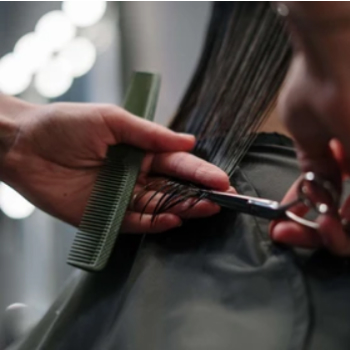
A cut built around density. The right shape and length can soften a receding hairline or thin crown. We start every appointment with a personalized consultation, then cut to your hair’s growth pattern. A women’s cut at our studio is $60-$75 and a men’s cut is $45-$50. Our guide to hairstyles for a receding hairline shows what tends to work.
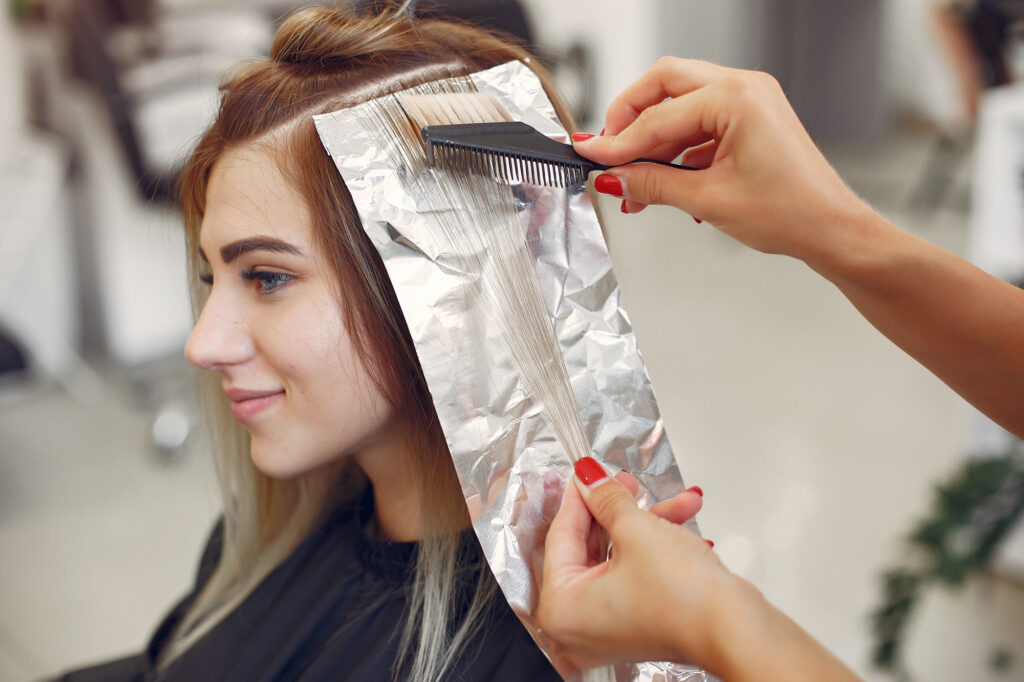
Color that adds depth. Contrast between roots and scalp is what makes thin areas show. Our balayage and highlight work can add dimension that reads as density. Full Balayage/Hair Painting is $200-$225, Partial Highlights are $115-$160, and Men Color is $55-$80. If you are weighing options, balayage versus highlights explains the difference.
Styling and treatments. A Blow Dry Style is $45-$75, and Deep Conditioning/Blow Dry Style is $80-$85. Healthy, well-conditioned hair has more body.
Extensions for volume. We offer Clip-In Extensions for $200-$400, Tape-In Extensions for $400-$800, Classic Bonding for $600-$1,000 and Fusion Extensions for $500-$1,500. Extensions add length and fullness in an afternoon, with no downtime. For an idea of how pricing breaks down between hair and labor, see what hair extensions cost. If you want to understand the choices first, read how to choose hair extensions.
For a broader look at the topic, our guides on managing thinning hair and dealing with hair loss cover the everyday side.
A note from our chair
We are a hair studio, not a surgical practice, and we say so plainly. If you are exploring a transplant, a dermatologist and a licensed surgeon should lead that decision.
What we bring is more than 25 years of experience in cut and color, and a team of hair artists who treat every head individually. Most people who come to us worried about thinning do not need a dramatic change. They need a shape that suits their growth pattern, color with depth and a stylist who talks through the options.
Hair that is cut well, colored with care and conditioned properly looks denser, and that holds whether you are mid-decision, mid-recovery or simply want to look your best.
Juiced
Book a consultation in La Jolla
If thinning is bothering you, we start with a conversation: what you see, what you want and what your hair can do. From there we recommend a cut, color or styling plan from our full service menu, with the price range for each service listed.

We are at Joel C Ma Hair Studio in La Jolla and serve clients across San Diego. For a special event, our updo styling starts at $100.
FAQ
Can a salon do a hair transplant?
No. A transplant is surgery and should be done by a licensed physician. What a salon can do is shape, color and style your hair so that it looks as full as possible, before or after surgery.
How long until I see results from a transplant?
Most people see results six to nine months after surgery, and some take up to 12 months. The transplanted hairs usually shed first, a few weeks after the procedure, before new growth starts.
Is a hair transplant permanent?
Transplanted follicles keep the traits of the area they came from, so they tend to last. But your other hairs can keep thinning, so many surgeons combine surgery with medical treatment, and a second session may be needed.
Does insurance cover a hair transplant?
Usually not. The Mayo Clinic says cosmetic transplants are generally not covered by insurance, so ask any clinic for a full written quote, including follow-up care.
What can I do for thinning hair right now?
A cut designed around your density, color with depth and styling that adds body make a visible difference. Extensions are another option for instant fullness. Book a consultation with us and we will go through what suits your hair.
Sources
- American Academy of Dermatology: hair transplant
- American Hair Loss Association: Am I a candidate?
- NHS: hair transplant
- Is every patient of hair loss a candidate? (2021)
- Hair Transplantation: State of the Art (2025)
- Mayo Clinic: hair loss diagnosis and treatment
- Clinical features of women treated with transplantation (2024)
- Recipient-site necrosis after FUE (2026)
- Hair transplant cost: 16 countries compared (2025)
- BAHRS advice on surgery abroad
- How much do hair extensions cost?