
La Jolla Cove Surfing: What You Need to Know
TL;DR:
- La Jolla Cove is closed to surfing by law to protect sea lions and swimmers in the ecological reserve.
- Nearby spots like La Jolla Shores offer safe, accessible waves for all skill levels, especially beginners.
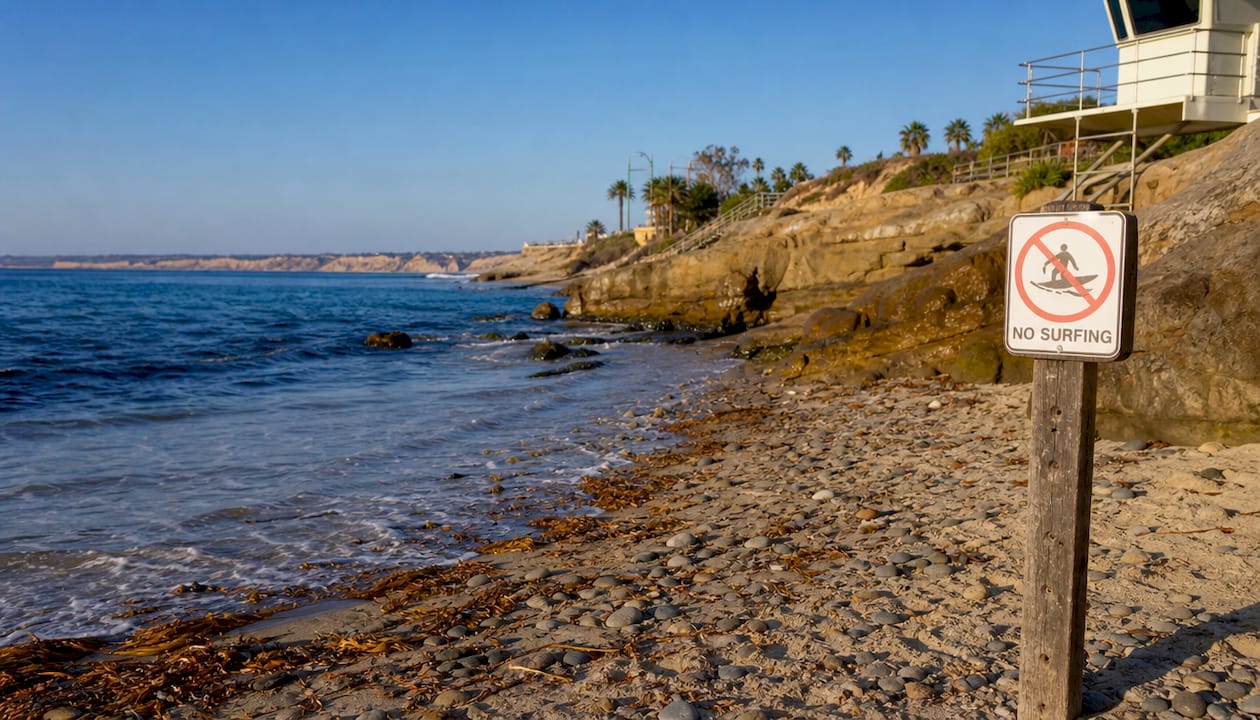
La Jolla Cove is closed to surfing, and that ban is total and enforced. As of 2026, surfboards are prohibited at the Cove to protect swimmers, sea lions, and the surrounding Ecological Reserve. That means no surfboards, no boogie boards, and no stand-up paddleboards. The good news: within a short drive or walk, La Jolla offers some of Southern California’s most varied surf breaks, from gentle beginner beach breaks at La Jolla Shores to punishing reef barrels at Horseshoe. This guide covers why the Cove is off-limits, where to surf instead, how to read local conditions, and how to fit into the La Jolla surf community.
Why is surfing banned at La Jolla Cove?
La Jolla Cove sits inside the San Diego-La Jolla Underwater Park Ecological Reserve, a protected marine zone where conservation rules take priority over recreational surfing. The Cove’s rocky seabed and sheltered bay make it physically unsuitable for surfing anyway. The water is shallow, the beach is small, and the cove fills with swimmers and snorkelers throughout the year.
The regulations go beyond a simple preference. Authorities enforce a total ban on surfboards and similar flotation equipment, with lifeguards actively intervening when violations occur. The protected status of the Cove keeps swimmer traffic and sea lion populations safe from surfboard collisions. Sea lions haul out on the rocks at the Cove year-round, and the reserve’s rules protect their habitat directly.
The geography reinforces the legal ban. The Cove’s small, enclosed shape means waves do not form in any way useful for surfing. Swells that reach the Cove are already broken and scattered by the surrounding cliffs. Even without the regulations, no serious surfer would paddle out there.
Pro Tip: If you see someone paddling a surfboard into La Jolla Cove, they are breaking the law. Lifeguards will remove them. Do not follow their lead.
Key reasons the ban exists:
- Wildlife protection: Sea lions and marine life in the Ecological Reserve require a surfboard-free zone.
- Swimmer safety: The Cove is one of San Diego’s most popular swimming and snorkeling spots. Surfboards create collision risks.
- Rocky hazards: The seabed is uneven and rocky, making wipeouts dangerous for surfers and bystanders.
- Conservation law: The San Diego-La Jolla Underwater Park Ecological Reserve carries legal weight, not just advisory status.
What are the best La Jolla surfing spots nearby?
The local surfing experience around La Jolla ranges from gentle, forgiving beach breaks to extreme reef and canyon waves that demand years of experience. Every skill level has a home within a few miles of the Cove.
La Jolla Shores
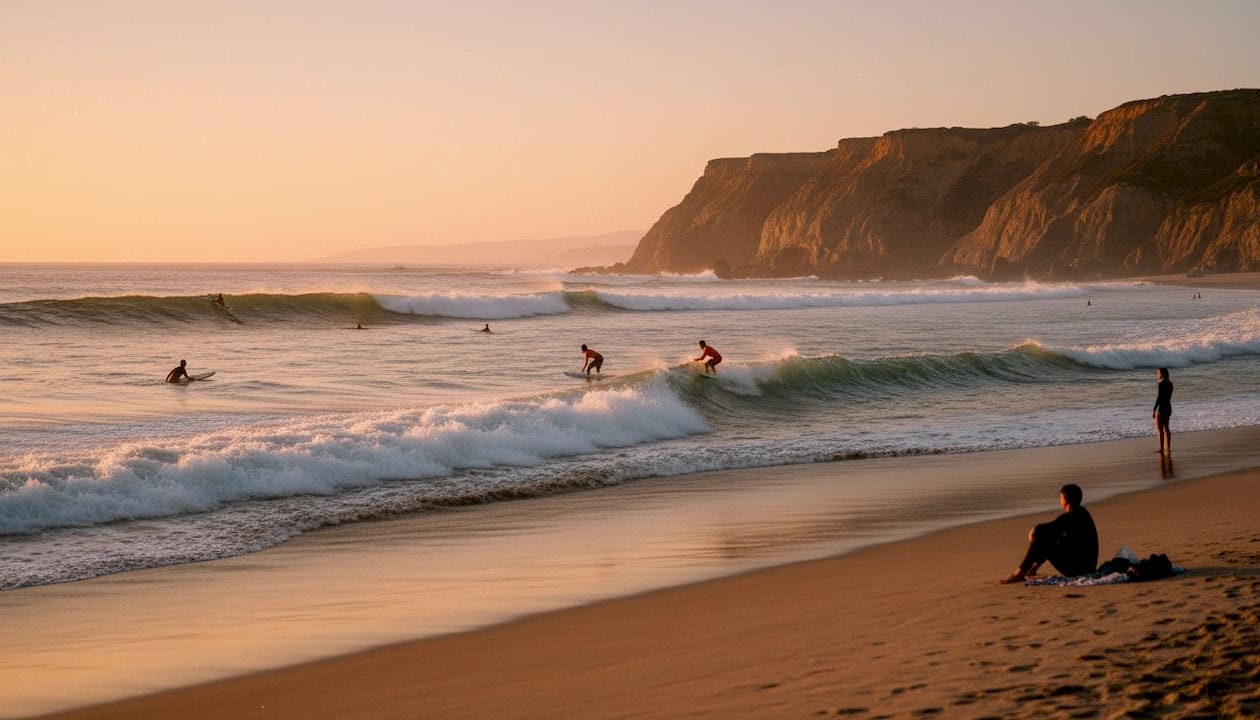
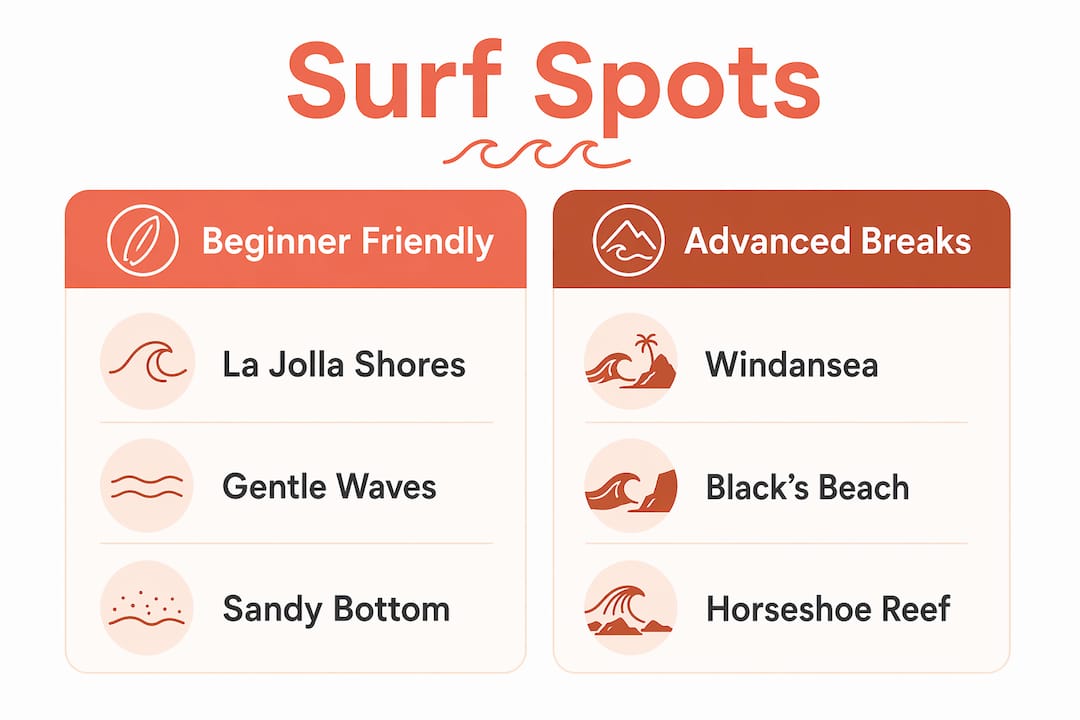
La Jolla Shores offers a forgiving beach break that works for beginners, intermediates, and longboarders. The sandy bottom reduces injury risk, and the waves are consistent without being overpowering. Surfing lessons in La Jolla almost always start here. The beach is wide, parking is available, and lifeguards are on duty during peak hours. If you are new to surfing or returning after a long break, La Jolla Shores is the right call.
Windansea Beach
Windansea is an iconic reef break with a reputation that goes back decades. The waves are powerful and hollow, shaped by a submerged reef that produces fast, barreling rides. This spot rewards experienced surfers and punishes those who underestimate it. The local surf culture at Windansea is intense. Respect the lineup and the people already in the water.
Black’s Beach
Black’s Beach is a canyon-fed beach break that peaks in power from november through february. Getting there requires a demanding hike down a steep cliff trail. There are no facilities on site, so you carry everything in and out. The waves are powerful and the crowd is thin, which makes it worth the effort for advanced surfers who want quality waves without a packed lineup.
Horseshoe
Horseshoe is a punishing reef break that opens up primarily from november through march. It produces heavy, hollow barrels over a shallow reef. This spot is for expert surfers only. The consequences of a bad wipeout are real, and the wave does not forgive mistakes.
| Spot | Skill level | Wave type | Best season | Key hazard |
|---|---|---|---|---|
| La Jolla Shores | Beginner to intermediate | Sandy beach break | Year-round | Crowds in summer |
| Windansea Beach | Intermediate to advanced | Reef break | Fall and winter | Localism, reef |
| Black’s Beach | Advanced | Canyon beach break | November to February | Hike access, no facilities |
| Horseshoe | Expert only | Heavy reef break | November to March | Shallow reef, barrels |
How do surf conditions work at La Jolla area breaks?
Surf conditions around La Jolla vary significantly by season, swell direction, tide, and wind. Understanding these variables separates a good session from a wasted trip.
Swell direction matters most. Northwest swells light up Windansea and La Jolla Shores consistently. South swells, which arrive in summer, can produce fun waves at La Jolla Shores but often leave reef breaks like Windansea flat or disorganized. West swells work well across most breaks in the area.
Swell period tells you the wave quality. A swell with a period of 14 seconds or more delivers powerful, well-organized waves. Shorter periods under 10 seconds produce choppy, weak surf. When checking a La Jolla surf report, always look at period alongside wave height. An 8-foot swell at 8 seconds is far less impressive than a 5-foot swell at 16 seconds.
Wind timing is the daily variable. Morning sessions before 10:00 AM typically offer cleaner conditions as offshore winds hold the wave face up. Afternoon sea breezes blow onshore and chop up the surface. Checking wind forecasts the night before saves you from showing up to blown-out conditions.
Pro Tip: After heavy rain, avoid entering the water for at least 72 hours. Runoff from storm drains carries bacteria and pollutants into the ocean near La Jolla beaches. Your health is not worth one session.
Seasonal patterns to know:
- Fall (september to november): The best all-around season. Consistent northwest swells, light winds, and warm water.
- Winter (december to february): Biggest swells of the year. Black’s Beach and Horseshoe come alive. Cold water and strong currents require experience.
- Spring (march to may): Transition season. Mixed conditions. Good for intermediate surfers building skills at La Jolla Shores.
- Summer (june to august): South swells dominate. Smaller waves, crowded beaches, and ideal conditions for beginners at La Jolla Shores.
For up-to-date La Jolla beach waves and conditions, Surfline and Surftrips.co both publish detailed forecasts with tide charts, wind data, and swell period breakdowns. Check both before you go.
What is the local surf culture like around La Jolla?
La Jolla’s surf community has a long history, and that history shapes how surfers interact at every break. Windansea in particular carries a localism culture dating back to the 1950s. Newcomers who paddle out without reading the room often find themselves unwelcome. That is not unique to La Jolla, but it is more pronounced here than at many San Diego breaks.
The lineup hierarchy is real and unwritten. The surfer closest to the peak has priority on the wave. Dropping in on someone already riding is a serious breach of etiquette. At crowded reef breaks like Windansea, this rule is enforced socially and sometimes bluntly. Observe before you paddle out. Watch how the locals position themselves and how they communicate in the water.
Beginners belong at La Jolla Shores, not at Windansea or Black’s Beach. This is not gatekeeping. It is a safety and courtesy issue. A beginner on a longboard at a reef break creates hazards for everyone, including themselves. Starting at the right spot builds skills faster and keeps the peace.
Environmental stewardship matters to the La Jolla surf community. Many local surfers actively support the Ecological Reserve’s conservation goals. Picking up trash on the beach, avoiding disturbing sea lions on the rocks, and following water quality advisories after rain are all part of being a responsible surfer in this area. The protected status of La Jolla Cove benefits the entire coastal ecosystem, including the surf breaks nearby.
Core etiquette rules every surfer should follow:
- Respect the peak: The surfer closest to the breaking wave has right of way.
- Do not snake: Paddling around someone to steal their position is a fast way to create conflict.
- Communicate: A simple nod or verbal “go” prevents collisions and builds goodwill.
- Know your limits: Surfing a break beyond your skill level puts you and others at risk.
- Leave no trace: Pack out everything you bring to the beach, especially at Black’s Beach where there are no facilities.
Key Takeaways
La Jolla Cove is a no-surf zone by law, but the surrounding area delivers some of San Diego’s best and most varied surf breaks for every skill level.
| Point | Details |
|---|---|
| Surfing ban at the Cove | Surfboards are prohibited at La Jolla Cove by law; lifeguards enforce the ban actively. |
| Best beginner spot | La Jolla Shores offers a sandy beach break suitable for all skill levels year-round. |
| Advanced breaks nearby | Black’s Beach and Horseshoe deliver powerful waves from november through february for expert surfers. |
| Conditions vary by season | Fall produces the most consistent surf; winter brings the biggest swells; summer favors beginners. |
| Respect local culture | Windansea’s localism culture dates to the 1950s; observe lineup etiquette before paddling out. |
Surfing and the Cove: what I’ve learned from years in La Jolla
Spending time in La Jolla teaches you something most surf guides skip. The Cove’s ban is not a loss for surfers. It is a trade that works in everyone’s favor. The Cove stays clean, the sea lions stay put, and swimmers have a rare stretch of protected California coastline. Meanwhile, surfers get Black’s Beach, Windansea, and La Jolla Shores within a few miles.
What frustrates me is watching visitors show up at the Cove with boards, confused about why they cannot paddle out. The information exists. The signs are posted. The regulations are clear. Part of being a good surfer is doing the homework before you arrive, not just on wave height but on where you are legally and ethically allowed to be.
The bigger point is this: La Jolla rewards surfers who take the time to understand it. Windansea will humble you if you rush it. Black’s Beach will exhaust you if you are not prepared for the hike. La Jolla Shores will teach you if you let it. Each break has a personality, and the surfers who thrive here are the ones who match their skill and attitude to the right spot.
Support the conservation efforts around the Cove. They protect the water quality that makes every La Jolla surf session possible. A healthy reef and a clean ocean are not separate from surfing culture. They are the foundation of it.
— Juiced
Hair care for La Jolla surfers and beach regulars
Saltwater, UV exposure, and wind are the three biggest threats to hair health for anyone spending serious time at La Jolla beaches. Sun and salt strip moisture from the hair shaft, leaving it brittle and prone to breakage. That damage compounds fast when you are in the water daily.

Joelcma, La Jolla’s expert-driven hair studio with over 25 years of experience, works with clients who live the coastal lifestyle. The team understands what repeated saltwater and sun exposure does to hair, and they build care plans around it. Whether you need a protective haircut that holds up between sessions or advice on sun protection for your hair, Joelcma brings the same precision to hair care that you bring to reading a swell forecast. Book a consultation and get a plan that actually fits your life in La Jolla.
FAQ
Can you surf at La Jolla Cove?
No. Surfing is strictly prohibited at La Jolla Cove as of 2026. The Cove is part of the San Diego-La Jolla Underwater Park Ecological Reserve, and lifeguards enforce the ban on surfboards and similar equipment.
Where is the best place to surf near La Jolla Cove?
La Jolla Shores is the closest and most accessible surf spot, offering a forgiving beach break for all skill levels. Windansea and Black’s Beach serve intermediate and advanced surfers looking for more challenging waves.
When are surf conditions best in La Jolla?
Fall, from september through november, delivers the most consistent conditions across La Jolla surf spots. Winter brings the largest swells, best suited for experienced surfers at Black’s Beach and Horseshoe.
Is La Jolla Shores good for surfing lessons?
Yes. La Jolla Shores is the primary location for surfing lessons in La Jolla due to its sandy bottom, consistent beach break, and lifeguard presence. Most local surf schools operate there.
Should I check a surf report before going to La Jolla?
Always check a current La Jolla surf report before heading out. Swell period, wind direction, and tide all affect wave quality significantly, and conditions can change within hours.
Recommended
- Local La Jolla Attractions: Your Insider’s Guide – Joel C Ma Hair Studio
- La Jolla Art Show 2026: Your Complete Festival Guide – Joel C Ma Hair Studio
- Book a Luxury Hair Appointment in La Jolla: Your Guide – Joel C Ma Hair Studio
- Find the Perfect High-End Hair Salon in La Jolla: Tips – Joel C Ma Hair Studio