
How to Manage Thinning Hair Naturally for Fuller Look

Over fifty percent of American women experience noticeable hair thinning before age fifty. For women in La Jolla, struggling with fragile strands and visible scalp can undermine confidence and enjoyment of daily life. Addressing hair health early makes a dramatic difference. This guide outlines expert techniques and personalized tips to help you restore fullness, choose the right products, and discover the styling solutions you deserve in a high-end salon setting.
Table of Contents
- Step 1: Assess Current Hair Condition And Identify Causes
- Step 2: Select Appropriate Products And Treatments
- Step 3: Apply Volume-Enhancing Styling Techniques
- Step 4: Incorporate Scalp Care And Gentle Routines
- Step 5: Evaluate Progress And Adjust Routine Regularly
Quick Summary
| Essential Insight | Description |
|---|---|
| 1. Assess Hair Condition Thoroughly | Conduct a visual and tactile examination of your hair and scalp to identify thinning and texture changes. |
| 2. Document Hair Changes Regularly | Keep a journal of hair changes, dietary habits, and stress levels to aid healthcare professionals. |
| 3. Consult Professionals for Personalized Advice | Seek guidance from dermatologists or trichologists to receive tailored recommendations for hair treatments. |
| 4. Use Lightweight Products for Volume | Select volumizing products and avoid heavy formulas to enhance the appearance of fullness without weighing hair down. |
| 5. Perform Scalp Care Rituals Daily | Maintain scalp health through gentle cleansing and regular massages to promote circulation and healthy hair growth. |
Step 1: Assess current hair condition and identify causes
Understanding your hair’s health starts with a careful and strategic evaluation of its current state and potential underlying factors. Thinning hair isn’t just about appearance it’s a complex signal from your body that something might need attention. Hair loss can emerge from multiple sources, ranging from genetic predispositions to nutritional deficiencies and systemic health conditions.
To properly assess your hair condition, begin with a comprehensive visual and tactile examination. Stand in natural light and closely inspect your scalp and hair density. Look for signs like increased shedding when brushing or washing, visible thinning at the crown or hairline, and changes in hair texture. Pay attention to the thickness of individual strands tracking whether they seem finer or more fragile than before. Consider documenting these observations with photographs taken from multiple angles to track potential progression.
Next, reflect on recent life changes that might impact hair health. Stress levels, dietary shifts, hormonal fluctuations like pregnancy or menopause, and medication changes can significantly influence hair growth patterns. Autoimmune conditions can also trigger unpredictable hair loss, so understanding your overall health context becomes crucial. If you notice persistent or significant thinning, consulting a professional dermatologist or trichologist can provide precise diagnostic insights through potential blood tests or scalp examinations.
Professional Tip: Keep a detailed journal tracking hair changes, dietary habits, stress levels, and any medical treatments to help healthcare professionals understand your unique hair health profile.
Step 2: Select appropriate products and treatments
Navigating the world of hair restoration requires a strategic approach to selecting products and treatments that address your specific hair loss concerns. Understanding that hair health is deeply connected to overall nutrition, you will want to explore targeted solutions that support your unique hair challenges.
Nutritional interventions play a critical role in managing hair health, with specific vitamins and minerals supporting hair growth and thickness. Start by evaluating oral supplements that include B complex vitamins, biotin, iron, and zinc. These nutrients can help strengthen hair follicles and promote healthier growth. Topical treatments offer another layer of intervention, with options like rosemary oil, pumpkin seed oil, and clinically proven solutions such as minoxidil providing potential improvements in hair density and scalp health.
When selecting treatments, consider consulting a professional who can provide personalized recommendations based on your specific hair loss pattern and underlying causes. Some individuals might benefit from combination therapies that address multiple aspects of hair restoration, such as using oral supplements alongside topical treatments. Pay attention to your body’s response and be prepared to adjust your approach if you do not see desired results within a reasonable timeframe.
Professional Tip: Always introduce new hair treatments gradually and document your progress with consistent photographs to track potential improvements.
Here’s a concise comparison of popular hair restoration approaches and their core benefits:
| Approach | Example Products | Primary Benefit |
|---|---|---|
| Oral Supplements | Biotin, zinc tablets | Support hair follicle strength |
| Topical Treatments | Minoxidil, rosemary oil | Improve scalp health, enhance growth |
| Styling Techniques | Volumizing mousse, layers | Create fuller, denser appearance |
| Scalp Care | Gentle shampoo, scalp oil | Promote optimal growth conditions |
Step 3: Apply volume-enhancing styling techniques
Transforming thinning hair into a fuller, more voluminous style requires strategic styling techniques that create the illusion of density and body. Understanding how to work with your hair’s natural texture and using the right products can dramatically improve your hair’s appearance and confidence.
Lightweight styling products are key to creating volume without weighing down fine hair. Start by selecting a volumizing mousse or foam that provides lift at the roots. When blow-drying, use a round brush to create height and movement, directing the hair upward and away from the scalp. Technique matters more than heavy products focus on creating lift and texture rather than trying to mask thinning areas with excess product. Natural oils can also play a supportive role in enhancing hair volume and scalp health, with options like rosemary oil potentially stimulating circulation and protecting hair follicles.

Consider working with a professional stylist to develop a cutting and styling strategy that maximizes the appearance of fullness. Layered haircuts can create the illusion of volume, while strategic cutting techniques can help distribute hair more evenly across the scalp. Experiment with different parting styles and styling techniques to find what works best for your unique hair texture and density.
Professional Tip: Invest in a professional volumizing haircut that creates the appearance of fullness and practice blow-drying techniques that lift hair at the roots.
Step 4: Incorporate scalp care and gentle routines
Developing a nurturing approach to scalp health is fundamental in managing thinning hair and promoting optimal hair growth. Your scalp is essentially the foundation for healthy hair, requiring careful attention and a thoughtful maintenance strategy that supports follicle strength and overall hair vitality.
Maintaining proper scalp hygiene involves using gentle cleansing techniques that remove excess buildup without stripping natural oils. Choose mild shampoos specifically formulated for your hair type, and avoid overwashing which can disrupt your scalp’s natural balance. Gentle brushing can stimulate circulation and distribute natural scalp oils, but be extra careful when handling fragile hair. Protecting your hair from excessive heat and harsh styling practices is crucial in preventing additional damage and potential hair loss.
Consider incorporating scalp massage techniques using lightweight oils that nourish without clogging follicles. These massages can improve blood circulation, potentially supporting healthier hair growth. Pay attention to your scalp’s specific needs, watching for signs of dryness, irritation, or excessive oiliness, and adjust your care routine accordingly. Remember that scalp health is a holistic process that involves nutrition, hydration, and gentle treatment.
Professional Tip: Invest in a soft bristle brush and perform gentle scalp massages for 5 minutes daily to enhance circulation and promote a healthy hair growth environment.
Step 5: Evaluate progress and adjust routine regularly
Managing thinning hair is an ongoing journey that requires consistent monitoring, patience, and willingness to adapt your approach. Tracking your hair’s response to different treatments and techniques is crucial for developing an effective long-term strategy that supports hair health and growth.
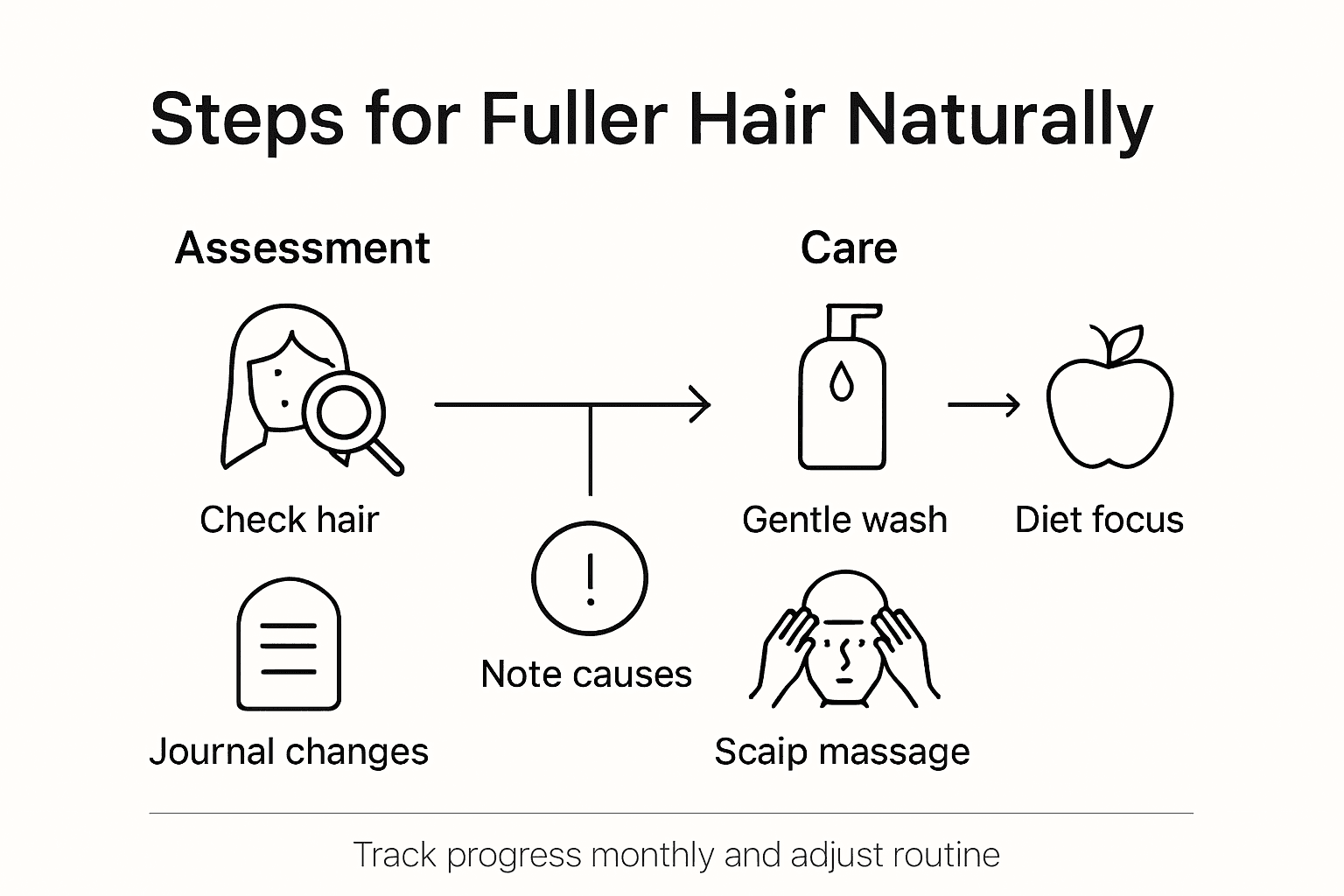
Regular clinical assessments are fundamental in understanding your hair loss treatment progress. Start by documenting your hair’s condition through monthly photographs taken under consistent lighting and from the same angles. Pay attention to subtle changes in hair density, texture, and overall scalp health. Healthcare providers recommend periodic follow-ups to modify management plans and address any underlying causes that might be contributing to hair thinning.
Be prepared to make strategic adjustments to your hair care routine based on your observations. This might involve changing product formulations, adjusting supplement intake, or exploring additional treatments that could better support your hair’s unique needs. Remember that hair restoration is not a one-size-fits-all process, and what works initially might need refinement over time. Stay open to professional guidance and be patient with your progress.
Professional Tip: Create a digital or physical tracking journal to record monthly hair measurements, product usage, and any noticeable changes, which will help you and your healthcare provider make informed decisions.
For easy reference, here’s a summary of professional tips from each step:
| Step | Professional Tip Highlight |
|---|---|
| Assess Hair Condition | Keep a detailed tracking journal |
| Product & Treatment Selection | Introduce new treatments gradually |
| Styling for Volume | Invest in a volumizing haircut and blow-drying |
| Scalp Care | Use soft brushes, perform daily scalp massages |
| Evaluate and Adjust | Document monthly changes with journal entries |
Restore Confidence with Expert Hair Care at Joel C Ma Hair Studio
Managing thinning hair naturally requires a thoughtful approach that blends gentle scalp care, volume-enhancing styling techniques, and tailored treatments designed specifically for your unique hair condition. If you relate to challenges like fragile strands, lack of volume, or spotting gradual hair thinning, our expert team at Joel C Ma Hair Studio understands the emotional impact and offers personalized solutions that elevate your hair’s fullness and vitality.
Experience the transformation with our artistic haircuts and customized styling consultations that work in harmony with your natural hair texture to create the fuller look you desire. Visit Joel C Ma Hair Studio to explore premium hair care services and schedule your personalized session today. Don’t wait to embrace a hair care routine that honors scalp health and unlocks your hair’s true potential with proven techniques from industry-leading professionals.
Frequently Asked Questions
How can I assess my current hair condition to manage thinning hair naturally?
To assess your hair condition, perform a visual and tactile examination. Look for signs of increase in shedding, visible thinning, and changes in hair texture, and take photographs from multiple angles to track changes over time.
What nutritional interventions can help improve thinning hair?
Incorporate oral supplements that contain B complex vitamins, biotin, iron, and zinc, as these nutrients support hair follicle strength. Consider integrating these into your routine within 30 days for noticeable benefits.
How do I select the right topical treatments for thinning hair?
Choose topical treatments like rosemary oil or minoxidil, which can potentially enhance scalp health and hair density. Gradually introduce these treatments and monitor your progress with before-and-after photos to evaluate their effectiveness.
What styling techniques can I use to create volume with thinning hair?
To create volume, use lightweight volumizing products and a round brush when blow-drying to lift hair at the roots. Experiment with layered haircuts and different parting styles to enhance fullness and texture.
How can I develop a proper scalp care routine for thinning hair?
Maintain a gentle scalp care routine by using mild shampoos that cleanse without stripping natural oils. Dedicate time for scalp massages with lightweight oils to boost circulation and nourish hair follicles for healthier growth.
How often should I evaluate my hair care progress?
Evaluate your hair care progress monthly by taking photographs and documenting changes in hair density and scalp health. Adjust your routine based on your observations and stay open to tweaking your approach as needed.
Recommended
- How to Style Thinning Hair for a Fuller Look – Joel C Ma Hair Studio
- Complete Guide to Reasons for Hair Thinning – Joel C Ma Hair Studio
- Managing Postpartum Hair Loss – Effective Solutions for Recovery – Joel C Ma Hair Studio
- Dealing With Hair Loss: Complete Guide and Solutions – Joel C Ma Hair Studio
- How to Naturally Make Your Lips Plump with Sensitive Care – Pure Light Botanical Beauty