
How to Detangle Hair Easily for Luxurious Results

When over 68 percent of American women report hair tangling as their top beauty frustration, it is clear that flawless styling begins with the right prep. Luxurious hair thrives on gentle care, especially for those who love sophisticated looks common in La Jolla social circles. Discover how a methodical approach with expert-approved products and tools turns routine detangling into a seamless experience worthy of your time and investment.
Table of Contents
- Step 1: Prepare Hair With Gentle Moisturizing Products
- Step 2: Section Hair For Controlled Detangling
- Step 3: Apply A Wide-Tooth Comb Or Detangling Brush
- Step 4: Work Through Knots With Slow, Steady Motions
- Step 5: Assess Smoothness And Repeat If Necessary
Quick Summary
| Key Insight | Explanation |
|---|---|
| 1. Use moisturizing products | Start detangling with a hydrating conditioner to soften hair and reduce breakage. |
| 2. Section hair carefully | Divide hair into smaller sections for a more manageable detangling process, minimizing stress. |
| 3. Choose the right tools | A wide-tooth comb or detangling brush is essential to prevent damage while working through knots. |
| 4. Detangle slowly and gently | Work through knots from the ends upwards, being patient to avoid pulling and breakage. |
| 5. Assess hair thoroughly | Check for remaining tangles after detangling to ensure smoothness and prevent future issues. |
Step 1: Prepare hair with gentle moisturizing products
Preparing your hair for detangling starts with selecting the right moisturizing products that will soften and lubricate your strands. The goal is to create a smooth surface that allows your comb or brush to glide through with minimal resistance.
Start by choosing a conditioning product suited to your hair type. Professional stylists recommend using a hydrating conditioner that adds slip and prevents breakage. Look for formulas containing natural oils like coconut or jojoba that provide extra lubrication. You might also consider creating a homemade detangling spray with ingredients like aloe vera juice and essential oils for added moisture.
Apply your chosen product generously from mid shaft to ends, ensuring complete coverage. Gently work the product through your hair using your fingers or a wide tooth comb to distribute moisture evenly. This preparation stage is crucial for reducing friction and making the subsequent detangling process smoother and less damaging to your hair.
Pro tip: For maximum moisture absorption, apply your conditioning product to damp hair to help the ingredients penetrate more effectively.
Step 2: Section hair for controlled detangling
Sectioning your hair is a critical strategy that transforms your detangling process from potentially frustrating to smoothly manageable. By dividing your hair into smaller, controlled sections, you can approach each area systematically and reduce overall stress on your strands.
Begin by dividing thick or dense hair into multiple sections typically ranging from 4 to 8 parts depending on your hair’s volume and texture. Use hair clips or hair ties to secure each section, keeping unworked areas neatly contained. Secure smaller sections with clips or clamps to prevent already detangled portions from becoming tangled again. This method allows you to focus intensely on one area at a time, minimizing breakage and making the entire process more controlled and less overwhelming.

Start at the back of your head and work forward, unclipping one section at a time. Use your fingers or a wide tooth comb to gently separate each sectioned area, working from the ends upward to minimize pulling and reduce potential damage. By maintaining this methodical approach, you transform a potentially challenging task into a precise and gentle hair care routine.
Pro tip: Wrap unworked sections in a soft silk or satin scarf to keep them protected and prevent additional tangling during the detangling process.
Step 3: Apply a wide-tooth comb or detangling brush
Selecting the right tool is crucial for minimizing damage and effectively working through tangled hair. A wide-tooth comb or specialized detangling brush will be your primary weapon in transforming knots into smooth, manageable strands.
Board-certified dermatologists recommend using a wide-tooth comb to gently separate hair with minimal breakage. Begin at the very ends of your hair and work upward in small incremental movements. Hold the section you are working on firmly at the roots to prevent unnecessary pulling and tension. This technique reduces stress on your hair and allows you to methodically work through each tangle without causing additional damage.
Move slowly and patiently, repeating the combing motion multiple times in each section. If you encounter a particularly stubborn knot, do not pull or yank. Instead, apply a bit more of your moisturizing product and use your fingers to gently separate the tangle before returning to the wide-tooth comb. The key is maintaining a gentle touch and allowing the comb to do the work without forcing it through your hair.
Pro tip: For extra slip and easier detangling, mist your comb with a leave-in conditioner before working through each hair section.
Here is a comparison of common detangling tools to help choose the best option for your hair:
| Tool Type | Best For Hair Type | Advantages | Potential Drawbacks |
|---|---|---|---|
| Wide-Tooth Comb | Curly, coily, thick | Minimal breakage, gentle motion | May miss smaller knots |
| Detangling Brush | All hair types | Fast detangling, flexible bristles | Might cause static |
| Fingers | Fragile, tightly coiled | Reduces tension, precise control | Time-consuming process |
Step 4: Work through knots with slow, steady motions
Detangling your hair requires patience and a gentle approach that minimizes breakage and preserves the integrity of your strands. The key is transforming what could be a frustrating experience into a careful, methodical process that respects your hair’s delicate nature.
Working slowly through tangles prevents hair damage, starting at the ends and moving upward with deliberate, controlled movements. Use your fingers first to gently separate larger knots, then switch to your wide-tooth comb. Detangle hair with conditioner for smoother results, which provides additional slip and reduces friction. Hold each section firmly at the root to minimize tension and potential pulling, allowing your comb to glide through without causing stress to the hair shaft.
If you encounter a particularly challenging knot, resist the urge to pull or yank. Instead, apply more conditioning product, use your fingers to carefully loosen the tangle, and return to your comb with gentle, incremental movements. Think of detangling as a meditation process where slow, intentional actions will ultimately yield the smoothest results.
Pro tip: Consider working under soft, warm light to better see your hair sections and identify intricate tangles before they become more complicated.
Step 5: Assess smoothness and repeat if necessary
Your detangling process is not complete until you have thoroughly evaluated the smoothness and consistency of your hair. This final assessment ensures that you have successfully removed all potential tangles and prepared your hair for styling or further treatment.
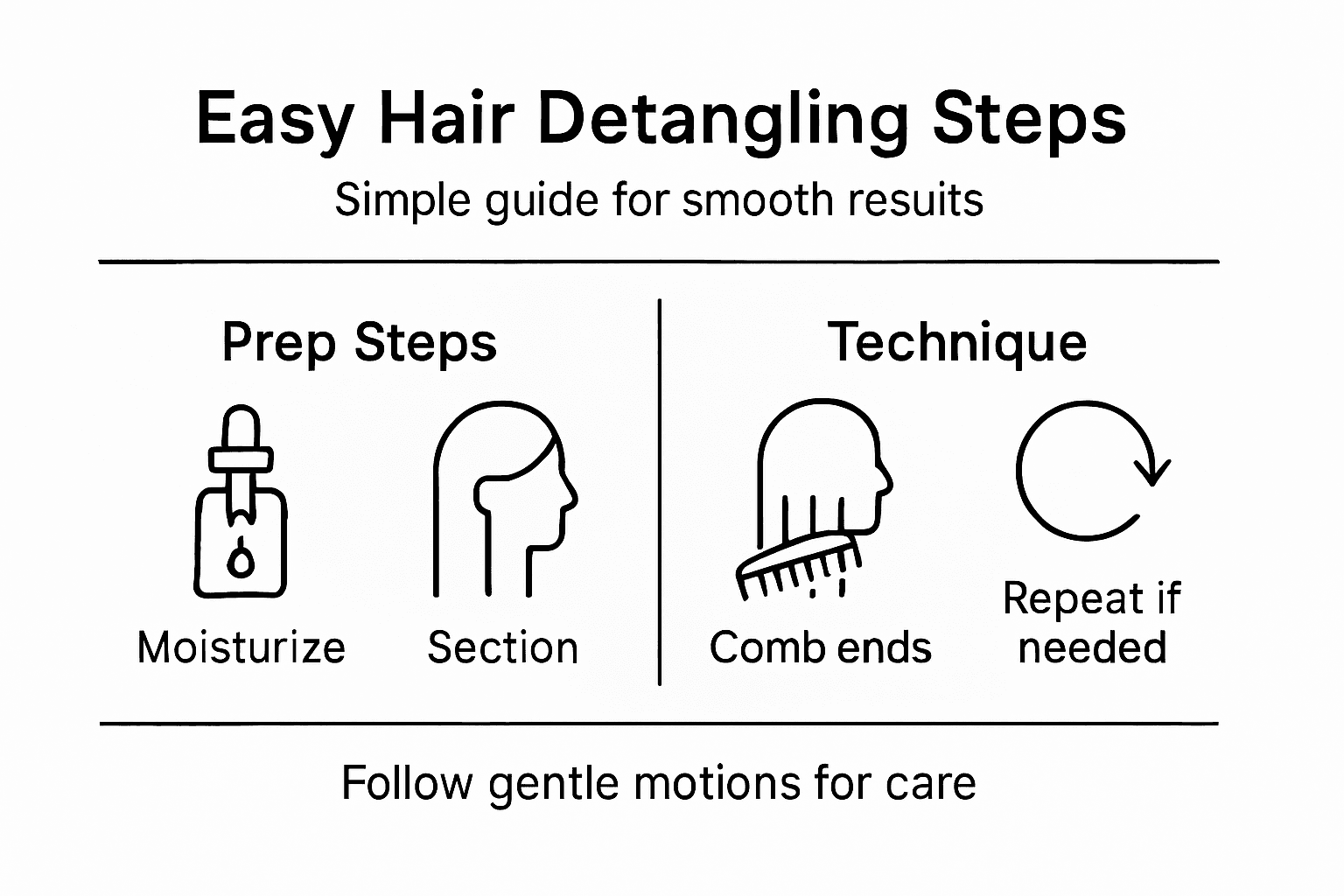
Carefully examine hair for remaining tangles by running your fingers through each section, feeling for any rough spots or unresolved knots. Use both visual and tactile inspection to identify areas that might require additional attention. Reapply detangling techniques for persistent knots by returning to problematic sections with your wide-tooth comb and conditioning product. Pay special attention to areas near the nape of the neck and behind the ears, where tangles tend to be more stubborn.
If you discover additional knots during your assessment, do not become discouraged. Simply return to your previous detangling techniques, working slowly and gently through each section. Remember that thoroughness is more important than speed, and taking the extra time to ensure completely smooth hair will prevent future breakage and damage.
Pro tip: Use a handheld mirror to check the back of your head thoroughly, ensuring you have not missed any hidden tangles.
This summary table highlights key checkpoints for an effective detangling assessment:
| Assessment Step | What to Look For | Recommended Action |
|---|---|---|
| Smoothness | No knots or rough spots | Use fingers to feel through sections |
| Consistency | Even texture, no snags | Repeat combing if needed |
| Hidden Tangles | Back and nape areas | Use mirror for a full view |
Transform Your Detangling Routine with Expert Care at Joel C Ma Hair Studio
Tangled hair can be frustrating and damaging without the right techniques and products. This article highlights the challenges of gently detangling while avoiding breakage through moisturizing, sectioning, and using the right tools like wide-tooth combs. If you want to move beyond DIY methods and experience truly luxurious, smooth hair, our expert team at Joel C Ma Hair Studio in La Jolla is here to help. With over 25 years of experience, we specialize in personalized hair care that respects your hair’s unique texture and needs, elevating your detangling routine to an art form.

Ready to treat your hair with the care it deserves and enjoy effortless manageability? Discover our tailored hair services that include premium conditioning treatments designed to nourish strands deeply. Visit Joel C Ma Hair Studio to book your consultation and explore how our team of skilled hair artists can create customized solutions just for you. Don’t wait to unlock the full beauty of your hair—start your transformation today at Joel C Ma Hair Studio.
Frequently Asked Questions
How do I prepare my hair for easy detangling?
Begin by applying a gentle moisturizing product that suits your hair type. Use a hydrating conditioner or a homemade detangling spray to add slip and moisture, making sure to cover your hair evenly from mid-shaft to ends.
What tool should I use for detangling my hair?
A wide-tooth comb or a specialized detangling brush is best for effectively managing tangles with minimal breakage. Start at the ends of your hair and work your way up in small sections to achieve smoother results.
How can I section my hair for controlled detangling?
Divide your hair into smaller sections, typically 4 to 8 parts, depending on its thickness. This will help you focus on one area at a time, making it easier and less stressful to detangle your hair without causing damage.
What should I do if I encounter a stubborn knot while detangling?
If you find a tough knot, don’t yank on it; instead, apply more conditioning product and gently use your fingers to loosen it. After that, return to your comb to work through the knot slowly and carefully.
How can I ensure my hair is fully detangled?
After detangling, run your fingers through each section to check for any remaining knots or rough spots. If you find any, use your detangling method again on those specific areas to ensure your hair is completely smooth and tangle-free.
What is the best technique for detangling without causing damage?
Always detangle your hair starting from the ends and moving upward, using deliberate and slow motions. Hold each section firmly at the roots to reduce tension, allowing your comb or brush to glide through without pulling.