
Hair Treatment for Long Hair: Your 2026 Expert Guide
TL;DR:
- Effective long hair treatment combines regular trims with targeted products like peptide sealers and heat protectants. Maintaining a routine that includes trimming every 8 to 12 weeks and using proper care products helps reduce split ends and breakage. Professional salon services like precise dusting and fiber-strengthening treatments further enhance long-term hair health.
Effective hair treatment for long hair combines regular precision trims with targeted products like peptide-rich sealers, bond-building formulas, and heat protectants to maintain strength, reduce breakage, and improve manageability. Long hair faces more cumulative stress than short hair. Every inch of length has survived months of heat, friction, and environmental exposure, making a structured care approach non-negotiable. Products from lines like Kérastase Extentioniste, Redken Extreme Length, and Revlon Eksperience address the specific needs of longer strands, and 2026 research confirms that combining trims with the right products delivers measurably better results than either approach alone.
What is the best hair treatment for long hair?
The best long hair treatment is a combination of regular trimming and a consistent product routine built around your hair’s specific needs. No single product replaces the structural work a good trim does, and no trim alone compensates for daily damage from heat and friction.
Trimming every 10–12 weeks combined with peptide-rich sealers applied twice weekly reduces split end formation by approximately 40% over six months compared to trimming alone. That 40% reduction translates directly into longer intervals between salon visits and visibly healthier ends.
The key insight most people miss is that products and scissors serve different functions. Products manage the hair you have. Scissors remove the damage that cannot be reversed. Both are required for genuinely healthy long hair.
Why trimming is the only real fix for split ends
No topical product can permanently repair a split end. Scissors are the only definitive solution. This is not a marketing claim. It is a structural reality: a split end is a physically separated shaft, and no formula bonds it back permanently.
Resin-based sealers do temporarily smooth and seal split ends, but they lose effectiveness within about 10 washes as the physical separation reasserts itself. They buy you time between trims. They do not replace them.
Here is what a smart trimming strategy looks like for long hair:
- Regular trims every 8–12 weeks to remove active split ends before they travel up the shaft
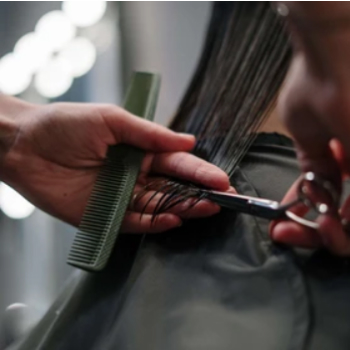
- Dusting as a between-trim technique, removing only the very tips of the hair, typically an eighth of an inch, to delay bigger cuts while preserving length
- Peptide sealer application twice weekly to extend the life of your trim and protect ends between appointments
- Avoiding heat directly on ends to slow the rate of new split end formation
“Dusting is the most underused technique in long hair care. It removes just enough to stop damage from spreading without sacrificing the length you have worked months to grow.”
Pro Tip: Ask your stylist specifically for a dusting rather than a standard trim when your goal is length retention. Most stylists offer it, but few clients know to request it by name.
Dermatologists recommend trimming every 6–8 weeks for hair prone to breakage, with longer intervals acceptable for healthier hair maintained with quality products. The frequency matters less than the consistency.
Which products actually work for long hair health?
The most effective products for long hair target three problems: breakage, moisture loss, and heat damage. The best formulas address all three simultaneously.

Bond-building and peptide-rich treatments are the most scientifically supported category. Peptide-based and marine-derived formulas mimic keratin structure and improve hair fiber integrity over 60-day cycles, similar to how physical training builds muscle progressively. Kérastase Extentioniste and Redken Extreme Length both use this approach.
Heat protectants are non-negotiable for anyone who styles with tools. Clinical data shows heat-protection treatments protect hair up to 230°C, reducing breakage by up to 93%. That number is significant. Most people use heat protectants inconsistently, which means they are absorbing the full damage load on unprotected days.
Comprehensive shampoo and conditioner systems also outperform individual products. Using a matched shampoo, conditioner, and sealer system reduces visible split ends by 78% and breakage by 81% versus non-conditioning systems. Redken Extreme Length is one of the most studied examples of this approach.
| Product type | Key benefit | Best use |
|---|---|---|
| Peptide sealer | Reduces breakage, smooths fiber | Twice weekly on dry ends |
| Heat protectant spray | Up to 93% breakage reduction | Before every heat styling session |
| Deep conditioning mask | Restores moisture and elasticity | Weekly on mid-lengths and ends |
| Bond-building treatment | Repairs internal hair structure | Monthly or after chemical services |
| Leave-in conditioner | Lightweight daily moisture | Daily on damp hair before styling |
Key ingredients to look for on labels include biotin, keratin, collagen, vitamin E, and vitamin B5 (panthenol). These ingredients appear consistently across the most effective long hair care products on the market.
What does a good daily and weekly long hair routine look like?
A good hair care routine for long locks follows a clear structure: gentle cleansing, targeted conditioning, careful detangling, and protective styling. Skipping any one of these steps creates a gap that compounds over time.
Follow this weekly framework:
- Wash with a sulfate-free shampoo two to three times per week. Sulfate-free formulas clean without stripping the natural oils that long hair depends on for moisture retention.
- Apply a nourishing conditioner from mid-length to ends every wash. Avoid the scalp to prevent buildup.
- Use a weekly deep conditioning mask on mid-lengths and ends. Leave it on for 10–20 minutes before rinsing. This is where products like moisturizing hair masks from Kérastase or Briogeo deliver their biggest results.
- Detangle carefully with a wide-tooth comb while hair is still damp and conditioned. Start from the ends and work upward to avoid snapping strands.
- Apply a leave-in conditioner or lightweight oil like argan or coconut oil before drying. These seal the cuticle and reduce frizz without weighing hair down.
- Use a heat protectant spray before any blow-drying, flat ironing, or curling. Apply it to every section, not just the surface layer.
Pro Tip: Swap your regular cotton pillowcase for a silk or satin version. The lower friction surface dramatically reduces overnight breakage and tangles, especially for hair longer than shoulder length.
For more detail on building a complete long hair care routine, Joelcma has a dedicated guide covering every step from washing to styling.
What causes the most damage to long hair, and how do you prevent it?
Mechanical damage is the most overlooked cause of long hair deterioration. Heat styling, rough towel drying, and aggressive brushing collectively account for more breakage than most people realize. Switching to low-friction tools like silk pillowcases and wide-tooth combs can significantly reduce daily breakage without changing a single product.
The most common damage sources and their fixes:
- Heat styling without protection: Use a heat protectant rated to at least 230°C before every session. Limit flat iron use to three times per week maximum.
- Rough towel drying: Swap your terry cloth towel for a microfiber towel or a soft cotton T-shirt. Pat dry rather than rubbing.
- Aggressive brushing on dry hair: Brush only when hair is detangled and slightly damp. Use a boar bristle brush or a wide-tooth comb.
- Sun and environmental exposure: UV rays degrade the outer cuticle layer. Use a UV-protective hair spray or wear a hat during extended outdoor exposure.
- Protein overload: Protein overload signs include gummy, stretchy strands when wet. If your hair feels that way, pause protein treatments and switch to moisture-focused products for two to four weeks before reintroducing protein.
Dermatologists specifically recommend sulfate-free shampoos and silk pillowcases as two of the highest-impact, lowest-effort changes for long hair health. Both address friction and moisture loss simultaneously.
How do salon treatments take long hair results further?
Salon treatments deliver results that home care cannot replicate, primarily because they use professional-grade formulas and application techniques calibrated to your specific hair condition.
The most impactful salon services for long hair include:
- Precision trimming and dusting: A skilled stylist removes split ends with minimal length loss, using techniques like dusting to preserve growth while stopping damage from traveling up the shaft.
- Fusio-Dose treatments: Kérastase’s Fusio-Dose transforms hair quality in under five minutes in-salon, improving fiber resilience immediately. It is one of the fastest-acting professional treatments available for long hair.
- Professional hair diagnosis: A trained stylist identifies whether your hair needs more protein, more moisture, or a structural repair treatment. This prevents the common mistake of applying the wrong product category and worsening the problem.
- Scalp treatments: Healthy hair starts at the scalp. In-salon scalp treatments address buildup, dryness, and circulation issues that affect how well new hair grows in.
For readers interested in luxury hair treatments that go beyond standard conditioning, Joelcma covers the most effective options available in 2026.
Key takeaways
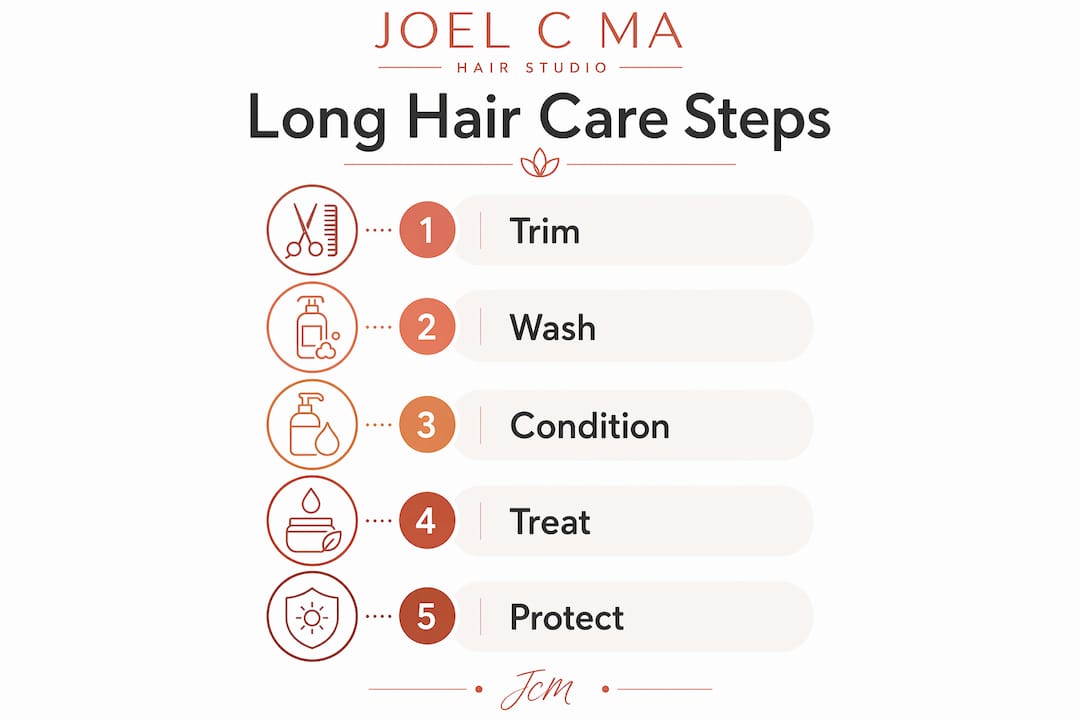
The most effective approach to long hair treatment combines regular precision trims with a consistent product routine built around peptide sealers, heat protectants, and moisture-focused conditioning.
| Point | Details |
|---|---|
| Trimming is non-negotiable | Only scissors permanently remove split ends; products provide temporary protection between cuts. |
| Combine trims with peptide sealers | This pairing reduces split end formation by 40% over six months versus trimming alone. |
| Heat protection is critical | Clinical-grade heat protectants reduce breakage by up to 93% at temperatures up to 230°C. |
| Watch for protein overload | Gummy, stretchy wet hair signals too much protein; switch to moisture treatments immediately. |
| Salon treatments accelerate results | In-salon services like Fusio-Dose and precision trimming deliver results home care cannot match. |
What I have learned after years of working with long hair
After more than two decades working with long hair at Joelcma, the pattern I see most often is this: clients invest in good products but skip the trim, or they trim regularly but use the wrong products for their hair type. Both approaches leave results on the table.
The clients with the healthiest long hair share one habit. They treat their hair like a system, not a collection of separate steps. Trim, seal, protect, condition. In that order, on a consistent schedule. They do not chase the newest product launch or switch routines every few weeks. They pick a protocol that fits their hair type and they stick with it.
The other thing I tell every client: stop waiting until you can see the split ends. By the time they are visible, the damage has already traveled. A dusting every eight to ten weeks costs almost no length and saves months of recovery time. That trade is always worth it.
Realistic expectations matter too. Long hair does not transform in two weeks. Peptide-based treatments work on 60-day cycles. Deep conditioning shows cumulative results, not overnight ones. The readers who get the best outcomes are the ones who commit to a routine for three months before evaluating it.
— Juiced
Ready to give your long hair the care it deserves?
Long hair thrives with the right combination of expert trimming, professional treatments, and a personalized product routine. At Joelcma, the team specializes in exactly this kind of customized hair styling built around your hair’s specific needs, whether that means a precision dusting, an in-salon conditioning treatment, or a full care consultation.
From recommending the right salon shampoos for your hair type to delivering expert trims that protect your length, Joelcma brings over 25 years of experience to every appointment. Book a consultation at the La Jolla studio and get a treatment plan built specifically for your hair.
FAQ
What is the most effective split hair treatment?
The only permanent fix for split ends is trimming. Products like peptide sealers temporarily smooth the shaft but lose effectiveness within about 10 washes.
How often should I deep condition long hair?
Deep conditioning once per week on mid-lengths and ends is the standard recommendation for long hair. Leave the mask on for 10–20 minutes for full absorption.
Can I grow long hair faster with treatments?
Peptide-based and marine-derived formulas improve fiber strength over 60-day cycles, which reduces breakage and helps retain length. They support growth by preventing the breakage that offsets it.
What are the best products for long hair in 2026?
Kérastase Extentioniste, Redken Extreme Length, and Briogeo Don’t Despair, Repair are among the most evidence-backed options. Look for biotin, keratin, collagen, and panthenol on the ingredient list.
How do I know if my hair has protein overload?
Hair that feels gummy or stretchy when wet is a clear sign of protein overload. Pause all protein treatments and use moisture-focused products for two to four weeks before reintroducing them.