
Dry Salon Services: What to Expect and Why It Works
TL;DR:
- A dry salon, also known as a blow dry bar, offers only wash and blow-dry services focused on quick, affordable styling. It provides consistent results with fixed menus, shorter appointment times, and predictable pricing, making it ideal for events and regular maintenance. Dry salons do not perform haircuts or color, which are handled by full-service salons with broader service scopes.
A dry salon is a hair salon that specializes exclusively in washing and blow-drying hair to create polished, styled looks without offering cuts or color services. The concept strips the traditional salon model down to one thing: the blowout. Drybar, founded in 2010, proved this focus could scale to 200+ locations with a single tagline: “No Cuts. No Color. Just Blowouts.” For anyone who wants event-ready hair without a two-hour appointment or a triple-digit bill, the dry salon model delivers exactly that.
What is a dry salon and how does it work?
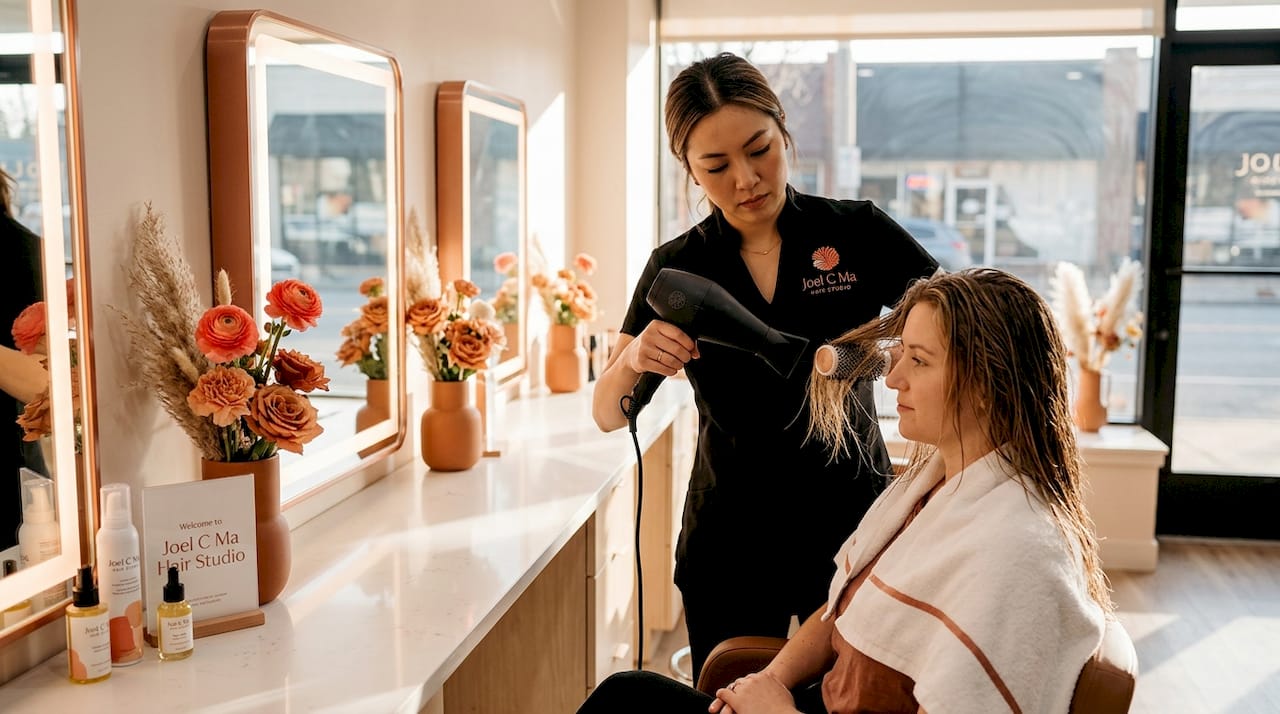
A dry salon, also called a blow dry bar, provides picture-perfect blowouts without haircuts or coloring. You walk in with your hair, a stylist washes and blow-dries it using professional tools and technique, and you leave with a finished style. The entire service is built around the blowout, which is the process of drying and shaping hair with a round brush and a high-powered dryer to achieve volume, smoothness, or curl definition.
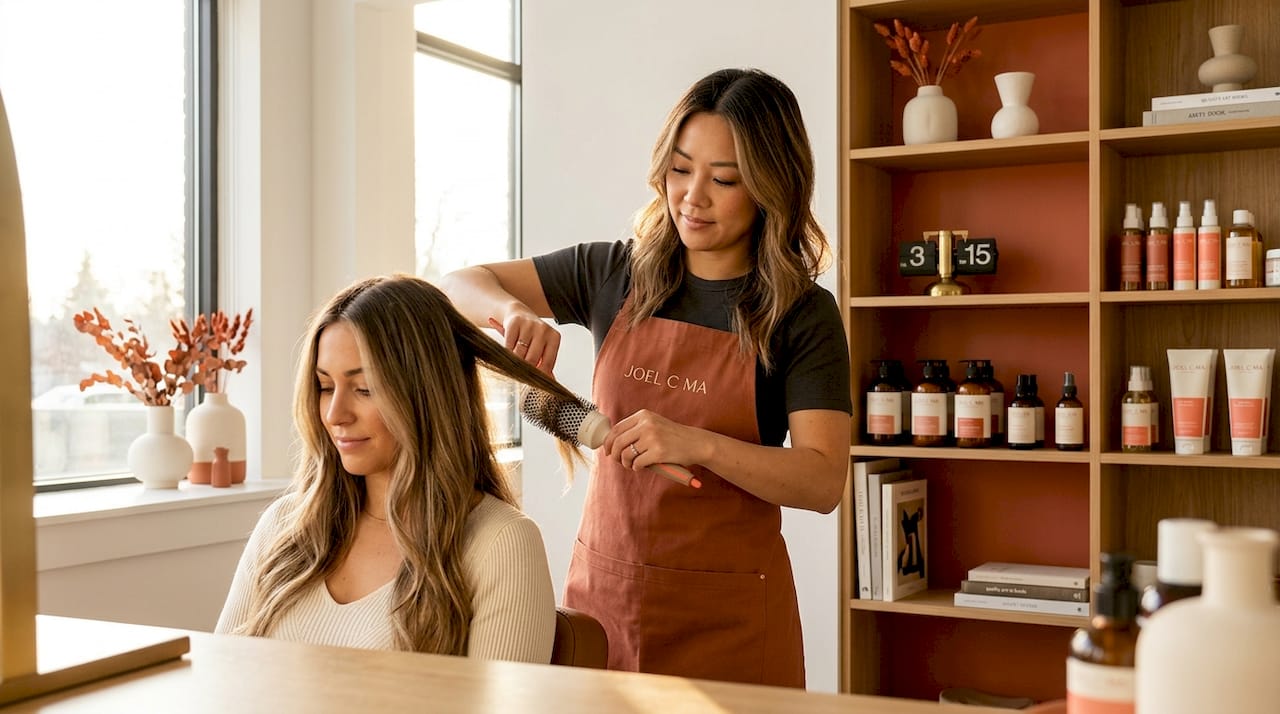
The term “dry salon” is an informal, consumer-facing phrase. The recognized industry term is a blow dry bar or blowout bar. Both refer to the same model: a single-service salon where styling is the product. Drybar popularized this format in the United States, and the brand’s success inspired dozens of similar concepts across the country, including Blo Blow Dry Bar and local independent blow dry bars in most major cities.
What makes the model work is focus. Stylists at a blow dry bar train specifically on a defined set of styles, which means every client gets a consistent, repeatable result. There is no guesswork about what a stylist can or cannot do. You pick a style from the menu, sit down, and the process begins.
How do dry salons differ from traditional full-service salons?
The core difference is scope. A traditional full-service salon offers haircuts, color, chemical treatments, and styling under one roof. A dry salon offers one thing: the wash and blow-dry. That single constraint changes everything about how the business operates and what clients experience.
Pricing and appointment length reflect this directly. A full-service haircut and blowout at a traditional salon can run anywhere from $80 to $200 or more depending on location and stylist level. At a blow dry bar, blowouts typically cost $20 to $59 with an appointment duration around 45 minutes. That is a meaningful difference for someone who wants great hair before a wedding or a work presentation without committing to a full salon visit.
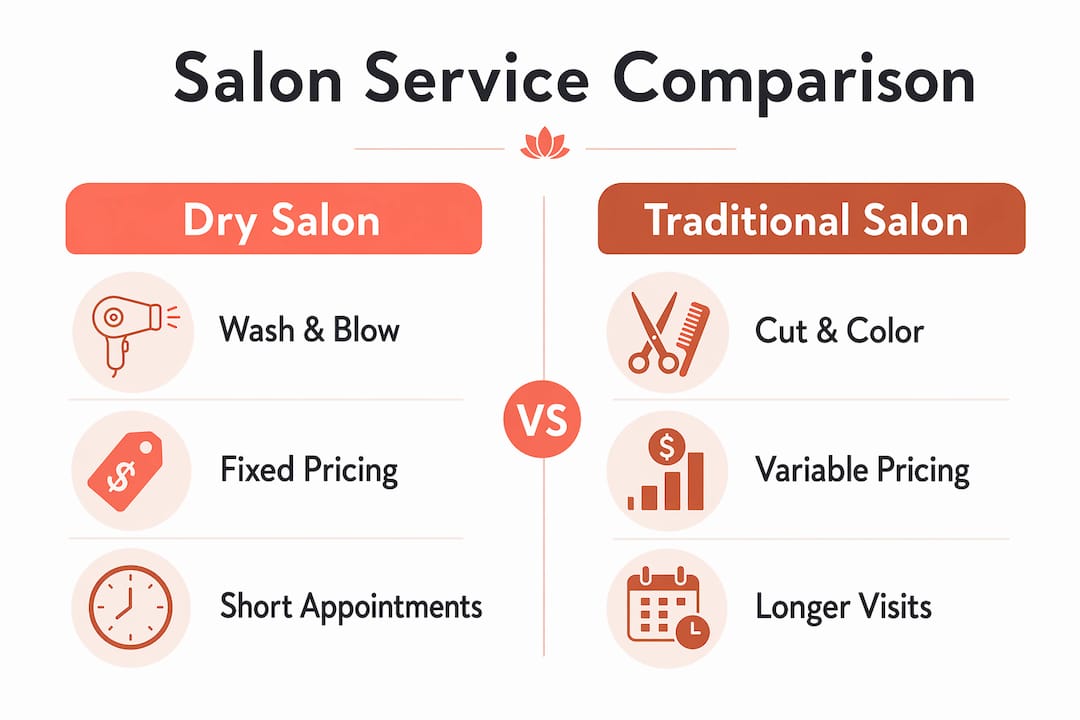
The table below shows the key structural differences between the two models.
| Feature | Dry salon (blow dry bar) | Traditional full-service salon |
|---|---|---|
| Services offered | Wash and blow-dry only | Cuts, color, treatments, styling |
| Appointment length | 30 to 60 minutes | 60 to 180+ minutes |
| Typical price range | $20 to $59 | $80 to $200+ |
| Stylist specialization | Blowout techniques only | Full cosmetology training |
| Booking predictability | High, standardized timing | Variable by service type |
Operationally, the single-service model creates scheduling predictability and efficiency that multi-service salons cannot match. A blow dry bar knows exactly how long each appointment takes because every appointment is the same type of service. That consistency reduces wait times, simplifies staffing, and makes the client experience more reliable.
Booking convenience is another real advantage. Because appointment durations are fixed and predictable, many blow dry bars offer online booking with precise time slots. You are not waiting for a color to process or a cut to run long. You show up, you get styled, you leave on time.
What styles and services can you expect at a dry salon?
Most blow dry bars offer a fixed styling menu with three to five core looks. Common options include sleek straight, beachy waves, and bouncy curls. Some bars name their styles after cocktails or themes, which is a format Drybar made famous with options like the Cosmo (loose waves) and the Manhattan (sleek and straight). The naming convention is clever because it simplifies the client decision and makes the experience feel distinct from a standard salon visit.
Here is what you can typically expect on a dry salon menu:
- Sleek straight: Hair is blown out flat and smooth using a paddle brush and finishing serum for a polished, frizz-free result.
- Beachy waves: Stylists use a round brush or a Dyson Airwrap to create loose, effortless texture that mimics natural movement. This is one of the most requested styles for events and casual wear alike.
- Bouncy curls: A classic blowout with volume and defined curl, achieved with a large round brush and a diffuser or concentrator nozzle.
- Simple updos and braids: Many bars offer these as menu add-ons for an additional fee, making them popular for weddings and formal events.
Drybar’s product line, launched in 2013, extended the brand into retail with styling tools and haircare products that clients could use at home to maintain their blowout results. This move showed how deeply product and service can reinforce each other in the blow dry bar model.
Pro Tip: Ask your stylist to apply a heat protectant before the blow-dry begins. Most blow dry bars include this automatically, but confirming it protects your hair from repeated thermal exposure, especially if you visit weekly.
What are the pricing and time benefits of choosing a dry salon?
Speed and cost are the two reasons most clients choose a blow dry bar over a traditional salon for styling. A 45-minute appointment at $35 to $59 delivers the same finished look you would get from a full-service salon blowout at twice the price and twice the time. For clients who want event-ready hair without the commitment of a cut or color, the value is straightforward.
| Service type | Average cost | Average time |
|---|---|---|
| Blow dry bar blowout | $35 to $59 | 30 to 45 minutes |
| Traditional salon blowout add-on | $40 to $80 | 30 to 45 minutes |
| Full haircut and blowout | $80 to $200+ | 60 to 120 minutes |
| Color service with blowout | $120 to $300+ | 90 to 180 minutes |
Fixed pricing is a specific advantage that often goes unmentioned. At a traditional salon, the final bill can shift based on hair length, stylist level, or added treatments. At a blow dry bar, the price on the menu is the price you pay. That predictability matters for clients who budget their beauty spending carefully.
Pro Tip: Many blow dry bars offer membership programs that reduce the per-visit cost to $25 to $35 for regular clients. If you get a blowout twice a month, a membership pays for itself within the first two visits.
How does dry cutting relate to dry salons and modern hairstyling?
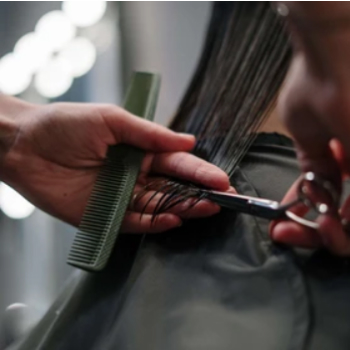
Dry cutting is a distinct technique that deserves its own explanation because it often gets conflated with the dry salon concept. Dry cutting involves cutting hair while dry to reveal the hair’s natural movement and true shape, rather than cutting it wet when it appears longer and behaves differently. This is especially effective for curly, fine, or textured hair where shrinkage after drying can make a wet cut look shorter or uneven than intended.
Dry salons, by definition, do not offer haircuts. The “dry” in dry salon refers to the blow-dry service, not dry cutting as a technique. Understanding this distinction helps you choose the right service for your needs.
Here is how dry cutting fits into modern hairstyling more broadly:
- Dry cutting for curly and textured hair: Cutting hair in its natural dry state lets the stylist see exactly how each curl or wave falls. This prevents the common problem of a cut looking great wet but losing shape after drying.
- Dry cutting for fine hair: Fine hair behaves very differently when wet versus dry. A dry cut allows the stylist to see the actual density and movement, which produces a more accurate and flattering result.
- Hybrid cutting techniques: Many skilled stylists use wet and dry cutting together for the best outcome. Wet cutting establishes the structure and length, while dry cutting refines texture and shape at the end.
- Tool requirements: Dry cutting requires sharper shears specifically designed for dry hair because dry strands resist the blade more than wet ones. Professional-grade convex-edge scissors are the standard recommendation.
For readers interested in a deeper look at this technique, Joelcma has a thorough breakdown of dry cutting explained that covers when and why stylists choose this approach. The key takeaway is that dry cutting is a precision tool for customized haircuts, while a dry salon is a service model built around blowouts. They are related by the word “dry” but serve entirely different purposes.
Key takeaways
A dry salon delivers fast, affordable, and consistent blowout styling by focusing exclusively on wash and blow-dry services, making it the right choice for event prep, quick style changes, and regular maintenance without cuts or color.
| Point | Details |
|---|---|
| Dry salon defined | A blow dry bar offers wash and blow-dry services only, with no cuts or color. |
| Cost and time advantage | Blowouts at dry salons typically cost $20 to $59 and take 30 to 45 minutes. |
| Style menu consistency | Fixed menus with trained stylists produce reliable, repeatable results every visit. |
| Dry cutting is separate | Dry cutting is a haircut technique, not a service offered at blow dry bars. |
| Best use cases | Dry salons are ideal for events, quick style refreshes, and regular blowout maintenance. |
Why dry salons deserve more credit than they get
The blow dry bar concept gets dismissed in some professional circles as a novelty or a limited-service shortcut. That reading misses the point entirely. Drybar did not succeed because it offered less. It succeeded because it offered exactly what a specific client needed, delivered consistently, at a price that made repeat visits realistic.
The clients who benefit most from a dry salon are not people who do not care about their hair. They are people who care enough to maintain a styled look between full salon visits. A blowout two days before a job interview, a wedding, or a first date is not a compromise. It is a smart use of time and money.
Where I think the model has room to grow is in education. Most blow dry bar clients do not know how to extend their blowout at home, which products to use, or when to switch from a beachy wave to a sleek straight based on their hair’s current condition. Joelcma’s expert styling guide covers exactly this kind of practical knowledge, and it is the type of information that turns a one-time blowout into a sustainable styling routine.
The honest advice is this: use a dry salon for what it does well, and use a full-service salon like Joelcma for what requires real expertise. Cuts, color, and personalized consultations belong with a stylist who knows your hair over time. Blowouts before events belong at a blow dry bar or, better yet, with a stylist who can do both.
— Joelcma
Expert styling services at Joelcma in La Jolla
Joelcma’s team at Joel C Ma Hair Studio in La Jolla brings over 25 years of styling expertise to every appointment. Whether you want a precision haircut with a blowout finish or a personalized consultation to find the style that fits your hair’s natural texture and movement, the studio delivers results that go beyond what a standard blow dry bar can offer. The difference is a stylist who knows your hair, not just a menu of styles. Clients across the San Diego area trust Joelcma for the kind of tailored, high-quality hair care that makes every visit worth it. Book your appointment and see what a true expert consultation feels like.
FAQ
What is a dry salon?
A dry salon, also called a blow dry bar, is a hair salon that offers only washing and blow-drying services without haircuts or color. The focus is on delivering a polished blowout style in a single, efficient appointment.
How long does a dry salon appointment take?
Most blow dry bar appointments run between 30 and 45 minutes. The fixed service format means timing is predictable, with no waiting for color to process or a cut to finish.
What styles can you get at a blow dry bar?
Typical options include sleek straight, beachy waves, and bouncy curls, often listed on a fixed menu. Some bars also offer simple updos or braids as add-ons for events.
Is dry cutting the same as a dry salon service?
No. Dry cutting is a haircut technique where the stylist cuts hair while it is dry to better see its natural shape and movement. Dry salons do not offer haircuts. The two concepts share the word “dry” but serve completely different purposes.
When should you choose a dry salon over a full-service salon?
A dry salon is the right choice for event prep, quick style refreshes, or regular blowout maintenance when you do not need a cut or color. For personalized haircuts, color work, or a full styling consultation, a full-service salon delivers better long-term results.