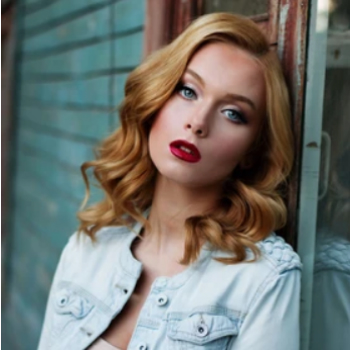

Best Cut for Hair: Face Shape and Hair Type Guide

TL;DR:
- Choosing a flattering haircut depends on understanding your face shape, hair type, and lifestyle needs rather than copying trends or celebrity styles.
- Proper communication with your stylist, including reference images and clear descriptions, significantly improves the final result.
- A personalized approach ensures your haircut complements your features, personality, and daily routine, leading to more confidence and satisfaction.
Finding the best cut for hair is not as simple as picking a style you saw on someone else and asking your stylist to copy it. Your face shape, hair texture, density, and daily routine all determine whether that cut will look as good on you as it did on someone else. The good news is that once you understand how these factors work together, choosing a flattering haircut stops feeling like a guessing game and starts feeling like a confident decision.
Table of Contents
- Key takeaways
- How face shape determines the best cut for hair
- Best cuts for thin, thick, and curly hair
- Trending and classic styles for men and women in 2026
- Customization: lifestyle and personality matter too
- My honest take on finding your best haircut
- Find your best cut at Joel C Ma Hair Studio
- FAQ
Key takeaways
| Point | Details |
|---|---|
| Face shape guides your cut | Identify your face shape first to use it as a starting filter, not a rigid rulebook. |
| Hair type changes everything | Fine, thick, and curly hair each respond differently to the same cut, requiring specific techniques. |
| Lifestyle shapes your choice | Factor in your daily styling time and professional setting before committing to a high-maintenance look. |
| Customization beats trends | Trends offer inspiration, but the most flattering haircuts are tailored to your specific features. |
| Communication gets results | Bringing photos and using precise language with your stylist dramatically improves outcomes. |
How face shape determines the best cut for hair
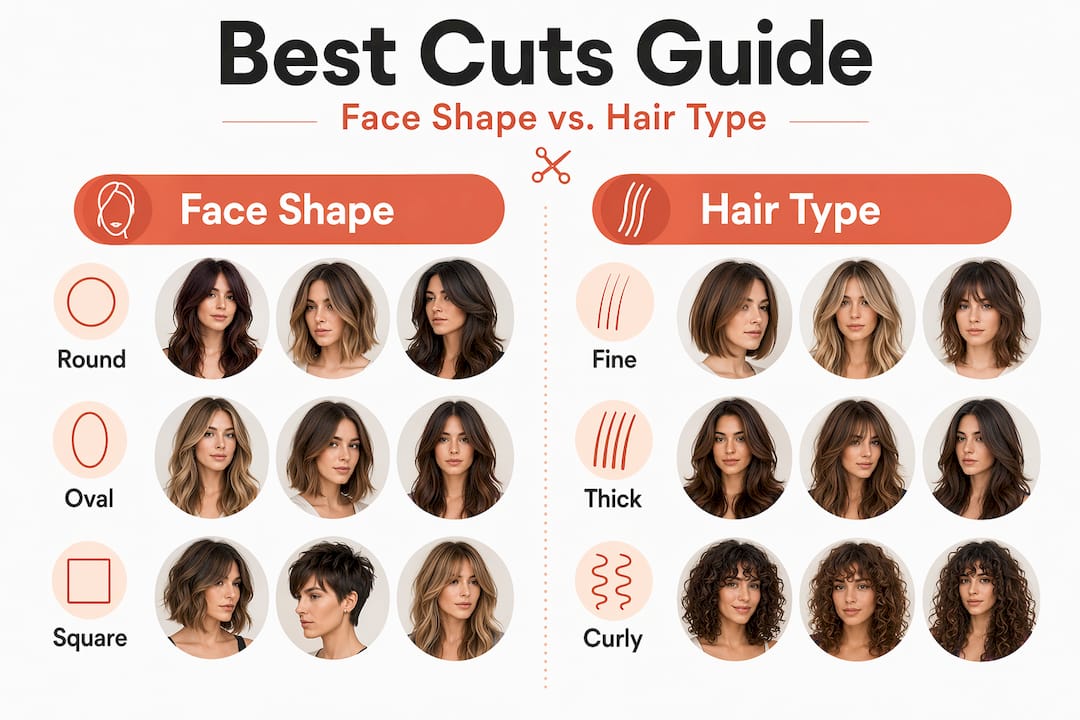
Before you ever talk about length or layers, you need to know your face shape. Hold your hair back, stand in front of a mirror, and trace the outline of your face. Most people fall into one of six categories: oval, round, square, heart, oblong, or diamond. Each shape has a set of proportions that certain haircuts either balance or exaggerate.
Oval faces are the most versatile because they are longer than wide with gently rounded edges. Nearly every haircut works here, from a blunt bob to waist-length layers. If you have an oval face, your main filter is hair type and personal preference, not shape restriction.
Round faces are the most common shape people ask about. The goal is to add vertical height and reduce the visual width. Asymmetrical lines in haircuts help break round face symmetry, and angled lobs or side-swept bangs draw attention away from width. Here is a quick breakdown:
- Round: Go longer on top, avoid blunt cuts at chin level that widen the face
- Square: Soften the jaw with layers, curtain bangs, or rounded bobs
- Heart: Balance a wider forehead with volume at the chin or mid-length cuts
- Oblong: Add width with shorter layers or blunt cuts at the sides
- Diamond: Frame cheekbones with chin-length bobs or soft layers near the face
Face shape vs. recommended strategies
| Face shape | What to add | What to avoid |
|---|---|---|
| Round | Height at crown, angles, vertical lines | Blunt chin-level cuts, side parts |
| Square | Soft waves, face-framing layers | Blunt bobs at jawline |
| Heart | Volume near chin, longer cuts | Heavy top layers, high pompadours |
| Oblong | Side volume, blunt fringes | Very long, flat styles with no layers |
| Diamond | Chin-length frames, side-swept bangs | Very short sides with no top volume |
Knowing your face shape helps you find the right haircut faster. Think of it as narrowing your options from 100 cuts down to 20, and then using your hair type and lifestyle to narrow it further.
Best cuts for thin, thick, and curly hair
Face shape gives you the outline, but hair type determines the actual technique. The same bob cut behaves completely differently on fine hair, thick hair, and curly hair, and a stylist who understands this distinction will give you a result that actually holds between appointments.
Fine and thin hair
Short blunt cuts like bobs create the appearance of fuller hair for thin or fine textures and generally need trims every 4 to 6 weeks to maintain their shape. The key is keeping the ends dense rather than wispy. Layering fine hair too aggressively creates the opposite effect by making it look even thinner at the ends. A blunt lob that hits just below the shoulder is one of the most consistently flattering choices for fine-haired women. For fine curly hair specifically, blunt bobs with subtle face-framing layers add fullness while avoiding over-layering that reduces volume.
If you have fine hair and want to explore your options, the styling techniques in chic hairstyles for fine hair cover everything from cut selection to finishing products.
Pro Tip: Blow-dry fine hair upside down and use a volumizing spray before any heat tool for noticeably more lift that lasts through the day.
Thick hair
Thick hair holds almost any shape well, but without strategic layering it becomes heavy and loses movement. Aggressive layering such as wolf cuts are trending for thick hair because they enhance movement and remove bulk without fighting natural wave patterns. The wolf cut, which blends a shag and a mullet, works especially well on thick hair because the layers create dimension that thinner hair cannot sustain. The best haircuts for thick hair also tend to benefit from regular thinning and point cutting at the ends to soften weight.
Curly hair
Curly hair deserves its own conversation because it behaves so differently when wet versus dry. Dry cutting curly hair is often preferred for tight curls to manage shrinkage and length loss, whereas wet cutting suits looser waves better. Most experienced curl stylists use a hybrid approach, building initial shape while the hair is wet and then refining placement while dry. Understanding your specific curl type, whether that is a loose wave or a tight coil, changes which cut will actually flatter you rather than just look acceptable.
Trending and classic styles for men and women in 2026
Both men and women benefit from understanding which styles are trending and which are genuinely timeless. The right answer depends on how much time you want to spend styling and how often you can get to a salon.
Men’s popular haircuts
High fades, pompadours, and textured crops are the recommended choices for men with round faces because they add height on top while removing bulk at the sides. For men with square faces, a medium-length textured crop softens the jaw without fighting the strong bone structure. The buzz cut and taper fade remain the most versatile short styles because they are customizable at almost every visit.
Popular men’s options for 2026 include:
- Textured crop with a skin fade: Works on most face shapes, low maintenance between cuts
- High pompadour: Best for round and square faces, requires some daily styling
- Buzz cut with a taper: Extremely clean, shows off strong facial features
- Classic side part: Timeless, professional, works on oblong and square faces
For men looking at stylish shorter options, short hairstyles for men offer detailed guidance on what suits different face shapes.
Pro Tip: When describing a fade to your barber, specify the number guard and where the fade should start. Saying “low fade with a 2 on the sides” will always get you closer to what you want than showing a photo alone.
Women’s popular haircuts
Women have a wider style range right now. The asymmetrical bob continues to be one of the best hairstyles for round faces because it introduces diagonal lines that break symmetry. Curtain bangs remain popular because, as noted in styling coverage from Vogue, they work across many face shapes and soften heavier looks without requiring a dramatic cut. Long layered lobs are consistently flattering top long haircuts because they add movement without removing length.
Trending vs. timeless women’s styles
| Style | Best for | Maintenance level |
|---|---|---|
| Curtain bangs | Most face shapes, especially heart and oval | Medium, trim every 6-8 weeks |
| Asymmetrical bob | Round and square faces | High, needs regular shaping |
| Long layered lob | Oval, heart, oblong | Low to medium |
| Pixie cut | Strong features, oval, square | High, trim every 3-4 weeks |
| Wolf cut (shag layers) | Thick hair, oval and oblong faces | Medium |
Customization: lifestyle and personality matter too
Face shape rules and hair type recommendations narrow your options significantly. But the final filter is the most personal one. Face shape haircut guides often overlook personality, which is genuinely important for choosing a look that feels authentic and comfortable to wear every day.
A technically perfect cut that you hate styling every morning is not actually the best cut for you. Here is a practical framework for factoring in lifestyle:
- Assess your honest styling time. If you spend less than five minutes on your hair most mornings, a high-maintenance style like a short undercut or a precise bob will look great on appointment day and rough the rest of the time.
- Consider your professional environment. Creative fields give you more range. Conservative workplaces often require styles that transition well from casual to formal without extra effort.
- Think about your climate. Humidity in coastal cities like San Diego affects curly and wavy hair dramatically. A cut that looks sharp in dry weather can turn unpredictable with moisture.
- Know your commitment to trims. The best short hair styles only look sharp when maintained on schedule, often every 3 to 6 weeks. If you typically stretch appointments, build that into your choice.
Pro Tip: When you sit down with your stylist, bring two or three reference photos and describe what you like about each one specifically. Saying “face-framing layers starting at the cheekbone” is far more useful than a photo alone.
My honest take on finding your best haircut
I have seen hundreds of clients walk in carrying photos of celebrities and walk out slightly disappointed not because the stylist did a poor job, but because no one asked the real questions first. The face shape formula is genuinely useful, but it breaks down fast when it is treated as a rigid rule rather than a starting point.
Celebrity hairstylist Jon Reyman puts it well: embracing your unique features often matters more than strictly following face shape rules. I agree with this completely. I have watched clients with round faces pull off chin-level bobs beautifully because the cut suited their confidence and their hair’s natural texture. And I have watched clients with technically “ideal” face shapes wear cuts that looked flat because nothing about the style matched their personality.
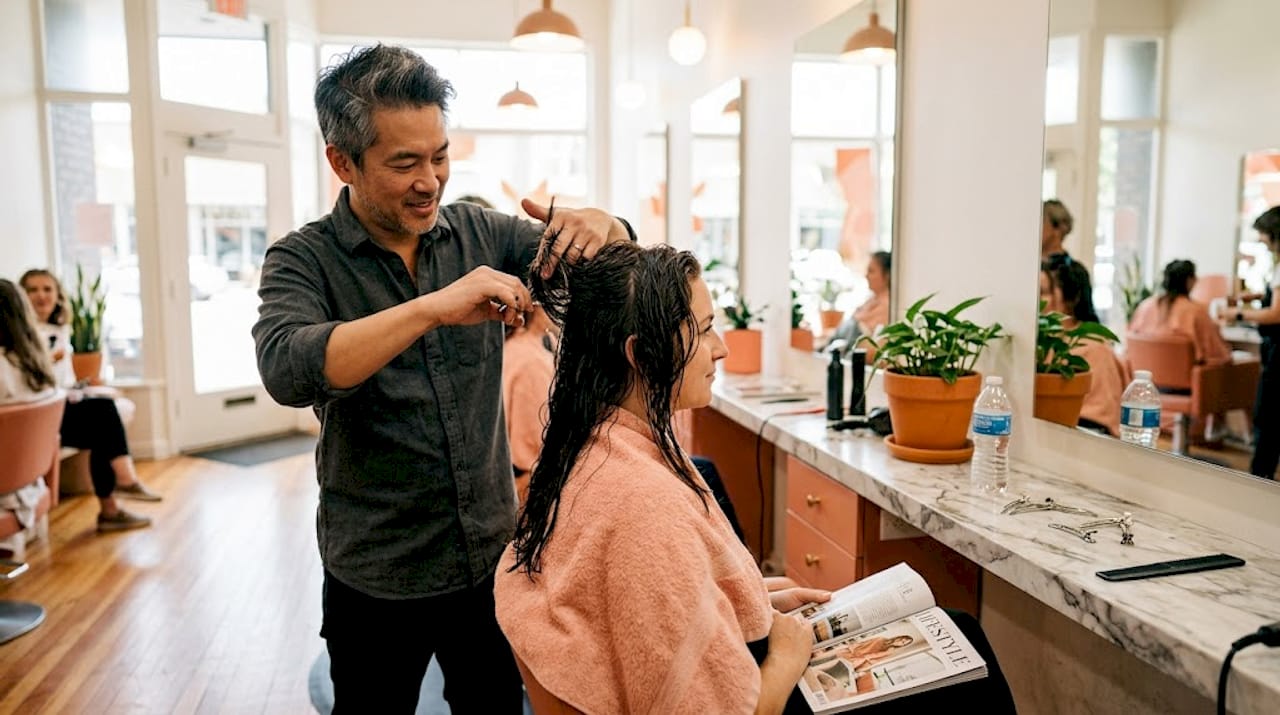
What I have learned is that the conversation you have before the cut matters as much as the cut itself. A good stylist will ask about your morning routine, your previous cuts that you loved or hated, and what you are hoping to feel when you look in the mirror. If those questions are not being asked, that is worth addressing before scissors touch hair.
Curly hair is the most mishandled category in this conversation. Most formulaic guides still treat curl as just another texture variable. It is not. It needs a stylist who understands wet and dry cutting differences and knows how shrinkage changes the final shape. If you have curly hair and you have never had a great cut, the technique your stylist is using is almost certainly the variable to change.
— Joelcma
Find your best cut at Joel C Ma Hair Studio
At Joel C Ma Hair Studio in La Jolla, California, every haircut starts with a real conversation. The team does not hand you a menu and ask you to choose. They look at your face shape, your hair texture, and your daily routine before a single recommendation is made.
Whether you are after one of the most flattering haircuts for your face shape, a curl-specific technique you have never tried, or a men’s cut that works with your bone structure instead of against it, the studio’s 25-plus years of experience covers it. From textured crops and high fades to long layered lobs and asymmetrical bobs, every cut is executed with the same precision and personalized attention. Book a consultation and walk in knowing exactly what you want, or let the team guide you there.
FAQ
What is the most flattering haircut for a round face?
For round faces, the most flattering cuts add vertical height and diagonal lines. High fades and asymmetrical bobs are strong choices for men and women respectively because they elongate the face by removing width at the sides.
What is the best cut for curly hair?
The best cut for curly hair depends on your curl type. Tight curls benefit most from dry cutting, which accounts for shrinkage, while looser waves respond well to wet cutting with dry refinement afterward.
How often should I trim my haircut to keep it looking sharp?
Short styles like pixie cuts and tapers need a trim every 3 to 4 weeks. Bobs and lobs hold their shape well for 4 to 6 weeks. Longer cuts can go 8 to 12 weeks between appointments without losing their shape significantly.
How do I communicate what I want to my stylist?
Bring reference photos and add verbal descriptions that are specific. Describing “face-framing layers starting at the cheekbone” gives your stylist far more to work with than a photo alone and reduces the chance of a miscommunication.
Are classic men’s cuts still relevant compared to trending styles?
Yes. Classic men’s cuts like the side part, taper fade, and pompadour remain consistently strong because they are adaptable, professional, and built around natural hair growth patterns rather than short-term trends.