
Hair Salon for Sensitive Scalp in La Jolla: What to Ask

A good salon for a sensitive scalp does three things: it looks at your scalp before it picks products, it adjusts heat, pressure and color placement to what you tell it, and it stops the moment you say something stings. You can check all three with a short conversation before you book. At Joel C Ma Hair Studio in La Jolla, we build every visit around a personalized consultation, and this guide shows you what to say in it.
TL;DR
- Book a consultation first and tell your stylist about any scalp condition, past reactions and tender areas before anything is applied.
- For color, ask about gentler formulas and how the stylist will keep product off the scalp. A patch test for hair dye is recommended before every coloring, not just the first.
- Agree on a pause signal. Discomfort is a reason to stop and adjust, not something to push through.
- Burning, blisters or symptoms that last more than two days after a service call for a dermatologist or primary-care doctor.
- Cuts, blow-dries and styling are the lowest-risk way to start with a new stylist if you are nervous about chemicals.
Table of Contents
- What a sensitive scalp actually means in a salon
- How to tell whether a salon can handle a sensitive scalp
- What to tell your stylist before you sit down
- Hair color and sensitive scalps: the questions that matter
- Cuts, blow-dries and styling when your scalp is touchy
- What a scalp treatment can and cannot do
- If something feels wrong during the appointment
- When to see a dermatologist instead
- Book a consultation at our La Jolla studio
- FAQ
- Sources
What a sensitive scalp actually means in a salon
“Sensitive scalp” is not one diagnosis. For some people it means tightness or stinging after shampooing. For others it is dryness and flaking, a history of eczema, seborrheic dermatitis or psoriasis, or a bad reaction to a box dye years ago. The salon cannot diagnose any of these, but it can work around them if it knows.
The American Academy of Dermatology advises that if you color, perm, straighten or relax your hair, you should choose a salon whose professionals can examine your scalp and hair and select suitable products. The AAD’s hair care tips also recommend a gentle shampoo and a moisturizing conditioner, and say to skip hot-oil treatments because heat can further damage fragile hair.
That is the standard to hold a salon to: someone looks at the scalp, and the plan changes based on what they see and what you say.
How to tell whether a salon can handle a sensitive scalp
You do not need a special “sensitive scalp salon.” You need a stylist who listens and has the technical range to adapt. Here is what to look for.
They ask before they apply
A stylist who starts with questions about your scalp, past reactions and products is already doing the work. If the first thing that happens is a cape and a bowl of color, the conversation has not happened.
They talk about technique, not just products
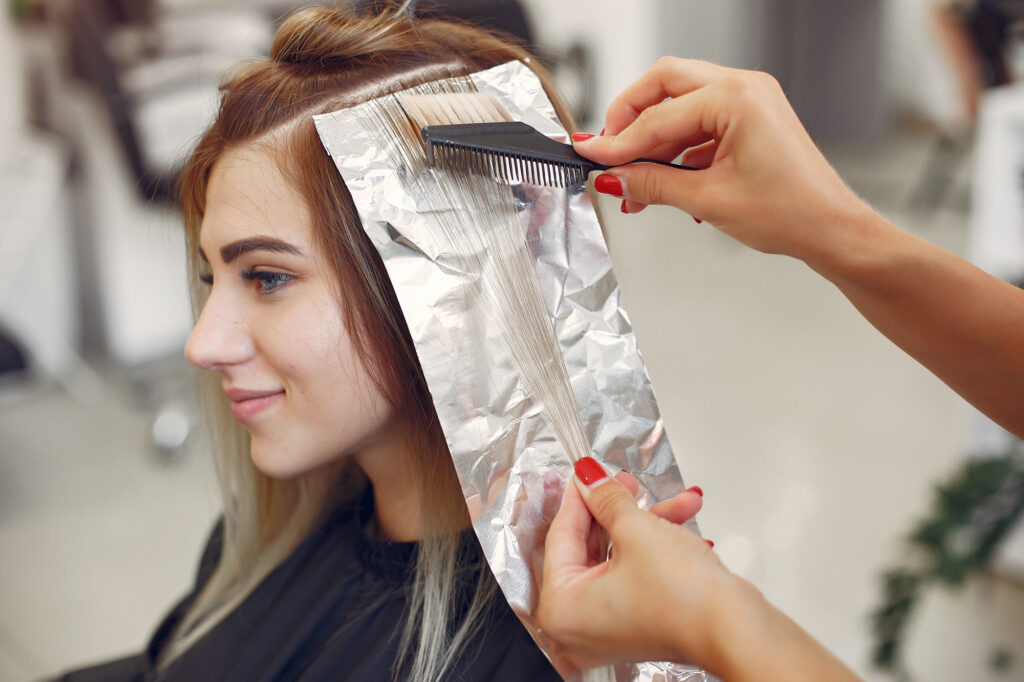
Sensitivity is often managed with placement and timing as much as with formulas. A stylist skilled in hand-painted techniques such as balayage can place lightener away from the scalp by design. A dermatology practice’s guidance on coloring a sensitive scalp suggests telling your colorist which areas are tender, considering low-ammonia or hypoallergenic formulas, and minimizing direct scalp contact where feasible.

They welcome a pause signal
The Hair Society’s guidance on planning a comfortable salon visit recommends agreeing on a pause cue, speaking up if discomfort develops, and pausing the relevant exposure. A salon that makes this easy is one you can trust with longer services.
They are gentle with their hands and tools
A stylist should avoid pulling or tugging and should ask whether heat bothers you, according to the patient council guidance from the Global Healthy Living Foundation. If your scalp runs hot or tender, say so before the blow-dryer comes out.
What to tell your stylist before you sit down
The most useful thing you can do is be specific. Vague phrases like “my scalp is sensitive” leave the stylist guessing. Try to cover these points:
- Any diagnosis. Psoriasis, eczema, seborrheic dermatitis or a known allergy. The patient council recommends telling the stylist before the visit, along with where plaques or patches occur.
- Past reactions. Which product, which service, what happened and how long it lasted. Healthline’s dermatologist-quoted salon guidance for psoriasis also suggests explaining any care strategies that have worked for you before.
- What triggers you. Hot water, tight hairstyles, hot dryers, hard brushing, strong fragrance.
- Products you already use. If your dermatologist has recommended a shampoo or leave-in, say so. The same patient council advice is to ask about the salon’s product ingredients and bring your own if needed.
- Your goal. A softer shade change and a full color transformation call for very different plans.
A message ahead of the appointment or a consultation at the start of the visit both work. We would rather hear about a concern at the start than find out mid-service.
Hair color and sensitive scalps: the questions that matter
Color is where most scalp reactions happen, so it deserves its own plan.
Know the common culprit
PPD (p-phenylenediamine) is a common hair dye ingredient that some people become allergic to. The FDA’s cosmetics fact sheet says to check the ingredient list if you want to avoid it. A 2024 peer-reviewed review of hair product allergy reports that PPD allergy commonly shows up as scalp itching followed by an eczema-like rash that can involve the scalp, forehead, eyelids and neck.
Do the patch test, every time
The FDA advises a patch test before every dyeing: a small amount of dye on a quarter-sized area of skin in the bend of the elbow, left for 48 hours, with no use of the dye if a rash appears. Allergy UK says the same 48-hour allergy alert test applies to salon appointments and must be repeated each time, because sensitivity and product ingredients can change.

Practically, that means telling us about your sensitivity when you book, so there is time to plan a patch test before a color day rather than on the day.
Ask these questions before color
- Can you keep color off my scalp for this service? (Placement matters. Our balayage and highlight services are applied by hand, which gives the colorist control over where product sits.)
- Is there a lower-ammonia or fragrance-free option for the shade I want?
- How long will the product stay on, and will you check in during processing?
- What should I use at home afterward?
The dermatology practice guidance above also recommends fragrance-free soothing care after rinsing. Our guide to color-safe conditioners covers what to look for in aftercare.
Choose the service that fits your scalp
Some color services touch the scalp more than others. This is a general guide, so confirm the plan at your consultation.
| Service | Scalp contact | Price at our studio |
|---|---|---|
| Full Balayage/Hair Painting | Typically placed away from the roots | $200-$225 |
| Partial Highlights | Limited to selected sections | $115-$160 |
| Full Highlights | Throughout the head | $150-$225 |
| All Over Color | Applied from roots to ends | $95-$130 |
| Roots Touch-Up | Applied at the scalp line | $75-$120 |
| Men Color | Varies by technique | $55-$80 |
Prices are those published on our services page. If you want to understand how the techniques differ, see our guide to balayage versus highlights.
Natural-sounding does not mean allergy-free
The Cleveland Clinic notes that someone allergic to PPD should avoid formulations containing it and that a plant-based henna dye may be an alternative, as covered in its salon versus box dye article. Allergy UK adds that changing only the shade or brand may not be enough, since products can share ingredients. If you have had a real allergic reaction, the right first step is your doctor and a dermatologist, not a different bottle.
Cuts, blow-dries and styling when your scalp is touchy
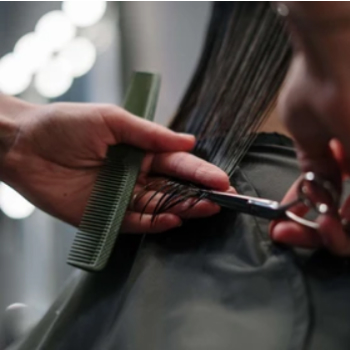
Not every visit involves chemicals. If you want to get to know a stylist before trusting them with color, a haircut is a low-stakes start, and it is where gentle technique shows. We offer a Women’s Haircut at $60-$75 and a Men’s Haircut at $45-$50. A Blow Dry Style is $45-$75, and Deep Conditioning/Blow Dry Style is $80-$85.
What to ask for:
- Cooler heat and more distance. Tell the stylist when the dryer feels too hot. Healthline’s guidance lists hot dryers among common triggers.
- Lighter brushing. Ask for a wide-tooth comb and slower detangling.
- Looser styles. Tight updos pull on the scalp. If you are booking a special occasion updo, from $100, mention that tension is an issue and ask for a softer hold.
- Warm, not hot, water at the shampoo bowl.
If you wear extensions or are considering them, tell us about your scalp first, since methods differ in how they attach. Our guide to choosing hair extensions is a good place to start.
What a scalp treatment can and cannot do
Scalp treatments and head spas are popular, and for good reason. Salon scalp treatments can temporarily soothe, hydrate or calm mild dryness, itchiness or flaking after chemical processing. CNA Lifestyle reports that a dermatologist cautions they may not address deeper medical problems.
A typical protocol, as described by Harper’s Bazaar UK, starts with a close look at the scalp through a magnifying device, then moves through cleansing, careful exfoliation, steaming, masks, serums, massage and a blow-dry as needed. The key phrase is “as needed.” On a sensitive scalp, a good practitioner skips the exfoliation or steaming if your skin is reactive that day.
If you want to read more before booking, we have written about the benefits of scalp treatments, dry scalp remedies and a practical scalp health routine. Scalp massage is covered in this guide to its benefits, which is worth reading if you tend to tense up in the chair.
If something feels wrong during the appointment
Tingling can mean different things, and you are not the one who has to decide which. Say it right away. A good stylist will pause, rinse or adjust the product, and change what happens next.
Use plain words:
- “That feels hot. Can we stop and check?”
- “My scalp is stinging. Can you rinse that area?”
- “I need a break from the dryer.”
The pause cue approach from The Hair Society is worth agreeing on before the service starts, so that speaking up is not awkward. Pain you are expected to endure is not part of a good salon visit.
When to see a dermatologist instead
Salon care is for hair and comfort. It is not treatment for a skin condition. See a doctor if:
- After dye, you notice redness, irritation, itching, scaling, flaking or blisters. The Cleveland Clinic says to make an appointment with a dermatologist or primary-care physician if symptoms are severe or last more than two days.
- You have persistent itching or excessive hair fall. The dermatologist quoted by CNA Lifestyle says these should be assessed by a doctor, potentially with blood work or scalp analysis.
- You have burning, redness, flaking or bumps on the scalp that do not settle. The dermatology practice guidance recommends an assessment.
- You suspect a dye allergy. Allergy UK says to consult a doctor for referral to a dermatologist. Formal skin patch testing is the gold standard for diagnosing allergic contact dermatitis, according to the 2024 review, and PPD-free options can be considered after the allergen is identified.
- You have swelling of the face or lips, or trouble breathing after a hair dye. Allergy UK notes severe reactions can involve angioedema or anaphylaxis. Treat that as an emergency and call 911.
Once you have a diagnosis and a doctor’s guidance, bring it to us. It makes planning a service much easier.
Our perspective
We have spent more than 25 years behind the chair, and one thing has not changed: the best results start with a conversation. People with a sensitive scalp are often the most careful clients we see, and that is a strength. They know their skin, and they tell us what they have noticed.
Our approach is personalized consultation first, service second. We want to know what your scalp does, what you are hoping for and what has gone wrong before. Then we plan the cut, color or styling around it. Our team is handpicked for technical skill and attention to hair health and safety, and artistry never has to come at the cost of comfort.
If you have been avoiding color because of a bad experience, start small. Come in for a consultation, or a cut and blow-dry, and see how we work. Trust is earned one visit at a time, and we would be glad to start yours.
Juiced
Book a consultation at our La Jolla studio
If you are looking for a salon that treats a sensitive scalp as part of the plan rather than an afterthought, start with a consultation at Joel C Ma Hair Studio in La Jolla. Tell us about your scalp, your history and your goals, and we will build the service around them. You can see everything we offer, with prices, on our services page.
Women’s and men’s haircuts, balayage, highlights, color, blow-dry styling and conditioning treatments are all available. When you book, mention your sensitivity so we can allow time for a patch test or a slower, more careful plan if you need it.
FAQ
Should I tell the salon about a scalp condition even if it is mild?
Yes. Mention eczema, psoriasis, seborrheic dermatitis, dryness or past reactions when you book and again at the chair. The stylist can then adjust water temperature, heat, pressure and product choice. Patient guidance recommends saying where your patches are and what bothers you.
Is a patch test really needed if I have colored my hair before?
The FDA recommends a patch test every time you dye your hair, and Allergy UK says the same applies to salon coloring. Sensitivity can develop over time, and product ingredients can change. Plan the test 48 hours before the appointment.
Can I get color with a sensitive scalp?
Often, yes, with planning. Techniques that keep product away from the scalp, gentler formulas and a patch test all help. If you have had an allergic reaction, see your doctor or a dermatologist first and bring their advice to your consultation.
How long should I wait before seeing a doctor after a reaction?
Do not wait if you have blisters, swelling or trouble breathing. For redness, itching or flaking after dye, the Cleveland Clinic advises seeing a dermatologist or primary-care physician if symptoms are severe or last more than two days.
Sources
- American Academy of Dermatology: Hair loss tips for managing
- Global Healthy Living Foundation: HEROES Patient Council on hair care
- Healthline: Going to the Salon When You Have Psoriasis
- The Hair Society: Fragrance preferences and planning a comfortable salon visit
- Florida dermatology practice: How to protect a sensitive scalp when coloring
- FDA: Cosmetics facts on hair dyes and relaxers
- PMC: Hair Product Allergy review (2024)
- Allergy UK: Allergy to hair dye factsheet
- Cleveland Clinic: Is salon or box dye healthier for your hair?
- CNA Lifestyle: The rise of scalp treatments and hair wellness
- Harper’s Bazaar UK: How luxury head spas became the next frontier in wellness