
6 La Jolla Surf Spots, Sorted by Skill and Hazards
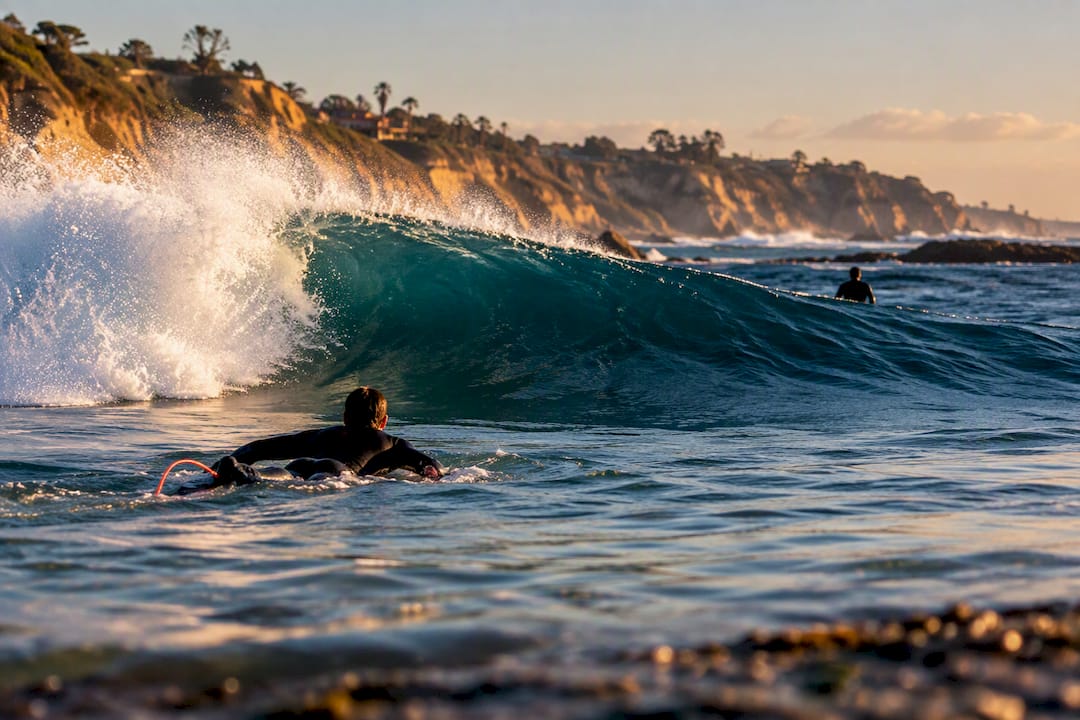
Beginners belong at La Jolla Shores, where a mile of sand and gentle rollers make wipeouts forgiving. Intermediates should head to Scripps Pier or Windansea once they can read a rip current. Advanced surfers want Black’s Beach, the most powerful break in the area, but only after checking the lifeguard flags and swell forecast first. The quick-reference list below sorts every named spot by skill level and hazard.
TL;DR:
- La Jolla Shores is ideal for beginners with gentle waves and a sand bottom, but surfers should monitor tide and swell for optimal conditions.
- Scripps Pier offers more punchy waves suitable for intermediates, with a strong rip current that should be respected for safety.
- Black’s Beach delivers the most powerful surf in the area, attracting advanced surfers willing to handle its challenging access and massive swell.
- Windansea and Torrey Pines provide reef and beach breaks that perform best on bigger west-northwest swells, requiring more experience.
- Checking live cams, swell forecasts, and lifeguard flags before paddling out is essential, especially to avoid wildlife closures and hazardous conditions.
Table of Contents
- The Best La Jolla Surf Spots at a Glance
- What Each La Jolla Surf Spot Is Actually Like
- Reading Swell, Period, and Tide Before You Paddle Out
- Staying Safe and Reading the Lineup
- A Local Checklist Before You Paddle Out
- Where to Check Conditions Before You Go
- Sources
- FAQ
The Best La Jolla Surf Spots at a Glance
Each break here handles swell differently, so match your skill level to the spot before you check the forecast.
- La Jolla Shores: Sand bottom, gentle rollers, best for beginners and longboarders; permanent lifeguard tower on site.
- Scripps Pier: Sand bottom with a known rip current running alongside the pilings; suits intermediate surfers who can paddle out fast.
- Windansea: Reef bottom, punchy peaks, local crowd; intermediate to advanced only.
- Black’s Beach: Sand bottom over a submarine canyon that funnels big groundswell; advanced surfers only, cliff or long-walk access.
- La Jolla Cove: Rarely surfable, rocky and shallow, closures possible for sea lions; check conditions before paddling.
- Torrey Pines / Rockpile / Hospitals: Beachbreaks north of the Cove that light up on bigger NW swell; moderate to advanced.
Before driving anywhere, pull up a live cam or the La Jolla Shores surf forecast to check swell size, period, and wind. Conditions shift fast along this stretch of coast, and a spot that’s flat at 7 a.m. can be pumping by 10.
What Each La Jolla Surf Spot Is Actually Like
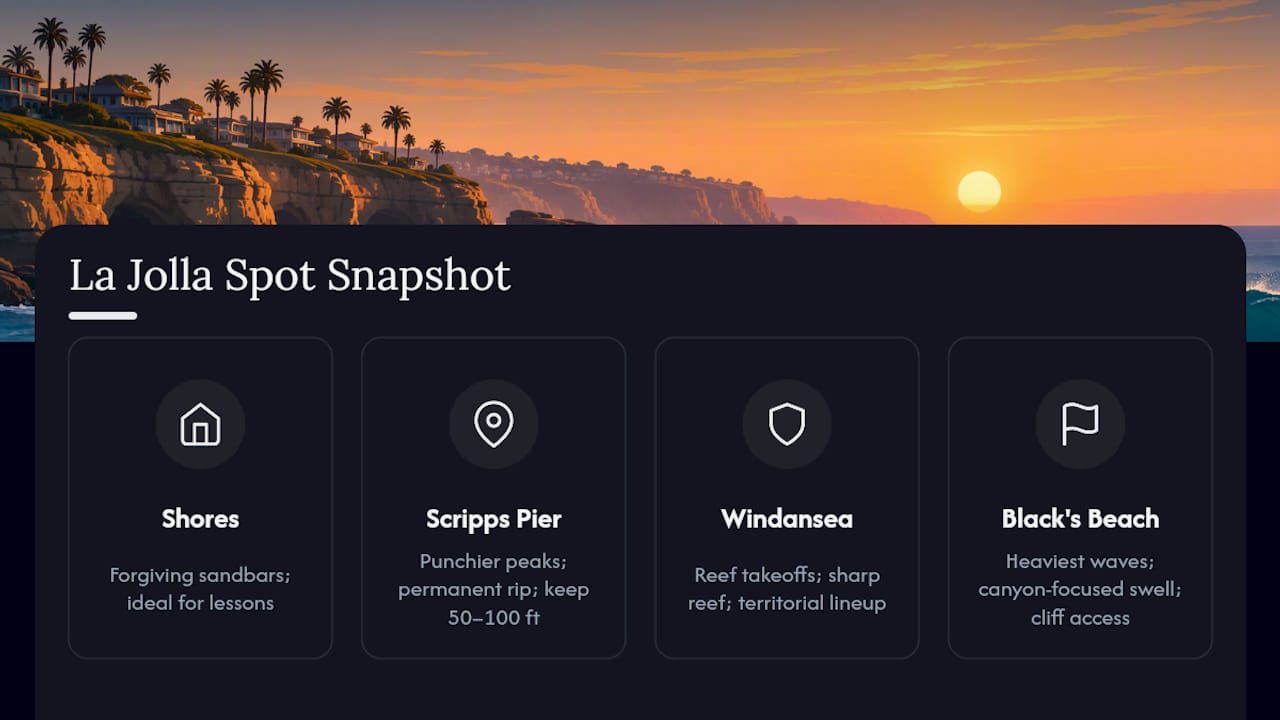
La Jolla Shores is the most forgiving of the bunch. Sandbars near the lifeguard tower create small, rolling waves that rebuild after every set, and the sand bottom means a bad fall costs you nothing but pride. Surf schools run lessons here for a reason. Check it near low to mid tide for the cleanest shape, and bring a longboard or a soft-top if you’re new. On days when swell wraps around the offshore canyon at a west-northwest angle, the sandbars link into long, mellow lines that longboarders in particular should watch for.
Scripps Pier, just north of the Shores, throws slightly punchier peaks than the main beach. A permanent rip current runs alongside the pilings, strong enough that local surfers use it to paddle out fast, but it’s dangerous if you drift into the pier structure itself. Keep at least 50 to 100 feet of clearance from the pilings at all times, and treat this spot as a step up from the Shores rather than a first-timer’s break.
Windansea is reef, not sand, and that changes everything. Takeoffs are sharper, the reef underneath can shred a knee or a fin, and the lineup has a reputation for being territorial toward outsiders who don’t know the etiquette. It performs best on bigger west or northwest swells and rewards surfers who can already read a peak before it breaks. Parking is street-side and limited, so arrive early if you’re set on a session here.
Black’s Beach is the heaviest wave in La Jolla, full stop. A submarine canyon just offshore focuses swell energy into a beachbreak that can double or triple in size compared to nearby spots on the same day, and Surfline rates it the area’s best beachbreak for exactly that reason. Getting there means a cliff descent or a long walk down from the Torrey Pines Gliderport, and there’s no lifeguard shortcut if you get in over your head. This is not a spot to learn on.
La Jolla Cove rarely produces rideable surf, and when it does, the rocky bottom and shallow entry make it a bad bet compared to nearby sandy breaks. Sea lion activity around the Cove has grown enough that the city has pursued closures in the area, so check current access before planning a session there.
Torrey Pines, Rockpile, and Hospitals sit north of the main cluster and wake up when a bigger northwest swell rolls through. These beachbreaks reward surfers who already have a beachbreak or reef under their belt, and access typically means a short walk down from the state beach parking lot.
Reading Swell, Period, and Tide Before You Paddle Out
Wave height only tells half the story. Period, the number of seconds between wave crests, determines whether a swell arrives with real power or just chop. A 12 to 16 second groundswell produces clean, well-organized waves, while a short-period windswell under 8 seconds tends to show up mushy and disorganized even at the same reported height.
Direction matters just as much. Northwest swells favor the open beachbreaks at Black’s, Torrey Pines, and Windansea, while La Jolla Shores can pick up a wider range of angles thanks to the sheltering effect of the Cove and the canyon nearby. Early morning is almost always your best window, since offshore or calm winds haven’t yet been replaced by the onshore afternoon breeze that chops up the surface.
Season shifts things too. Fall through early spring brings the bigger, more consistent NW groundswells that light up Black’s and Torrey Pines, while summer favors smaller, cleaner south swells that suit the Shores and beginners. Water temperature follows the same seasonal swing, running 56 to 60°F in winter and 65 to 70°F in summer, so a 3/2mm wetsuit is worth packing from October through May no matter which spot you choose.
Staying Safe and Reading the Lineup
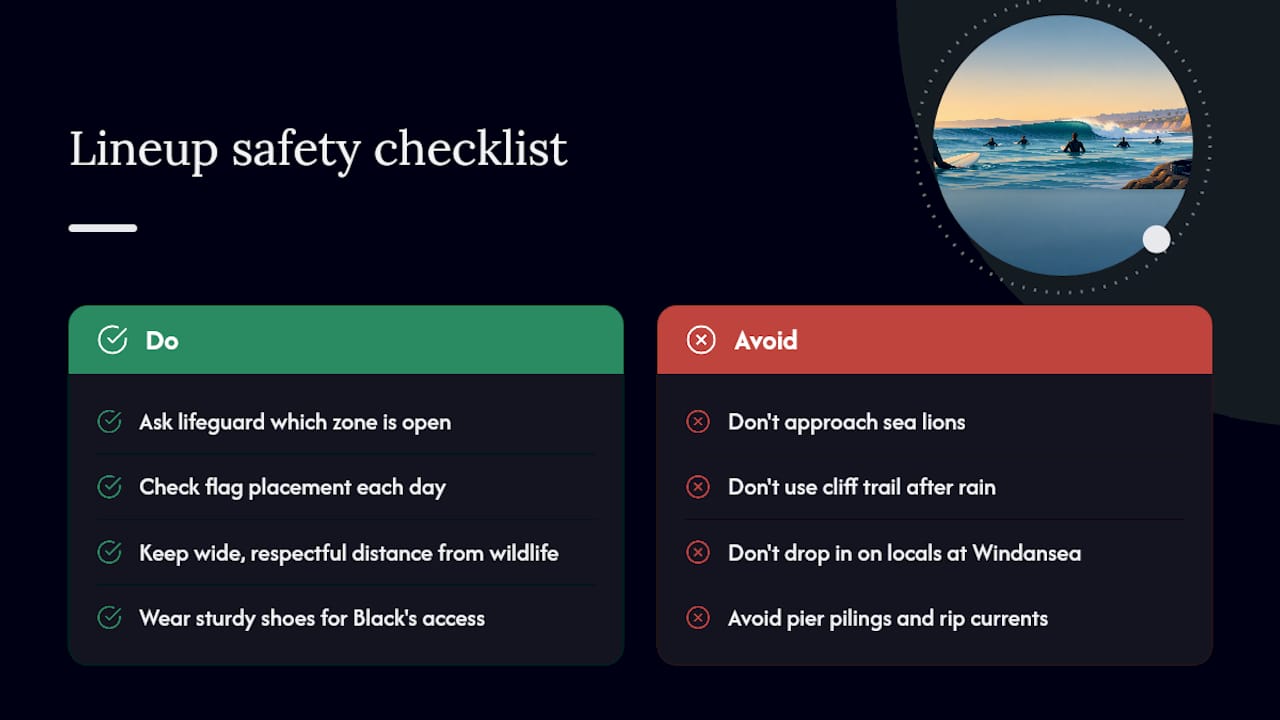
City lifeguards staff permanent towers at La Jolla Shores and La Jolla Cove year-round, and water areas are divided into marked swim and surf zones. Always ask the lifeguard on duty which zone is open before you paddle out, since flag placement can change day to day depending on conditions and crowd levels.
Sea lion activity near Point La Jolla and Boomer Beach has led to periodic closures, so keep a wide, respectful distance from any wildlife you spot in the water or on the rocks. Black’s Beach access involves a genuinely steep cliff trail; wear real shoes, skip it after rain, and don’t attempt it if you’re carrying more gear than you can climb with safely. In the water, give pier pilings and rip currents a wide berth, don’t drop in on a local at Windansea without reading the room first, and if you’re still building confidence, stay clear of the most crowded peak until you’ve got the pace down.
A Local Checklist Before You Paddle Out
Check the buoy readings and live cams the morning of your session, not the night before. Get to the parking lot early, since spots at the Shores and Torrey Pines fill fast on good days. Then ask the lifeguard on duty which zones are open before you touch the water.
Pro Tip: If the Scripps rip is running strong, use it to paddle out fast, but exit the lineup well before you drift near the pilings. Shift toward the Shores at low tide or Windansea on a bigger swell depending on what the day gives you, and always leave the beach the way you found it.
— Juiced
Where to Check Conditions Before You Go
Check the La Jolla Shores surf forecast first for swell size, period, and wind. Review City of San Diego lifeguard rules for zone flags and staffing, and check the Point La Jolla page for any active wildlife closures before you drive down.
Once you’re rinsed off and salty from a session, a little sun protection goes a long way for your hair, and Joelcma’s guide on protecting hair from sun exposure covers the basics. If you’re heading into La Jolla for more than a surf trip, Joelcma’s full service menu covers everything from a Women’s Haircut at $60 to $75 to a Full Balayage starting around $200, so you can book a haircut or color appointment before or after your surf trip and leave looking as good as the water felt.
Sources
- City of San Diego — Beach amenities and regulations
- Surf-Forecast — La Jolla Shores surf forecast (six-day)
- Surfline — La Jolla travel & surf guide
FAQ
Where Is the Best Surf in La Jolla?
For most visiting surfers, La Jolla Shores is the best overall spot thanks to its sand bottom and gentle, forgiving waves. If you want power and size, Black’s Beach is the area’s strongest beachbreak, but it’s for advanced surfers only.
Where Should Beginners Surf in San Diego?
La Jolla Shores is the standard beginner pick in the San Diego area because of its sandy bottom, small rolling waves, and permanent lifeguard coverage. Most local surf schools run their lessons directly on this stretch of beach for the same reason.
Does La Jolla Shores Have Waves?
Yes. La Jolla Shores produces small to medium, sandbar-driven waves that rebuild throughout the day, and it stays surfable more consistently than reef spots like Windansea. Low to mid tide typically gives the cleanest shape for beginners and longboarders.
What Wetsuit Do I Need to Surf in La Jolla?
A 3/2mm wetsuit covers most of the year, especially from October through May when water temperatures drop to around 56 to 60°F. In summer, when temperatures climb to 65 to 70°F, many surfers switch to a spring suit or no wetsuit at all.
Is Black’s Beach Only for Advanced Surfers?
Yes. The submarine canyon offshore concentrates swell energy into powerful, fast-breaking waves, and access requires a steep cliff descent or a long walk with no lifeguard shortcut. Beginners and even most intermediates are better served at La Jolla Shores or Windansea.