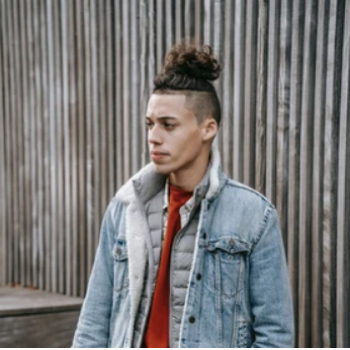

$45–$50 Cuts: La Jolla Men’s Hair Stylist Who Actually Listens
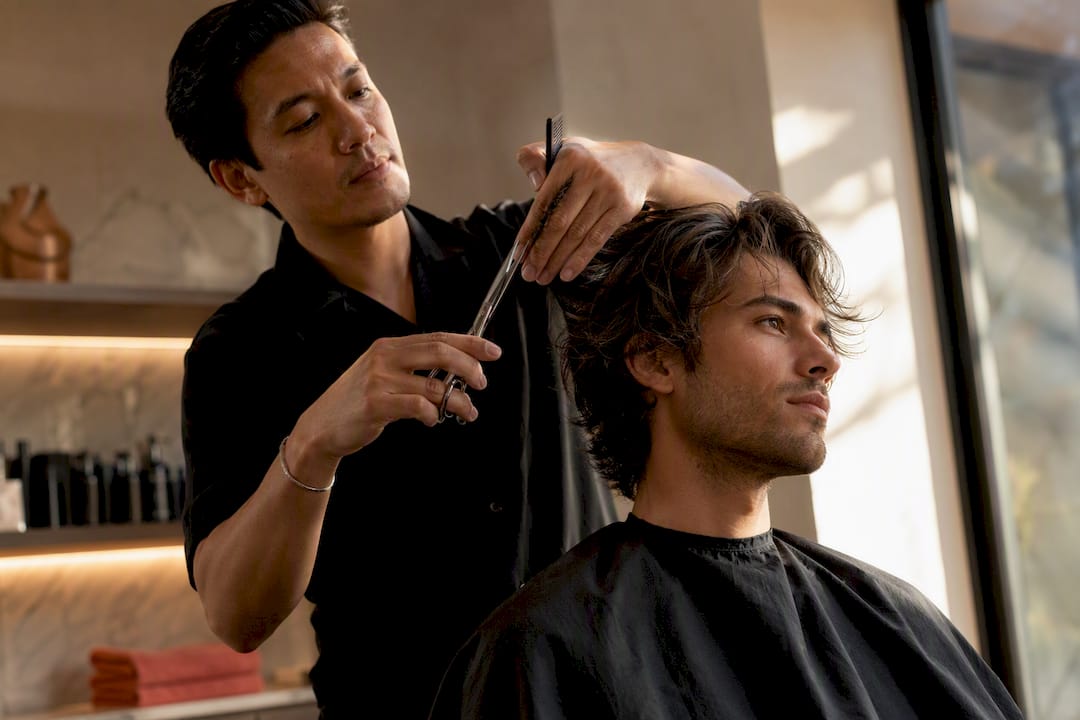
A specialist men’s hair stylist reads facial structure, hair texture, and growth pattern the way a barber’s clipper guard simply can’t. For longer, layered, or color-forward looks, that difference shows up the moment you leave the chair. Joel C Ma Hair Studio in La Jolla offers exactly this kind of tailored approach for men across Orange County and San Diego, with services and booking available online.
TL;DR:
- Specialist men’s stylists use architectural techniques like scissor-over-comb to create natural-looking, textured cuts that grow out into a proper shape, unlike clipper-only trims.
- Choosing a stylist who primarily works on men’s hair, has a strong portfolio on similar textures, and offers thorough consultations significantly reduces the risk of dissatisfaction and correction visits.
- Prices range from $45 to $50 for a basic men’s cut, with premium services including color and finishings costing significantly more, reflecting the stylist’s experience and technique sophistication.
- Hair type, curl pattern, and desired maintenance level determine which styles suit you best, with trending natural textures outpacing highly polished, sculpture-like styles.
- Regular maintenance every four to six weeks, combined with proper home grooming routines and suitable products, helps sustain your haircut’s intended look.
Table of Contents
- What Does a Professional Men’s Hair Stylist Actually Do?
- How Do You Choose the Right Men’s Hair Stylist?
- Popular Men’s Styles and Who They Actually Suit
- What Should You Expect to Pay for a Men’s Haircut?
- What Happens During a Men’s Hair Stylist Appointment?
- How Do You Maintain a Men’s Haircut Between Visits?
- Why Trust This Guide on Choosing a Men’s Hair Stylist
- Does Location and Parking Actually Matter When Booking?
- What Qualifications Should a Men’s Hair Stylist Have?
- Do Customer Reviews Actually Predict a Good Haircut?
- What Hygiene and Safety Standards Should a Men’s Salon Follow?
- Should You See a Stylist or a Barber for Your Next Cut?
- Ready to Book a Men’s Haircut That Actually Fits Your Hair?
- Sources
- FAQ
What Does a Professional Men’s Hair Stylist Actually Do?
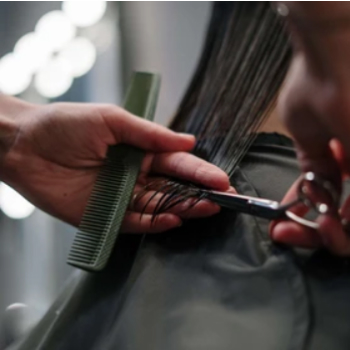
A men’s hair stylist works differently than a barber running a straight clipper-and-guard routine. Stylists often use architectural cutting techniques like scissor-over-comb to build shape into longer or textured hair, something a clipper alone can’t replicate. This distinction matters most for men who want their cut to move naturally, not sit like a helmet.
Top-tier stylists treat haircutting as a craft closer to sculpture than trimming, and that philosophy shapes how they listen to a client before ever picking up a tool. A generic barber cut and a specialist men’s haircut solve different problems entirely.
Here’s what tends to fall under a specialist men’s stylist’s service menu:
- Precision haircuts using both scissor and clipper technique for blended, natural-looking results
- Beard shaping and edging that complements the head shape, not just a trim
- Men’s color and highlight work, from subtle gray blending to full dimensional color
- Scalp and face treatments aimed at hair and skin health, not just styling
- Straight-razor finishing for crisp hairlines and necklines
- At-home styling lessons so the cut still looks right on day four
The technique a stylist chooses directly affects how your hair falls once it grows out. A cut built with scissor-over-comb technique grows out into a shape; a cut built purely with clippers grows out into a mess. That’s the practical reason men with thicker or wavier hair often graduate from a $20 barber chair to a specialist stylist.
How Do You Choose the Right Men’s Hair Stylist?
Picking a stylist by proximity or a coupon is how most men end up unhappy with a cut. A better filter is specialization: does this person primarily cut men’s hair, and can they show you results on hair textures similar to yours?
Here’s a practical checklist for evaluating any stylist before you book:
- Ask to see a portfolio filtered to men’s cuts, ideally on hair texture close to your own
- Confirm they do a real consultation, not a 30-second “the usual?” before cutting
- Ask what techniques they use for your hair type (scissor-over-comb, dry cutting for curls, razor work)
- Ask how the cut will grow out between visits and what maintenance it needs
- Ask what products they’d recommend for your specific hair, not a generic upsell
- Ask about their revision policy if you’re unhappy with the result
- Confirm pricing upfront, including any surcharge for longer hair or add-on services
- Ask how long they’ve specialized in men’s hair versus general salon work
A focused consultation before the first cut noticeably reduces the odds of a correction visit, which is exactly why it belongs on this list and not as an afterthought.
Pro Tip: Bring two or three reference photos, not one. A single photo tells a stylist what you want your hair to look like; three photos tell them what you actually like about your hair, which is more useful information.
Red flags are just as telling as green ones. Walk away from a stylist with no visible portfolio, one who rushes the consultation to fill the next slot, or one who won’t quote a price range before you sit down.
Popular Men’s Styles and Who They Actually Suit
The style you bring in as a reference photo should match your hair type and your patience for daily upkeep, not just what looks good on someone else’s Instagram feed.
- Short textured crop. Works well on straight to wavy hair with decent density. Ask your stylist about point-cutting the ends for texture instead of a blunt finish.
- Fades and tapered cuts. Deliver sharp structure with moderate maintenance, needing a touch-up every three to four weeks to keep the line clean.
- Medium-length layered styles and curtain bangs. Suit straight to loosely wavy hair and require some daily styling with a light product, but they’re currently among the most requested looks heading into 2026 for their natural movement.
- Curly and afro-textured cuts. Respond best to dry cutting, since curls behave differently wet than dry, and shrinkage has to be accounted for before a single strand gets cut.
Trend data backs up a broader shift too: textured, natural-looking cuts are outpacing highly polished, sculpted styles, largely because they need less daily effort to look intentional. If you’re bringing in a photo, check that it matches your actual hair density and curl pattern. A curtain-bang photo on fine straight hair will translate; the same photo on thick, curly hair will not, no matter how skilled the stylist is. For more style inspiration matched to face shape and hair type, browse current men’s cut options.
What Should You Expect to Pay for a Men’s Haircut?
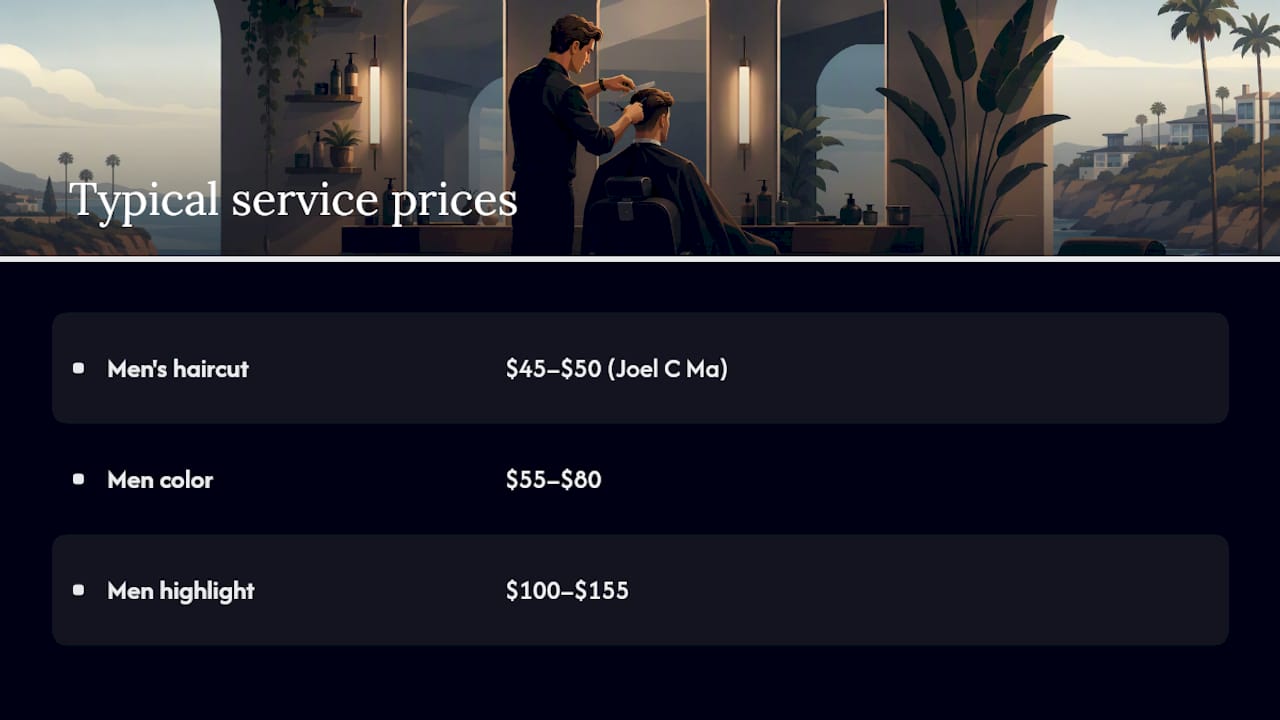
Pricing splits into three rough tiers, and knowing which tier you’re paying for helps you judge whether you’re getting value or just paying for the neighborhood.
A basic barber cut typically covers clipper work and a quick trim with minimal consultation. A mid-range stylist appointment adds a real consultation, scissor work, and often a beard shape. A premium specialist appointment includes an extended consultation, precision cutting across multiple techniques, and sometimes a styling walkthrough before you leave.
What drives the price up? Senior stylist experience, added color or gray-blending services, specialized finishes like a straight-razor edge, and simply how long the appointment runs. A haircut alone books faster than a haircut paired with color or a treatment.
At Joel C Ma Hair Studio, a Men’s Haircut runs $45 to $50, while Men Color starts at $55 to $80 and Men Highlight runs $100 to $155, depending on length and density. The real measure of value isn’t the number on the price list. It’s whether the price includes a genuine consultation, a portfolio that backs up the stylist’s claims, and some form of aftercare guidance once you’re out the door.
What Happens During a Men’s Hair Stylist Appointment?
A well-run appointment follows a predictable rhythm, and knowing that rhythm ahead of time helps you show up prepared instead of guessing.
- Arrival and check-in, usually a few minutes before your slot to settle in
- Consultation, where you discuss the look, your hair’s natural pattern, and your styling habits at home
- Cutting, blending scissor and clipper technique depending on the style and texture
- Finishing touches, including edging, neckline cleanup, and sometimes a straight-razor detail
- Styling demonstration, so you leave knowing exactly how to recreate the look yourself
A haircut-only appointment generally runs shorter than one that includes color or a treatment, since color needs processing time on top of the cut itself. Show up with a couple of reference photos, a clear sense of your daily routine (five minutes with product versus fifteen), and mention any scalp sensitivity or allergies before the stylist starts. That single detail can change which products they reach for.
How Do You Maintain a Men’s Haircut Between Visits?
The cut is only half the equation. What you do with it at home over the following weeks determines whether it still looks intentional on day ten or just looks grown out.
- Matte paste works best for textured, natural finishes with no shine, ideal for crops and tapers.
- Light creams suit finer hair that needs some hold without weighing it down.
- Pomade gives more shine and control, useful for slicked-back or classic looks.
Wash frequency matters more than most men assume. Shampooing every other day, using a conditioner suited to your scalp type, and adding an occasional deep scalp treatment keeps both the hair and the skin underneath in better shape. Grooming habits between appointments matter as much as the cut itself when it comes to how the style holds up.
Pro Tip: Apply product to towel-dried, not soaking wet, hair. Product distributes more evenly and you’ll use less of it, which means your paste or cream lasts twice as long.
Most specialist stylists recommend a return visit every four to six weeks for shorter styles, stretching to eight for longer, layered looks that grow out more gracefully.
Why Trust This Guide on Choosing a Men’s Hair Stylist
This guide draws on real industry technique standards and one salon’s specific, verifiable track record, rather than generic style advice recycled across the internet.
- Joel C Ma Hair Studio is a high-end, expert-driven salon located in La Jolla, California, built around personalized consultations rather than assembly-line cuts.
- The founder brings more than 25 years of focused experience in artistic haircutting and advanced color technique, the kind of tenure that separates a stylist from someone who just learned clippers last year.
- The studio’s own writing on men’s hair artistry lays out the same specialist philosophy this guide recommends: a masculine, comfortable environment paired with salon-level technical skill.
- Full service details, client testimonials, and portfolio work are viewable on the salon’s site for anyone comparing options before booking.
That combination, decades of hands-on technique plus a service structure built specifically around men’s grooming, is precisely what separates a specialist stylist from a barber running a faster, more generic chair.
Does Location and Parking Actually Matter When Booking?
Convenience factors decide whether you actually keep your six-week rebooking habit or let it slide into a three-month grow-out you regret.
A stylist fifteen minutes from your office or home is one you’ll actually visit on schedule; one across town becomes the appointment you keep pushing back. Parking matters more than people admit before they’re circling a block in a dress shirt fifteen minutes late. Ask about validated or dedicated parking when you book, especially in denser areas of Orange County or coastal San Diego where street parking runs tight on weekends.
Accessibility covers more than stairs and ramps, though that matters too. It includes appointment flexibility: can you book evenings after work, or are you stuck choosing between missing a meeting and missing your haircut? A salon that offers online booking and clear appointment windows removes a layer of friction that has nothing to do with cutting skill but everything to do with whether you’ll actually show up consistently. Consistency, more than any single great haircut, is what keeps a style looking sharp over months rather than weeks.
What Qualifications Should a Men’s Hair Stylist Have?
Formal cosmetology licensing is the baseline every legitimate stylist holds, but licensing alone doesn’t tell you whether someone specializes in men’s hair or just tolerates cutting it between other appointments.
Look for stylists whose training or ongoing education specifically covers men’s cutting techniques: scissor-over-comb, fade blending, and razor work, not just general styling certification. Specialization often shows up in career pattern more than a certificate on a wall. A stylist who’s spent decades building a men’s-focused clientele has almost certainly seen more variation in male hair texture, growth pattern, and face shape than someone who splits time evenly across all services.
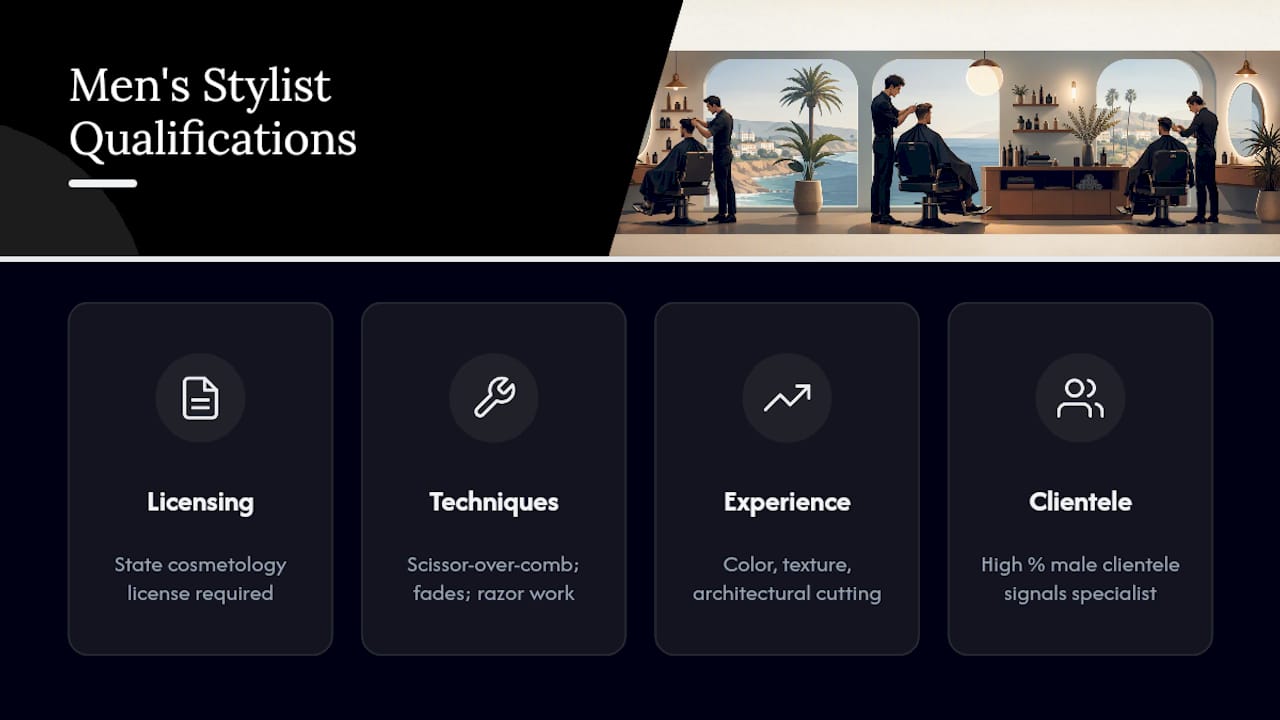
Experience length matters, but so does the type of experience. A stylist with 25 years across color, texture work, and men’s architectural cutting brings a different depth than someone with 25 years doing the same basic trim on repeat. Ask directly what percentage of their clientele is male and what techniques they use most. The answer tells you quickly whether you’re talking to a specialist or a generalist who happens to also cut men’s hair.
Do Customer Reviews Actually Predict a Good Haircut?
Reviews matter, but the right way to read them is to look for specificity, not star ratings alone.
A five-star review that just says “great cut, nice guy” tells you very little. A review that describes the consultation process, mentions a specific technique, or explains how the cut held up weeks later tells you far more about whether that stylist’s approach will suit you. Testimonials and portfolio images published directly by a salon, like those featured on Joel C Ma Hair Studio’s site, let you compare a stylist’s described results against actual finished cuts on real clients rather than stock photography.
Pay attention to patterns across multiple reviews rather than one glowing outlier. If several reviews independently mention thorough consultations, listening skills, or specific technique work, that pattern is a stronger signal than any single five-star post. Conversely, repeated complaints about rushed appointments or unclear pricing across multiple reviews should weigh more heavily than one bad review from someone who might’ve just been having an off day.
What Hygiene and Safety Standards Should a Men’s Salon Follow?
Basic sanitation isn’t optional in a licensed salon, but the standard of care varies more than most men realize until they’ve experienced both ends of it.
Tools, combs, and clippers should be sanitized between every single client, not just at the end of the day. Straight razors should use fresh, disposable blades for each client, never a reused edge. Capes and neck strips should be fresh for every appointment, and stations should look and smell clean, not like they’ve absorbed a decade of hair product residue.
Ask about sanitation practices directly if you’re trying a new stylist for the first time. A salon confident in its protocols will answer specifically, not vaguely. Watch for basic signals during your visit too: are surfaces wiped down between clients, are used towels handled separately from clean ones, is the floor swept regularly rather than left with hair buildup from three appointments ago? These small operational details tend to correlate closely with how carefully a salon handles the technical side of the cut itself.
Should You See a Stylist or a Barber for Your Next Cut?
Barbers earn their reputation on speed and precision with clipper-based short styles, and for a straightforward fade or buzz cut, that’s genuinely the right tool for the job. Where a specialist stylist pulls ahead is anything architectural: longer layers, color work, curly or wavy texture that needs to be cut dry, or a style that has to move naturally rather than sit rigid.
The honest test is maintenance willingness. If you want a five-minute morning routine and a cut that barely changes week to week, a barber serves you well. If you want a style that reads as intentional, moves with your hair’s natural pattern, and can evolve with color or texture work, that’s a stylist’s territory. Neither choice is wrong. The mistake is picking based on habit instead of matching the tool to what you actually want your hair to do.
— Juiced
Ready to Book a Men’s Haircut That Actually Fits Your Hair?
Most men switch between a fast clipper cut and a full styling appointment depending on the week, but neither extreme solves the real problem: getting a cut built specifically for your hair texture and face shape, done by someone who specializes in men’s grooming rather than treats it as an afterthought.
Joel C Ma Hair Studio in La Jolla offers exactly that specialization, with a men’s haircut priced at $45 to $50 and men’s color services starting at $55 for clients who want gray blending or a subtle tonal shift. Every appointment opens with a real consultation, not a rushed guess, so the technique matches your hair’s natural pattern instead of fighting it.
If you’re ready to stop settling for a generic clipper cut, view the full services menu and book a consultation directly. Bring a couple of reference photos, mention your daily styling routine, and let the stylist build a cut that actually holds up between visits.
Sources
- 12 Best Men’s Hairstyles for Fall 2026 | BLUMAAN
- Men’s haircuts 2026 styles roundup — Hairopal
- Joe Mills — professional hairdresser biography
FAQ
Should a Man Go to a Hair Stylist Instead of a Barber?
For longer, layered, textured, or color-forward styles, a specialist stylist typically produces better results than a clipper-focused barber. For simple clipper-based fades or buzz cuts, a skilled barber remains a solid, faster option.
How Do You Find a Good Men’s Hair Stylist?
Look for a stylist who specializes specifically in men’s hair, has a visible portfolio on textures similar to yours, and offers a real consultation before cutting. Focused consultations reduce the odds of needing a correction visit, so ask directly whether one is included before booking.
What Should You Bring to a Men’s Haircut Appointment?
Bring two or three reference photos that match your actual hair texture and density, not just a style you like the look of. Mention your daily styling routine and any scalp sensitivities or allergies before the stylist starts cutting.
How Often Should You Get a Men’s Haircut?
Shorter, structured styles like fades typically need a touch-up every three to four weeks to stay sharp. Longer, layered cuts can often stretch to six or eight weeks between visits since they grow out more gracefully.