
Founder With 25 Years’ Experience: Alopecia Stylist in La Jolla
If you searched for an alopecia hair stylist near me because you want a premium haircut, careful color, and a stylist who actually listens before touching your hair, Joel C Ma Hair Studio in La Jolla is the answer. Founder Joel C Ma brings extensive experience to a consultation-first process, adapting balayage formulas and cutting techniques to your specific hair texture and scalp needs, then building a maintenance plan that keeps results looking sharp long after you leave the chair.
TL;DR:
- A detailed consultation that assesses hair texture, scalp sensitivity, and color history is essential for personalized, damage-free results, especially for thin or fine hair.
- Experienced stylists will tailor formulas based on local climate factors like humidity and mineral content, and document every step for consistency and future appointments.
- Conservative techniques such as balayage, layered cuts, and bond-repair treatments help preserve hair health while delivering natural, low-maintenance results.
- Booking flexibility, clear maintenance plans, and written estimates are key indicators of a luxury salon capable of long-term, reliable service.
- Client reviews with specific details and visible, daylight photos better confirm a stylist’s true skill and consistency than star ratings alone.
Table of Contents
- What makes a luxury, consultation-led salon different?
- What should you ask during a hair consultation?
- Which techniques protect hair while still looking premium?
- What does luxury salon pricing and scheduling actually look like?
- How do you judge a stylist’s actual expertise?
- How should you read salon reviews and testimonials?
- Can you get a flexible appointment that fits your schedule?
- The consultation is the whole game
- Book a consultation at Joel C Ma Hair Studio
- Sources
What makes a luxury, consultation-led salon different?
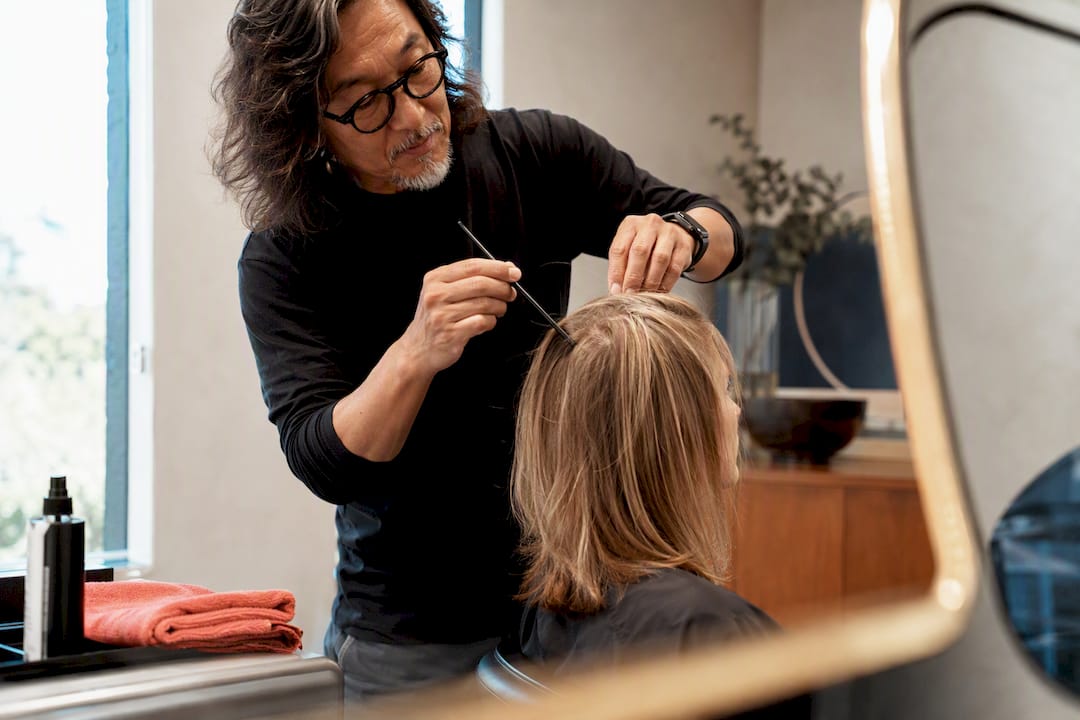
Most salons hand you a price list and a chair. A luxury salon hands you a plan. That distinction shows up the moment you sit down for a consultation, because the stylist is diagnosing your hair before touching a single strand: texture, density, scalp sensitivity, how your hair has responded to color in the past, and what you actually want to look like in six weeks, not just today.
This matters more for anyone dealing with thinning or fine hair, where the wrong lift or an aggressive foil pattern can create breakage that shows up as bald-looking patches rather than soft, blended color. A thorough consultation typically produces a personalized plan instead of a one-size-fits-all package, which is the whole point of paying for expertise rather than speed.
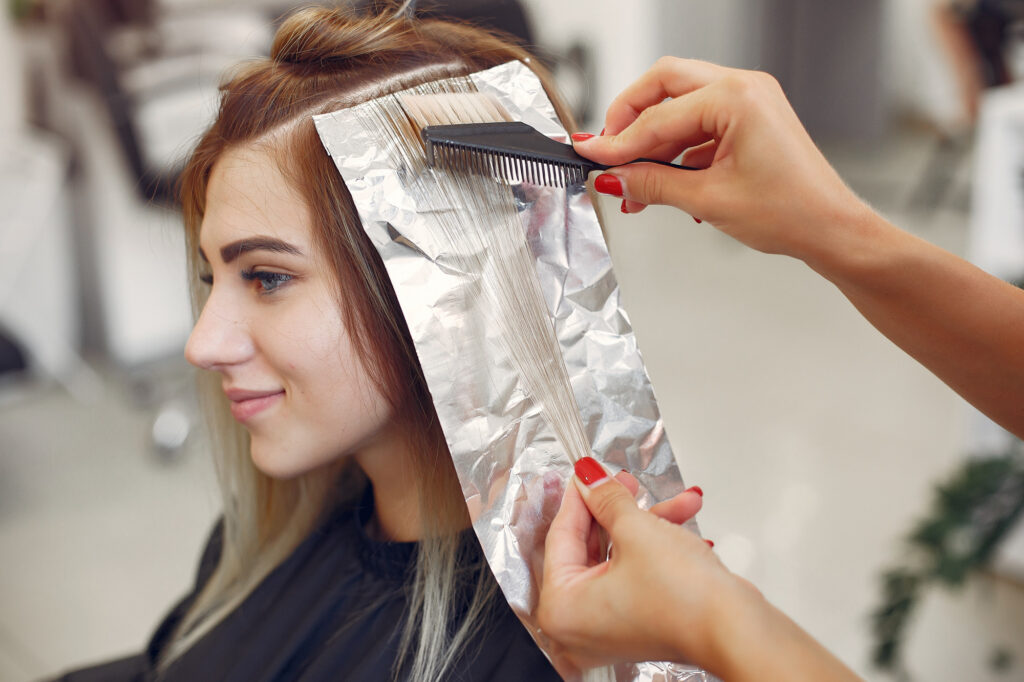
Technique adaptation is where the real skill lives. A seasoned colorist will change developer volume, foil placement, and toner formulas based on your hair’s porosity and even the local water and climate, since coastal humidity and hard water both affect how color holds and how hair behaves day to day.
Look for these signals of quality before booking:
- A visible portfolio of real client transformations, not just studio-lit before-and-afters
- Written testimonials that mention specific results, not vague praise
- Staff who have worked at the salon for years, not a revolving door of new hires
- Evidence of ongoing technique training, like certifications or continuing education mentioned on staff bios
Pro Tip: Ask directly, “How do you adjust your formulas for hair like mine, or for our local water?” A stylist who answers with specifics about porosity, mineral buildup, or humidity is speaking from real technical knowledge. A vague “we just go by eye” answer is a red flag.
What should you ask during a hair consultation?
A good consultation is really a screening interview, and you’re the one doing the screening. Come prepared with a short list of questions and you’ll walk out knowing whether this stylist deserves your hair, and your money.
- Is the look I want realistic in one session, or will it take staged appointments?
- What’s the maintenance schedule and cost after this first visit?
- Will you write down the exact formula you use on me today?
- Do you recommend a patch test given my hair or skin history?
- What’s the total timeline for today’s appointment?
- What aftercare products do you recommend, and why those specifically?
Bring backup material. Save reference photos on your phone, and if you’re switching stylists, bring the written color formula from your previous stylist so the new one can reproduce or intentionally adjust the look rather than guessing.
Watch for these warning signs:
- The consultation feels rushed, or happens standing at the front desk instead of seated with real attention
- Vague answers about cost, especially when you ask what happens if the color needs a second session
- No mention of maintenance until after the service is already done
- Reluctance to write anything down
Before you go, do a few small things that make the whole visit smoother: arrive 10 to 15 minutes early, block extra time in your calendar for the actual consultation, and have your hair history ready, including past chemical treatments, allergies, and how your hair has reacted to color before. Our essential consultation questions guide walks through this in more detail if you want a fuller script.
Which techniques protect hair while still looking premium?
The best luxury results come from restraint, not aggression. A skilled stylist can create the illusion of volume and movement through precision cutting long before any chemical process touches your hair, and that matters even more when hair is fine or thinning.
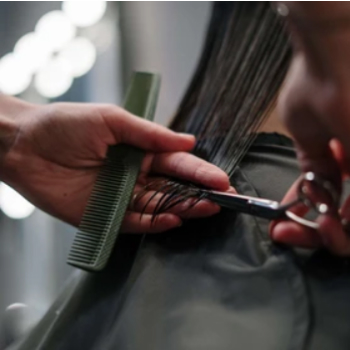
Point cutting and strategic texturizing add soft movement without removing so much weight that hair looks sparse. Layer placement, done thoughtfully, creates the appearance of density at the crown and around the face, which is often exactly what someone with thinning hair actually wants without ever framing it as a medical fix.
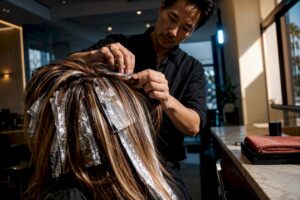
On the color side, conservative lifting beats dramatic lifting almost every time for hair health. A colorist who places balayage carefully, using lower-volume developers where possible and finishing with a gloss, gets a soft, low-maintenance result that grows out gracefully instead of leaving a hard line.
Supportive treatments matter too:
- Bond-repair treatments during or after color services to reduce structural damage
- Professional glossing to refresh tone and shine between full color appointments
- Scalp-friendly product lines when sensitivity is part of the conversation
Staged appointments are a recommended risk-management strategy for anyone requesting a big change, meaning your stylist does a smaller first move, evaluates how your hair responds, then refines from there rather than gambling on one dramatic session. A patch test 48 hours before any new color service is standard practice and worth insisting on, especially if you’ve never used that specific formula before.
What does luxury salon pricing and scheduling actually look like?
Expect your total cost to break into a few distinct pieces rather than one flat number: a consultation (sometimes free, sometimes a nominal fee that’s credited toward service), the base cut or color charge, add-ons like a gloss or bond-repair treatment, and any retail products recommended for home care.
Timelines vary by service complexity. A precision cut with styling might run 45 minutes to an hour. A full balayage with gloss can take three to four hours in a single session, while a major color correction or dramatic change is often staged across two or three appointments spaced weeks apart to protect hair integrity.
For maintenance, typical cadences look like this:
- Gloss refreshes every 6 to 12 weeks to keep tone from turning brassy or dull
- Trims every 6 to 10 weeks to maintain shape, especially with precision cuts
- At-home product swaps to color-safe shampoo and conditioner immediately after a color service
Ask for a written estimate and a maintenance plan before you leave the consultation. A salon that documents formulas and gives you a follow-up schedule is showing you what an unhurried, well-run luxury visit is supposed to feel like, versus one that hopes you’ll just book again whenever.
How do you judge a stylist’s actual expertise?
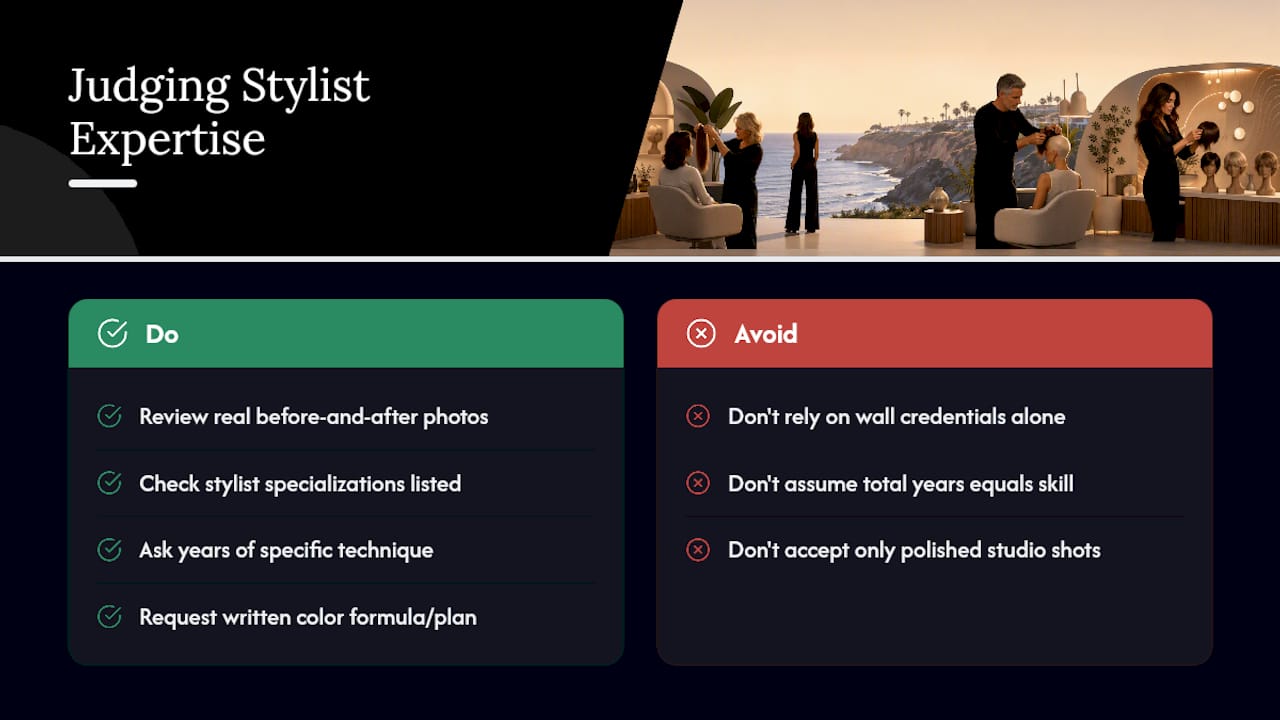
Credentials on a wall matter less than what a stylist can show you and explain clearly. Start with the portfolio: does it feature real client transformations with visible before-and-after context, or just polished studio shots that could belong to anyone?
Specialization pages tell you a lot too. Salon staff bios that clearly list expertise, whether that’s balayage, curly texture work, or men’s cutting, help match you to a stylist whose actual skill set fits your hair rather than a generalist who’s good at everything and great at nothing.
Ask how long they’ve been doing a specific technique, not just how long they’ve been a stylist overall. Someone can have a license for fifteen years and only two years of serious balayage practice. The difference shows up in how evenly color is placed and how naturally it grows out.
Documentation is an underrated signal. Salons that write down color formulas and maintenance plans tend to deliver more consistent results appointment after appointment, because nothing is left to memory or guesswork. If a stylist can pull up your exact formula from six months ago without hesitation, that’s a stronger indicator of professionalism than any framed certificate.
Finally, ask about continuing education. Techniques change fast, and a stylist who attends workshops or seeks out advanced training is actively keeping pace rather than repeating what they learned a decade ago.
How should you read salon reviews and testimonials?
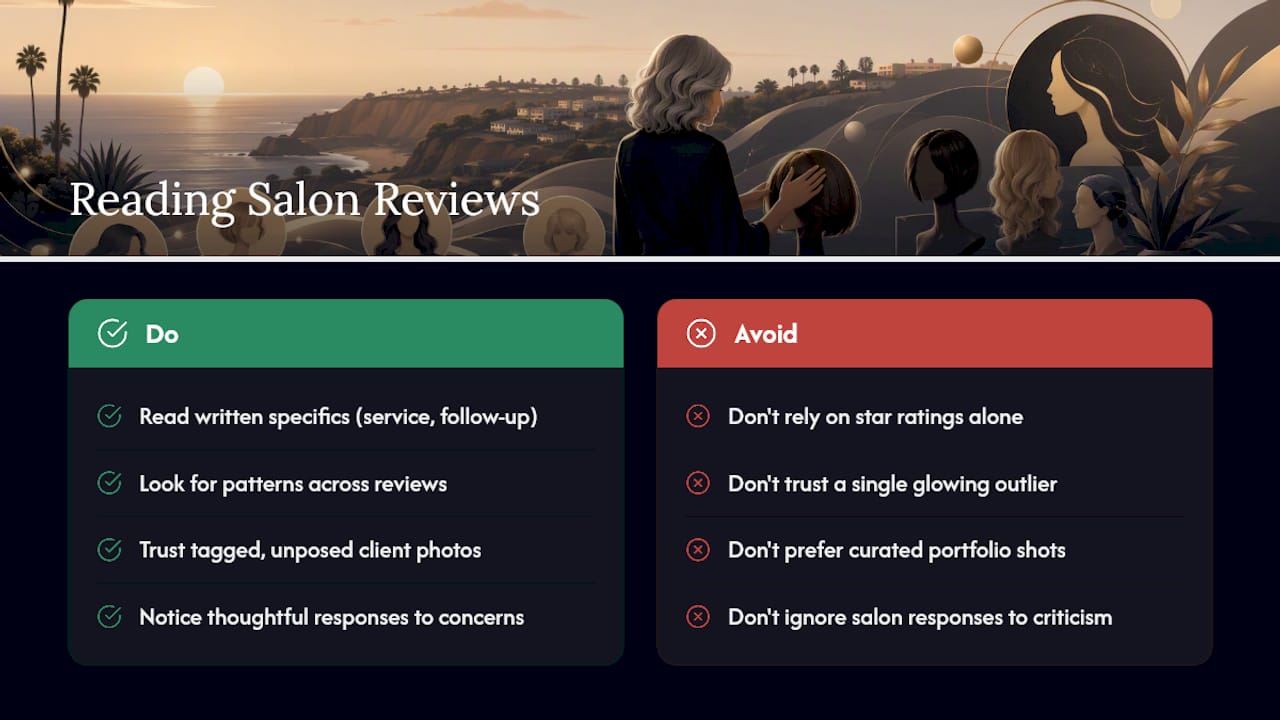
Star ratings alone don’t tell you much. What matters is the specificity in the written review: does the client describe the actual service, the consultation experience, and how the result held up weeks later, or is it a generic five-star with no detail?
Look for patterns across multiple reviews rather than one glowing outlier. If several clients independently mention that the stylist listened carefully, explained the plan, or adjusted an approach based on their hair type, that’s a consistent signal worth trusting. One isolated rave review proves less than five reviews that all mention the same specific strength.
Tagged, unposed client photos on social media are often more revealing than curated portfolio shots, since they show how a color or cut actually looks in daylight, weeks after the appointment, styled the way a real person styles their own hair day to day.
Pay attention to how a salon responds to less glowing reviews too. A thoughtful, specific response to a concern says more about professionalism than a page full of perfect ratings with no engagement at all. Testimonials that mention the consultation process by name, referencing a written plan or a follow-up call, tend to correlate with the kind of documented, consistent service worth booking.
Can you get a flexible appointment that fits your schedule?
Booking flexibility matters as much as skill when you’re trying to fit a two-hour color session into a real week. A salon that only offers weekday mid-morning slots isn’t built for people juggling work and family, so check whether evening or weekend appointments are actually available before you fall in love with a stylist’s portfolio.
Staged color plans, the kind recommended for anyone making a big change, also require scheduling flexibility from the salon itself. If your plan calls for a touch-up in four weeks and a refinement in eight, you need a booking system that can hold those follow-up slots without a six-week waiting list getting in the way.
Ask directly during your first consultation how far out you’d need to book a follow-up appointment, and whether the salon keeps any short-notice slots open for maintenance visits like glosses or trims. A salon that can’t answer that clearly probably can’t deliver on the maintenance plan they just promised you.
The consultation is the whole game
Most people shopping for a stylist focus entirely on the portfolio and skip past the consultation, treating it as a formality before the “real” appointment starts. That’s backwards. The consultation is where you find out whether a stylist actually understands your hair, or whether they’re about to run a standard formula on you regardless of what you said you wanted.
The overlooked detail is documentation. A stylist who writes down your formula, your maintenance schedule, and your hair history isn’t just being thorough. They’re building a system that protects you from inconsistent results the next time you sit in their chair, or in someone else’s if you ever move. That habit, more than any single haircut, is what separates a salon built for long-term client relationships from one built for one-time transactions. If a stylist can’t tell you what they did to your hair last time without checking with you first, they’re improvising, not practicing a craft.
— Juiced
Book a consultation at Joel C Ma Hair Studio
At Joel C Ma Hair Studio, every visit starts the same way this article recommends: a real consultation, not a rushed chair-side chat. Joel brings extensive experience adapting precision cuts, balayage, and glossing techniques to individual hair texture, scalp sensitivity, and the realities of Southern California’s climate and water.
The services covered in this guide are exactly what’s on offer: precision cutting for shape and movement, balayage and color work with conservative lifting and gloss finishing, bond-repair treatments for hair that needs extra protection, and a written maintenance plan you leave with, not one you have to ask for later. Your first visit follows the sequence outlined above: consultation, written estimate, then either a single-session service or a staged plan if the change is significant.
If thinning or fine hair is part of your concern, the personalized consultation process is built to address that directly, matching cut and color choices to what actually works for your density and scalp rather than a generic template. Ready to see what a documented, tailored plan looks like for your hair? Book a consultation and bring your reference photos and hair history with you.
Sources
- How luxury salon experience differs from standard salons — Salon Rituel blog
- How to find a good hairstylist when you’re picky — Allure
- What to expect from a luxury hair salon visit — Kimistry Hair