
Heatless Styling Techniques That Actually Work in 2026

Sock curls win. After extensive testing across methods, they consistently deliver the bouncy, blowout-style curl most people are chasing, with zero special tools and enough comfort to sleep in. Wrap damp hair around a long sock on each side, roll the opening upward to secure, and let time do the work. That’s it.
The other contenders, flexi rods, foam rollers, and classic ribbon curls, each have a real place depending on your hair type and how much definition you want. But for sheer ease and reliable results, sock curls rank as the clear winner across comfort, styling ease, and outcome.
Why sock curls hold the top spot:
- No purchase required — any long sock works
- Comfortable enough to sleep in overnight
- Produce classic, bouncy curls on medium to long hair
- Take under five minutes to set up
- Work on most hair textures with minimal product
1. Sock curls: the method that keeps winning
Divide your hair down the middle. Bring each section forward over your shoulder, place a long sock at the root, and wrap your hair around it in a spiral toward the ends. Tuck the ends into the sock’s opening and roll it upward to the scalp to secure. Sleep on it, unravel in the morning, and separate with your fingers.
Hair stylists point to the sock’s soft, flexible structure as the key. It creates a consistent curl diameter without the pressure points that rigid rollers can leave. Fine to medium hair tends to get the best definition; very thick hair may need the sock divided into more sections.
2. Flexi rods for tight, defined curls
Flexi rods are bendable foam-covered rods that you wrap damp sections around, then fold the ends to lock them in place. Smaller rods produce tighter ringlets; larger ones give a looser spiral. They hold curl patterns well on thick or coarse hair, where softer methods sometimes fall flat.
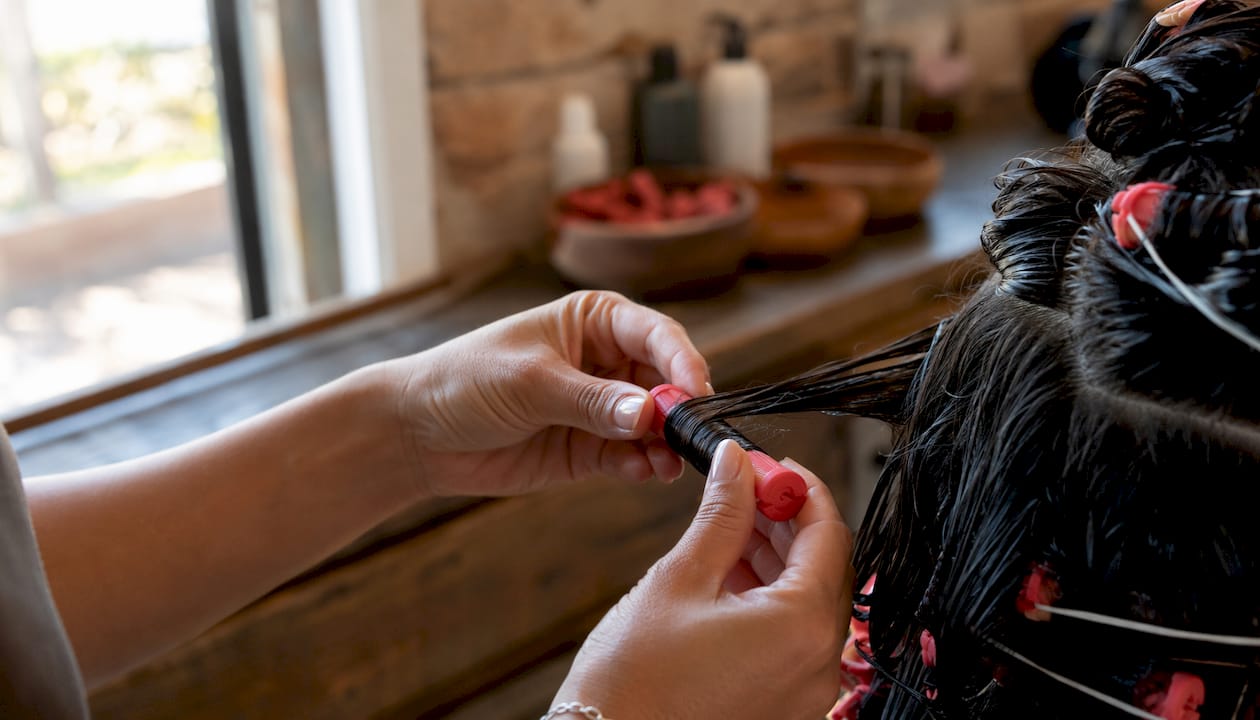
The overnight wear is comfortable once you find the right rod size for your sections. Satin-sleeved versions reduce friction during removal, which matters if your hair is color-treated or prone to breakage.
3. Foam rollers for classic, voluminous curls
Foam rollers are the retro option that genuinely delivers. Roll damp sections from ends to roots, secure the roller flat against your head, and let hair dry completely before unrolling. High-density foam minimizes kinks during overnight wear, and the result is a full, rounded curl with real volume at the root.
They work best on medium-length hair. Very long or very thick hair can be harder to set evenly, so section carefully.
4. Classic ribbon curls for soft waves
The ribbon or robe-tie method wraps damp sections of hair around a soft fabric cord draped over the top of your head, working from front to back on each side. The result is a bouncy, uniform curl that sits closer to a blowout than a tight ringlet. Hair stylist Adam Reed describes the robe tie as producing “a softer, more natural bend” compared to bulkier tools.
This method suits medium to long hair and works especially well when you want volume without too much definition.
5. Jumbo flexi rods for loose, beachy waves
Same principle as standard flexi rods, but the larger diameter means each curl is wider and more relaxed. Jumbo rods are ideal if you want waves rather than ringlets, and they’re faster to set because you’re working with bigger sections. Thick hair responds particularly well since the rod has enough surface area to grip dense strands.
6. Braiding for effortless texture
Loose three-strand braids on damp hair create soft, beachy texture overnight. Tighter rope braids increase curl definition noticeably. The rule is simple: smaller braids equal tighter waves, larger braids equal looser movement. French and Dutch braids incorporate hair from the crown, so the wave pattern starts at the root rather than a few inches down, which adds real volume.
Apply a lightweight styling cream before braiding to improve hold and reduce frizz when you take them out.
Pro Tip: Dutch braids, where strands cross under rather than over, tend to produce slightly more pronounced waves than standard three-strand braids. Try both on the same night to see which suits your texture.
7. Twist outs for natural curl definition
Two-strand twists work by coiling damp sections of hair around each other, then releasing once dry to reveal a defined, springy curl pattern. This method is particularly effective on naturally curly or coily textures, where the twist amplifies the hair’s existing pattern rather than imposing a new one. Lightweight gel applied before twisting gives the hold needed for the pattern to last.
Finger coils and mini twists follow the same logic at a smaller scale, producing curl patterns that hold for several days with the right products.
8. Pin curls for polished, defined results
Pin curls date back to the 1920s and still produce some of the most defined curls achievable without heat. Wind small sections of damp hair around your finger down to the root, then secure flat against your head with two bobby pins crossed over each other. Alternating the winding direction, clockwise on one section, counterclockwise on the next, creates natural-looking movement. Winding all sections the same way gives a more uniform, vintage finish.
9. Headband and scarf curls for voluminous waves
Place a wide, soft headband over your head like a crown. Take sections of damp hair and loop them over and under the band, working from front to back on each side, until all your hair is wrapped. The result is large, voluminous waves that mimic a professional blowout. A scarf works the same way and adds a bit of extra hold.
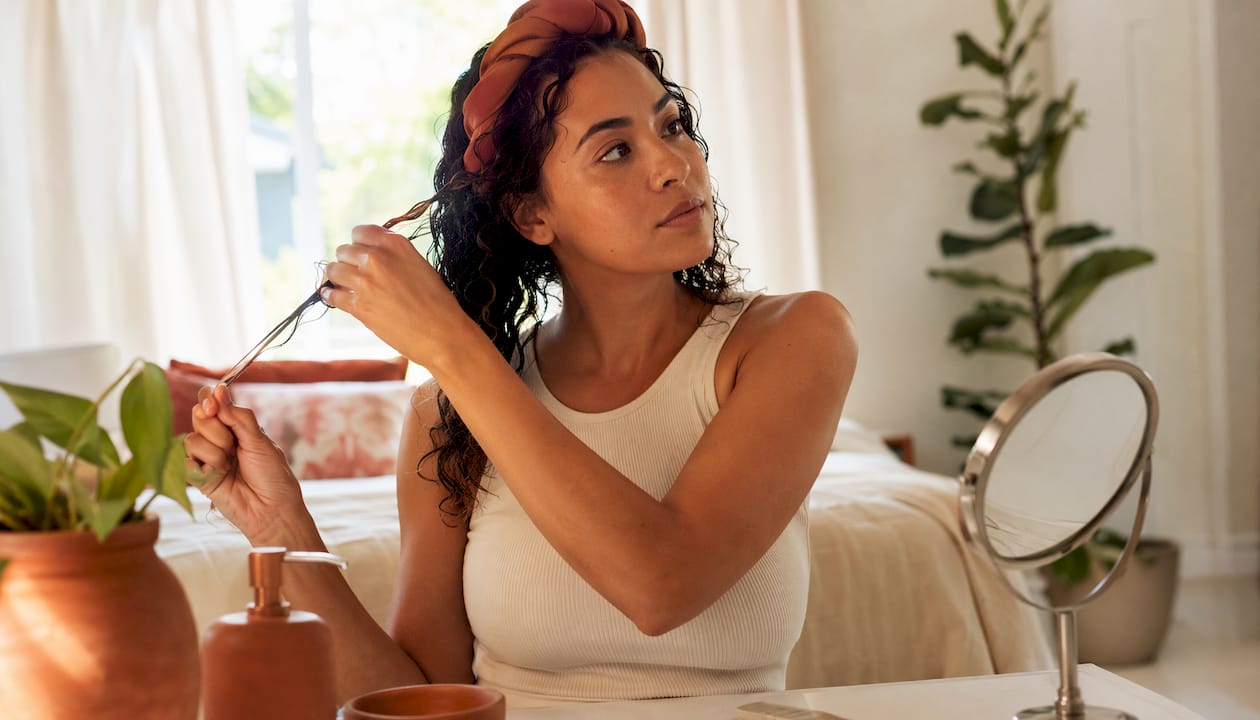
This is the lowest-effort method on the list. Setup takes a few minutes, and it’s comfortable enough to wear while going about your evening.
10. Bantu knots for spiral definition
Bantu knots involve twisting sections of damp hair and coiling them into small, flat buns pinned against the scalp. Smaller sections produce tighter spirals; larger sections give looser, more voluminous curls. Leave them in for at least six hours or overnight. When you unravel, separate with your fingers only. No brushing. Brushing breaks up the curl pattern immediately.
This method adapts to all hair types but delivers the most dramatic results on natural and textured hair.
11. Overnight styling as a daily habit
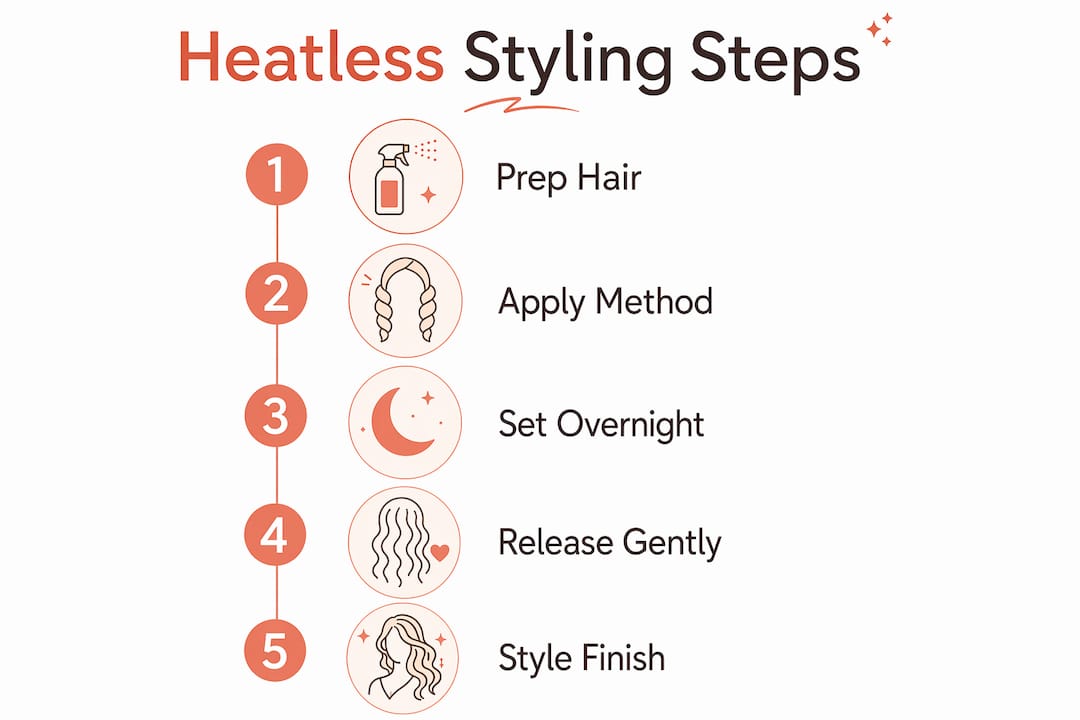
The most practical shift you can make is treating nighttime as styling time. Set your chosen method before bed, whether sock curls, flexi rods, braids, or Bantu knots, and wake up with a finished style. Heatless styling protects hair health by avoiding high-temperature damage, preserving shine, strength, and color vibrancy over time. That’s the real payoff of building a consistent overnight routine.
How to prep your hair for the best results
Preparation determines whether your style holds or falls flat by noon. Hair should be about 80–90% dry before wrapping. Too wet and the hair won’t set properly; too dry and it loses curl memory.
Key prep steps:
- Detangle with a wide-tooth comb, working from ends upward
- Apply a leave-in conditioner or lightweight mousse to damp hair before wrapping
- Match your product to your texture: lightweight mousse for fine hair, aloe-based gel for medium hair, and a richer cream for coarse strands
- Avoid excessive tension when wrapping; moderate tension is enough and protects against breakage
- Sleep on a silk or satin pillowcase, or wear a satin bonnet, to reduce friction and preserve the set overnight
Pro Tip: Patience is key: let your hair cool completely and fully memorize its shape before releasing any method. Rushing the reveal is the most common reason styles fall flat within an hour.
Which technique suits your hair type?
Not every method works equally well across textures. Matching the technique to your hair saves time and frustration.
- Straight hair: rope wraps and ribbon curls create subtle bends that straight hair holds well
- Wavy hair: braids and headband curls enhance existing texture without fighting it
- Curly or coily hair: banding elongates curls without losing bounce; twist outs and Bantu knots amplify natural pattern
- Thick or coarse hair: flexi rods and jumbo rods have enough grip to shape dense strands overnight
- Fine hair: braids and lightweight foam rollers work best; heavy creams or large rods can flatten fine hair
Time is the other variable. Overnight methods like sock curls, Bantu knots, and braids require zero morning effort. Headband curls and pin curls can work in two to four hours if you set them in the evening.
Joelcma’s team at Joel C Ma Hair Studio in La Jolla works with clients across every texture and regularly recommends building a no-heat styling routine as the foundation of long-term hair health. If you want a personalized recommendation for your specific texture and goals, a custom hair consultation is the fastest way to get there.

Key Takeaways
Sock curls are the most reliable all-around heatless method, but matching your technique to your hair texture and prep routine is what makes any no-heat style last.
| Point | Details |
|---|---|
| Sock curls lead the pack | They require no tools, take under five minutes, and deliver bouncy curls comfortable enough to sleep in. |
| Prep determines hold | Hair that is mostly dry sets best; pair with a leave-in conditioner or mousse suited to your texture. |
| Texture drives technique | Straight hair suits rope wraps; curly and coily hair benefits from banding, twist outs, or Bantu knots. |
| Overnight is the strategy | Setting styles before bed eliminates morning effort and gives curls the full drying time they need. |
| Satin protects overnight | A silk or satin pillowcase reduces friction and preserves the curl pattern through the night. |