
Hair Nourishment: Practical Methods for Stronger, Healthier Hair

Effective hair nourishment combines what you eat, what you apply to your strands, and how gently you treat them day to day. The most impactful starting points are straightforward: add protein-rich foods like salmon and eggs to your diet, work a nourishing oil such as coconut or jojoba into your weekly routine, and swap your regular shampoo for a sulfate-free formula. These three moves alone address the biggest gaps most people have in their hair care.
Key substances that feed hair from the inside out and the outside in include:
- Coconut oil and olive oil for deep conditioning and moisture retention
- Rosemary oil and jojoba oil for scalp health and oil balance
- Biotin (vitamin B7) and vitamin D to support follicle strength and the growth cycle
- Collagen and keratin to reinforce the structural core of each strand
- Ceramides to seal the cuticle and lock in moisture
The sections below cover each of these in detail, along with the research behind them and the daily habits that make the biggest difference.
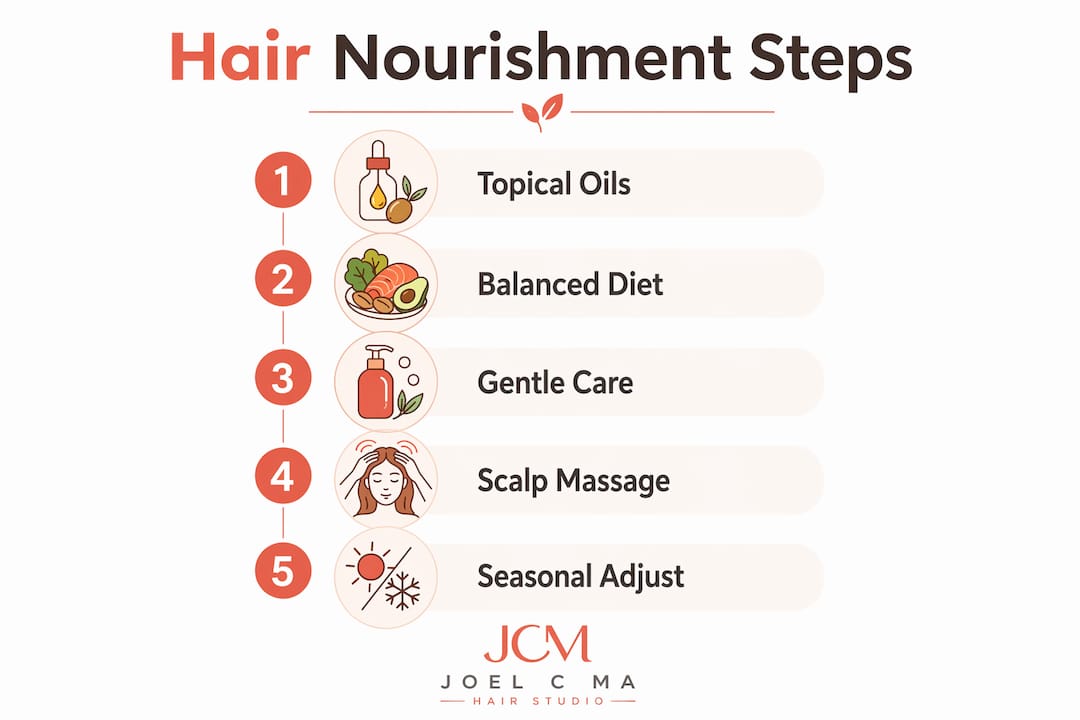
1. How to nourish hair topically with oils and the right products
Oils are the most direct way to feed your hair from the outside. Each one works differently, so matching the oil to your hair type matters more than people realize.
Coconut oil penetrates the hair shaft rather than just coating it, which means it actually reduces protein loss from inside the strand. It works best as a pre-wash treatment: apply it 30 minutes before shampooing, then rinse. Olive oil is heavier and better suited to thick or coarse hair that needs serious moisture. A small amount warmed between your palms and worked through dry ends once a week is usually enough.
Jojoba oil is the closest match to the scalp’s own sebum, which makes it unusually effective at balancing oil production without clogging follicles. It absorbs quickly and leaves no greasy residue, so it works for fine hair too. For scalp health specifically, diluted rosemary oil has a long track record. Traditional use and clinical reports both confirm its antibacterial properties, and it’s particularly useful for oily or flaky scalps. Always dilute it in a carrier oil like jojoba before applying directly to skin. You can find a deeper breakdown of how to select and use these options in Joelcma’s guide to nourishing hair oils.
Beyond oils, your shampoo choice shapes how much nourishment your hair actually retains. Sulfates strip natural oils aggressively, leaving hair dry and more prone to breakage. A sulfate-free formula cleans without that stripping effect. Use a clarifying shampoo once or twice a month to remove product buildup, but not more often.
- Apply shampoo to the scalp only, not the full length of your hair
- Use conditioner after every wash to restore moisture and ease detangling
- Look for conditioners that contain ceramides or proteins for added structural support
- Scalp serums with peptides or plant extracts can complement weekly oil treatments
Pro Tip: If you have fine hair, skip heavy butters and thick creams entirely. A lightweight silicone like dimethicone gives you protection and manageability without the weight that makes fine strands look flat.
2. What to eat for healthier hair: nutrients, foods, and supplements
Diet is where most people underinvest in their hair. Hair is one of the fastest-growing tissues in the body, and it needs a steady, generous supply of protein, vitamins, and minerals to keep up that pace. When the body senses a shortage, it redirects nutrients away from hair first.

Protein is the foundation. Each strand is made primarily of keratin, a structural protein that accounts for roughly 65–95% of the hair’s dry weight. Without enough dietary protein, strands become thin and brittle. Aim for protein at every meal: eggs, fish, poultry, legumes, and tofu all count.
Biotin (vitamin B7) supports keratin production. Egg yolks are one of the richest food sources, and whole grains, nuts, and seeds contribute as well. The clinical evidence on biotin supplementation is mixed — it helps most when there’s an actual deficiency, and true deficiency is uncommon. Dermatologist Dr. Shilpi Khetarpal recommends 3–5 mg of biotin daily for those who want supplemental support.
Vitamin D plays a direct role in the hair growth cycle. Dr. Khetarpal typically recommends at least 2,000 IUs daily, which you can get from fatty fish, fortified dairy, and sun exposure. Low vitamin D is one of the more common and correctable contributors to hair thinning.
- Salmon, mackerel, herring — omega-3 fatty acids, protein, vitamin D
- Eggs — biotin, protein, zinc
- Leafy greens (spinach, kale) — vitamin A, iron, vitamin C
- Shellfish (oysters, clams) — zinc, which the body needs to synthesize keratin
- Whole grains — selenium, B vitamins, biotin
- Citrus fruits, peppers, berries — vitamin C, which drives collagen production
- Lean meats and legumes — iron and protein
Iron deserves special attention. Red blood cells use iron to carry oxygen to follicles, and low iron is one of the most common nutritional drivers of hair shedding, particularly in people who menstruate or follow plant-based diets. Dark leafy greens, lentils, and red meat (in moderation) are the most accessible sources.
Omega-3 fatty acids reduce inflammation at the follicle level and support a healthy scalp. They appear in fatty fish, flaxseeds, chia seeds, and walnuts. One caveat worth knowing: high-dose omega-3 supplements may increase stroke risk in some people, so food sources are generally the safer route.
Oral collagen and ceramide supplementation have moved well beyond wellness trends into clinical territory. Daily supplementation with 450 mg of eggshell membrane collagen, rich in type I collagen and elastin, produced significant improvements in hair thickness and reduced breakage within 12 weeks in a placebo-controlled trial. Ceramide supplements restored the cuticle lipid barrier and increased hair density, with effects visible within 8–12 weeks in double-blind trials.
3. Gentle hair care practices that protect what you’ve built
The way you handle your hair physically can undo every nutritional and topical effort you make. Wet hair is at its most fragile state, and brushing it is one of the most common causes of mechanical breakage. The American Academy of Dermatology recommends using a wide-tooth comb on damp hair rather than a brush, working from ends upward to avoid snapping strands.
Apply conditioner from mid-length to ends only. Putting conditioner directly on the scalp weighs roots down and makes hair look flat and oily faster. For fine or straight hair, this boundary is especially important. If your hair is dry or curly, you can work conditioner through the full length, but still keep it off the scalp itself.
Habits that damage hair faster than most people expect:
- Excessive heat from flat irons, curling wands, and blow dryers on high settings
- Overwashing, which strips the scalp’s natural oils and triggers more oil production
- Tight hairstyles worn daily, which create traction stress on follicles over time
- Rough towel drying, which roughs up the cuticle and causes frizz and breakage
- Skipping heat protectant before any thermal styling tool
Hydration matters more than most hair care guides acknowledge. Registered dietitian Michelle Dodd recommends at least 64 ounces of water daily, noting that dehydration dries out the scalp and slows hair growth. A dry scalp can’t support healthy follicle function, no matter how good your topical routine is.
4. What the research actually says about hair nutraceuticals
The clinical evidence for targeted hair supplements has grown considerably in recent years, and the results are more specific than the general wellness claims you see on product labels.
A 6-month prospective study across 244 participants found that daily use of standardized hair growth nutraceuticals produced a measurable increase in hair shaft diameter, with corresponding gains in strength and reductions in breakage. Clinical trials showed diameter increases of 6–9% over six months, which translates directly to more scalp coverage and less shedding. Rated hair strength improved significantly across all participant groups by day 180.
The structural science behind these results centers on five macromolecules that hair depends on:
- Type I collagen and elastin reinforce the dermal papilla’s extracellular matrix, sustaining the signals that keep follicles in the growth phase
- Keratin hydrolysates replenish the cortical protein that forms each strand’s structural core, reinforcing the disulfide bonds that give hair its tensile strength
- Ceramides act as the “glue” between cuticle cells, sealing the lipid barrier and improving moisture retention
- Melanin provides UV protection for the hair shaft, preserving keratin integrity and color stability
Keratin hydrolysates specifically showed a 30–50% decrease in hair loss in randomized controlled trials, alongside measurable gains in tensile strength. That’s a meaningful result, though it’s worth noting that most trials use specific formulations at specific doses, not the generic keratin listed on a drugstore conditioner.
The honest picture on supplements is that they work best when you have a deficiency or an elevated demand on your follicles. Too much of certain nutrients, particularly vitamin A and iron, can actually accelerate hair loss. Dr. Khetarpal advises working with a dermatologist before starting any supplement protocol, especially if you’re dealing with significant shedding. Ongoing research continues to refine dosing and combination strategies, and the evidence base is still evolving.
5. Why scalp care is the foundation of hair nourishment
Every strand grows from a follicle embedded in the scalp, so the condition of that skin directly determines what your hair can do. A congested, inflamed, or dry scalp restricts follicle function before a strand even emerges. Treating scalp care as a separate priority from hair care is one of the most practical shifts you can make.
Cleansing the scalp regularly removes dead skin cells, excess sebum, and product buildup that can block follicles. Shampoo belongs on the scalp, not the length of your hair. Massaging it in with your fingertips (not nails) for a minute or two also stimulates circulation, which supports nutrient delivery to follicles.
For dry or flaky scalps, a dedicated scalp oil or serum applied between washes can restore the lipid barrier without requiring a full wash. Jojoba oil is particularly effective here because it mimics the scalp’s own sebum. If you’re dealing with persistent dryness, understanding the underlying cause matters. A detailed look at dry scalp causes and care can help you distinguish between simple dehydration and conditions like seborrheic dermatitis that need a different approach.
Scalp massage with diluted rosemary oil once or twice a week is one of the more accessible and well-supported practices for scalp health. It addresses both circulation and the antibacterial environment that keeps follicles clear.
6. How seasonal changes affect your hair and what to do about them
Hair doesn’t behave the same year-round, and adjusting your routine to match the season prevents a lot of unnecessary damage and dryness.
In winter, cold air outside and heated air indoors both strip moisture from the hair shaft. Static increases, ends become brittle, and the scalp often gets drier. The fix is straightforward: add a weekly deep conditioning treatment, switch to a more moisturizing shampoo, and consider a leave-in conditioner as a daily layer of protection. Covering hair with a satin-lined hat rather than a rough wool one also reduces friction damage.
Summer brings the opposite set of problems. UV exposure degrades keratin and fades color, while chlorine from pools and salt from the ocean both strip the cuticle. Rinse hair with fresh water before swimming to reduce how much chlorine or salt it absorbs. A UV-protective hair product or a light oil applied before sun exposure creates a barrier. Washing more frequently in summer is fine, but pair it with a conditioner every time to replace what the extra cleansing removes.
Spring and fall are good times to reassess your routine. Seasonal shedding is a real phenomenon, with many people noticing more hair in the shower drain during these transition months. This is largely normal and tied to the hair growth cycle, but it’s also a good prompt to check your vitamin D levels and protein intake, both of which tend to slip during seasonal transitions.
7. How stress affects your hair and what actually helps
Stress is one of the most underestimated drivers of hair thinning, and the mechanism is direct. Acute or chronic stress can push a large number of follicles into the telogen (resting) phase simultaneously, a condition called telogen effluvium. The result is diffuse shedding that typically appears two to three months after the stressful event, which makes the connection easy to miss.
Managing stress for hair health isn’t about eliminating pressure entirely. It’s about giving your body the recovery tools it needs. Regular aerobic exercise reduces cortisol levels and improves circulation, including to the scalp. Sleep is where cellular repair happens, and consistently getting less than seven hours disrupts the hormonal environment that supports hair growth. Practices like meditation, yoga, or even a consistent wind-down routine before bed have measurable effects on cortisol over time.
Nutritionally, stress depletes certain micronutrients faster, particularly zinc, vitamin C, and B vitamins. If you’re going through a high-stress period, paying closer attention to those specific nutrients in your diet makes sense. Joelcma’s resource on preventing hair loss naturally covers the overlap between stress management and follicle health in more detail.
The reassuring part: telogen effluvium is almost always temporary. Once the stressor resolves and nutritional support is in place, regrowth typically follows within a few months.
Key Takeaways
Consistent hair nourishment requires combining a protein-rich diet, targeted topical oils, gentle handling, and scalp care to build hair that is measurably stronger and more resilient over time.
| Point | Details |
|---|---|
| Diet drives hair structure | Keratin makes up 65–95% of hair’s dry weight; adequate protein, iron, and biotin are non-negotiable for strong strands. |
| Oils work best when matched to hair type | Coconut oil penetrates the shaft; jojoba balances scalp oil; rosemary oil supports scalp health when diluted. |
| Clinical supplements show real results | A 6-month study of 244 participants found increases in hair shaft diameter of 6–9% with standardized nutraceuticals, along with improved hair strength and reduced breakage. |
| Scalp health precedes hair health | Follicle function depends on a clean, well-moisturized scalp; shampoo belongs on the scalp, not the hair length. |
| Stress triggers measurable shedding | Telogen effluvium from stress is temporary; managing cortisol and replenishing zinc and B vitamins supports recovery. |
Ready to put nourished, healthy hair together with a cut or color that actually suits it? The team at Joelcma brings over 25 years of expertise to every appointment, from personalized styling consultations to precision haircuts tailored to your texture and goals. Book your visit at Joel C Ma Hair Studio in La Jolla and let your hair reflect the care you’ve put into it.