
Corrective Hair Color Near Me: Fix It Right
TL;DR:
- Corrective hair color repairs structural pigment issues that standard dyeing cannot resolve and requires multiple sessions. A professional consultation, strand testing, and transparent planning are essential to achieve safe and lasting results. Choosing a specialist salon with clear communication minimizes risks like damage and increases the chance of successful correction.
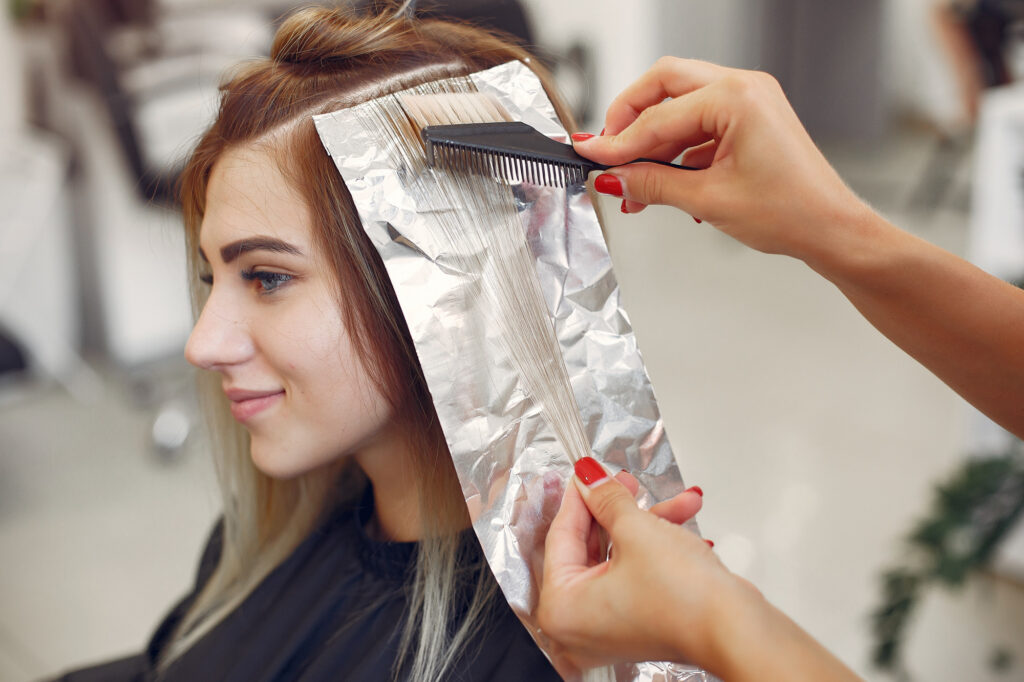
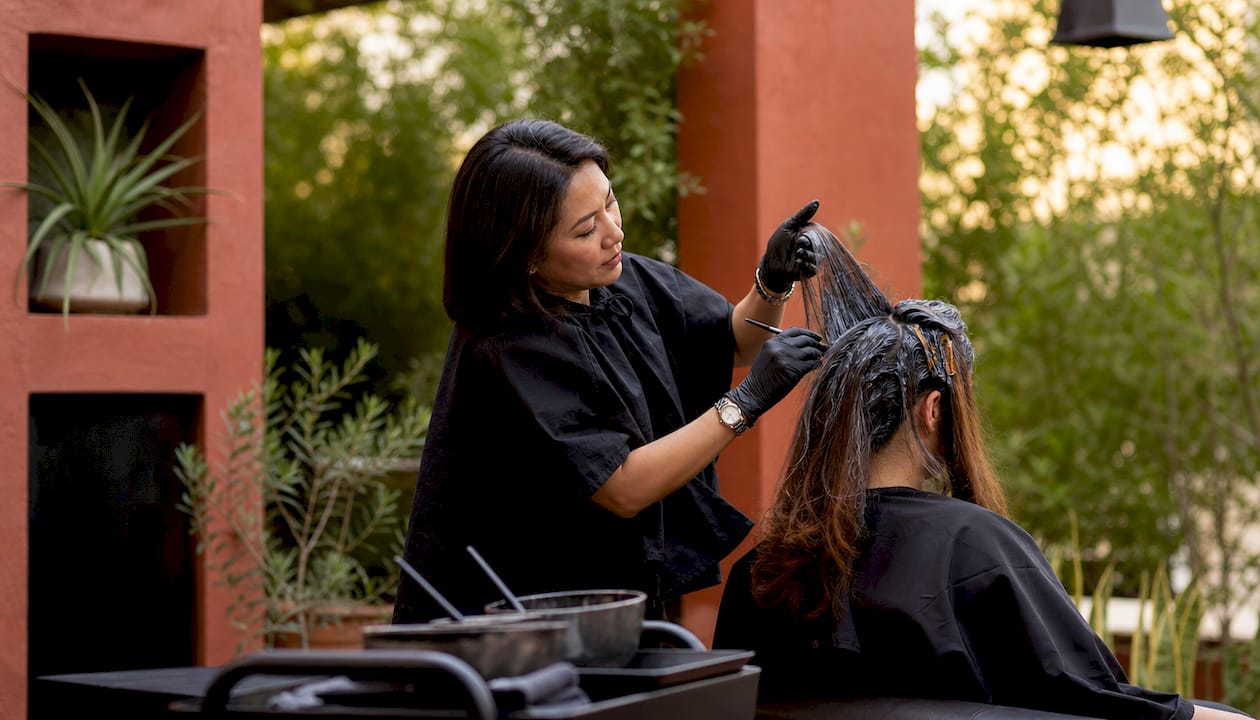
Corrective hair color near me refers to professional salon services designed to fix hair color problems, including brassiness, patchiness, uneven tones, and box-dye damage, that standard coloring methods cannot resolve. The industry term for this work is “color correction,” and it is a specialized technical service distinct from a routine color appointment. Unlike a fresh balayage or a root touch-up, color correction addresses structural pigment issues deep within the hair shaft. It requires advanced color theory, a trained colorist, and almost always more than one session.
Why professional consultation is the first step in corrective hair color
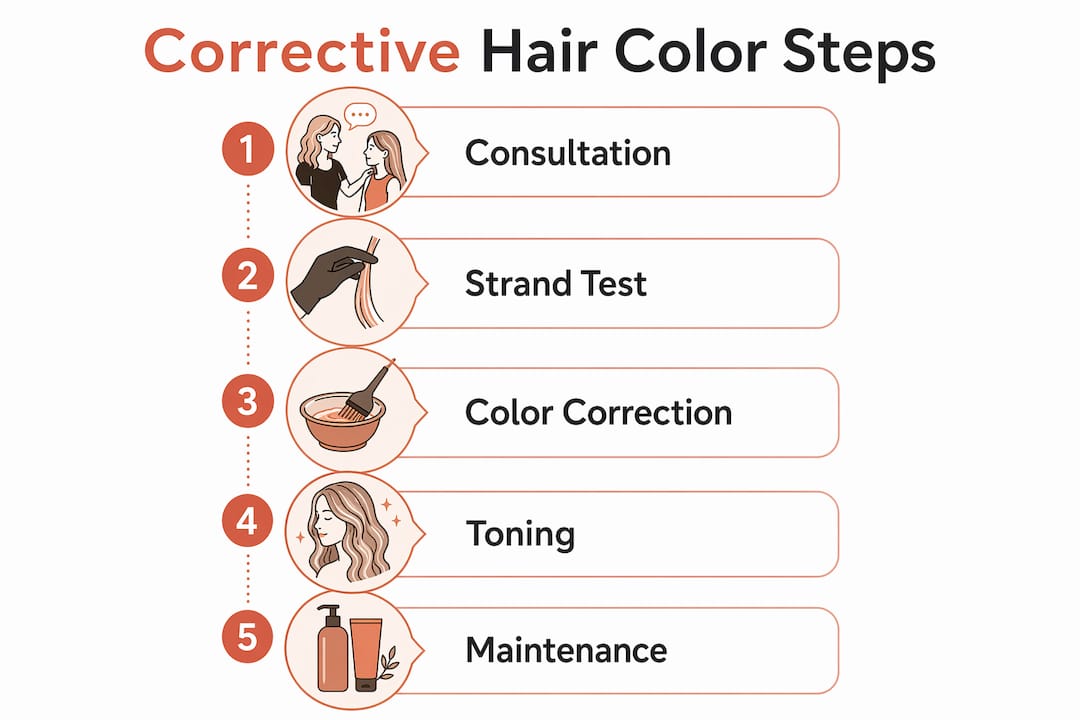
A consultation is not optional for color correction. It is the diagnostic foundation the entire process depends on. A trained colorist uses the consultation to assess your hair history, current condition, and the specific nature of the color problem before any chemical touches your hair.
During that assessment, three things happen:
- Hair history review. The colorist asks about previous chemical services, box dye use, and any treatments like keratin or relaxers. Each of these affects how your hair will respond to corrective chemicals.
- Strand testing. A strand test predicts hair behavior before full application, allowing the colorist to observe how previously treated or damaged hair reacts to lifting agents. Skipping this step is how breakage happens.
- Session planning. Complex corrections demand 2–3 appointments spaced out over weeks. A single-visit repair is unrealistic for severe cases and risks causing more damage than it fixes.
Pricing reflects this complexity. Basic corrections start around $250, while complex multi-session cases, such as box-dye removal or drastic lightening, often exceed $500. Knowing this upfront prevents frustration and helps you plan realistically.
Pro Tip: Ask your colorist to walk you through the session plan in writing before you commit. A good salon will map out the number of appointments, the goal for each one, and the estimated total cost.
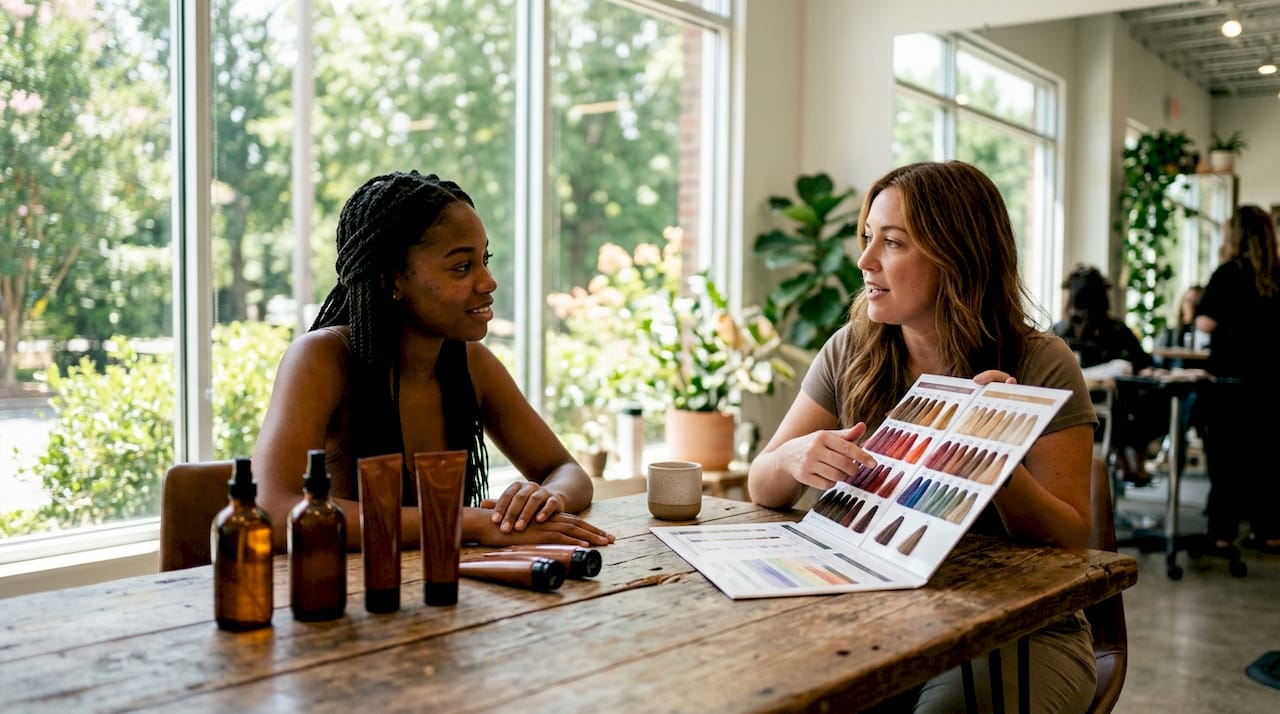
Transparent pricing and session mapping are becoming the industry standard, and salons that offer this upfront are the ones worth booking.
How corrective color differs from regular coloring
Most people assume color correction is just a stronger version of a regular color appointment. It is not. Applying more dye without addressing pigment structure and depth complicates later corrections and risks serious damage. Color correction works on the hair’s underlying pigment layers, not just the surface.
The technical difference comes down to what the colorist is actually fixing:
- Banding. Uneven color bands appear when multiple dye applications overlap at different levels. Fixing banding requires blending those layers without stripping the hair.
- Porosity imbalance. Over-processed hair absorbs color unevenly. Corrective work addresses porosity before applying new color.
- Unwanted tones. Advanced color theory uses blue-based formulas to neutralize orange and purple-based formulas to neutralize yellow. This is not guesswork. It is precise pigment science.
- Box-dye build-up. Box dyes contain heavy metallic salts that coat the hair shaft. Removing them safely requires a different approach than lifting salon color.
A common misconception is that purple shampoo or a toner can fix these problems. Purple shampoo only neutralizes yellow tones and is completely ineffective against orange or red hues. Toners shift the surface shade only. Neither product touches the underlying structural issues that cause uneven or brassy color.
Pro Tip: If your hair has been colored with box dye more than twice, tell your colorist before the consultation. Box-dye build-up is one of the most complex corrective scenarios, and disclosing it early changes the entire treatment plan.
Rushing a correction, or attempting it at home, creates “hot roots,” uneven lift, and in severe cases, breakage. The advanced color techniques a professional colorist uses are not replicable with retail products.
Common scenarios that require professional color correction
Color correction covers a wide range of problems. Understanding which category your issue falls into helps you have a more productive consultation and set realistic expectations.
| Scenario | What causes it | Professional approach |
|---|---|---|
| Brassiness after highlights | Underlying warm pigment not fully lifted | Toning with blue or purple-based formulas |
| Patchy or uneven color | DIY application or overlapping salon visits | Color blending and rebalancing across sections |
| Box-dye build-up | Metallic salts from repeated at-home dye | Careful removal process followed by rebalancing |
| Over-processed or damaged hair | Excessive lifting or chemical overlap | Bond-building treatments before any color work |
| Uneven roots or “hot roots” | Rushed single-session lifting | Phased lightening across multiple appointments |
Common corrective scenarios include brassiness, patchy color, and box-dye build-up, each requiring a different specialized technique. No two corrections are identical, which is why a personalized plan matters more than a standard service menu.
For drastic changes, such as going from a level 4 dark brown to a level 9 blonde, lifting hair multiple levels in one session damages integrity. Expert colorists prioritize hair health by spacing out the lift across multiple appointments. The corrective process commonly involves multi-step treatments such as clarifying, bond-building, toning, and lowlights to restore a healthy color balance.
After correction is complete, maintenance matters just as much as the treatment itself. Color-safe shampoos, regular toning gloss appointments, and heat protection all extend the life of corrective work. Skipping aftercare is the fastest way to end up back in the same chair with the same problem.
How to find the best corrective hair color salon near you
Searching for corrective hair color near me returns a lot of results. Not every salon that appears offers true color correction expertise. Here is how to filter for the ones that do.
- Look for colorists who specialize in correction. A salon that lists color correction as a dedicated service, not just a footnote, is more likely to have trained staff and the right products.
- Prioritize transparent pricing. Salons that provide clear, fixed pricing or transparent session plans before service begins prevent surprise costs and signal professionalism.
- Book a consultation before committing. A reputable salon will not quote you a final price without seeing your hair first. If a salon skips the consultation, walk away.
- Read reviews carefully. Look for reviews that mention specific color problems and how the salon resolved them. Generic five-star reviews tell you less than a detailed account of a box-dye removal.
- Ask the right questions. Before booking, ask how many sessions your correction will likely require, what the plan is for each session, and what happens if your hair does not respond as expected.
Honest, upfront consultations are the clearest signal that a salon takes color correction seriously. Salons that rush you into a chair without a plan are the ones most likely to leave you with a worse problem than you started with.
For clients in the San Diego area, Joelcma offers luxury color corrections in La Jolla with in-depth consultations and personalized session planning built into every corrective service. The studio’s 25-plus years of experience means the colorists have seen and fixed virtually every color scenario.
Key Takeaways
Professional color correction requires a structured, multi-session approach grounded in advanced color theory, strand testing, and transparent planning to fix hair color problems safely and permanently.
| Point | Details |
|---|---|
| Consultation is non-negotiable | Every correction starts with a full hair history review and strand test before any chemicals are applied. |
| Multiple sessions are standard | Complex corrections typically require 2–3 appointments spaced out to protect hair health and integrity. |
| Purple shampoo is not a fix | Toners and purple shampoo address surface tone only and cannot correct structural pigment or porosity issues. |
| Pricing reflects complexity | Basic corrections start around $250; multi-session or box-dye removal cases often exceed $500. |
| Salon selection matters | Choose salons that specialize in correction, offer transparent pricing, and require a consultation before booking. |
What I’ve learned from watching clients skip the consultation
The single most expensive mistake I see clients make is skipping the consultation and booking a correction appointment based on a photo they found online. Color correction does not work that way. The photo shows a result. It does not show the three sessions, the bond-building treatments, or the two months of careful maintenance that got there.
Clients are often surprised that corrective color cannot be completed in a single session without sacrificing hair health. That surprise almost always comes from a lack of honest communication at the start. The best corrective colorists I have seen work are the ones who spend as much time on the consultation as on the actual service.
The other pattern I notice is clients who have tried to fix the problem themselves first. Purple shampoo, box dye in a “close enough” shade, a toner from a beauty supply store. Each of those attempts adds a layer of complexity to the correction. What might have been a two-session fix becomes a four-session process.
My advice is direct: find a salon that requires a consultation, gives you a written session plan, and is honest about what your hair can handle right now. If a colorist promises to fix everything in one visit without seeing your hair first, that is a red flag, not a bargain.
— Juiced
Joelcma’s approach to professional color correction
Joelcma at Joel C Ma Hair Studio in La Jolla brings over 25 years of expertise to every color correction service. The studio’s approach starts with a thorough consultation, where colorists assess your hair history, run strand tests, and build a phased plan tailored to your specific color issue.

Whether you are dealing with brassiness after a balayage, uneven patches from a DIY attempt, or years of box-dye build-up, Joelcma’s team has the training and the tools to fix it correctly. Pricing is transparent from the first appointment, so you know exactly what to expect before any work begins. After your correction, the studio’s guide to salon shampoos for colored hair helps you protect your results at home. To get started, book a consultation at joelcma.com and let the team build a plan that works for your hair.
FAQ
What is corrective hair color?
Corrective hair color, also called color correction, is a professional salon service that fixes structural pigment issues such as brassiness, uneven tones, and box-dye build-up that standard coloring cannot resolve. It uses advanced color theory and often requires multiple sessions.
How many sessions does color correction take?
Most complex corrections require 2–3 appointments spaced out over several weeks to protect hair health. Single-session fixes are only realistic for minor tonal adjustments.
How much does corrective hair color cost?
Basic one-session corrections start around $250, while complex cases involving box-dye removal or drastic lightening often exceed $500. Pricing depends on the severity of the issue and the number of sessions required.
Can I fix hair color problems at home?
At-home products like purple shampoo and toners address surface tone only and cannot fix underlying pigment or porosity issues. Attempting a full correction at home risks breakage, uneven results, and more complex problems for a professional to fix later.
What should I ask during a color correction consultation?
Ask how many sessions your correction will require, what the goal is for each appointment, and what the total estimated cost will be. A reputable colorist will also explain what your hair can and cannot handle at this stage of the process.
Recommended
- Color Correction Hair Salon: Fix Any Hair Color Mistake – Joel C Ma Hair Studio
- Hair Color Correction 101: What You Need to Know
- Hair Correction Near Me: Your La Jolla Expert Guide – Joel C Ma Hair Studio
- Luxury Hair Color Corrections in La Jolla: Expert Solutions for Every Style – Joel C Ma Hair Studio