
Hair Coloring Definition: What Every Type Really Means
TL;DR:
- Hair coloring is a complex chemical process involving different formulations, techniques, and hair characteristics that produce varying results. Understanding solvent chemistry, hair layers, and terminology like balayage or toner helps clients communicate effectively and manage expectations. Personal factors such as porosity and maintenance habits significantly influence long-term color outcomes and durability.
Most people think they know what hair coloring means until they sit down in a salon chair and realize they have no idea what the stylist is actually describing. The hair coloring definition goes far beyond “putting dye on your hair.” It covers a spectrum of chemical processes, application techniques, and formulation types that produce dramatically different results. Whether you’re considering your first color service or trying to decode the difference between balayage and ombre, understanding the hair coloring meaning at a foundational level changes how you choose services, communicate with stylists, and maintain your results.
Table of Contents
- Key takeaways
- The hair coloring definition, explained scientifically
- Understanding hair color types
- Professional techniques and salon terminology
- What affects your hair color results
- My honest take on what beginners get wrong
- Ready to apply what you’ve learned?
- FAQ
Key takeaways
| Point | Details |
|---|---|
| Hair coloring is a process, not a product | It involves chemical or semi-chemical formulas that either deposit color or lift and deposit simultaneously. |
| Not all “temporary” colors behave the same | True temporary color washes out after one shampoo; semi-permanent lasts 6 to 8 weeks. |
| Chemistry determines outcome | Whether a formula penetrates the cortex or coats the cuticle directly affects how dramatic and long-lasting the result will be. |
| Salon terminology affects what you get | Words like balayage, toner, and demi-permanent have specific meanings that determine your final result. |
| Porosity shapes how color performs | Hair porosity controls how quickly your hair absorbs and releases color, which impacts vibrancy and fade speed. |
The hair coloring definition, explained scientifically
Before you can understand what separates a gloss from a glaze or a tint from bleach, you need to understand what hair coloring actually does to the hair strand itself.
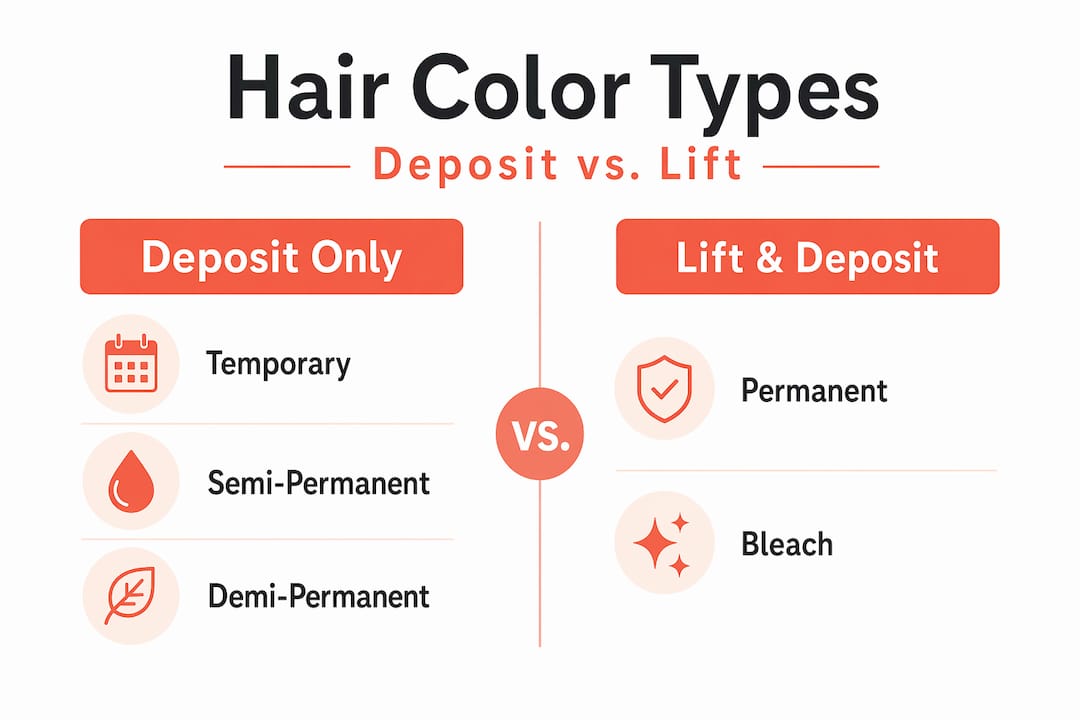
At its most precise, hair coloring is the process of changing or enhancing natural hair pigment through chemical or semi-chemical formulas, using either deposit-only or permanent lift-and-deposit methods. That single sentence contains a lot of information worth unpacking.
Your hair strand has two key layers relevant to color: the cuticle and the cortex. The cuticle is the outer protective shell, made of overlapping scale-like cells. The cortex sits underneath and contains melanin, the natural pigment that gives your hair its color. Eumelanin produces brown and black tones; pheomelanin produces red and yellow tones. The ratio of these two determines your natural shade.
“Dyes are colored substances soluble in solvents that chemically bind to the material being colored, differing from pigments which remain insoluble.” Dye chemistry is what makes hair colorants work at a molecular level. Hair colorants use soluble dye molecules small enough to either penetrate the cortex or bond to the cuticle surface.
Permanent color lifts and changes pigment inside the hair shaft, while deposit-only formulas coat the outside surface. That distinction is the entire foundation of how colorists predict results, regrowth patterns, and damage risk.
Pro Tip: If a colorist mentions “opening the cuticle,” they are describing an alkaline reaction, usually from ammonia, that expands the hair shaft so dye molecules can get inside. This is what makes permanent color permanent.
Understanding hair color types
This is where most of the confusion lives. The phrase “hair color types” gets used loosely, but there is a specific classification system that professionals use to describe duration, chemistry, and result.
Temporary color
True temporary color washes out after one shampoo. Think spray-on color for Halloween, colored hair mascara, or wash-out mousses. These products sit on top of the cuticle without bonding to it. They are water-soluble and not designed for long-term wear. They do not lift or alter your natural pigment at all.
Semi-permanent color
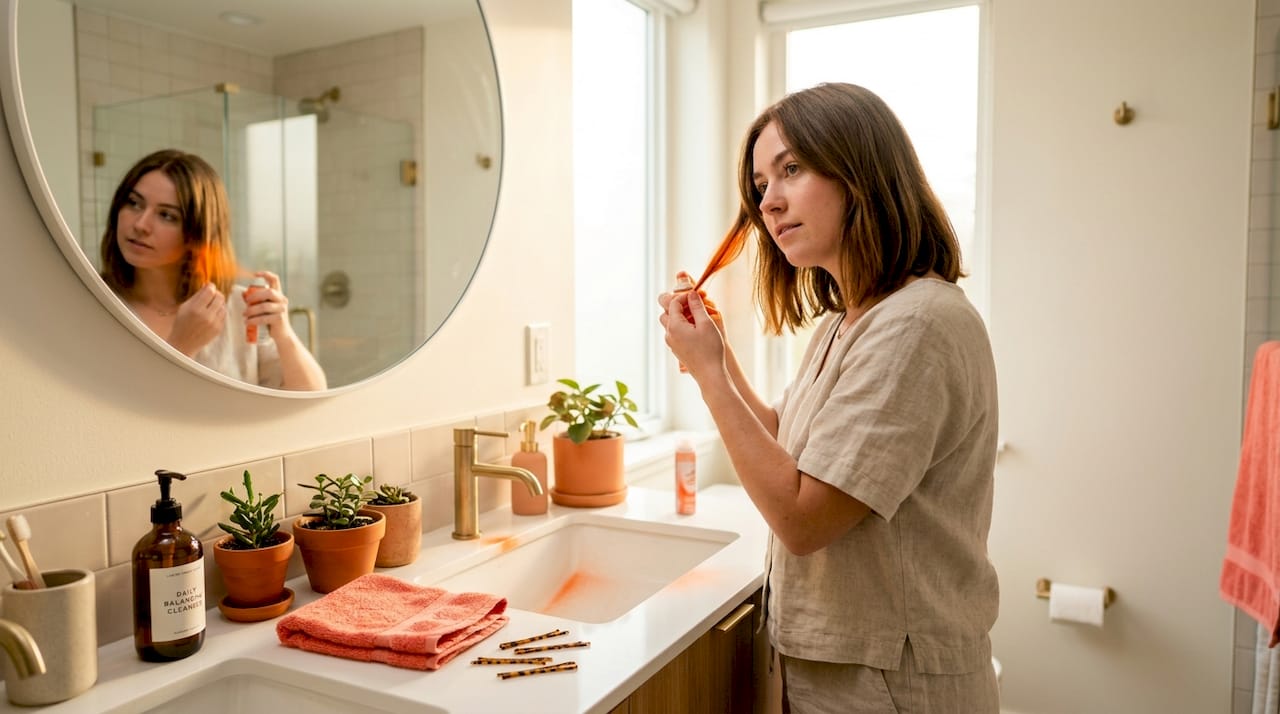
This is where consumer confusion spikes. Many people call semi-permanent color “temporary” because it fades. It is not. Semi-permanent color typically lasts 6 to 8 weeks depending on hair characteristics like porosity, washing frequency, and starting condition. It deposits color without lifting the natural pigment, which means it cannot make dark hair dramatically lighter. It works beautifully for adding vibrancy, toning, or refreshing existing color.
Demi-permanent color
Demi-permanent sits between semi-permanent and permanent. It uses a low-volume developer (usually 10 volume) and no ammonia. It deposits color with mild longevity, fades more gradually than permanent color, and adds minimal stress to the hair shaft. Colorists often use demi-permanent formulas for glossing services, toning after bleach, and blending gray without committing to full permanent coverage.
Permanent color
Permanent color uses both ammonia and peroxide to open the cuticle, lift existing melanin, and deposit new color molecules into the cortex. The result does not wash out. It grows out. This is why regrowth lines are visible after several weeks. Permanent color is the only option capable of significant lightening without bleach, and it creates the most dramatic, long-lasting transformations.
Here is a quick comparison of the four types:
| Type | Ammonia | Developer | Duration | Lifts natural pigment? |
|---|---|---|---|---|
| Temporary | No | No | 1 wash | No |
| Semi-permanent | No | No | 6 to 8 weeks | No |
| Demi-permanent | No | Low (10 vol) | 4 to 6 weeks | Slightly |
| Permanent | Yes | Medium to high | Until grown out | Yes |
Key things to remember when choosing:
- Temporary color is ideal for events, photo shoots, or testing a shade before committing.
- Semi-permanent color suits people who want low-maintenance color that naturally fades.
- Demi-permanent is the go-to for glossing, toning, and gray blending with less commitment.
- Permanent color is best for significant shade changes, full gray coverage, or lifting dark hair lighter.
Professional techniques and salon terminology
Understanding the hair dyeing process means nothing if you cannot speak the language your stylist uses. Salon terms like base color, toner, and balayage describe specific manipulations of hair color, and confusing them leads to mismatched expectations.
Here are the key terms you should know before your next appointment:
- Base color: A single shade applied from root to tip to create uniform color. Usually permanent. Common for full gray coverage or dramatic color changes.
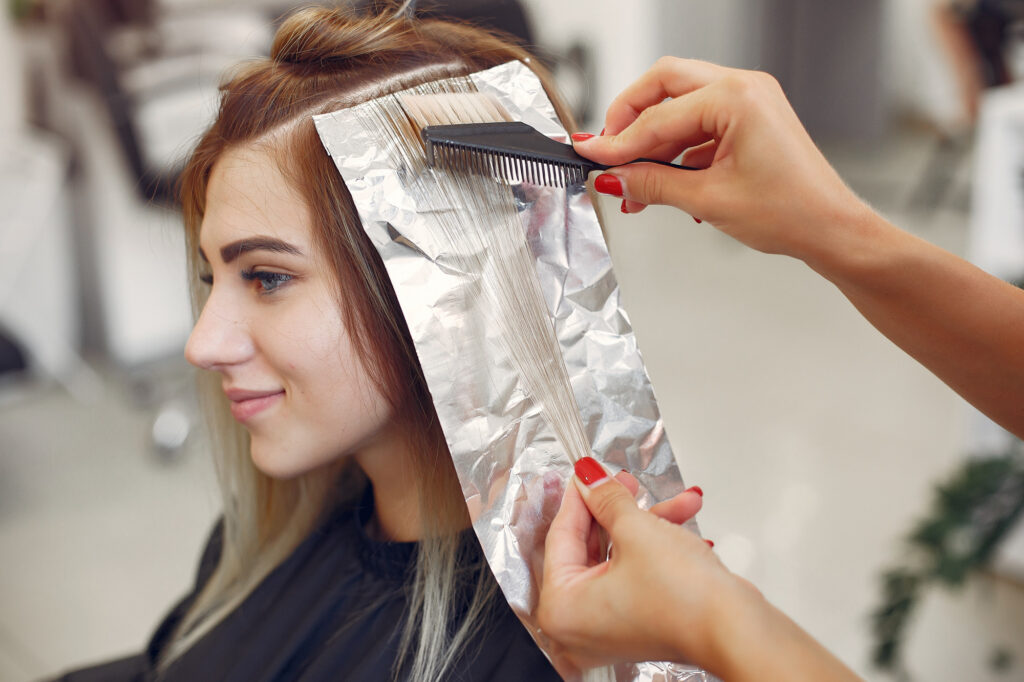
- Highlights: Sections of hair lightened with bleach or high-lift color to create contrast and dimension. Applied with foil or a freehand brush.
- Lowlights: The opposite of highlights. Darker pieces added for depth. Often used to create natural-looking dimension.
- Balayage: A French freehand painting technique that creates soft, sun-kissed color with gradual fade. No foils, no regrowth lines. The result looks more natural than traditional highlights.
- Ombre: A gradient effect from darker roots to lighter ends. More dramatic than balayage, with a visible shift in tone.
- Toner: A deposit-only formula used after lightening to neutralize unwanted warmth (brassiness) or shift the tone of bleached hair to ash, silver, or platinum.
The difference between a single-process and a multi-process service is also worth knowing. A single-process involves one color application, typically a base color. A multi-process service involves two or more steps, such as bleach followed by toner, or highlights combined with a base. Multi-process services take longer, cost more, and require more skill to execute without damage.
Pro Tip: Before your appointment, pull up reference photos that show both the color and the technique. Saying “I want balayage” tells your stylist the method. Showing a photo tells them the target result. Both together give your colorist the full picture.
Natural and plant-based hair dyes, like henna, also fall under the hair coloring definition. They deposit color without chemistry but come with their own restrictions. Henna, for example, can interfere with chemical color services applied over it months later.
What affects your hair color results
Two people can use the exact same product with completely different outcomes. The hair dyeing process is not a one-size-fits-all equation. Several personal and behavioral factors influence how your color looks, how long it lasts, and how it fades.
-
Hair porosity. Hair porosity is how readily your hair absorbs and releases moisture, and it applies directly to color. High-porosity hair (often chemically processed or heat-damaged) absorbs color fast but releases it just as fast, leading to quicker fading. Low-porosity hair resists color absorption and may require longer processing times or stronger formulas.
-
Washing frequency. Every shampoo strips a small amount of color from the hair shaft. Washing daily is one of the fastest ways to shorten the life of a semi-permanent or demi-permanent service. Switching to every-other-day or using dry shampoo between washes can add weeks to your color’s life.
-
Water quality. Hard water contains minerals that build up on the hair shaft and accelerate color fading. If you live in an area with hard water and notice your color goes brassy fast, a chelating shampoo can help.
-
Product choice. Sulfate-heavy shampoos are designed to strip oils and residue. They do the same to hair color. Color-safe or sulfate-free formulas are gentler on the cuticle and preserve vibrancy longer. Using a color-protecting shampoo is one of the simplest and most effective maintenance habits you can adopt.
-
Heat exposure. Direct sun, hot showers, and heat styling all degrade color molecules over time. UV rays are particularly damaging to red and copper tones, which fade noticeably faster than ash or brown shades.
Matching your color type to your lifestyle matters as much as matching it to your aesthetic goal. Someone who washes their hair daily and swims regularly is not a good candidate for semi-permanent color and should consider permanent formulas with better staying power.
My honest take on what beginners get wrong
I’ve watched clients come in disappointed more times than I can count, and the root cause is almost always a mismatch between what they thought they were getting and what the product actually does. The biggest culprit is the temporary-versus-semi-permanent confusion. Many consumers treat all temporary colors as equivalent, applying a semi-permanent formula before a beach vacation expecting it to be gone by Monday. It won’t be.
The second mistake I see is underestimating the deposit versus lift distinction. People with dark hair who want to go blonde sometimes choose semi-permanent color based on the photo on the box. Semi-permanent cannot lift dark pigment. Understanding that deposit-only versus lift-and-deposit determines whether dramatic lightening is even possible would save people a lot of frustration and money spent on color corrections.
My advice to anyone new to hair color: learn what type of formula you’re using before you apply it. That one step prevents 80% of the disappointments I see in consultation.
— Joelcma
Ready to apply what you’ve learned?
The knowledge is only useful if it guides you toward better decisions, whether at the drugstore or in the salon.

At Joelcma, the team at Joel C Ma Hair Studio in La Jolla has spent over 25 years helping clients navigate exactly this kind of decision. From color corrections to first-time balayage, every service starts with a thorough consultation. If you want to know which formula suits your hair condition and color goals, browse the salon’s full services to see what’s available. For specific product questions about keeping your color vibrant between appointments, the best shampoos for colored hair guide is a strong starting point. You can also explore the hair coloring FAQs to get answers to the most common questions from clients just like you.
FAQ
What is the basic hair coloring definition?
Hair coloring is the process of changing or enhancing natural hair pigment using chemical or semi-chemical formulas that either deposit color onto the hair shaft or lift existing pigment and deposit new color simultaneously.
How long does semi-permanent hair color actually last?
Semi-permanent color lasts approximately 6 to 8 weeks, depending on hair porosity, washing frequency, and overall hair condition. It is not the same as truly temporary color, which washes out after a single shampoo.
What is the difference between balayage and highlights?
Highlights use foil to isolate sections of hair for uniform lightening from root to tip, while balayage is a freehand painting technique that creates a softer, more gradual lightening effect with no distinct regrowth line.
Can I use permanent color to go lighter without bleach?
Permanent color with a high-volume developer can lift hair up to four shades lighter, but it cannot achieve platinum or very light blonde results on dark hair without bleach. Bleach breaks down melanin more completely than any dye formula alone.
How does hair porosity affect color results?
High-porosity hair absorbs color quickly but also loses it faster, leading to faster fading. Low-porosity hair may resist color absorption and require longer processing. Understanding your porosity level helps you choose the right formula and predict how your color will age.