
How a custom hair consultation delivers your best look
TL;DR:
- Most salon visits lack a genuine consultation and do not treat hair as a unique project.
- A true custom hair consultation involves in-depth analysis, personalized recommendations, and thorough documentation, enhancing results and client trust.
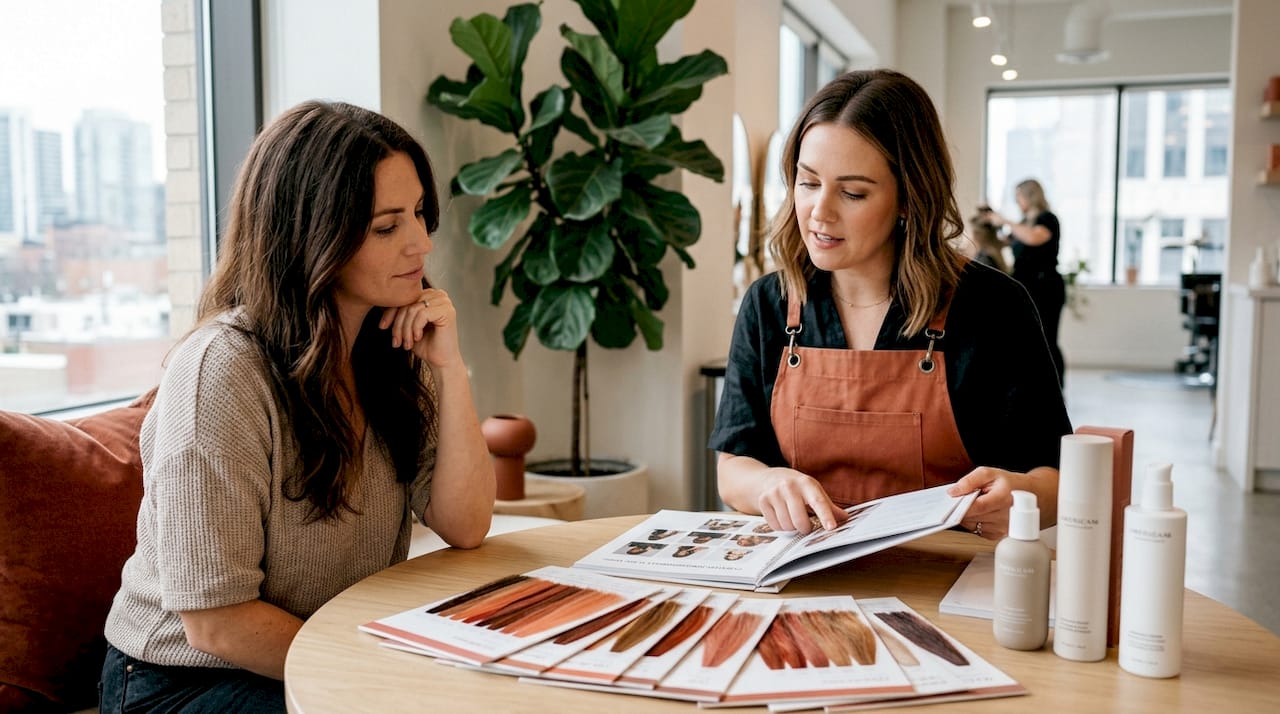
You sit down in the salon chair, hoping for something genuinely tailored to you. Instead, the stylist glances at your hair for thirty seconds, asks one vague question, and reaches for the scissors. Sound familiar? You are far from alone. Research from InspoLab reveals that while virtually every client expects a real consultation, only 9% feel they actually receive one. This article walks you through every step of a premium, personalized hair consultation so you know exactly what to expect, what to demand, and how to walk out with the style you truly envisioned.
Table of Contents
- What sets a custom hair consultation apart
- What to prepare: Intake forms, inspiration, and expectations
- Expert analysis and tactile assessment: The stylist’s process
- Tailoring recommendations: Digital tools and personalized care
- Verifying results and keeping your style on track
- Why most consultations fail, and how you can demand better
- Transform your experience with a La Jolla consultation
- Frequently asked questions
Key Takeaways
| Point | Details |
|---|---|
| True customization matters | A structured, expert-led consultation leads to a dramatically better, more personalized hair result. |
| Preparation pays off | Bringing inspiration and information ensures a productive consultation with fewer surprises. |
| Technique and technology combine | Top salons use both tactile analysis and high-tech tools for personalized recommendations. |
| Always verify the outcome | Request documentation and a follow-up plan so your new style stays flawless. |
What sets a custom hair consultation apart
Most salon visits follow a predictable pattern: a quick chat, a familiar technique, and a result that feels close but never quite right. A true custom consultation is a completely different experience. It treats your hair as a unique project rather than a routine job, and the difference in outcomes is significant.
The role of hair consultation goes far beyond a chat. It is a structured, in-depth discovery process where your stylist learns about your hair history, your daily routine, your face shape, and the specific aesthetic you want to achieve. High-end salons in La Jolla approach this with the same care a skilled tailor applies to measuring for a bespoke suit.
The numbers back this up. Only 9% of clients feel they receive a genuine consultation, yet when one is done well, it boosts client spending by up to 35%. That statistic is not about the salon making more money. It reflects clients who feel understood enough to invest in additional services because they trust the outcome.
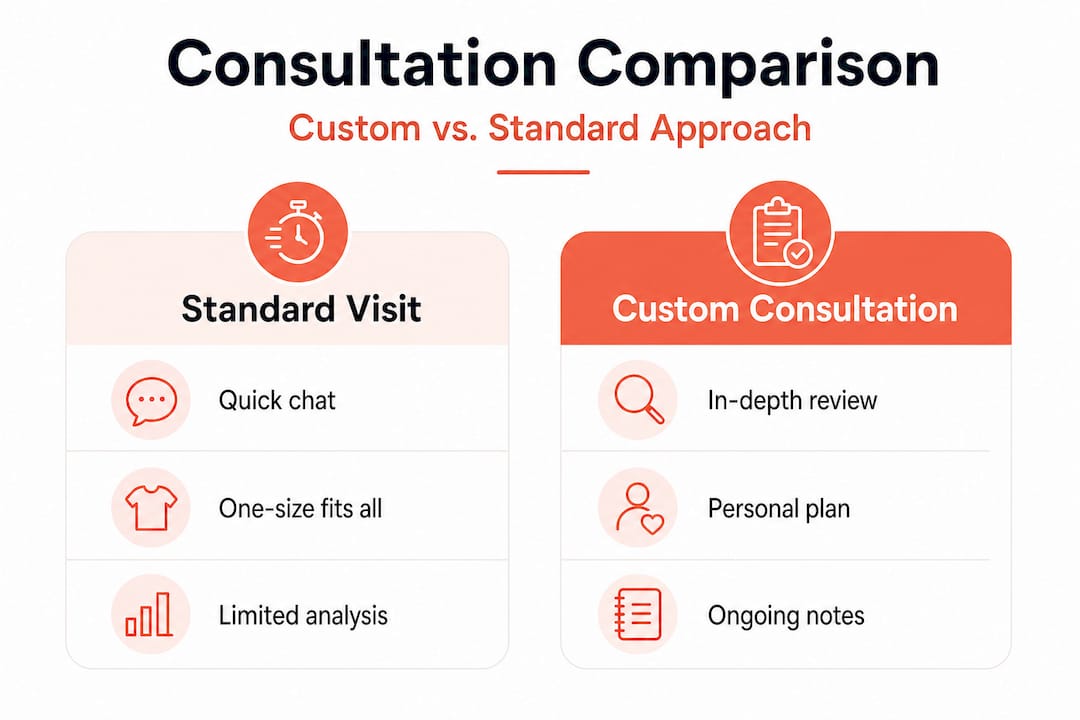
What does a truly elevated consultation include? Here is how it stacks up against a standard appointment:
| Feature | Standard salon visit | Custom consultation |
|---|---|---|
| Hair history review | Rarely asked | Always gathered |
| Lifestyle and maintenance discussion | Minimal | Detailed and specific |
| Visual inspiration review | Client mentions a name | Portfolios and moodboards reviewed together |
| Privacy for sensitive topics | Usually skipped | Private, open conversation |
| Written documentation | Uncommon | Formula and notes recorded |
| Follow-up planning | Rarely discussed | Built into the session |
Premium salons also lean on personalized styling consultations to close the gap between what a client imagines and what actually happens in the chair. For example, a hair consultation for extensions requires even deeper analysis of texture, density, and color matching. The same depth applies to balayage, precision cuts, and corrective color work.
Key advantages of a custom consultation include:
- Personalized diagnosis: Your stylist understands your unique hair type and density before touching it
- Aligned expectations: Both you and your stylist agree on the goal before the work begins
- Reduced risk: Allergies, sensitivities, and problem areas are identified early
- Better investment: You pay for exactly what you need, not a generic service
- Long-term consistency: Your stylist builds a profile that improves each visit over time
What to prepare: Intake forms, inspiration, and expectations
Having identified what sets the consultation apart, let’s make sure you arrive fully prepared to get the most from it.

Top-tier salons do not wait until you are in the chair to start learning about you. According to workflow standards at Booksy, a premium consultation follows three clear phases: Phase 1 is a pre-visit digital intake, Phase 2 is the in-chair review with tactile analysis and price sign-off, and Phase 3 is post-service formula documentation and rebooking. Most salons skip Phase 1 entirely, which is why Phase 2 always feels rushed.
Here is how to prepare effectively:
- Complete your intake form thoroughly. Quality salons send a digital form before your appointment. Answer every question, including past chemical treatments, allergies, and your ideal weekly styling time.
- Document your hair history. Note any recent colors, relaxers, keratin treatments, or heat damage. This affects what is chemically and structurally possible for your hair.
- Build an inspiration collection. Pull 5 to 8 images from magazines, social media, or celebrity styles. Use color inspiration tips to identify what appeals to you in terms of tone, placement, and contrast.
- Identify your non-negotiables. Know what you are not willing to change, whether that is length, the time you spend on styling each morning, or a color range that suits your complexion.
- Check the essential consultation questions your stylist should be asking and prepare honest answers so the session stays efficient and productive.
The intake form serves as a foundation for the personalized consultation guide your stylist builds. It eliminates guesswork and opens up the kind of private, candid conversation that leads to real results.
| Intake category | Why it matters |
|---|---|
| Past chemical services | Prevents damage and determines what is achievable |
| Allergy and sensitivity history | Ensures safety during color or chemical treatment |
| Lifestyle and styling routine | Shapes realistic, maintainable recommendations |
| Inspiration images | Creates visual alignment between client and stylist |
| Hair goals and concerns | Clarifies priorities and focuses the appointment |
Pro Tip: Bring two contrasting inspiration images: one showing a look you love and one showing a look you want to avoid. This simple contrast tells your stylist more than ten minutes of description ever could.
Expert analysis and tactile assessment: The stylist’s process
With your prep done, here is what actually happens during the expert assessment phase of your consultation.
This is the part most clients never see clearly, even as it happens to them. Your stylist is not simply looking at your hair. They are reading it. Advanced techniques include a structured tactile analysis where the stylist assesses density, porosity, and elasticity. The snap test, where a wet strand is gently stretched and released, reveals elasticity and the current strength of your hair’s protein bonds.
Here is what a complete expert assessment covers:
- Density check: Your stylist parts your hair in multiple sections to gauge how many strands grow per square inch. Fine, medium, and coarse hair each require different cutting and coloring approaches.
- Porosity assessment: How quickly does your hair absorb water? High-porosity hair soaks it in fast, which affects how color deposits and fades. Low-porosity hair resists moisture, requiring different product choices entirely.
- Elasticity test: A strand with good elasticity stretches slightly and snaps back cleanly. Poor elasticity signals protein damage and rules out certain chemical services until the hair is restored.
- Scalp condition analysis: Dryness, excess oil, flaking, or redness can all indicate conditions that affect treatment choices and long-term scalp health.
- Patch and strand testing: Allergy patch tests are conducted 48 hours behind the ear before any color or chemical service. Strand tests check how a specific formula reacts with your hair before applying it to your entire head.
Understanding your own hair texture and density basics also helps you engage more confidently with this process. Clients who understand their hair type ask better questions and catch potential issues before they become problems.
“A skilled stylist does not just see your hair. They feel it, test it, and interpret what it needs before a single product is applied.”
Medical red flags are also part of this phase. Sudden patchy loss, scalp irritation, or unusual breakage may require a referral to a dermatologist or trichologist before any chemical work proceeds. A genuinely skilled stylist is never too proud to refer out when necessary. Maintaining scalp health is foundational to everything else.
Pro Tip: If a salon skips the patch test and wants to proceed directly to color, pause. The 48-hour rule is not a formality; it is a safety standard that protects you from potentially severe allergic reactions.
Tailoring recommendations: Digital tools and personalized care
Once the expert has analyzed your hair and scalp, next comes the tailored recommendation phase, where luxury technology and hands-on expertise combine.
This is where modern premium salons genuinely distinguish themselves. Leading brands like Wella have developed AI-powered tools such as InspoLab, which uses facial and skin tone analysis to generate moodboards and precise color formulas. The Navicare quiz recommends custom regimens based on your specific hair concerns. This is not gimmicky technology; it produces measurable improvements in client satisfaction and formula accuracy.
Aveda’s approach centers on personalized scalp assessments that include exfoliation, targeted serums, and therapeutic massage. The data gathered goes directly into your custom care plan, making every visit more effective than the last.
What to expect from the recommendation phase:
- Custom color formula: Your exact shade is documented and saved, meaning every future appointment starts from a known baseline rather than a fresh guess
- Tailored product recommendations: Product choices are based on your hair type, not what happens to be on the shelf that day
- Technique selection: Whether it is balayage, glazing, or a precision dry cut, the technique is chosen for your specific hair characteristics and lifestyle
- Aftercare plan: A clear, realistic home care routine is outlined so your results last as long as possible
- Regimen mapping: Using tools like personalized quizzes, your stylist can map out a personalized styling approach that accounts for seasonal changes, hormonal shifts, and product sensitivities
Research shows that personalized recommendations save clients up to 30% in costs compared to trial-and-error approaches. When applied to hair, that same principle holds. You stop spending money on products that do not work and services that miss the mark.
The benefits of scalp massage during this phase also go beyond relaxation. Regular massage increases circulation, supports healthier follicles, and gives your stylist real-time insight into your scalp’s condition.
Pro Tip: Before you leave the chair, ask your stylist for a written summary of your custom plan. This should include your color formula, product recommendations, and the timing of your next appointment.
Verifying results and keeping your style on track
With recommendations in hand, it is time to make sure your salon delivers lasting value by verifying results and planning the next steps.
The final phase of a premium consultation does not end when the blow dryer turns off. True luxury service includes a deliberate wrap-up process that sets you up for consistent results over time.
- Review the results together. Stand at the mirror and look at your hair from all angles. Ask your stylist to walk you through what was done and why. This is your right as a paying client.
- Request formula documentation. According to Booksy’s post-service standards, formula and aftercare documentation should be recorded in your client file after every service. Ask to confirm this happened.
- Take photos. Capture your results from multiple angles immediately after your appointment. These become your baseline reference for future visits and help you communicate adjustments clearly.
- Discuss any adjustments needed. If something is slightly off, say so now. Most stylists would rather address a concern in the moment than have you leave unhappy.
- Rebook before you leave. Securing your next appointment while your stylist’s notes are fresh ensures continuity. Your follow-up visit will build on this one, not start from scratch.
The benefits of personalized styling compound over time. Each visit adds a layer of understanding that makes the next result even better.
Pro Tip: If your style starts shifting between appointments, keep a short photo log on your phone. Showing your stylist how your hair has evolved since your last visit gives them far better data than a verbal description.
Why most consultations fail, and how you can demand better
After laying out the process, it is worth being direct about why so many salons still get this wrong.
The honest answer is that a thorough consultation takes time, and time is the most limited resource in a busy salon. Rushing is not always malicious. It is often a structural problem, where appointment books are packed too tight to allow for genuine discovery. The result is that clients get a surface-level version of what a real consultation should be.
Here is what we have observed across more than 25 years in this industry: clients who advocate for themselves get dramatically better results. Only 9% of clients feel they receive a true consultation, but the ones who do tend to ask specific questions, bring clear inspiration, and push back when a stylist moves too fast.
The luxury benefits of consultation are not reserved for people with unlimited budgets. They are available to anyone who understands what to ask for. Expect portfolio examples. Insist on privacy when discussing sensitive topics like thinning or damage. Verify that your formula will be documented before you book your next appointment.
Top La Jolla salons succeed because they have built accountability into every step: ongoing client notes, consistent follow-through, and a genuine respect for the relationship between stylist and client. That is not an accident. It is a deliberate culture built around the belief that every person who sits in the chair deserves a result they can be proud of.
If a salon cannot tell you exactly what they put on your hair last time, find one that can.
Transform your experience with a La Jolla consultation
Everything you have read here is not just information. It is a standard you deserve to hold your salon to every single time you book an appointment.
At Joel C Ma Hair Studio in La Jolla, every client receives the kind of custom hair consultation described in this guide. That means a structured intake process, thorough tactile and scalp analysis, AI-assisted color planning, and formula documentation that carries forward into every future visit. Our team brings over 25 years of expertise to each appointment, ensuring that your style goals are not just heard but actually achieved. If you are ready to experience the personalized consultation process that transforms how you feel about your hair, we would love to be your next step.
Frequently asked questions
What should I bring to a custom hair consultation?
Bring photos of your current hair, inspiration looks, a list of past chemical services, and details about your lifestyle or hair concerns. The more specific your preparation, the more personalized and accurate your stylist’s recommendations will be.
How long does a thorough hair consultation take?
A premium consultation typically lasts 30 to 45 minutes, allowing time for detailed analysis and personalized recommendations. Anything shorter than 20 minutes should raise a concern about whether the assessment was truly thorough.
Are patch and strand tests always necessary?
Yes, especially if you are changing color dramatically or have a known allergy risk. Patch tests behind the ear conducted 48 hours before treatment, along with strand tests, protect you from reactions and ensure the formula will perform as expected.
What tech can I expect in a modern La Jolla consultation?
AI-powered tools from brands like Wella, personalized regimen quizzes, digital moodboards, and detailed scalp assessments are now standard features at high-end salons committed to genuinely personalized results.
Recommended
- Customized Hair Styling: Defining Your Unique Look – Joel C Ma Hair Studio
- Hair Consultation Role: 68% Prefer Personalized Styling – Joel C Ma Hair Studio
- Hair consultation guide: personalized, fashion-forward style – Joel C Ma Hair Studio
- What is a hair consultation? 5 luxury benefits explained – Joel C Ma Hair Studio