
Sulfate-free shampoo: real benefits for healthier hair
TL;DR:
- Sulfates can strip natural oils, cause frizz, and weaken hair over time.
- Sulfate-free shampoos use gentler surfactants, preserving moisture and color.
- Switching benefits dry, color-treated, sensitive, and curly hair, with visible results in weeks.
Walking down the shampoo aisle feels simple until you start reading labels. Most people assume all shampoos do the same job, just with different scents and price points. That assumption costs you more than you’d expect, because sulfates can lead to dryness, frizz, and reduced moisture retention over time. Ingredient safety is not a marketing gimmick. It’s a meaningful difference between shampoos that deplete your hair and ones that support it. This guide breaks down what sulfates actually do, how sulfate-free formulas compare, who benefits most, and what results you can realistically expect.
Table of Contents
- What are sulfates, and how do they affect your hair?
- How sulfate-free shampoo works: a gentler approach
- Who should use sulfate-free shampoo? Real benefits and results
- Are there any drawbacks or myths to consider?
- Our perspective: ingredient intelligence drives real hair health
- Want premium hair care guidance? Our La Jolla experts can help
- Frequently asked questions
Key Takeaways
| Point | Details |
|---|---|
| Gentle on scalp and color | Sulfate-free shampoo protects your scalp and preserves hair color by maintaining natural oils. |
| Noticeable improvement quickly | Most people see softer, less frizzy hair within three to six washes when switching. |
| Safe, expert-approved ingredients | Sulfate-free formulas use milder surfactants that are recommended by dermatologists for healthy hair. |
| Not one-size-fits-all | While ideal for sensitive or color-treated hair, occasionally using sulfates can help with heavy oil or buildup. |
| Myths debunked | Sulfates are not carcinogenic, but ingredient awareness is key to making the best choice for your hair. |
What are sulfates, and how do they affect your hair?
Sulfates are a category of synthetic detergents added to shampoo primarily to produce that thick lather most of us associate with a “good clean.” The two most common types are sodium lauryl sulfate, or SLS, and sodium laureth sulfate, or SLES. Both are highly effective at removing grease, dirt, and product buildup. In fact, SLS is used in everything from dish soap to industrial degreasers, which tells you something important about its strength.
The problem is not that sulfates clean your hair. It’s that they clean too aggressively for everyday use on most hair types. Sulfates like SLS and SLES strip natural hair lipids and force the cuticle open, which leaves the hair shaft exposed and vulnerable. Think of your hair cuticle like a roof made of overlapping tiles. When those tiles lie flat, your hair reflects light, resists humidity, and holds onto moisture. When sulfates lift those tiles, moisture escapes, frizz increases, and color molecules wash out faster.
There’s also a pH factor that rarely gets discussed. Healthy hair and scalp sit at a slightly acidic pH, roughly between 4.5 and 5.5. Sulfate-based shampoos tend to be more alkaline, often sitting between 6.0 and 7.0. That alkaline pH disrupts the hair’s natural acid barrier, sometimes called the acid mantle, which protects against bacteria and environmental damage. Over time, repeated disruption weakens the scalp barrier and can make existing conditions like dandruff or sensitivity worse.
“Not every ingredient that cleans your hair is designed to protect it. Strength and gentleness are not the same thing.”
Here’s a quick breakdown of how SLS compares to SLES in terms of irritation risk:
| Property | SLS (sodium lauryl sulfate) | SLES (sodium laureth sulfate) |
|---|---|---|
| Lather production | Very high | High |
| Irritation potential | Higher | Moderate |
| Lipid stripping | Significant | Moderate |
| Common in budget shampoos | Yes | Yes |
| pH range | 6.0 to 7.0 | 5.5 to 7.0 |
For anyone serious about long-term tips for healthy scalp care, understanding what’s in your bottle is step one. The ingredients doing the cleaning matter just as much as the cleaning itself.
Key concerns with sulfates at a glance:
- Strip sebum (the scalp’s natural protective oil) with every wash
- Raise the hair cuticle, increasing breakage and frizz
- Accelerate color fade in treated hair
- Cause scalp sensitivity and irritation with frequent use
- Disrupt the acid mantle, making scalp conditions worse over time
How sulfate-free shampoo works: a gentler approach
Sulfate-free shampoos replace harsh detergents with milder cleansing agents called surfactants. These gentler molecules still attract dirt and oil, but they release them without the aggressive stripping action you get from SLS or SLES. Two of the most effective and well-studied mild surfactants are cocamidopropyl betaine, derived from coconut oil, and sodium cocoyl isethionate, which is also coconut-derived and has an exceptionally mild skin compatibility profile.
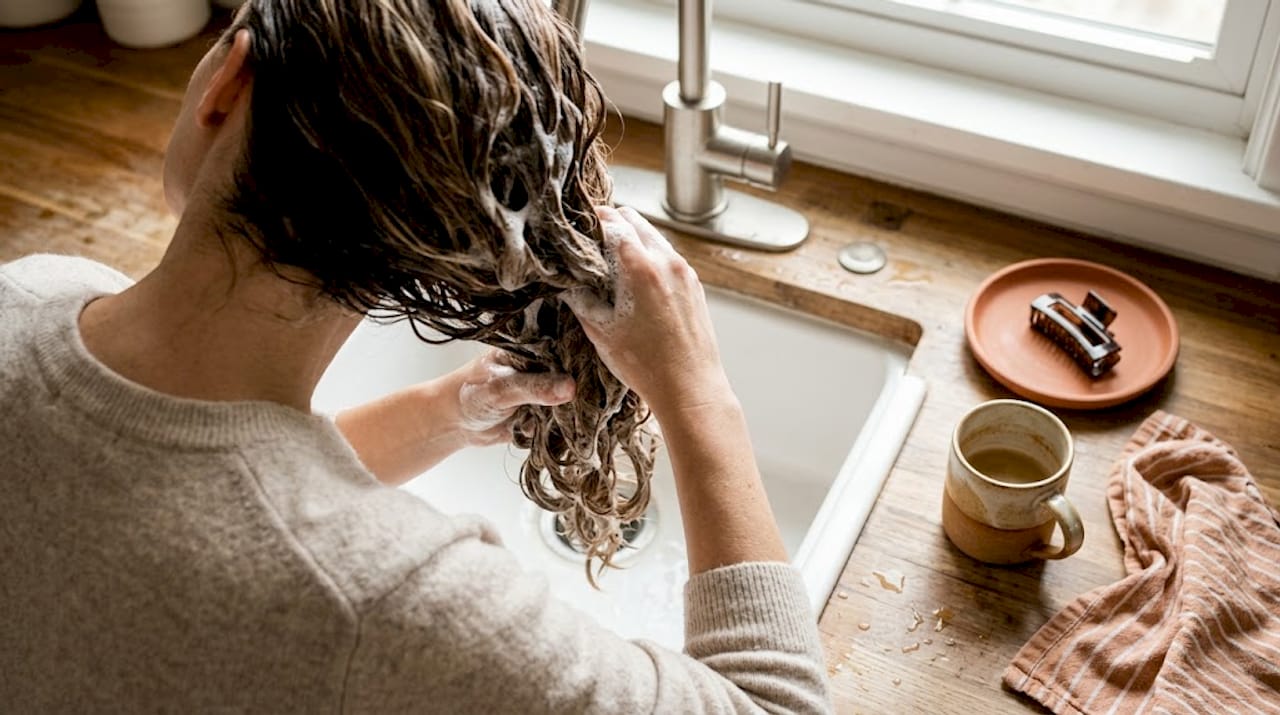
Sulfate-free shampoos use milder surfactants that preserve the lipid layer and maintain hair’s natural moisture, which directly translates to softer texture, better color retention, and a calmer scalp. The pH of most sulfate-free formulas sits between 4.5 and 6.0, which aligns with the natural pH of your scalp and hair. That alignment means the cuticle stays smoother after washing instead of being forced open.
Pro Tip: When shopping for a sulfate-free shampoo, scan the ingredient list for cocamidopropyl betaine or sodium cocoyl isethionate near the top. Their position on the label indicates concentration, and a higher concentration means more effective but still gentle cleansing.
This matters enormously for color-treated hair. When the cuticle remains closed, color pigments stay locked inside the hair shaft longer. Balayage, highlights, and glosses all last measurably longer when you protect the cuticle consistently. Pairing a sulfate-free shampoo with color safe conditioners creates a routine that actively extends the life of salon color, which saves money and keeps results looking fresh between appointments.
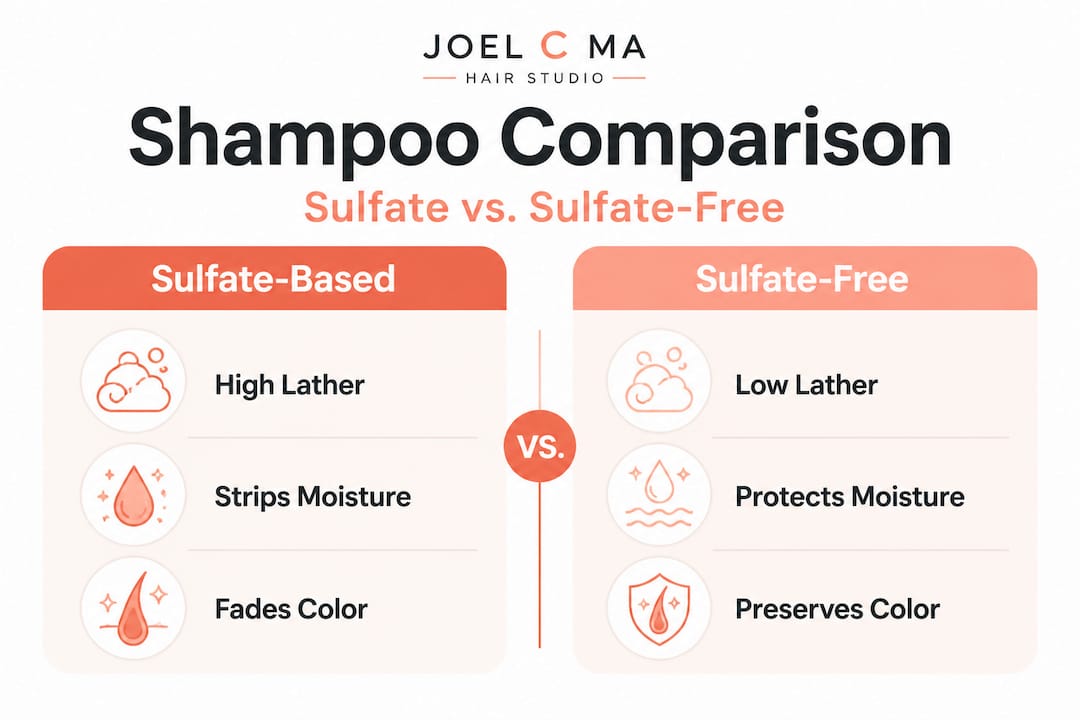
Here’s a direct comparison between the two shampoo types:
| Feature | Sulfate-based shampoo | Sulfate-free shampoo |
|---|---|---|
| Lather volume | High | Lower but present |
| Cleansing strength | Strong | Moderate |
| Natural oil preservation | Low | High |
| Color longevity | Reduced | Extended |
| Scalp sensitivity risk | Higher | Lower |
| pH alignment with hair | Poor to moderate | Good |
| Best for hair type | Oily, fine, buildup-prone | Dry, color-treated, sensitive |
For clients who are also transitioning away from other harsh ingredients, a paraben free hair care guide can help round out a fully ingredient-conscious routine. Removing sulfates and parabens together creates a noticeably gentler regimen that health-focused clients in La Jolla consistently respond well to.
Benefits of going sulfate-free:
- Preserves natural sebum, keeping scalp balanced without over-drying
- Maintains cuticle integrity for smoother, shinier hair
- Supports longer-lasting color after salon treatments
- Reduces frizz by keeping the hair shaft sealed
- Calms reactive or sensitive scalps with a pH-compatible formula
Who should use sulfate-free shampoo? Real benefits and results
Not every person walks out of the shower with the same hair concerns, but there are specific groups who see clear and consistent improvements after switching. The biggest beneficiaries are color-treated hair clients, people with naturally dry or coarse hair, those with sensitive scalps or conditions like eczema and seborrheic dermatitis, and frequent washers who expose their hair to shampoo multiple times per week.
SLS at 10 to 15% concentrations irritates the scalp and increases inflammation, which is why sulfate-free formulas aid sensitive scalps and existing scalp conditions noticeably. For someone already managing a reactive scalp, reducing that source of irritation can produce real, visible improvement within a matter of weeks.
Here’s a realistic timeline for what to expect after switching:
- Washes 1 to 3: Less lather than you’re used to. This is normal and doesn’t mean your hair isn’t clean. Your scalp may still be adjusting its sebum production.
- Washes 3 to 6: Noticeably softer texture and reduced frizz as the cuticle settles into a flatter, smoother position.
- Weeks 2 to 4: Scalp balance begins to normalize. People who previously over-washed to manage grease often find their hair needs washing less frequently.
- Weeks 4 to 6: Full lipid rebuild is underway, and moisture retention improves significantly. Color-treated clients see a visible difference in vibrancy during this window.
- Beyond 6 weeks: A fully adapted scalp and hair routine. Most clients at this stage describe their hair as feeling more like itself, less product-dependent and more naturally manageable.
Pro Tip: Give your scalp a minimum of four weeks before judging whether sulfate-free is working for you. The first week or two can feel like an adjustment period, especially if you’ve used sulfate shampoos for years. Stick with it before drawing conclusions.
One important exception worth mentioning: if you have very oily hair or use heavy styling products daily, a 100% sulfate-free routine may leave some buildup over time. The practical solution is a hybrid approach. Use your sulfate-free formula most days, and reach for a gentle clarifying shampoo once or twice a month to reset. Learning to minimize frizz is closely tied to how well you maintain moisture balance between washes, and clarifying occasionally without over-clarifying keeps that balance right.
Key groups who benefit most:
- Color-treated hair (balayage, highlights, glosses)
- Dry or chemically processed hair
- Sensitive or reactive scalps
- Curly and textured hair types prone to dryness
- Frequent washers (four or more times per week)
Are there any drawbacks or myths to consider?
The wellness world has not always been kind to sulfates, and some of the claims floating around online go well beyond what the science actually supports. Let’s address the most common ones honestly.
First, the carcinogen myth. Sulfates are not inherently damaging or carcinogenic, and this concern has been thoroughly debunked by dermatologists and toxicologists. The confusion often stems from early internet misinformation conflating SLS with other compounds. SLS is irritating to some scalps at certain concentrations. It is not a cancer-causing agent.
Second, the idea that sulfate-free shampoos don’t clean well. This is partly a perception issue driven by lather. We’re culturally conditioned to equate foam with clean, but foam is a byproduct, not a measure of cleansing power. Sulfate-free formulas clean effectively for the vast majority of people living regular daily lives. The exception is someone with very oily hair, very fine hair, or heavy daily product use. Those clients may find sulfate-free shampoo leaves them feeling less than fresh, and an occasional clarifying step with a gentle sulfate formula is a completely reasonable solution.
Third, the assumption that all sulfate-free products are premium or superior. Some sulfate-free formulas swap out SLS but add other potentially irritating ingredients to compensate. No direct clinical trials have directly compared sulfate-free vs. regular shampoo in a controlled setting. The current consensus comes from chemistry research, dermatology insights, and ex vivo (lab-based hair sample) studies. That consensus is strong and consistent, but it’s worth knowing that the sulfate-free label alone doesn’t guarantee a better formula without checking the full ingredient list.
“Reading a label isn’t paranoia. It’s the same critical thinking you apply to food. Your scalp absorbs what you put on it.”
Here’s a balanced look at real limitations of sulfate-free products:
- Lower lather may feel unfamiliar and require an adjustment period
- May require slightly more product or a second wash for heavy buildup
- Some formulas compensate by using other surfactants that aren’t dramatically better
- Not all brands are equal — the full ingredient list matters more than the label claim
- Not ideal as a sole option for very oily or product-heavy hair without a clarifying step
For anyone managing frizzy hair in La Jolla’s coastal humidity, switching to sulfate-free is one of the highest-impact changes you can make. The salty air already challenges the cuticle. The last thing your hair needs is a shampoo doing the same thing from the inside.
Our perspective: ingredient intelligence drives real hair health
Here’s something we’ve learned from over 25 years working with clients who have every imaginable hair type: the sulfate-free conversation often gets hijacked by marketing. One side says sulfates are poison. The other says the trend is overblown. Neither is right.
What actually works is matching ingredients to individual hair needs, not following product labels as a proxy for good decisions. Sulfate-free shampoos are genuinely better for color-treated, dry, sensitive, and chemically processed hair. That covers a significant portion of our clients in La Jolla. But we’ve also seen clients with fine, oily hair who went fully sulfate-free and spent months wondering why their hair felt limp and weighed down. The formula wasn’t wrong. The match was.
The smartest approach is a hybrid regimen built on what we call ingredient intelligence. Use a quality sulfate-free shampoo as your daily or near-daily driver. Keep a gentle clarifying option available for the moments when buildup demands a deeper reset. Pay attention to the full ingredient label, not just the front-of-bottle claim. And when you invest in a color-safe conditioner alongside your sulfate-free shampoo, you’re creating a system that supports your hair instead of just cleaning it.
La Jolla clients who take this layered, personalized approach almost always see better results than those who simply swap one product for another and expect transformation. Ingredient intelligence is about building a routine around your actual hair, not someone else’s.
Want premium hair care guidance? Our La Jolla experts can help
Knowing the science is one thing. Building a routine that actually works for your specific hair is another.
At Joel C Ma Hair Studio in La Jolla, we help clients move past the noise and toward routines grounded in real expertise. Whether you’re investing in salon shampoos for colored hair, looking for guidance on customized hair styling that complements your hair health goals, or ready to book one of our personalized styling consultations, we bring more than 25 years of hands-on experience to every recommendation we make. Your hair deserves a routine built around you, not a trend. Let’s build it together.
Frequently asked questions
Will switching to sulfate-free shampoo reduce frizz?
Yes. Most users see less frizz and softer hair within a few washes because the cuticle stays closed and natural lipids are preserved, which directly controls frizz at the source.
Is sulfate-free shampoo better for color-treated hair?
Absolutely. Sulfate-free shampoos preserve the hair’s outer lipid layer and keep the cuticle sealed, which slows color fade and maintains vibrancy significantly longer between salon visits.
Do sulfate-free shampoos clean as well as regular shampoos?
They clean effectively for most daily needs, but very oily hair or heavy product buildup may require more product or an occasional clarifying wash, since sulfates remain best for extreme buildup situations.
How soon will I see results after switching?
Most people notice less dryness and reduced frizz after just 3 to 6 washes, with full scalp balance and moisture recovery typically settling in around the 4 to 6 week mark.
Are sulfates dangerous or carcinogenic?
No. Sulfates are not carcinogenic, and there is no credible scientific evidence supporting this claim. The concern is a widely circulated myth that dermatologists and toxicologists have consistently debunked.