
Expert hair styling techniques for your unique look in La Jolla
Most people assume that salon-quality results come from expensive products alone. The real secret? Technique. Sectioning hair into 10-12 parts cuts drying time by 25%, boosts root lift by 12%, and improves styling precision by 22%. That single adjustment separates a flat, rushed blowout from a polished, lasting style. At Joel C Ma Hair Studio, we’ve spent over 25 years refining these methods so every client in La Jolla walks out with a look that’s genuinely their own.
Table of Contents
- The foundation of expert styling: Sectioning and preparation
- Precision cutting: The secret to seamless style and movement
- Blowouts and heat styling: The science behind lasting results
- Adapting expert techniques to your hair type: Fine, thick, and curly
- Consultation: The step that defines your signature salon style
- Discover La Jolla’s luxury hair studio: Take your look further
- Frequently asked questions
Key Takeaways
| Point | Details |
|---|---|
| Sectioning boosts precision | Careful sectioning reduces drying time and improves styling accuracy for salon-caliber results. |
| Cutting techniques define movement | Using the right angle and blending method gives hair seamless flow and natural style. |
| Cool air extends style | Finishing heat styling with cool air increases hold and keeps looks fresh for days. |
| Tailor methods to hair type | Adapting products and styling strategies to hair texture ensures best results and prevents damage. |
| Consultation creates signature looks | Expert consultations blend technique and your preferences to shape a unique style tailored to you. |
The foundation of expert styling: Sectioning and preparation
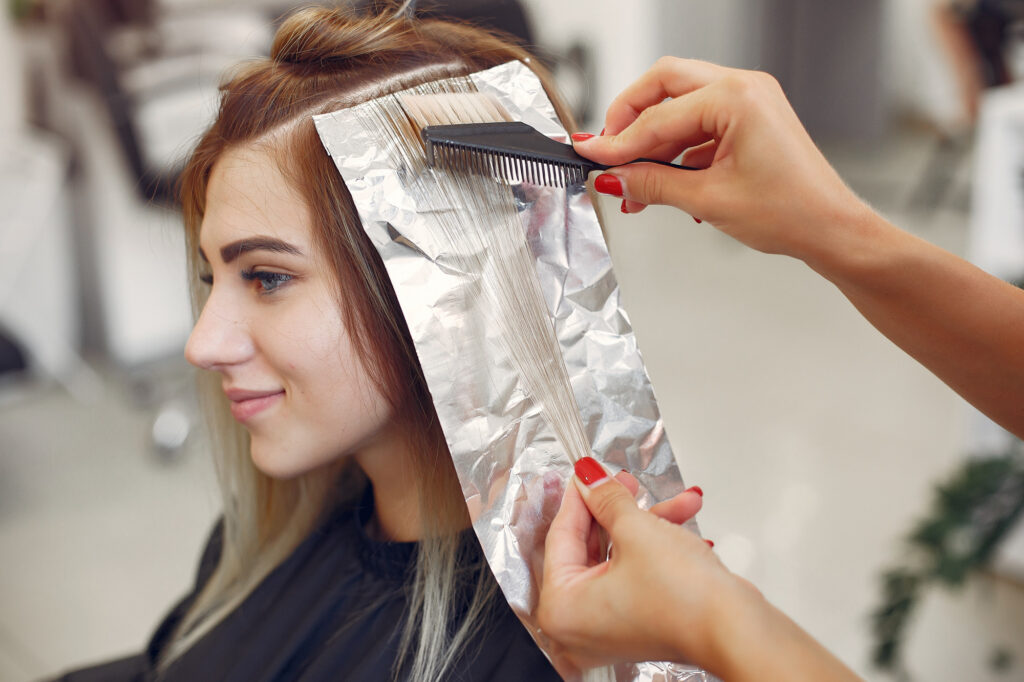
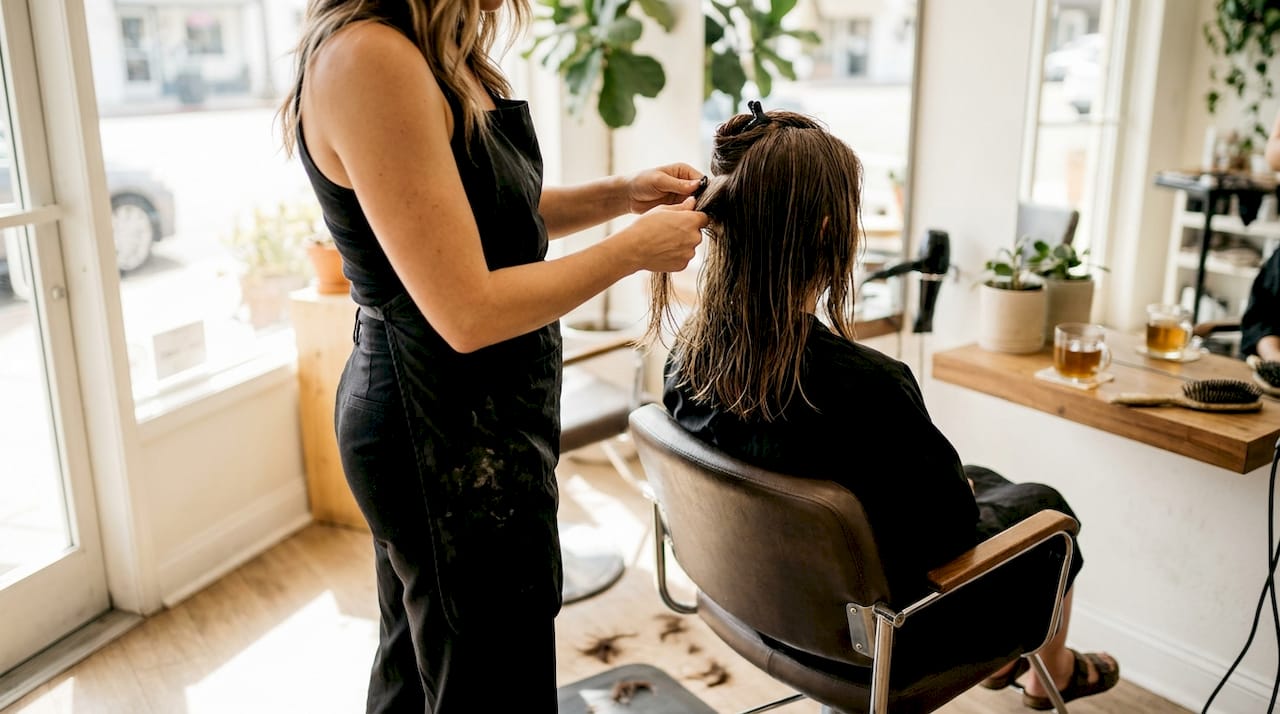
Sectioning is the step most people skip at home, and it’s the reason salon results feel so different. When your stylist divides your hair methodically, every strand gets equal attention, heat, and tension. The result is consistent volume, smoother ends, and a finish that holds longer.
Professional prep starts before a single drop of heat touches your hair. Personalized hair consultations help your stylist understand your texture, density, and goals before choosing a sectioning strategy. From there, a quality heat protectant is applied to every section, not just the surface layer.
Here’s how expert sectioning compares to a basic approach:
| Approach | Sections used | Drying time | Root lift | Styling precision |
|---|---|---|---|---|
| Basic (no plan) | 1-2 | Longest | Minimal | Low |
| Intermediate | 3-4 | Moderate | Some | Medium |
| Expert (professional) | 10-12 | 25% faster | +12% | +22% |
The classic blowout sequence follows a clear order: consult, apply heat protectant, rough dry to 80%, then section into four or more horizontal layers before finishing with a round brush and nozzle. Each step builds on the last.
Key prep steps every stylist follows:
- Assess hair type and density before choosing section count
- Apply heat protectant evenly from roots to ends
- Rough dry to remove excess moisture before precision styling
- Use a tail-comb for clean, consistent parting
- Adjust section size based on hair thickness
“The prep phase isn’t optional — it’s where the style is actually built. Everything after is just revealing what you set up in those first five minutes.”
Pro Tip: If you’re styling at home, clip each finished section up and out of the way before moving to the next. This prevents overlap and keeps your work clean.
Precision cutting: The secret to seamless style and movement
A great cut does most of the styling work for you. When layers are cut with precision, your hair falls naturally into shape with minimal effort. That’s not luck — it’s geometry.
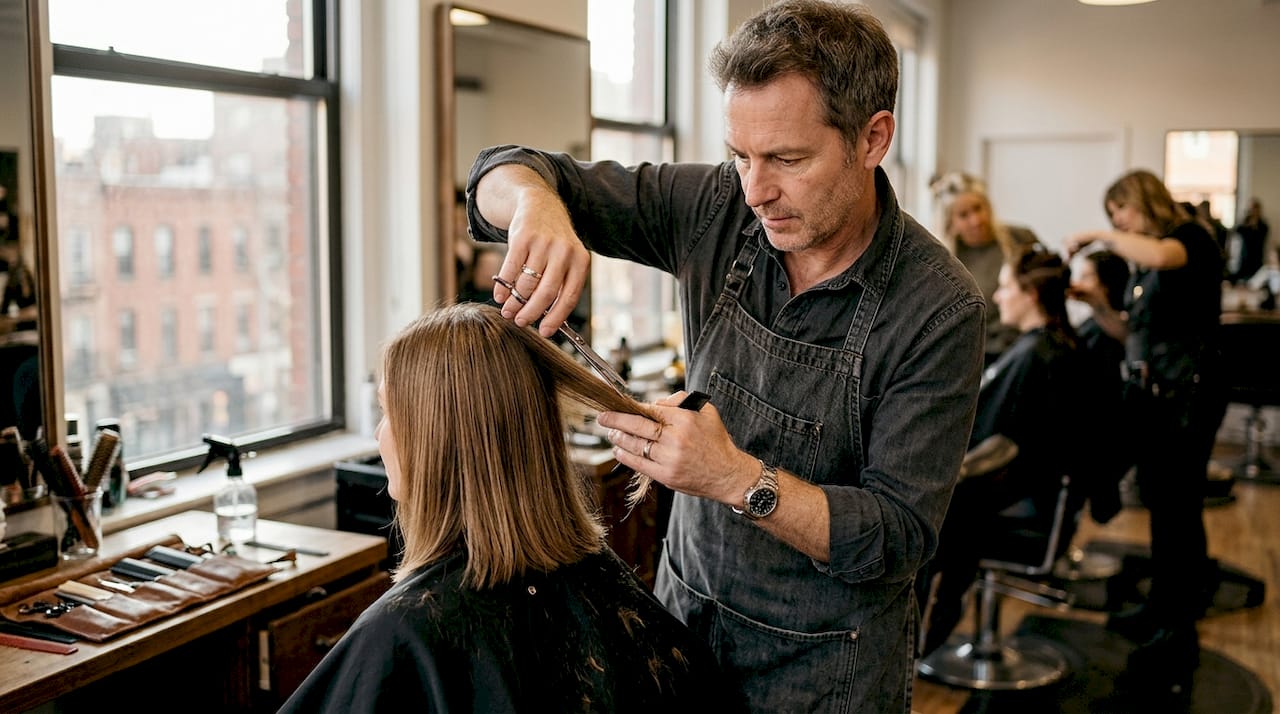
Long layers cut at a 45-degree angle create natural movement and allow for seamless blending between lengths. The sliding guide technique, where the comb moves along the hair shaft as you cut, removes bulk without creating harsh lines. The result feels effortless because the structure supports it.
Steps for precision layer cutting:
- Section hair symmetrically before making any cuts
- Hold shears at a 45-degree angle for soft, natural movement
- Use a sliding guide to blend between sections
- Check balance from multiple angles throughout the cut
- Finish with point-cutting at the ends to remove weight without losing length
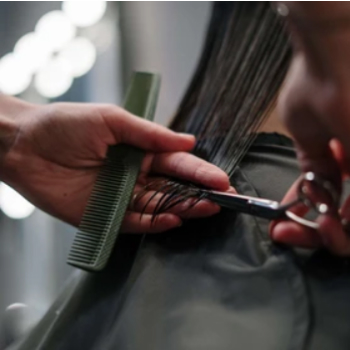
Tool quality matters more than most clients realize. Sharp shears cut cleanly, while dull ones push the hair, causing split ends and uneven texture. A quality sectioning comb keeps your parts precise so every cut lands exactly where it should.
Precision cutting techniques also shift depending on texture. Straight hair responds well to blunt or point-cut techniques, while curly hair needs cuts that account for shrinkage and spring. Cutting curly hair dry, for example, lets the stylist see the natural curl pattern and avoid removing too much length.
| Hair texture | Recommended cut style | Key tool | Main goal |
|---|---|---|---|
| Straight | Blunt or point-cut | Sharp shears | Clean lines, movement |
| Wavy | Layered, 45-degree angle | Texturizing shears | Reduce bulk, add shape |
| Curly | Dry cut, curl-by-curl | Wide shears | Respect curl pattern |
| Thick | Slide cutting, small sections | Thinning shears | Remove weight evenly |
Pro Tip: Ask your stylist to show you the customized styling approach they’re using for your cut. Understanding the angle and technique helps you maintain the style at home between visits.
Blowouts and heat styling: The science behind lasting results
A blowout isn’t just drying your hair with a brush. It’s a sequenced process where each step builds hold, volume, and smoothness into the style before the next begins.
The professional blowout process starts with a consultation and heat protectant application, moves into a rough dry to about 80% dryness for root lift, then sections into four or more horizontal layers. A round brush with a nozzle attachment creates tension and directs airflow precisely where it’s needed.
What separates a professional blowout from a DIY attempt:
- Consistent tension on each section with the round brush
- Nozzle attachment to direct heat and reduce frizz
- Working from the bottom layers upward
- Finishing each section before moving to the next
- Ending with a cool air shot to lock the style
That last step is more important than it sounds. Finishing with cool air increases style hold by 11 to 15% and extends results by up to two days. The cool air closes the hair cuticle, sealing in the shape created by the heat.
For curly hair, the approach shifts. Use a diffuser attachment, scrunch sections upward, and keep heat on medium rather than high. This preserves the curl pattern instead of disrupting it. Always apply heat protection before any heat tool, regardless of hair type.
Pro Tip: After your blowout, let your hair cool completely before touching it. Running your fingers through warm hair breaks the style before it sets.
Adapting expert techniques to your hair type: Fine, thick, and curly
The same technique applied to different hair types produces very different results. Expert stylists don’t use one approach for everyone — they adapt every step based on what your hair actually needs.
Fine hair needs volume without weight. Fine hair requires volumizing products and root lift, while heavy creams or oils flatten the style quickly. Use a lightweight mousse at the roots, skip conditioner on the scalp, and focus heat at the root zone during blowouts.
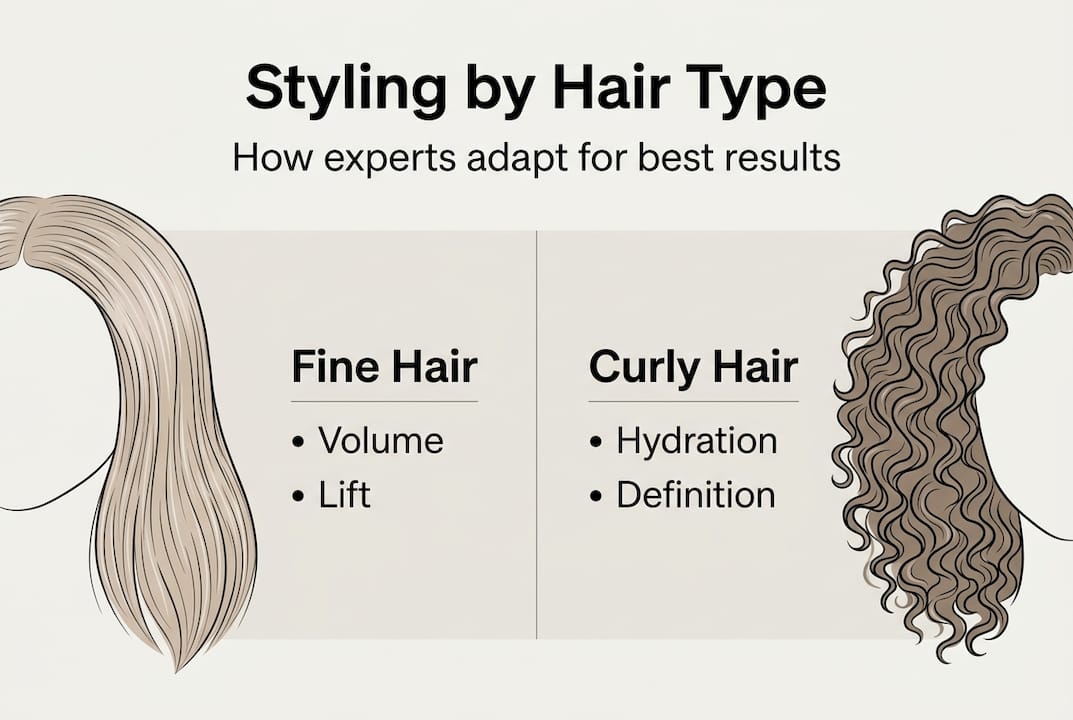
Thick hair needs hydration and control. Thick hair styling calls for a hydrating shampoo and conditioner, detangling wet with a wide-tooth comb, leave-in conditioner, and smaller sections to fight frizz. Heat protectant is non-negotiable here because thick hair requires more heat exposure to dry fully.
Curly hair needs moisture and definition. Curly hair styling works best when you cleanse the scalp, hydrate the lengths, and style while wet using leave-in conditioner, curl cream, and a light gel or mousse. Avoid dry brushing entirely, and use a diffuser to refresh without disrupting the curl pattern.
| Hair type | Key products | Section size | Main challenge |
|---|---|---|---|
| Fine | Volumizing mousse, root spray | Medium | Avoiding flatness |
| Thick | Hydrating leave-in, heat protectant | Small | Managing frizz and bulk |
| Curly | Curl cream, gel, leave-in | Medium to large | Preserving curl definition |
| Wavy | Light serum, texturizing spray | Medium | Balancing frizz and wave |
Our curly hair cutting guide and curly hair care tips go deeper into the specific methods we use at Joel C Ma Hair Studio for clients with natural texture.
Pro Tip: Match your product weight to your hair density, not just your hair type. A fine-stranded but dense head of hair needs more product than a coarse but low-density one.
Consultation: The step that defines your signature salon style
Every great style starts with a conversation. Not a quick glance in the mirror, but a real dialogue about your lifestyle, your face shape, how much time you spend styling at home, and what you actually want to feel when you look in the mirror.
Luxury La Jolla salons prioritize personalized consultations that blend cutting and styling decisions together. This is what separates a technically correct haircut from one that genuinely suits you. The cut, the color, and the styling method are all chosen as a system.
What a thorough consultation covers:
- Face shape and how it influences layer placement
- Lifestyle factors like workout frequency and styling time
- Current hair health and any damage history
- Color goals and how they interact with the cut
- Long-term maintenance and how to keep the style looking fresh
“A signature style isn’t something we impose on a client — it emerges from listening carefully and then applying the right technique to match what they’ve described.”
La Jolla salons like Joel C Ma offer precision cuts, balayage, and styling tailored to lifestyle and face shape using advanced techniques for upscale, low-maintenance looks. The custom consultation process is where that personalization begins. Before your next appointment, review our essential consultation questions to get the most from your time with your stylist.
Discover La Jolla’s luxury hair studio: Take your look further
Knowing the techniques is one thing. Having an expert apply them to your specific hair is another. At Joel C Ma Hair Studio, every appointment starts with the kind of consultation that turns good hair into a genuine signature look.
Our team specializes in customized styling services that draw on over 25 years of experience in precision cutting, blowouts, and color. Whether you’re looking for expert haircuts that work with your natural texture or professional styling options that fit your daily routine, we build every service around you. Book a consultation and let’s create something that’s entirely yours.
Frequently asked questions
What is the most important expert technique for improving blowout results?
Sectioning into multiple parts and finishing with cool air are the two highest-impact steps. Cool air finish increases hold by 11 to 15% and extends results by up to two days.
How do luxury salons in La Jolla personalize hair styling?
Stylists use in-depth consultations to adapt sectioning, cutting angles, and product choices to each client’s face shape and lifestyle. La Jolla salons like Joel C Ma specialize in this tailored approach.
What technique is best for blending long layers?
Hold shears at a 45-degree angle and use a sliding guide technique along the hair shaft for seamless blending and natural movement.
How should thick or curly hair be styled to avoid frizz?
Use hydrating products, detangle while wet, work in small sections, and finish curls with a diffuser. Avoid dry brushing curly hair entirely to preserve the curl pattern.
Can expert techniques be used at home as well as in salons?
Yes. Sectioning into 10-12 parts at home cuts drying time by 25% and improves precision significantly. Heat protection and cool air finishing are also easy to replicate at home.
Recommended
- Expert hair stylists near me for luxury looks in 2026 – Joel C Ma Hair Studio
- Explore types of haircuts for upscale La Jolla style – Joel C Ma Hair Studio
- Discover the advantages of luxury salons for bespoke hair care – Joel C Ma Hair Studio
- 7 Best Hair Treatments in La Jolla for Luxury Results – Joel C Ma Hair Studio
- Tebori Brows – Expertos en Belleza Natural en Madrid