
How to minimize frizz for sleek, healthy hair in 2026
Living in La Jolla means enjoying stunning ocean views and coastal breezes, but that same humidity can wreak havoc on your hair. If you’ve battled frizz despite trying countless products, you’re not alone. The key to sleek, healthy hair lies in understanding what causes frizz and implementing strategic solutions tailored to your hair’s unique needs. This guide reveals expert-backed techniques, product insights, and practical steps to help you achieve smooth, manageable hair that stays beautiful even in coastal climates.
Table of Contents
- Key takeaways
- Understanding the causes of frizz and hair porosity
- Preparing your hair with the right products and routine
- Executing styling and protection techniques to lock frizz out
- Verifying results and troubleshooting common frizz challenges
- Discover personalized frizz solutions at Joel C Ma Hair Studio
- Frequently asked questions
Key Takeaways
| Point | Details |
|---|---|
| Porosity awareness | Understanding whether your hair is low, medium, or high porosity guides product choice and hydration needs. |
| Silicone use strategy | Use silicone containing products strategically and rotate with silicone free options to reduce buildup while keeping frizz in check. |
| Consistent care routine | Regular hydration trims and limited washing help maintain hair health and limit frizz in humid climates. |
| Coastal humidity tactics | Apply targeted products and styling techniques designed for humid coastal air to sustain smoothness. |
Understanding the causes of frizz and hair porosity
Frizz isn’t just a styling nuisance; it’s a scientific response to environmental conditions and hair structure. When hair cuticles open due to moisture imbalance, individual strands absorb water from humid air, swell unevenly, and create that familiar fuzzy halo. Understanding this mechanism empowers you to choose solutions that actually work.
Hair porosity determines how easily moisture enters and exits your hair shaft. Think of porosity as tiny doors along each strand. Low porosity hair has tightly closed doors, making it resistant to moisture absorption but also difficult to hydrate. High porosity hair has doors swinging wide open, absorbing water rapidly but releasing it just as fast. This constant moisture fluctuation causes strands to misalign, creating visible frizz.
La Jolla’s coastal humidity intensifies these challenges dramatically. Ocean air carries moisture that penetrates porous hair throughout the day, causing repeated swelling and contraction cycles. Bleached hair shows higher porosity and increased frizz sensitivity because chemical treatments compromise the protective cuticle layer. Color-treated, heat-styled, or chemically processed hair becomes more vulnerable to environmental moisture.
Recognizing your hair porosity level transforms how you approach frizz management:
- Low porosity hair needs lightweight products that won’t sit on the surface
- Medium porosity hair balances moisture retention with manageability
- High porosity hair requires intensive hydration and protective barriers
- Damaged hair of any porosity type demands repair-focused treatments
| Hair Type | Porosity Level | Frizz Risk | Recommended Approach |
|---|---|---|---|
| Virgin, untreated | Low to medium | Moderate | Lightweight hydrators, minimal products |
| Color-treated | Medium to high | High | Protein treatments, moisture sealants |
| Bleached | High | Very high | Intensive repair, protective styling |
| Heat-damaged | High | Very high | Heat-free periods, deep conditioning |
Pro Tip: Conduct a simple porosity test by placing a clean strand in room-temperature water. Hair that sinks quickly indicates high porosity and greater frizz vulnerability, while hair that floats suggests low porosity requiring different product strategies.
The relationship between humidity, damage, and frizz creates a cycle that demands intentional intervention. Coastal environments like La Jolla present unique challenges requiring specialized approaches beyond generic anti-frizz advice. By identifying your hair’s specific porosity and damage level, you can select targeted solutions that address root causes rather than temporarily masking symptoms.
Preparing your hair with the right products and routine
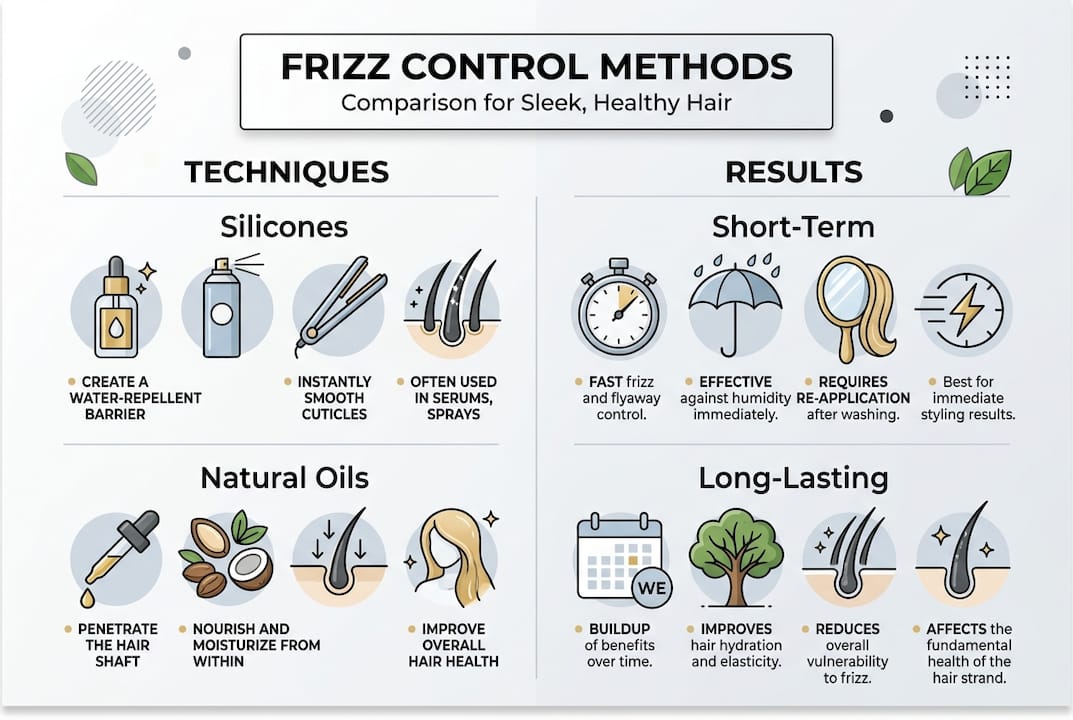
Product selection makes the difference between temporary smoothness and lasting frizz control. Silicones remain controversial in hair care, but understanding their mechanisms helps you use them strategically. Silicones form a protective film that reduces friction, blocks humidity ingress, and creates immediate smoothness. However, water-insoluble dimethicone and similar compounds accumulate over time, requiring clarifying shampoos to remove buildup.
Water-soluble silicones like cyclomethicone offer frizz reduction without heavy accumulation. These lighter alternatives evaporate during styling, leaving beneficial conditioning effects without coating strands permanently. For women managing frizz in humid climates, rotating between silicone-containing products and silicone-free alternatives prevents buildup while maintaining protection.
Natural oils provide hydration and cuticle sealing without synthetic ingredients. Argan oil penetrates the hair shaft effectively, delivering fatty acids that strengthen and smooth. Coconut oil works best on high porosity hair, filling gaps in damaged cuticles. Apply oils to damp hair for better absorption, focusing on mid-lengths and ends where damage concentrates.

Leave-in conditioners deserve permanent spots in frizz-fighting routines. These products continue working between washes, maintaining hydration levels that prevent moisture imbalance. Hydrate with leave-in conditioners generously, especially on curly or textured hair that naturally tends toward dryness. Layer leave-ins under styling products for maximum benefit.
Establishing the right washing frequency protects natural oils that combat frizz:
- Wash 1-2 times weekly to preserve sebum production
- Use sulfate-free formulas that clean without stripping
- Incorporate clarifying shampoos monthly to remove product buildup
- Consider co-washing between shampoo sessions for added moisture
- Apply conditioner from mid-shaft to ends, avoiding roots
Protective habits extend beyond products. Silk pillowcases reduce friction during sleep, preventing the mechanical damage that worsens frizz. Cotton pillowcases absorb moisture and create roughness that lifts cuticles overnight. Switching to silk or satin preserves your styling efforts and minimizes morning frizz.
Regular trims prevent split ends from traveling up the hair shaft. When ends split, the damage creates irregular surfaces that catch light poorly and frizz easily. Schedule trims every 8-10 weeks to maintain structural integrity. Between salon visits, use targeted treatments on ends to prevent splitting.
Pro Tip: Create a moisture-sealing routine by applying leave-in conditioner to soaking wet hair, then layering a light oil while hair remains damp. This technique locks in maximum hydration before environmental factors can interfere.
Building an effective routine requires patience and observation. Track which products deliver results and which create buildup or dryness. Your hair’s needs shift with seasons, damage levels, and chemical treatments. Women seeking frizz management in La Jolla benefit from adjusting routines as coastal humidity fluctuates throughout the year. Investing in quality shampoos for colored hair protects both your color investment and frizz control efforts simultaneously.
Executing styling and protection techniques to lock frizz out
Styling technique determines whether your preparation work succeeds or fails. Heat styling without protection damages cuticles and increases porosity, creating the exact conditions that cause frizz. Apply heat protectants containing volatile silicones before any thermal styling to create a barrier against damage. These products evaporate during styling while leaving protective residues that block humidity penetration.
Temperature control prevents unnecessary damage during styling. Modern tools offer precise temperature settings, but many users default to maximum heat unnecessarily. Fine or damaged hair needs temperatures between 300-350°F, while thick or coarse hair tolerates up to 400°F. Exceeding 450°F damages even healthy hair, creating permanent porosity increases.
Layering products strategically extends frizz protection throughout your day. After heat styling, apply lightweight serums or oils that provide ongoing moisture barriers. High-end products showed frizz reduction lasting up to 72 hours with proper application. Start with small amounts, adding more as needed to avoid weighing hair down.
Execute your styling routine with these steps for maximum frizz control:
- Apply heat protectant to damp hair, distributing evenly from roots to ends
- Rough dry hair to 80% using medium heat and constant motion
- Section hair into manageable portions for detailed styling
- Use a round brush or flat iron at appropriate temperature for your hair type
- Finish each section with a cool shot to seal cuticles
- Apply finishing serum while hair retains slight warmth for better absorption
Hairstyle selection impacts frizz exposure significantly. Updos and braids minimize hair contact with humid air, reducing moisture absorption opportunities. Loose styles allow maximum environmental interaction, making them challenging in coastal climates. Consider protective styling on high-humidity days, saving loose styles for controlled indoor environments.
Heat protection techniques extend beyond product application. Allow hair to air dry partially before applying heat, reducing total thermal exposure. Use the lowest effective temperature rather than defaulting to maximum settings. Limit heat styling frequency to 2-3 times weekly when possible, allowing hair recovery periods between sessions.
| Silicone Type | Water Solubility | Frizz Control Duration | Buildup Risk | Best For |
|---|---|---|---|---|
| Dimethicone | No | Long-lasting | High | Occasional use, special events |
| Cyclomethicone | Yes | Moderate | Low | Daily styling, fine hair |
| Amodimethicone | Partially | Long-lasting | Moderate | Damaged hair, humidity protection |
| Phenyl trimethicone | No | Very long | High | Maximum shine, photography |
Environmental awareness guides styling choices. La Jolla’s marine layer creates morning humidity that burns off by afternoon, suggesting strategic timing for styling sessions. Style hair during lower humidity periods for better longevity. Check weather forecasts and plan accordingly, using stronger hold products on high-humidity days.
Pro Tip: Apply a small amount of anti-humidity spray to finished styles, focusing on the hair surface rather than saturating strands. This creates an invisible shield that repels moisture without adding weight or stiffness.
Explore humidity-proof hairstyles that work with your hair texture rather than fighting it. Embracing natural texture with proper products often yields better results than forcing straight styles in humid conditions. Textured styles hide frizz more effectively while requiring less maintenance throughout the day.
Verifying results and troubleshooting common frizz challenges
Assessing frizz control effectiveness requires systematic observation. Check hair texture at different times throughout the day, noting when frizz appears and under what conditions. Morning smoothness that deteriorates by afternoon suggests insufficient moisture barriers or product selection issues. Consistent frizz regardless of products indicates deeper porosity or damage concerns requiring professional intervention.
Buildup manifests as dullness, heaviness, or paradoxically increased frizz despite product use. When silicones and oils accumulate, they prevent moisture from entering hair, creating dryness that triggers frizz. Incorporate clarifying shampoos every 2-4 weeks to reset your hair’s condition. Follow clarifying sessions with deep conditioning treatments to restore moisture balance.
Product mismatch creates frustrating results despite proper technique. Signs include:
- Excessive greasiness indicating too-heavy products for your hair density
- Persistent dryness suggesting insufficient moisturizing ingredients
- Limp, flat hair from protein overload in fine textures
- Continued frizz despite multiple products indicating wrong formulation types
Avoid overwashing, which strips natural oils and triggers rebound oil production. This cycle creates alternating dryness and greasiness, both contributing to frizz. If your scalp feels oily but ends remain dry, your washing frequency likely needs adjustment. Focus cleansing on the scalp while allowing shampoo runoff to gently clean lengths.
Seasonal adjustments maintain results year-round. La Jolla’s summer humidity requires stronger moisture barriers and anti-humectant products. Winter’s drier air needs increased hydration and lighter sealants. Track your hair’s response to seasonal changes and modify your routine proactively rather than reactively.
Troubleshoot systematically when frizz persists:
- Eliminate one product at a time to identify problematic formulations
- Increase hydration through deep conditioning masks weekly
- Reduce heat styling frequency to assess damage contribution
- Switch to water-soluble silicones if buildup seems likely
- Consider professional porosity testing for personalized solutions
- Evaluate whether chemical damage requires repair treatments before frizz control
Contrasting views on silicones highlight that while effective short-term, they may block moisture in curly hair, creating buildup cycles. Water-soluble silicones offer better long-term hydration balance for textured hair types. If you have curls or coils, prioritize moisture-permeable products over heavy sealants.
Recognize when professional help becomes necessary. Persistent frizz despite diligent routine adherence often indicates structural damage requiring salon treatments. Chemical damage from color or relaxers needs protein reconstruction before frizz products work effectively. Porosity issues sometimes demand professional-grade treatments unavailable in retail products.
Document your routine and results through photos taken in consistent lighting. Visual tracking reveals subtle improvements that daily observation might miss. Note which products and techniques deliver measurable smoothness, building your personalized frizz-fighting protocol based on evidence rather than marketing claims.
Pro Tip: Perform a strand test before committing to new products by applying them to a small section and observing results for 24 hours. This prevents wasting money on full-size products that don’t suit your hair’s unique needs.
Preventing damage proves easier than repairing it. Implement natural damage prevention strategies alongside frizz control efforts. Healthy hair with intact cuticles resists frizz naturally, reducing your dependence on products and styling. Prioritize hair health as the foundation for lasting smoothness and manageability.
Discover personalized frizz solutions at Joel C Ma Hair Studio
Achieving truly smooth, frizz-free hair in La Jolla’s coastal climate often requires expert guidance tailored to your unique hair characteristics. Joel C Ma Hair Studio specializes in analyzing hair porosity, damage levels, and individual lifestyle factors to create customized frizz management strategies that deliver lasting results.

Our team provides access to professional-grade products scientifically proven to reduce frizz for up to 72 hours, combined with advanced styling techniques that work specifically in humid environments. Through personalized consultations, we identify the precise combination of treatments, products, and maintenance routines that transform your hair from frustrating to fabulous. Whether you need customized styling solutions, professional recommendations for salon-quality shampoos, or the complete luxury salon experience, our expertise ensures your hair looks stunning regardless of weather conditions.
Frequently asked questions
How often should I wash my hair to minimize frizz?
Limit washing to 1-2 times per week to preserve the natural oils that protect against moisture imbalance and frizz. Overwashing strips these protective oils, forcing your scalp to overproduce sebum while leaving lengths dry and frizz-prone. Use sulfate-free shampoos that clean gently without harsh stripping, and consider incorporating a clarifying shampoo once monthly to remove product buildup without disrupting your moisture balance.
Are silicones good or bad for frizzy hair?
Silicones effectively reduce frizz short-term by creating a protective barrier that blocks humidity and smooths cuticles, but water-insoluble types like dimethicone can cause buildup over time. This accumulation prevents moisture from penetrating hair, eventually worsening dryness and frizz. Water-soluble silicones like cyclomethicone provide frizz control without heavy buildup and wash out easily. Rotate between silicone-containing and silicone-free products, using clarifying shampoos every 2-4 weeks to prevent accumulation while maintaining protection.
What styling techniques best prevent frizz in humid climates like La Jolla?
Apply heat protectants containing volatile silicones before any thermal styling to create moisture barriers that block humidity penetration throughout the day. Layer lightweight serums or oils after styling for ongoing protection, and choose humidity-proof hairstyles like updos or braids that minimize hair exposure to moisture-laden air. Use the lowest effective heat setting on styling tools, finish with cool air to seal cuticles, and consider anti-humidity finishing sprays for maximum environmental protection.
Can I repair high porosity hair to reduce frizz permanently?
While you cannot reverse porosity caused by chemical damage or heat styling, you can significantly improve hair condition through consistent protein treatments and intensive moisturizing. Regular deep conditioning masks fill gaps in damaged cuticles, temporarily reducing porosity and frizz susceptibility. Maintaining a protective routine with minimal heat styling, regular trims, and gentle products prevents further porosity increases. Professional treatments like keratin smoothing or bond-building services offer more dramatic improvements for severely damaged, highly porous hair.
Why does my hair look smooth after styling but frizzy hours later?
This pattern indicates insufficient moisture barriers or products that don’t withstand humidity exposure. Your initial styling creates temporary smoothness, but environmental moisture penetrates unprotected cuticles as the day progresses, causing swelling and frizz. Switch to longer-lasting products with proven humidity resistance, layer protective serums over your styling, and ensure you’re using heat protectants that continue working after styling rather than evaporating completely. Consider stronger hold products on high-humidity days for extended smoothness.