
How to Manage Thick Hair Naturally for Luxurious Results
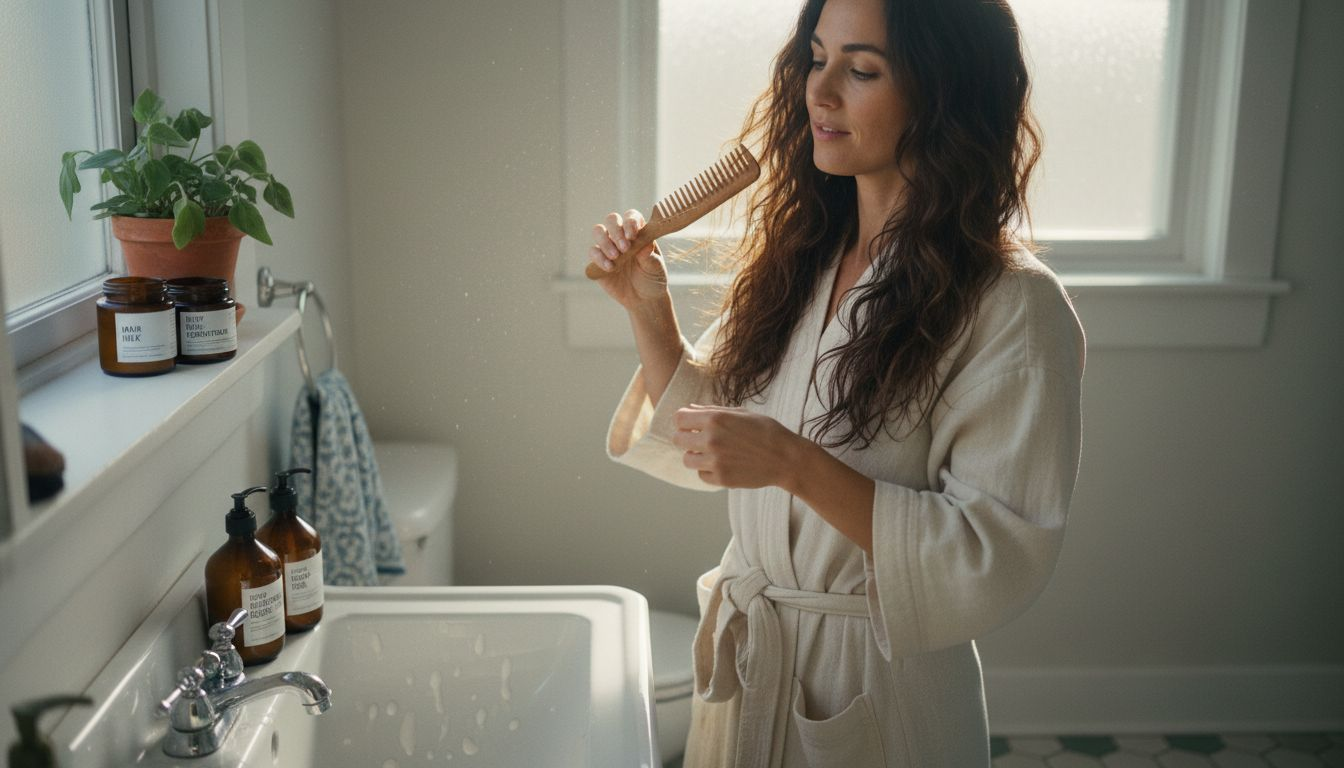
Managing thick hair can be a daily battle for women in La Jolla who crave smoothness, volume, and effortless style. When your hair feels heavy, prone to frizz, or refuses to hold a polished look, the challenge quickly becomes real. By exploring personalized hair texture analysis and expert care strategies, you can discover luxurious techniques used by professional stylists to reveal your hair’s full beauty and keep every strand perfectly tamed.
Table of Contents
- Step 1: Assess Your Hair Type And Texture
- Step 2: Choose Suitable Shampoos And Conditioners
- Step 3: Apply Nourishing Treatments And Masks
- Step 4: Use Advanced Drying And Styling Techniques
- Step 5: Check Results For Softness And Manageability
Quick Summary
| Key Point | Explanation |
|---|---|
| 1. Assess your hair type | Identify your hair texture by evaluating strand diameter, density, and styling behavior for personalized care. |
| 2. Choose the right products | Select shampoos and conditioners that hydrate thick hair without weighing it down, avoiding sulfates and heavy silicones. |
| 3. Use nourishing treatments | Apply masks with rich oils and proteins weekly to strengthen and moisturize thick hair for healthier results. |
| 4. Master drying techniques | Utilize gentle drying methods and minimize heat to protect your hair’s integrity while achieving desired styles. |
| 5. Regularly evaluate results | Monitor your hair’s softness and manageability frequently to refine your care routine for optimal health and appearance. |
Step 1: Assess your hair type and texture
Understanding your hair’s unique characteristics is the crucial first step in managing thick hair naturally. By identifying your specific hair texture, you’ll unlock personalized styling techniques that enhance your hair’s natural beauty and volume.
To accurately determine your hair texture, you’ll want to perform a simple assessment that looks at three key factors: strand diameter, overall density, and pattern. Hair texture analysis involves examining individual strands and understanding their specific qualities.
Here are the primary methods for evaluating your hair texture:
-
Thread Comparison Test: Hold a piece of sewing thread next to a clean, dry hair strand
- Fine hair is thinner than the thread
- Medium hair is approximately the same width as the thread
- Coarse hair appears noticeably thicker than the thread
-
Feel Assessment: Gently roll a single strand between your fingers
- Fine hair feels soft and barely perceptible
- Medium hair has a moderate, subtle texture
- Coarse hair feels thick and strong
-
Styling Behavior Observation:
- Examine how your hair responds to styling products
- Note how quickly it absorbs moisture
- Check how well it holds different hairstyles
Accurately identifying your hair texture helps you choose products and styling techniques that work harmoniously with your natural hair structure.
Once you’ve determined your specific hair texture, you’ll be prepared to select targeted care strategies that enhance your hair’s natural volume and health.
Here’s a summary of how hair strand characteristics impact care strategies:
| Strand Diameter | Typical Challenges | Best Care Approach | Styling Tip |
|---|---|---|---|
| Fine | Prone to breakage | Lightweight moisturizers | Avoid heavy gels |
| Medium | Needs balance | Hydrating, strengthening products | Layer with leave-in conditioner |
| Coarse | Dryness, frizz | Rich, nourishing masks | Use anti-frizz serums |
Pro tip: Take photos of your hair in different lighting conditions to help you track and understand its true texture over time.
Step 2: Choose suitable shampoos and conditioners
Selecting the right shampoo and conditioner is essential for managing thick hair effectively. Your product choices can dramatically impact hair health, volume, and overall manageability.
Specialized thick hair products should focus on ingredients that hydrate and strengthen without weighing down your hair. Understanding the specific needs of thick hair helps you make informed choices.
Key considerations for product selection include:
-
Hydration Ingredients:
- Argan oil
- Coconut oil
- Biotin
- Collagen
-
What to Avoid:
- Sulfate-based formulas
- Heavy silicone products
- Alcohol-heavy styling products
-
Product Performance Checklist:
- Moisturizes without excess weight
- Reduces frizz
- Promotes hair strength
- Supports natural volume
Choosing the right shampoo and conditioner can transform thick hair from unmanageable to luxuriously smooth and vibrant.
Look for products specifically designed for thick hair textures that balance cleansing power with moisture retention. These formulations help prevent breakage and maintain your hair’s natural health.
Quick reference: How common hair care ingredients affect thick hair:
| Ingredient | Benefit for Thick Hair | Ideal Usage |
|---|---|---|
| Argan Oil | Adds shine, repairs damage | Use in conditioner |
| Coconut Oil | Deep moisture, reduces frizz | Apply as mask |
| Biotin | Strengthens strands | Use in shampoos |
| Collagen | Boosts elasticity | Use in styling products |
Pro tip: Rotate between two different shampoo and conditioner sets to prevent product buildup and keep your hair responsive to treatment.
Step 3: Apply nourishing treatments and masks
Transforming thick hair requires strategic nourishment through targeted treatments and masks that penetrate deep into your hair shaft. Understanding how to apply these intensive conditioning solutions can dramatically improve your hair’s health and appearance.
Natural hair mask ingredients offer powerful hydration and repair for thick hair textures. By selecting the right combination of nutrients, you can strengthen hair strands and enhance their natural resilience.
Key ingredients for effective hair masks include:
-
Protein-Rich Components:
- Egg yolk
- Banana
- Greek yogurt
- Avocado
-
Moisture-Boosting Oils:
- Coconut oil
- Olive oil
- Argan oil
- Almond oil
-
Application Process:
- Start with clean, damp hair
- Apply mask from roots to ends
- Massage gently into scalp
- Cover with shower cap
- Leave on for 20-30 minutes
- Rinse thoroughly with lukewarm water
Consistent use of natural hair masks can transform dry, brittle strands into soft, lustrous, and manageable locks.
Frequency matters when applying intensive treatments. For thick hair, aim to use a deep conditioning mask once weekly to maintain optimal moisture and strength without overwhelming your hair.
Pro tip: Use a microfiber towel to gently squeeze out excess moisture after rinsing your hair mask to prevent unnecessary friction and potential damage.
Step 4: Use advanced drying and styling techniques
Mastering the art of drying and styling thick hair requires precision and strategic techniques that protect your hair’s natural texture while creating stunning, long-lasting looks. Understanding how to minimize damage and maximize volume is key to achieving professional-level results at home.

Heatless styling techniques offer innovative ways to manage and style your thick hair without compromising its health. By implementing smart drying and styling methods, you can transform your hair routine and reduce potential damage.
Essential techniques for thick hair styling include:
-
Drying Methods:
- Use microfiber towels
- Air dry when possible
- Section hair for even drying
- Avoid rough towel rubbing
-
Heat Styling Strategies:
- Use lowest heat setting
- Apply heat protectant
- Keep blow dryer moving
- Use diffuser attachment
-
Styling Process:
- Start with detangled, moisturized hair
- Apply lightweight styling products
- Use wide-tooth comb for distribution
- Choose styling technique based on desired look
- Minimize direct heat exposure
Careful styling techniques can transform thick hair from challenging to beautifully manageable, creating salon-quality results at home.
Consistent practice and gentle handling are crucial for maintaining your hair’s health while achieving your desired style. Experiment with different techniques to discover what works best for your unique hair texture.
Pro tip: Invest in silk or satin scrunchies to reduce hair breakage and minimize friction during styling and overnight hair management.
Step 5: Check results for softness and manageability
Evaluating the success of your thick hair care routine requires a careful assessment of texture, movement, and overall hair health. The final step in your journey involves understanding how to critically examine the results of your styling and treatment efforts.
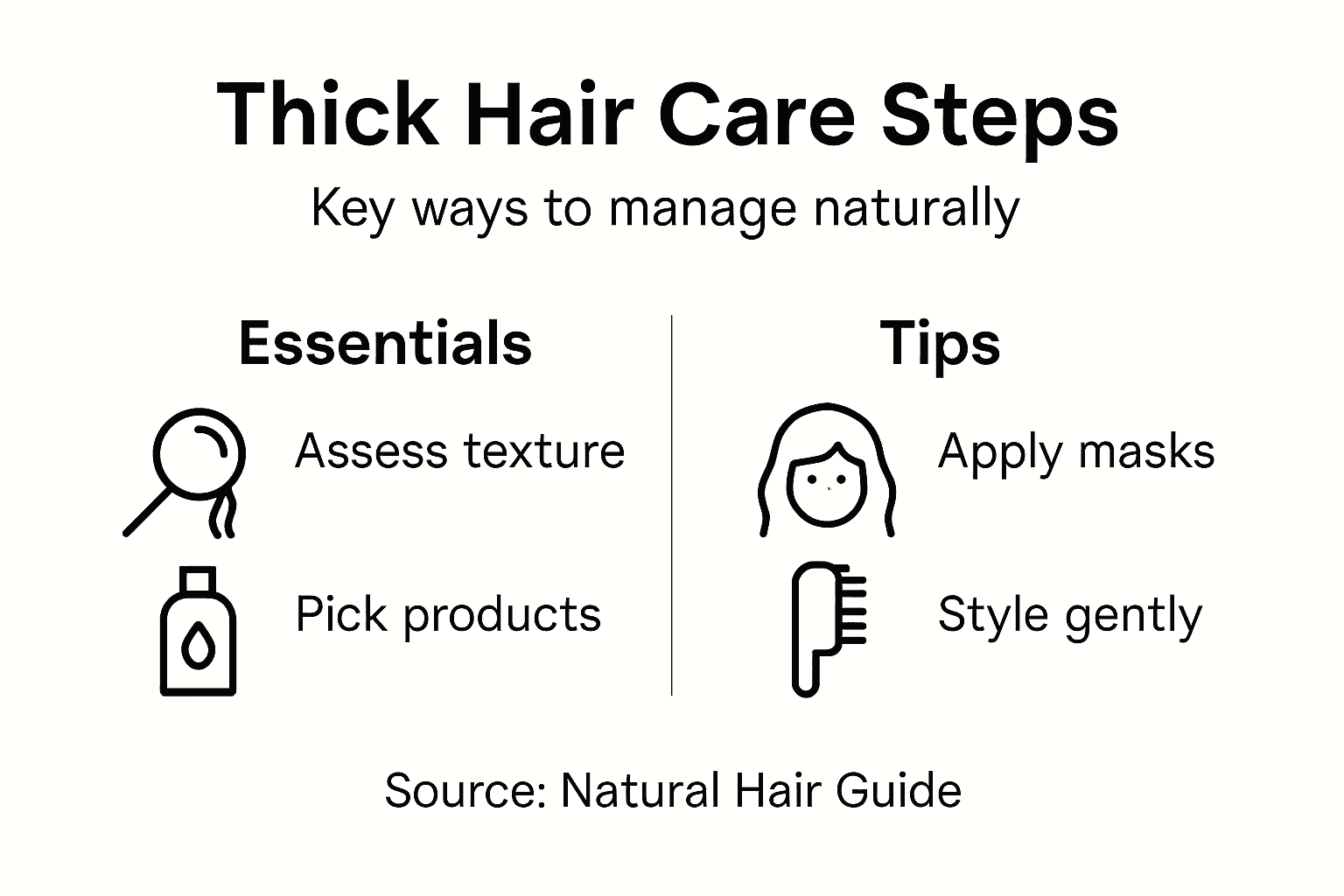
Natural hair care techniques can dramatically transform your hair’s appearance and feel. By developing a systematic approach to checking your hair’s condition, you’ll be able to fine-tune your routine and achieve consistently luxurious results.
Key indicators of successful hair management include:
-
Softness Evaluation:
- Smooth texture without roughness
- Easy finger combing
- Minimal tangling
- Soft to the touch
-
Manageability Indicators:
- Reduced frizz
- Natural movement and flow
- Quick styling time
- Consistent curl or wave pattern
-
Assessment Checklist:
- Check hair in natural and styled states
- Examine hair under different lighting
- Feel hair texture throughout the day
- Note styling ease and longevity
- Monitor hydration levels
Truly manageable thick hair feels effortless, moves naturally, and reflects a healthy, well-maintained hair care routine.
Remember that hair texture can change with seasons, hormonal shifts, and diet. Regular reassessment helps you adapt your hair care strategy to maintain optimal softness and manageability.
Pro tip: Take monthly progress photos in consistent lighting to objectively track your hair’s transformation and improvement.
Discover Expert Solutions for Managing Your Thick Hair Naturally
Managing thick hair with personalized care can feel challenging given its unique texture and moisture needs. This article highlights how identifying your hair type and selecting the right hydration and styling techniques are essential for softness, manageability, and shine. If you find yourself struggling with frizz, dryness, or styling difficulties despite trying natural treatments and advanced drying methods, it may be time to seek professional guidance that understands thick hair deeply.

At Joel C Ma Hair Studio, we specialize in personalized hair care that aligns perfectly with your individual texture, density, and lifestyle. Our expert stylists with over 25 years of experience use artistic haircuts, precision color techniques like balayage, and tailored consultations to enhance your hair’s natural beauty and health. Don’t wait to transform your thick hair into luxurious, manageable locks that reflect your personal style. Book your custom consultation at Joel C Ma Hair Studio today and experience the highest level of care designed just for you.
Frequently Asked Questions
How can I assess my hair type and texture?
To assess your hair type and texture, you can perform a thread comparison test by holding a piece of sewing thread next to a clean hair strand. Fine hair will be thinner than the thread, medium hair will match the thread’s width, and coarse hair will be thicker.
What ingredients should I look for when choosing shampoos and conditioners for thick hair?
Look for shampoos and conditioners that contain hydration ingredients like coconut oil, argan oil, and biotin, which nourish thick hair. Avoid products with sulfates and heavy silicones that can weigh your hair down.
How often should I apply hair masks for best results?
Apply nourishing hair masks at least once a week to maintain optimal moisture and strength for thick hair. This consistent treatment helps transform dry, brittle strands into soft and manageable locks.
What are some effective styling techniques for thick hair?
Effective styling techniques for thick hair include air drying with a microfiber towel and using the lowest heat setting for any heat styling. Applying a heat protectant can minimize damage, so always incorporate that into your routine when styling.
How can I check if my hair care routine is successful?
Evaluate your hair by checking for softness, manageability, and reduced frizz. A good indication of success is whether your hair feels smooth, is easy to comb, and has a natural movement without excessive styling time.
What can I do to track my hair’s progress?
To track your hair’s progress, take monthly photos in consistent lighting. This visual documentation will help you objectively assess changes in texture and overall health over time.
Recommended
- Top Haircuts for Thick Hair That Instantly Elevate Your Style
- How to Style Thinning Hair for a Fuller Look – Joel C Ma Hair Studio
- 7 Best Haircuts for Thick Hair to Elevate Your Look – Joel C Ma Hair Studio
- How to Manage Thinning Hair Naturally for Fuller Look – Joel C Ma Hair Studio
- 7 основни совета за здрава коса за жени на 20-40 години