
What Is Hair Porosity? Complete Expert Breakdown

Most american adults never realize that hair porosity can change over time, yet this single factor shapes how your hair responds to moisture and products. Nearly everyone believes certain myths about hair care, which leads to frustration and ineffective routines. Understanding the science behind porosity can help you make smarter choices and break free from common mistakes. This guide separates fact from fiction so you can finally take better care of your hair, no matter your unique needs.
Table of Contents
- Defining Hair Porosity And Common Myths
- Understanding Low, Medium, And High Porosity
- How To Test Your Hair’s Porosity Level
- Factors Influencing Hair Porosity Over Time
- Best Practices For Caring For Each Type
Key Takeaways
| Point | Details |
|---|---|
| Understanding Hair Porosity | Hair porosity determines how well hair absorbs and retains moisture, influenced by the cuticle layer and external factors. |
| Types of Hair Porosity | There are three porosity levels: low, medium, and high, each requiring different care approaches to maintain optimal moisture. |
| Testing for Porosity | Simple home tests like the Water Glass Test and Slip and Slide Test can help determine your hair’s porosity type. |
| Tailored Care Strategies | Customized hair care for each porosity type can improve moisture retention and overall hair health, preventing damage. |
Defining Hair Porosity and Common Myths
Hair porosity is a fundamental yet often misunderstood concept in hair care that goes far beyond simple categorization. Hair porosity refers to your hair’s ability to absorb and retain moisture, primarily determined by the condition of your hair’s cuticle layer. According to Healthline, this characteristic is not just about your hair type, but involves complex interactions between genetic factors and external influences.
Contrary to popular belief, hair porosity isn’t a fixed state. The cuticle layer can change based on multiple factors like chemical treatments, heat styling, environmental exposure, and overall hair health. Goldwell highlights an important misconception: high porosity doesn’t automatically mean damaged hair. Some individuals naturally have more porous hair without any structural compromise.
Understanding your hair’s porosity can revolutionize your hair care approach. Here are key insights to help you navigate this complex terrain:
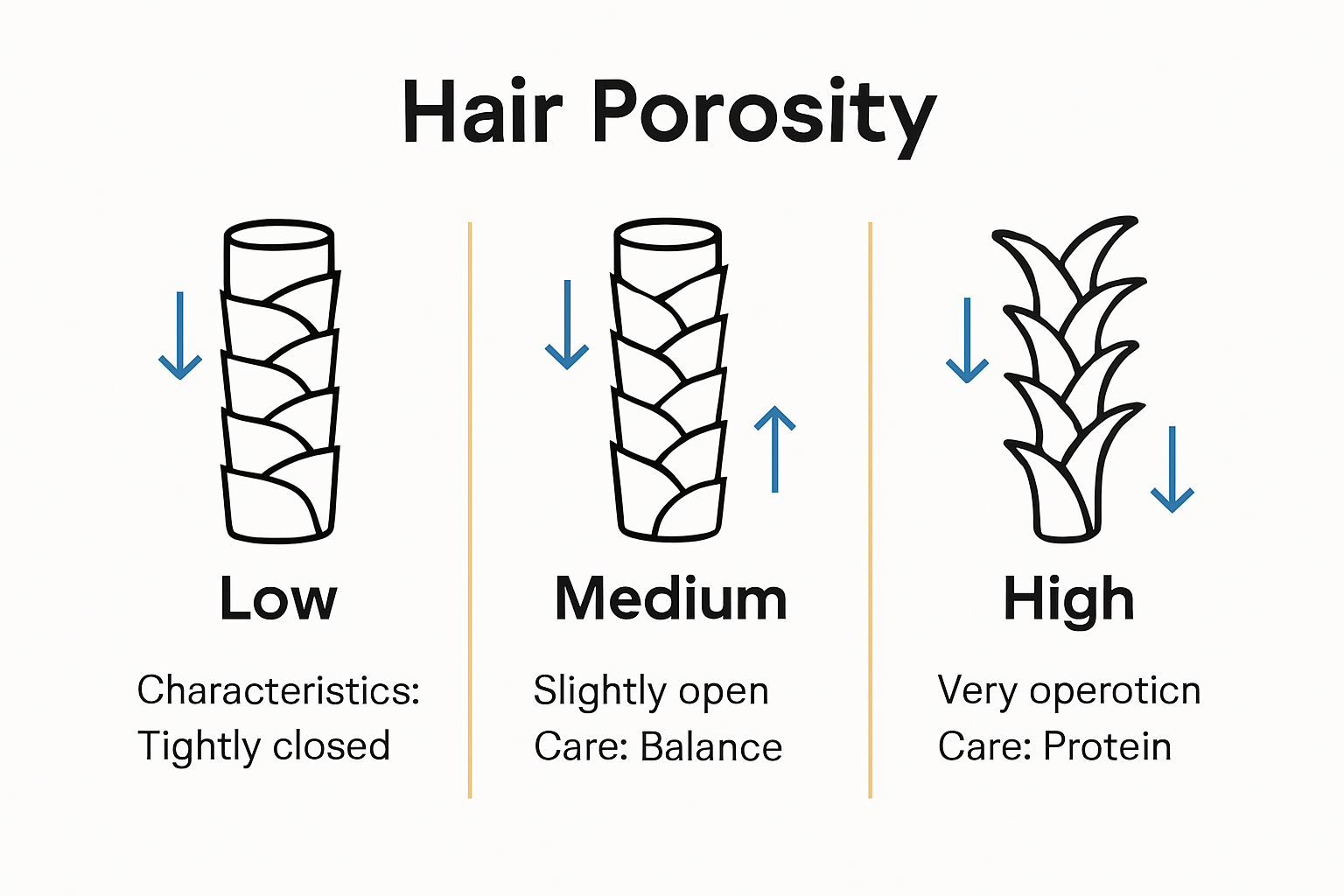
- Low Porosity: Tightly closed cuticles that resist moisture absorption
- Medium Porosity: Balanced moisture retention and absorption
- High Porosity: Easily absorbs moisture but struggles to maintain it
Recognizing your hair’s unique porosity profile allows for targeted treatments, preventing common issues like dryness, breakage, and ineffective product absorption. By debunking myths and understanding the science behind hair porosity, you can develop a personalized hair care strategy that genuinely supports your hair’s health and appearance.
Understanding Low, Medium, and High Porosity
Hair porosity represents a spectrum of moisture interaction that dramatically impacts how your hair looks, feels, and responds to treatments. Medical News Today explains that porosity levels range from low to high, each with distinct characteristics that influence hair care strategies.
Let’s break down the three primary porosity types:
Low Porosity Hair
- Characteristics: Tightly bound cuticle layer
- Moisture Behavior: Highly resistant to water absorption
- Key Challenge: Difficulty allowing moisture to penetrate
Medium Porosity Hair
- Characteristics: Slightly looser cuticle structure
- Moisture Behavior: Balanced absorption and retention
- Key Advantage: Most versatile hair type
High Porosity Hair
- Characteristics: Gaps and spaces in the cuticle layer
- Moisture Behavior: Quick absorption and rapid moisture loss
- Key Challenge: Struggles to retain hydration
According to Care360, high porosity hair is more hydrophilic, meaning it absorbs moisture rapidly but also loses it just as quickly.
This characteristic makes high porosity hair particularly challenging to manage, often requiring specialized conditioning and sealing techniques to maintain optimal moisture balance.
Understanding your specific porosity type empowers you to select targeted hair care products, develop personalized styling routines, and address unique moisture retention challenges. By recognizing how your hair interacts with moisture, you can transform your hair care approach from generic to genuinely effective.
How to Test Your Hair’s Porosity Level
Hair porosity testing doesn’t require expensive equipment or professional intervention. With a few simple home techniques, you can accurately determine your hair’s moisture absorption characteristics. Healthline recommends several straightforward methods that provide reliable insights into your hair’s unique properties.
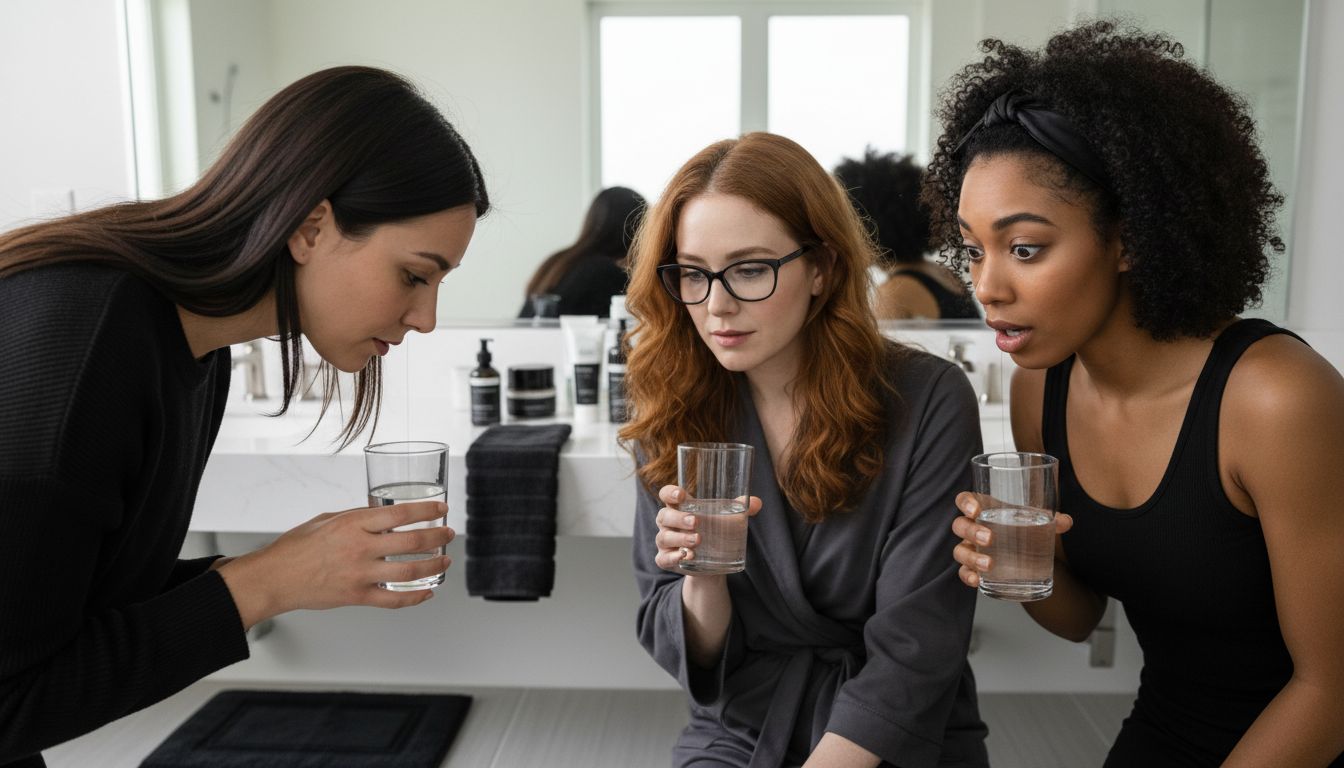
The Water Glass Test
This classic method offers a quick visual assessment of your hair’s porosity:
- Start with clean, product-free hair
- Take a single strand of hair
- Drop the strand into a glass of room temperature water
- Observe how the hair behaves:
- Sinks Quickly: High porosity
- Floats on Top: Low porosity
- Slowly Sinks to Middle: Medium porosity
The Slip and Slide Test
According to Medical News Today, another effective technique involves tactile examination:
- Take a clean hair strand
- Slowly slide your fingers up the hair shaft toward the root
- Pay attention to the texture:
- Smooth Surface: Indicates low porosity
- Rough or Bumpy Surface: Suggests high porosity
- Slight Texture with Some Smoothness: Points to medium porosity
Pro tip: Always conduct these tests on clean hair without any styling products to ensure the most accurate results. Each test provides different insights, so consider performing both for a comprehensive understanding of your hair’s unique moisture interaction profile.
 By understanding your hair’s porosity, you can make more informed decisions about hair care products, conditioning techniques, and styling approaches.
Factors Influencing Hair Porosity Over Time
Hair porosity is not a static characteristic but a dynamic property that evolves throughout your lifetime. Goldwell highlights that numerous external and internal factors can dramatically transform your hair’s moisture absorption capabilities.
Chemical Treatments Impact
Chemical processes are among the most significant porosity changers:
- Hair Coloring: Opens cuticle layers
- Bleaching: Creates permanent structural changes
- Permanent Treatments: Restructures hair protein bonds
Environmental Influences
External elements continuously reshape hair porosity:
- UV Radiation: Breaks down protective protein structures
- Pollution: Deposits damaging microscopic particles
- Humidity: Causes repeated swelling and contracting
A fascinating scientific study from PubMed utilizing advanced gas sorption techniques revealed that oxidative bleaching significantly increases hair porosity by generating additional microscopic pores within the hair’s structural matrix. These structural modifications fundamentally alter how your hair interacts with moisture and external environments.
Your hair’s porosity journey is ongoing, influenced by lifestyle choices, environmental exposure, and personal care practices. Understanding these dynamic factors empowers you to make informed decisions about hair treatment, protecting and maintaining your hair’s optimal moisture balance throughout different life stages.
Best Practices for Caring for Each Type
Hair porosity care requires a personalized approach tailored to your specific hair type. Medical News Today offers expert insights into targeted strategies that can transform your hair care routine.
Low Porosity Hair Care
Characteristics and Strategies:
- Use lightweight, liquid-based products
- Apply heat during conditioning to open cuticles
- Avoid heavy, protein-rich treatments
- Focus on clarifying shampoos to prevent product buildup
Medium Porosity Hair Care
Balanced Maintenance Approach:
- Use moderate conditioning treatments
- Select versatile, balanced hair products
- Rotate between protein and moisture treatments
- Maintain consistent hair care routine
High Porosity Hair Care
Intensive Moisture Management:
- Use protein treatments to strengthen cuticles
- Apply leave-in conditioners generously
- Seal moisture with heavier oils and butters
- Minimize heat and chemical treatments
According to Rossano Ferretti, understanding your hair’s unique porosity is crucial for developing an effective hair care strategy. Each porosity type demands a specialized approach to maintain optimal moisture balance, prevent damage, and promote overall hair health. By tailoring your routine to your specific porosity level, you can achieve more manageable, vibrant, and resilient hair.
Unlock Your Hair’s True Potential with Personalized Care
Understanding your hair porosity is the first vital step toward resolving common challenges like dryness, breakage, and stubborn styling issues. If your hair struggles to absorb or retain moisture due to its porosity level, you do not have to settle for ineffective products or routines. At Joel C Ma Hair Studio, we specialize in crafting personalized hair treatments designed to balance your hair’s unique porosity, whether it is low, medium, or high.

Experience expert artistry combined with tailored solutions that transform your hair from fragile to fabulous. Visit Joel C Ma Hair Studio today to book your customized consultation and discover a premium hair care routine that brings out the healthiest, most vibrant version of your hair. Don’t wait to thrive with your hair’s true nature. Start your transformation now at Joel C Ma Hair Studio.
Frequently Asked Questions
What is hair porosity?
Hair porosity refers to your hair’s ability to absorb and retain moisture, determined primarily by the cuticle layer’s condition.
How can I test my hair’s porosity at home?
You can test your hair’s porosity using the water glass test or the slip and slide test, both of which involve examining how your hair interacts with water.
What are the different types of hair porosity?
The three primary types of hair porosity are low porosity, medium porosity, and high porosity, each with unique characteristics and moisture behaviors.
How do I care for high porosity hair?
High porosity hair requires intensive moisture management, including regular use of protein treatments, leave-in conditioners, and sealing moisture with heavier oils and butters.