
Short Hair Styling Tips: Easy Looks, Volume and Texture

The best way to style short hair is to start with a cut that suits how your hair grows, then add the right amount of product, a few directional blow-dry moves and one finishing touch. Short hair has no room to hide. A good shape does about 70 percent of the work, and the other 30 percent is technique you can learn in a week. Below you will find the tips we give clients in the chair, from daily routines to updos and braids to what to ask for at your next appointment.
TL;DR
- Work with your natural growth pattern and texture instead of fighting them. It cuts styling time and looks more modern.
- Use less product than you think, but enough to coat your palms lightly. Match the formula to your texture: clay or wax for straight and wavy hair, moisture and shine for curls.
- Lift at the roots and change brush direction while blow-drying. Dry sections in opposite directions to avoid a rounded, helmet-like shape.
- Fine hair needs structure from the cut (blunt, one length, face-framing) plus light texture products, not heavy ones.
- Quick updos, half-up styles and braids work on short hair, and a stylist can build one for an event in under an hour.
Table of Contents
- Start with the cut, not the product
- Everyday styling: the five-minute routine
- How much product, and which kind
- Volume, shape and movement
- Avoiding the rounded, “helmet” look
- Short fine hair: how to look fuller
- Quick updos, half-up styles and braids
- Care habits that make styling easier
- Color and short hair
- Our perspective on short hair
- Get a short cut styled for you
- FAQ
- Sources
Start with the cut, not the product
Most short-hair frustration is a cut problem wearing a styling disguise. If the hair sticks out at the crown, sits flat at the sides or puffs into a round shape no matter what you do, the fix usually starts with how it was shaped. Before buying another pomade, look at three things.
Your growth pattern. Cowlicks, a strong part and the direction hair falls at the nape decide how a cut behaves. A veteran stylist interviewed by GQ puts it simply: do not fight the way your hair naturally lies. A good cut is built around the hair’s tendencies, so you can style it with your fingers in a minute or two.
Your texture. Straight, wavy, curly and coily hair each want a different shape. Short curly hair, for example, often looks best in a graduated cut that builds volume and movement into the curls without a triangular silhouette. Fine straight hair usually looks fuller with a blunt edge.
Your face shape and lifestyle. A cut you cannot maintain between appointments will not feel like a good cut. Tell your stylist how many minutes you really spend on your hair each morning. If you are deciding between a pixie, a crop or a bob, our guide to short hair styles for women walks through how to choose, and our piece on haircut ideas for round faces covers shape in more detail.
Everyday styling: the five-minute routine
Here is a routine that works for most short cuts, with small adjustments by texture.
- Dry gently. Pat or squeeze the hair with a microfiber towel rather than rubbing. Hello! magazine recommends this for short hair to avoid frizz and flattened volume.
- Protect before heat. Mist towel-dried hair with a styling spray if you plan to blow-dry. Vogue recommends this step for short styles to help guard against heat damage.
- Rough-dry first. Use your fingers to push the hair in the direction it wants to go, with the dryer on a moderate setting. This sets the base shape before any brush comes out.
- Add lift where you need it. Usually that means the crown and the roots at the front.
- Finish with texture. A small amount of product, warmed in your palms and worked through with your fingers.
The GQ stylist’s advice is to use your fingers as your main tool, pulling and pushing the hair where you want it. It sounds too simple, but fingers give you a softer, less “done” result than a comb, which is exactly the contemporary look most clients ask for.
Let your natural texture do the work
Wavy and curly short hair rewards a light touch. Skip the flat iron on most days and shape the hair when it is damp, then let it dry with a diffuser or air. If your hair is coily or tightly curled and you like the idea of a protective or polished option for events, there are plenty of natural updo hairstyles to look at for inspiration, including ones for shorter lengths. Whatever you choose, working with your pattern saves time every single morning.
How much product, and which kind
Over-product is the number one reason short hair looks greasy or heavy. Short hair shows everything, so the amount matters as much as the type.
According to the stylist quoted by GQ, start with enough to lightly coat your palms, then add more only if needed. The same source suggests matching product to texture:
| Hair type | What to look for | Why |
|---|---|---|
| Straight or wavy | Clays and waxes | Texture and hold without a stiff finish |
| Curly | Moisturizing, shine-adding products | Better curl definition |
| Fine | Texture powders, matte wax | Lift without weighing hair down |
Stylist magazine adds that texturizing products give shorter cuts structure and hold, and dry matte pastes are a good option when you want separation rather than shine.
A practical rule we use: apply product to your palms, rub until it disappears into a thin film, then work it from the back to the front. The back gets the least attention in the mirror and often needs the most help.
Volume, shape and movement
Flat hair on a short cut usually means either the roots lie down too much or the shape has no internal movement. Both are fixable.
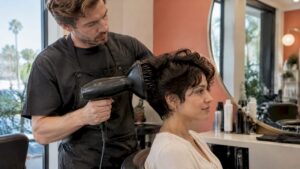
Lift at the roots. Blow-dry the roots first, pulling them up and away from the scalp with a round brush or your fingers. Dry the ends last, and only until they are about 90 percent dry, so you do not overheat them.

Change direction. Alternating the direction of the brush while drying creates natural bounce, instead of one smooth, uniform fall.
Cool shot to set. Finish with the cool setting on your dryer to lock the lift in place. It is the cheapest volume trick there is.
Use a light spray, not a heavy one. Hold the can at arm’s length for a fine mist. A flat, shellacked finish is the fastest way to make short hair look dated.
If volume is your main goal, our post on volume boosting haircuts shows which shapes add body before you pick up a dryer.
Avoiding the rounded, “helmet” look
The style clients most often want to escape is a short cut that turns into a puffy, rounded shape by midday. A few corrections help.
- Ask for beveled or softly shaped ends. A Vogue editor’s blow-dry guide for bobs recommends beveled ends and drying sections in opposite directions to break up a uniform, helmet-like silhouette.
- Finish with texture. After drying, a light texturizing spray and a bit of mussing with your fingers takes away the too-perfect look.
- Check the proportion. Too much volume at the sides makes any short cut look rounder. Keep height at the crown and closer lines at the temples and ears.
- Update your part. Moving your part half an inch, or switching sides, changes the whole shape and takes thirty seconds.
This is also why a custom consultation matters. A cut that is balanced for your head shape lets you skip most of these corrections.
Short fine hair: how to look fuller
Fine hair is not a problem with short styles, it is an advantage when the cut is right. Our existing guides on styling fine hair for volume and chic hairstyles for fine hair go deeper, but the essentials are these.
- Choose a blunt edge. Vogue is not the source here, so we will say it from our own chair: a blunt perimeter makes fine hair read as thicker because the ends look dense rather than wispy.
- Use texture powders and matte wax. The GQ stylist recommends these for lift without weight, which is what fine hair needs.
- Keep products light and targeted. Put powder at the roots only, and wax at the ends only.
- Use face-framing pieces. They add dimension without taking length from the rest of the cut.
If thinning is a concern, take a look at our post on styling thinning hair for a fuller look.
Quick updos, half-up styles and braids
Short hair is more versatile than people expect. Byrdie’s roundup of short hair updo ideas shows pinned curls, half-up styles with a claw clip and Dutch braids, including on a pixie cut. L’Oréal’s updo roundup, based on our reading of the research, also covers fishtail braids, crown braids and milkmaid braids as ways to hold shorter strands in place.
Here is how we think about it.
Half-up with a clip. Works from chin-length upward. Twist the top section, secure it with a claw clip or pins and leave the rest down. It takes under two minutes and suits second-day hair.

Pinned curls. Add loose waves with a small barrel iron, then pin the front sections back with small pins. Good for events.
Braided crown or side braid. Best at bob length or longer, where there is enough hair to hold. Texture spray on day-old hair gives the strands grip.
Accessories. Headbands, barrettes, scarves and ribbons change the look of the same cut. See our ideas for chic hairstyles with accessories.
For a wedding, gala or photo shoot, an updo built by a stylist on your actual hair will hold better than something copied from a video, especially when your hair is short and needs pins placed precisely.
Care habits that make styling easier
Healthy short hair is simply easier to style. The routine below keeps it cooperative.
- Trim on schedule. Short cuts lose their shape quickly. Many clients rebook every four to six weeks for a sharp cut, and a little longer for a softer one. Your stylist can set a schedule based on your growth rate.
- Condition regularly. Short hair that is color-treated or heat-styled benefits from a deep conditioning treatment. A salon version, finished with a blow dry, also gives you a polished style for the week.
- Sleep smart. A satin or silk pillowcase reduces friction and morning frizz.
- Go easy on heat. Use the lowest setting that gets the job done, and always use a heat protectant.
- Plan the grow-out. If you are considering moving from short to long later, read our tips for growing hair longer.
Men’s short hair follows the same logic: a clean shape, a small amount of product and a regular trim. If that is what you are after, see our notes on outdated men’s hairstyles and what to try instead.
Color and short hair
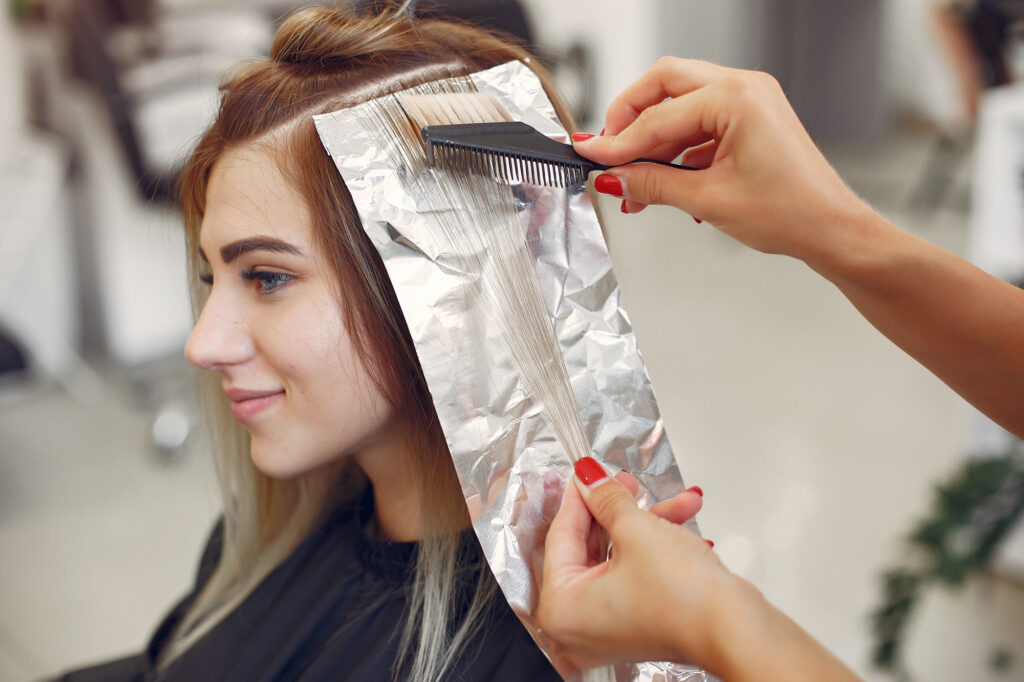
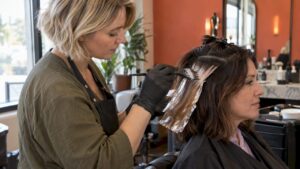
Color can do what product cannot: add depth and dimension. On a short cut, soft highlights or hand-painted balayage make the layers visible and the hair look thicker. Roots show faster on short hair, so lower-maintenance placements, such as a softer root blend, can help you go longer between visits. Our guides on what balayage is and grey blending techniques explain the options.
Our perspective on short hair
After more than 25 years behind the chair, the founder of Joel C Ma Hair Studio has seen the same pattern: clients come in asking for a styling tip when what they need is a conversation. We believe short hair is the most personal cut in the salon. It is shaped by your growth pattern, your texture, your face and the way you live, and no video can see all four at once.
That is why every visit with us begins with a style consultation. We look at how your hair falls dry, where it resists, what you want to feel like when you walk out, and how much time you will realistically spend each morning. Then we cut and, where it helps, color to match. Our approach is designed to give you a shape that looks finished with almost no effort, so the tips above become easy rather than a chore.
We would rather give you a cut that needs a fingertip of product than one that needs a twenty-minute routine.
— Juiced
Get a short cut styled for you
If you live in La Jolla or elsewhere in San Diego and want a cut that styles itself, we can help. Our women’s haircuts are listed at $60-$75 and men’s haircuts at $45-$50. A blow dry style runs $45-$75, and a deep conditioning treatment with blow dry style is $80-$85. For events, special occasion updos start from $100. Prices are as published on our site, so check the current menu before you book.
See every service and price on our services page, or look at our special occasion updo details if you have an event coming up.
FAQ
How do I style short hair so it does not look flat?
Lift the roots while you blow-dry, using a round brush or your fingers, and change brush direction as you go. Finish with a cool shot of air and a small amount of texture powder or matte product at the crown. If it is still flat, the cut may need more internal layering.
What products are best for short hair?
It depends on your texture. Clays and waxes suit straight and wavy hair, while curly hair does better with moisturizing, shine-adding products. Fine hair responds to texture powders and matte wax. In every case, start with an amount that lightly coats your palms.
Can you do an updo or braid with short hair?
Yes. Half-up styles with a claw clip, pinned curls and Dutch or crown braids all work on shorter lengths, and many are possible on chin-length cuts. For a very short cut, a stylist can pin a polished style that holds through an event.
How often should I trim short hair?
Most short cuts look their best with a trim every four to six weeks, since the shape is the style. Softer, more textured cuts can stretch a bit longer. Your stylist can tailor the timing to how fast your hair grows.
Will short hair make me look older?
Not when the cut is right. A shape with soft texture, movement and a modern finish looks fresh at any age. What ages a style is stiffness: too much product, a rounded outline or a flat finish.
Sources
- How to Style Short Hair, According to a Veteran Hairstylist (GQ)
- Can a Blow-Dried Bob Look Cool? (Vogue)
- Flat hair fix: Transform your short cut (Hello!)
- How to care for short hair, from bobs to pixie crops (Stylist)
- 31 Short Hair Updo Ideas for Every Occasion (Byrdie)