
Salon Booking Best Practices for Owners in 2026

TL;DR:
- Effective salon booking systems are vital for protecting revenue, reducing no-shows, and building client loyalty. They should offer 24/7 mobile access, automated reminders, deposits, waitlists, and demand-driven staff scheduling to optimize operations and client experience. Treating booking flows as growth tools and continuously refining them can significantly boost salon success.
Salon booking best practices are the strategies that protect revenue, reduce empty chairs, and give clients a reason to come back. The industry has moved well past paper appointment books. 71% of regular clients have abandoned a booking because the process felt too difficult. That single stat explains why your booking system is not just an admin tool. It is your first impression, your sales funnel, and your client retention engine all at once. Joelcma’s experience at Joel C Ma Hair Studio in La Jolla confirms what the data shows: a well-designed booking flow converts browsers into loyal clients.
What are the essential features of effective salon scheduling systems?
The foundation of any effective salon scheduling setup is 24/7 online access. 40% of bookings happen after business hours, which means a phone-only system loses nearly half its potential appointments before the day even starts. A mobile-first interface is not optional. It is the minimum standard clients expect in 2026.
Your booking system needs these core capabilities:
- 24/7 online booking with a mobile-first interface that works consistently across all devices
- Service menu with transparent pricing and duration so clients know exactly what they are booking
- Stylist selection with profile photos, specialties, and availability shown clearly
- Automated confirmations and triple reminders sent at 48 hours, 24 hours, and 2 hours before the appointment
- Deposit collection and cancellation policy acknowledgment built directly into the checkout flow
- Automated waitlist management to fill canceled slots without manual follow-up
- Back-office admin tools for staff calendars, manual bookings, approval queues, and reporting
The triple-reminder sequence deserves special attention. Sending reminders at 48 hours, 24 hours, and 2 hours before an appointment is not excessive. It is the sequence that reduces no-shows by 50–60% on its own, before deposits even enter the picture.
Pro Tip: Set your 2-hour reminder to include a one-tap link for rescheduling. Clients who cannot make it will reschedule instead of simply not showing up, which keeps the chair filled and the relationship intact.
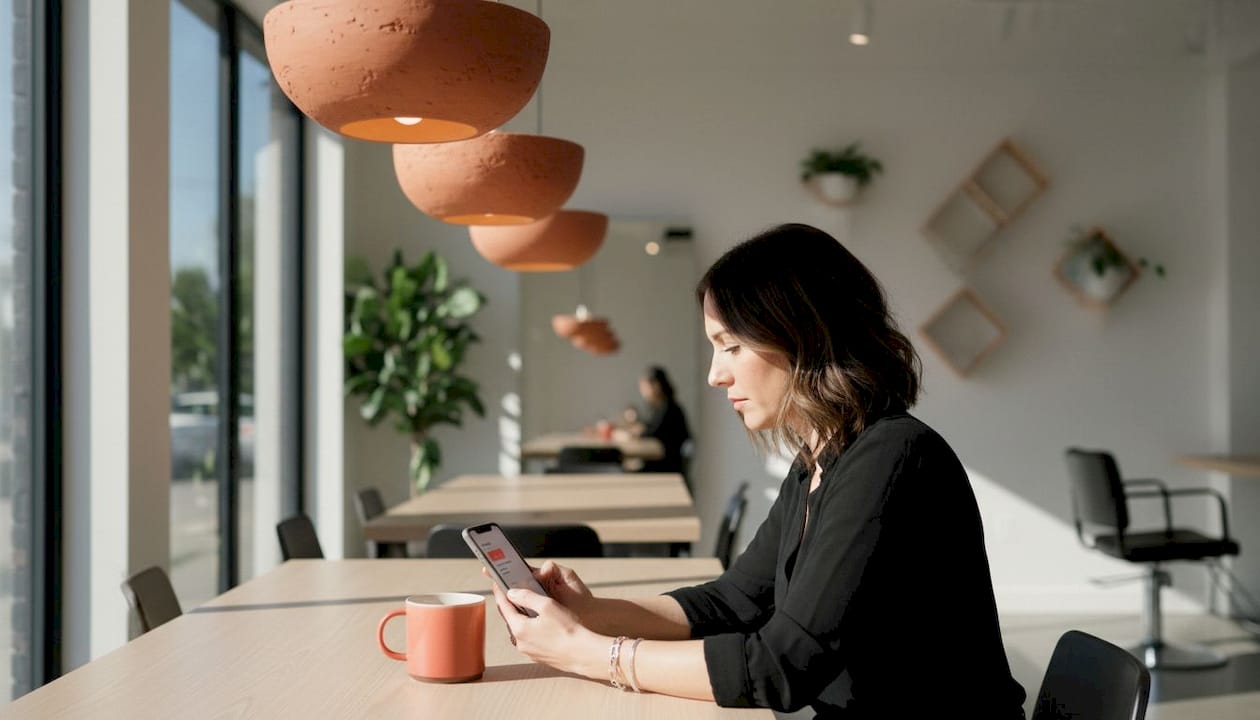
Deposit management inside the booking system removes the awkward conversation at the front desk. When clients acknowledge your cancellation policy and pay a deposit during checkout, they are financially and psychologically committed. That commitment changes behavior. The roles your staff play in reinforcing these policies at check-in and check-out complete the loop.
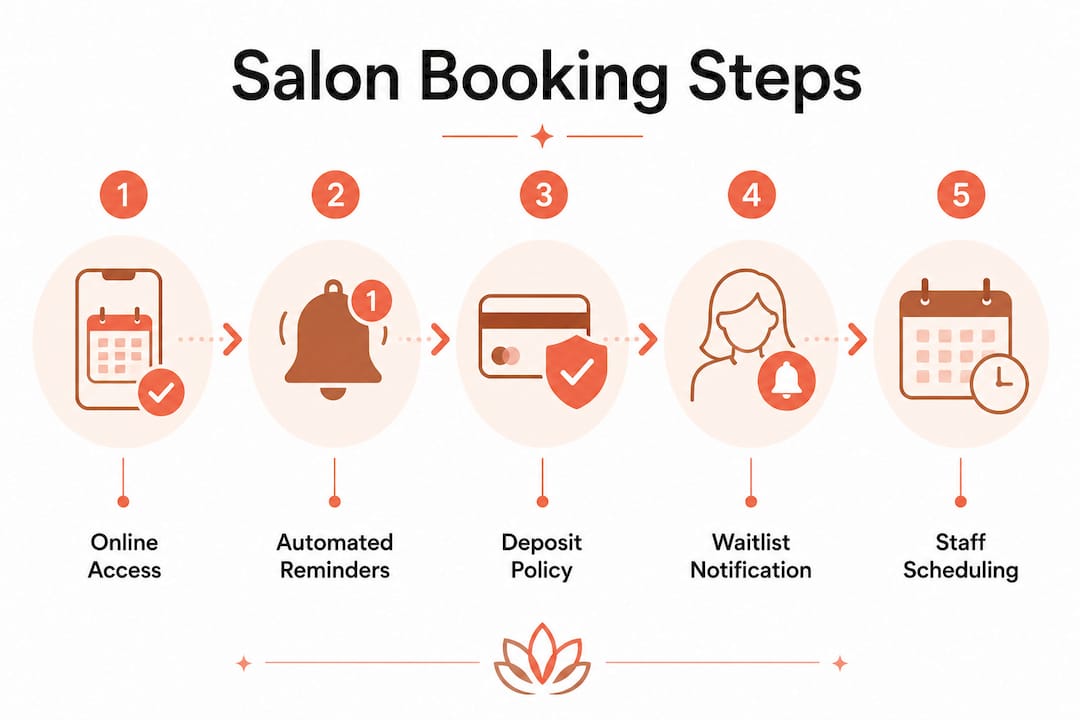
How can salons reduce no-shows and cancellations?
No-shows are the most expensive problem in salon operations. A single missed balayage appointment can represent $200 or more in lost revenue and an hour of wasted stylist time. The good news is that the combination of reminders, deposits, and tiered cancellation policies can cut no-shows by up to 80%.
The most effective approach follows this sequence:
- Activate the triple-reminder sequence. Automated reminders alone reduce no-shows by 50–60%. This is the lowest-effort, highest-return change most salons can make today.
- Require deposits for high-value services. Deposits capture an additional 60–75% reduction in no-shows on top of reminders. Set the deposit at a level that reflects the service investment, typically 20–30% of the service price.
- Apply a tiered cancellation policy. A flat 24-hour window does not protect a 3-hour balayage appointment the same way it protects a 30-minute trim. Tiered cancellation windows require 48–72 hours notice for color and chemical services and 24 hours for standard cuts. This aligns the penalty trigger with the actual prep and revenue risk.
- Make rescheduling frictionless. Every reminder should include a one-tap reschedule link. Clients who feel trapped by a policy will simply not show up. Clients who can reschedule easily will.
- Communicate policies upfront. Transparent cancellation policies reduce disputes and improve client relationships when clients acknowledge them during booking, not at the door.
- Activate automated waitlists. When a cancellation comes in, your system should immediately notify the waitlist. Automated waitlists fill roughly 80% of canceled slots, compared to 20–30% for manual phone calls.
The most overlooked no-show strategy is making it easy to cancel. When clients feel they have a simple, penalty-free path to rescheduling within your policy window, they use it. The chair gets filled. The relationship stays warm. A rigid, punitive policy that clients fear will produce more silent no-shows, not fewer.
Pro Tip: For services like balayage or keratin treatments, send a pre-appointment prep guide with your 48-hour reminder. Clients who feel prepared and informed are far less likely to cancel.
What are best practices for staff scheduling alongside appointment booking?
Staff scheduling and appointment booking are the same problem viewed from two angles. Most salons treat them separately. That separation creates overstaffing on slow days and understaffing during peak hours, both of which cost money and damage client experience.
AI demand forecasting solves this by analyzing booking data to predict which days, times, and service types will drive the most demand. The result is a schedule that puts the right number of stylists with the right skills on the floor at the right time. AI-driven scheduling saves up to 23% in labor costs compared to spreadsheet-based scheduling. That is a meaningful reduction for a business where labor is the largest expense.
| Scheduling approach | Labor cost control | Staff satisfaction | Client wait times |
|---|---|---|---|
| Spreadsheet-based | Low | Variable | Unpredictable |
| Demand-driven with booking data | High | Improved | Consistent |
Beyond cost, staff scheduling affects retention. Stylists who get consistent hours that respect their availability and skill set stay longer. Turnover in salons is expensive. Every time a stylist leaves, you lose their client relationships along with their chair revenue.
Smart scheduling also accounts for service structure. Active time and processing time are different things. A stylist applying color has 45 minutes of processing time where the chair is occupied but the stylist is free. Scheduling a bang trim or a gloss treatment during that window doubles the chair’s productivity without extending the appointment. This is the kind of nuance that spreadsheets miss and integrated booking systems handle automatically.
- Match stylist specialties to service types in the booking system so clients always land with the right person
- Build buffer time between appointments to account for overruns without cascading delays
- Use booking data from the previous 90 days to set staffing levels for the next month
How to design a booking flow that clients actually want to use?
The booking flow is where client experience begins. A confusing, slow, or visually inconsistent booking page signals the same thing as a messy reception desk. It tells clients the salon does not pay attention to details.
Mobile-first design with consistent UX across all devices is the baseline. Beyond that, the flow should feel like a conversation, not a form. Clear service descriptions in plain language, stylist bios with photos, and transparent pricing remove the friction that causes clients to abandon mid-booking. 71% of clients who abandon bookings cite friction as the reason.
Context-aware upsells placed at checkout convert at a 25% success rate when they feel like expert recommendations rather than sales pressure. A client booking a balayage appointment who sees “Add a toning gloss for $45 to extend color vibrancy” is receiving advice, not a pitch. That distinction matters. Joelcma’s approach to client-centered service reflects this principle: every touchpoint should feel like it serves the client’s goal, not the salon’s revenue target.
Repeat clients deserve a faster path. One-tap rebooking for returning clients removes every barrier to the next appointment. The client sees their last service, their preferred stylist, and a suggested date. One tap confirms it. That experience builds loyalty faster than any loyalty program.
Abandoned booking recovery is the final piece most salons ignore. When a client starts a booking and does not complete it, an automated follow-up message sent within 2 hours with a simple link back to their saved selection recovers a meaningful share of those lost appointments. Pair that with a small incentive for first-time bookers and the conversion rate climbs further.
Pro Tip: Mirror your booking page’s visual design to your physical salon. Use the same color palette, fonts, and photography style. Clients who recognize your brand in the digital space feel more confident completing the booking.
Key Takeaways
Effective appointment management combines 24/7 digital access, automated reminders, tiered cancellation policies, and demand-driven staff scheduling to protect revenue and build client loyalty.
| Point | Details |
|---|---|
| 24/7 booking access | 40% of appointments book after hours, so a phone-only system loses nearly half its potential clients. |
| Triple-reminder sequences | Automated reminders at 48h, 24h, and 2h reduce no-shows by 50–60% before deposits are added. |
| Tiered cancellation policies | Require 48–72 hours notice for color services and 24 hours for cuts to match penalty risk to service value. |
| Demand-driven staff scheduling | Integrating booking data with staff scheduling cuts labor costs by up to 23% and reduces wait times. |
| Client-centered booking flow | Context-aware upsells at checkout convert at 25%, turning the booking process into a revenue channel. |
Why your booking system is your most underused growth tool
Most salon owners I talk to think of their booking system as a calendar. That framing costs them money every single week. The booking interface is the first place a new client forms an opinion about your salon. If it is slow, confusing, or requires a phone call during business hours, you have already lost a portion of your potential clients before they ever sit in a chair.
The salons that grow consistently treat their booking flow the way a retailer treats a product page. They test it, refine it, and measure it. They look at abandonment rates, upsell conversion, and no-show frequency as business metrics, not IT problems. That mindset shift is the single biggest difference between salons that plateau and salons that grow.
Automation does not replace the human touch. It protects it. When your system handles reminders, deposits, and waitlists automatically, your front desk team has time for the conversations that actually build loyalty. The approval queue for new clients, the personal confirmation call for a first-time color appointment, the follow-up message after a major service. Those moments matter. Automation creates the space for them.
One more thing: be flexible with good clients. A rigid cancellation policy applied without judgment to a 10-year regular who had a family emergency will cost you far more than the missed appointment fee. The policy exists to protect revenue from chronic no-shows, not to punish loyal clients. Know the difference and act accordingly.
— Juiced
How Joelcma approaches salon excellence beyond the chair
Joelcma at Joel C Ma Hair Studio has spent over 25 years refining what a premium client experience looks like, from the first booking click to the final style reveal. That same attention to detail extends to the resources and guidance available on the Joelcma website.
Whether you are looking to refine your service menu, understand which salon haircut services drive the most repeat bookings, or explore how trend-aware salons attract and retain high-end clients, Joelcma’s expert content covers the full picture. The same principles that make a booking flow work, clarity, confidence, and client focus, are the principles that define every service at Joel C Ma Hair Studio in La Jolla.
FAQ
What is the most effective way to reduce salon no-shows?
The most effective method combines automated triple reminders at 48 hours, 24 hours, and 2 hours with a deposit requirement. Together, these tactics can reduce no-shows by up to 80%.
How far in advance should salons require cancellation notice?
A tiered policy works best: require 48–72 hours notice for color and chemical services, and 24 hours for standard cuts. This aligns the cancellation window with the actual prep time and revenue risk of each service.
Why do so many clients abandon online bookings?
Friction is the primary cause. Confusing navigation, missing pricing information, and the absence of stylist profiles cause clients to leave before completing a booking. A mobile-first design with transparent service details resolves most abandonment.
What is an automated waitlist and how does it help?
An automated waitlist notifies clients on a waiting list immediately when a cancellation occurs, typically with a 30-minute window to claim the slot. This approach fills roughly 80% of canceled appointments versus 20–30% for manual phone outreach.
How does integrating booking data with staff scheduling save money?
When scheduling software uses real booking demand to set staffing levels, it eliminates the guesswork that leads to overstaffing on slow days. AI-driven scheduling that incorporates booking data reduces labor costs by up to 23% compared to spreadsheet-based methods.
Recommended
- Salon Visit Preparation Tips for Best Results – Joel C Ma Hair Studio
- Best 6 Hair Straighteners for Salons – Expert Comparison 2025 – Joel C Ma Hair Studio
- Why Trend-Aware Salons Succeed With High-End Clients – Joel C Ma Hair Studio
- Role of Customer Service in Salons – Impact on Client Loyalty – Joel C Ma Hair Studio