
Professional Hair Care Advice From Experts

TL;DR:
- Professionals follow a fixed hair care sequence: cleanse, condition, treat, protect, and style. They customize products based on scalp conditions and hair porosity for optimal results and avoid overlayering treatments.
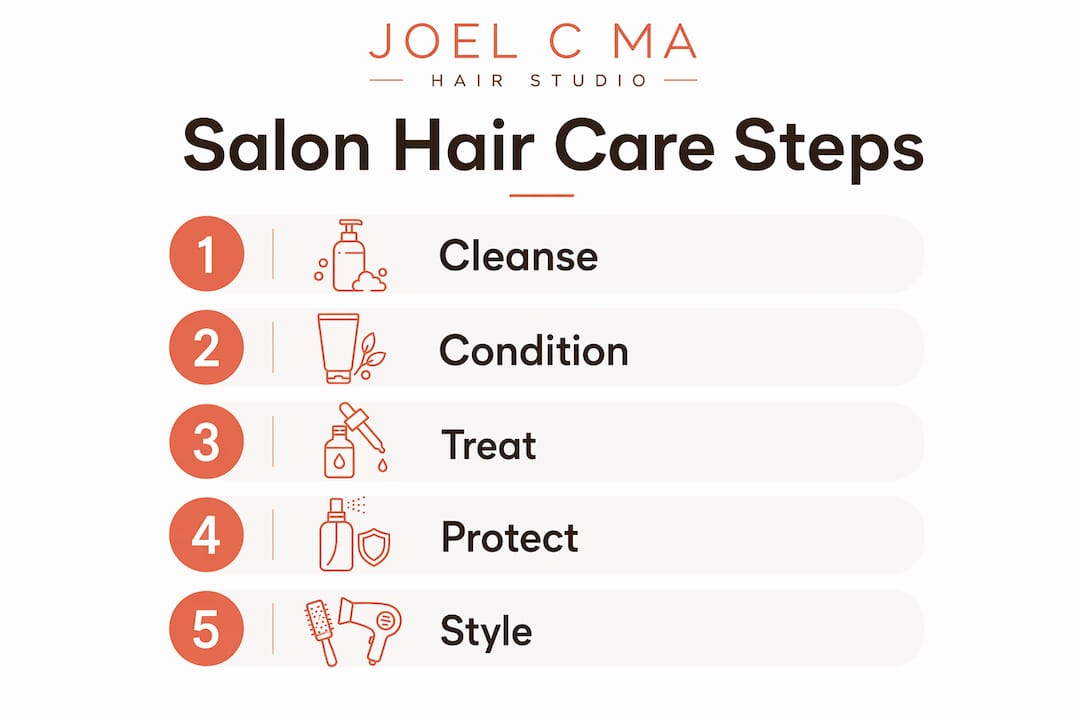
The single most important thing professionals do is follow a fixed sequence: cleanse → condition → treat → protect → style. Every step prepares the hair surface for the next one, and skipping or reordering them reduces how well each product actually works. Here are the three rules that matter most before your next salon visit:
- Apply shampoo directly to the scalp, not the lengths. Conditioner goes mid-length to ends only.
- Always apply a heat protectant before any thermal tool touches your hair.
- Match treatments to your porosity and scalp condition, not a generic hair-type label.
Before your next appointment: write down your current wash frequency, any scalp symptoms, and the last chemical service you had. That information shapes every recommendation your stylist makes.
Table of Contents
- What does a salon-grade weekly routine actually look like?
- How do professionals shampoo and condition for the best results?
- How often should you wash your hair?
- Which professional treatments work, and when do you need a dermatologist?
- What do pros do to protect hair from heat and sun?
- What happens during a luxury salon consultation?
- How do you choose the right shampoo, conditioner, and treatments?
- Key Takeaways
- Why personalization is the only thing that actually works
- Joel C Ma Hair Studio: where your consultation becomes a plan
- Useful sources
What does a salon-grade weekly routine actually look like?
Professionals build routines around that five-step order because each product alters the hair’s surface chemistry for what follows. Conditioning before a treatment, for example, opens the cuticle slightly and lets active ingredients penetrate more evenly.
A practical weekly structure looks like this:
- Wash day (2–3x per week for most people): Cleanse scalp, condition mid-lengths to ends, rinse with cool water to seal the cuticle.
- Treatment day (once weekly or biweekly): After conditioning, apply a deep mask or bond-building treatment to towel-dried hair. This is when porosity matters most — high-porosity hair drinks product fast and may need a heavier mask.
- Heat styling day: Always a separate step from wash day when possible. Dry hair completely, apply protectant, then style.
- Rest days: Refresh with a light mist of water or a leave-in spray. No heavy product layering.
Pro Tip: Pros often apply a bond-building treatment and a hydrating mask on alternating weeks rather than the same day. Layering both at once can cause limp, over-saturated hair that loses shape by the next morning.
For a deeper look at daily care habits that hold salon results between visits, Joelcma’s studio blog covers the specifics.
How do professionals shampoo and condition for the best results?
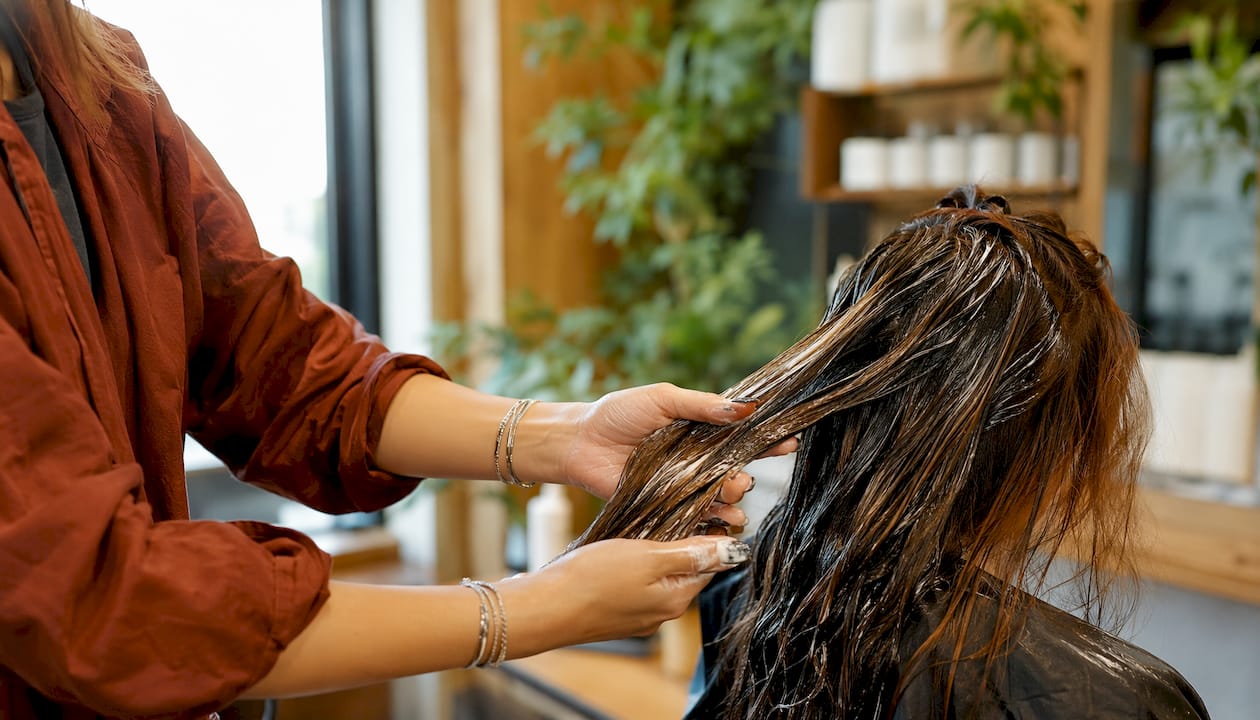
The core rule is simple: shampoo targets the scalp, conditioner targets the ends. Professionals never pile shampoo onto the lengths because the lengths don’t produce oil — the scalp does. Dragging lather through dry, porous ends strips what little moisture they have.
Step-by-step technique:
- Wet hair thoroughly with warm (not hot) water before applying any product.
- Dispense a quarter-sized amount of shampoo into your palms, emulsify it, then work it into the scalp using your fingertips in small circular motions. No scrubbing with nails or palms.
- Let the rinse water carry the lather through the lengths. That’s enough cleansing for the mid-shaft and ends.
- Squeeze out excess water before applying conditioner. Apply from the ear line down, focusing on the last two inches of the ends.
- Leave conditioner on for two to three minutes, then rinse with cool water.
What to avoid:
- Heavy oils or butters applied at the roots — they accelerate buildup and can clog follicles.
- Rough towel-drying. Pat or use a microfiber towel; friction when hair is wet causes breakage.
- Hot water throughout the full wash. Warm to start, cool to finish.
Pro Tip: For fine or color-treated hair, pros often use a lighter, rinse-out conditioner on the mid-lengths and reserve a leave-in spray for the ends only. This prevents the root-weighting that makes fine hair go flat within hours.
How often should you wash your hair?
Wash frequency depends on your scalp condition more than your hair type. Dermatologists assess oiliness, sensitivity, and lifestyle before making any recommendation. Most people do well washing two to three times per week, but that range shifts considerably based on what your scalp is actually doing.
| Scalp condition | Recommended frequency | Common modifier |
|---|---|---|
| Normal to oily | 2–3x per week | Daily exercise adds a wash |
| Dry or sensitive | 1–2x per week | Avoid sulfate shampoos |
| Curly or coily | Once weekly or less | Co-wash between wash days |
| Color-treated | 2x per week | Sulfate-free only |
| Dandruff-prone | 2–3x per week | Alternate medicated shampoo |
Dry shampoo works well as a one-day bridge between washes, but it is not a substitute for cleansing. Buildup from dry shampoo left on the scalp for more than a day can irritate follicles. For more on scalp health fundamentals, Joelcma’s guide covers the dermatology-aligned approach the studio uses.
Which professional treatments work, and when do you need a dermatologist?
Treatments must match what the hair and scalp actually need. Pros assess porosity and protein-moisture balance before selecting anything. Applying a protein treatment to already-stiff, low-porosity hair, for instance, makes it more brittle, not stronger.
Common salon treatments and who they suit:
- Deep-conditioning masks: Best for dry, high-porosity, or chemically treated hair. Weekly to biweekly use depending on damage level.
- Bond-building treatments (e.g., Olaplex, K18): For hair that has undergone bleaching or repeated color. Rebuilds broken disulfide bonds from the inside out.
- Keratin smoothing treatments: Reduces frizz and curl pattern temporarily. Best for coarse, frizzy, or humidity-affected hair. Not recommended for fine hair that already lacks volume.
- Scalp exfoliation: Removes buildup and dead skin cells. Useful for dandruff, product-heavy routines, or anyone using dry shampoo frequently. Joelcma’s guide on scalp exfoliation benefits explains what to expect from a professional treatment.
Red flags that require a dermatologist, not a stylist:
- Persistent redness or visible inflammation on the scalp
- Pimples or pustules along the hairline or crown
- Severe, unrelenting itching that does not respond to dandruff shampoo
- Sudden or patchy shedding beyond normal daily loss
- Scaling that looks thick, yellow, or greasy rather than dry and flaky
Scalp symptoms like these signal pathology that cosmetic products cannot fix.
Pro Tip: Pros sequence bond-building treatments before a hydrating mask, never after. Applying a mask first coats the cuticle and blocks the bond-builder from reaching the cortex where it does its actual work.
What do pros do to protect hair from heat and sun?
Professionals apply a thermal protectant before any heat tool, every single time. There are no exceptions for “just a quick blowout.” The protectant creates a barrier that slows moisture loss and reduces direct heat transfer to the cortex.
Heat styling dos and don’ts:
- Use a thermal spray or cream on damp hair before blow-drying, and again on dry hair before flat irons or curling wands.
- Keep flat irons below 365°F for fine or color-treated hair; medium-density hair can handle up to 400°F; coarse or resistant hair up to 450°F.
- Never use a flat iron on hair that is even slightly damp. Hair must be completely dry for a blowout to hold its shape — any retained moisture causes frizz and collapses the style.
- For UV protection, apply a UV-protective serum or leave-in spray before going outdoors, especially on color-treated hair where sun exposure accelerates fade.
Products to ask your stylist about: thermal spray (lightweight, pre-blowout), heat-protective cream (pre-iron, for coarse hair), and UV-protective serum (daily, for color-treated or highlighted hair). More detail on thermal protection strategies is available from Joelcma’s studio blog, and their guide on sun protection for hair covers UV-specific product layering.
What happens during a luxury salon consultation?
A high-value consultation assesses scalp condition, porosity, density, recent chemical history, and lifestyle before a single product or service is recommended. Generic hair-type labels — straight, wavy, curly — tell a stylist almost nothing useful on their own. Porosity and density determine how products behave on the hair far more reliably.
Questions to bring to your consultation:
- Any scalp symptoms (itching, flaking, tenderness)?
- Current wash frequency and products in use?
- Last chemical service and how hair responded?
- How much daily styling time are you willing to commit?
- What is your maintenance tolerance between salon visits?
What a luxury consultation looks like, step by step:
- Scalp and strand assessment: The stylist examines oiliness, flaking type, visible inflammation, and strand elasticity.
- Porosity check: A simple strand test or water-drop test reveals how quickly the hair absorbs and releases moisture.
- Service and product recommendation: Based on the assessment, the stylist builds a personalized treatment and maintenance plan.
- Demonstration: Key techniques (blow-dry direction, product placement) are shown so the client can replicate them at home.
- Follow-up schedule: A realistic cadence for in-salon treatments and at-home care is set before the client leaves.
Joel C Ma brings over 25 years of experience in artistic cutting, balayage, and personalized styling consultations to every client interaction. The studio’s approach is built on the principle that no two scalps, porosity profiles, or lifestyle demands are the same.
How do you choose the right shampoo, conditioner, and treatments?
Product choice should prioritize scalp compatibility and porosity over generic hair-type labels on packaging. A shampoo labeled “for dry hair” may still contain sulfates that strip a sensitized scalp. Ingredient function matters more than marketing copy.
Ingredient signals to look for:
- Glycerin, ceramides, hyaluronic acid: Hydration and moisture retention; best for dry, high-porosity hair.
- Ketoconazole or zinc pyrithione: Antifungal actives for dandruff; use alternated into routines rather than as a daily shampoo.
- Sulfate-free surfactants: For color-treated or dry hair; gentler cleanse that preserves color and moisture.
- Salicylic acid: Scalp exfoliant; useful for buildup or seborrheic dermatitis.
- Hydrolyzed proteins (keratin, silk, wheat): Strengthen and temporarily fill gaps in damaged cuticles.
| Hair/scalp state | Recommended shampoo type | Conditioner/treatment |
|---|---|---|
| Oily scalp, fine hair | Clarifying or balancing | Lightweight rinse-out only |
| Dry, color-treated | Sulfate-free | Deep mask biweekly |
| Dandruff-prone | Medicated (alternated) | Fragrance-free, light conditioner |
| High-porosity, damaged | Protein-enriched | Bond-builder + hydrating mask |
| Curly or coily | Co-wash + occasional clarify | Rich leave-in or butter |
Pro Tip: Pros trial a new product on a small section of hair during an in-salon visit before recommending the full retail size. Ask your stylist to do this at your next appointment — it takes five minutes and saves you from buying a product that fights your hair’s chemistry.
A well-rounded self-care beauty routine pairs these product choices with consistent application habits, which is where most people lose the gains they make at the salon.
Key Takeaways
The most effective professional hair care approach follows a fixed five-step sequence, matches every product to scalp condition and porosity, and refers persistent scalp symptoms to a dermatologist rather than treating them cosmetically.
| Point | Details |
|---|---|
| Follow the five-step order | Cleanse → condition → treat → protect → style; each step prepares the hair for the next. |
| Wash by scalp condition | Most people do well 2–3x per week; oily scalps may need more, curly or dry hair less. |
| Protect before every heat session | Apply a thermal protectant on damp hair before blow-drying and again before flat irons or wands. |
| Match products to porosity | Prioritize scalp compatibility and porosity over generic hair-type labels on packaging. |
| Joelcma consultation | Joel C Ma Hair Studio builds a personalized plan from a scalp and porosity assessment at every first visit. |
Why personalization is the only thing that actually works
The conventional wisdom in hair care is that you find your hair type, buy the matching products, and follow a standard routine. That model fails most people, and the reason is straightforward: hair-type labels collapse four or five distinct variables into one word. “Curly” tells you almost nothing about porosity, scalp oiliness, density, or chemical history. A routine built on that label alone is a guess.
What actually predicts how hair behaves is the combination of porosity and scalp condition. High-porosity hair absorbs product fast and loses moisture just as quickly. A low-porosity scalp resists penetration and gets weighed down by heavy products. These two variables determine whether a treatment helps or hurts, and they are invisible on a product label.
The misdiagnosis I see most often is someone treating a dry, flaky scalp with heavy moisturizing products when the actual issue is seborrheic dermatitis — an inflammatory condition that gets worse, not better, with occlusive oils. The fix is a medicated shampoo alternated into the routine, not more moisture. Getting that distinction right requires an assessment, not a quiz.
That is why a luxury consultation is not a luxury add-on. It is the only way to build a routine that holds up.
Joel C Ma Hair Studio: where your consultation becomes a plan
At Joel C Ma Hair Studio in La Jolla, the consultation is not a formality before the cut. It is the service. Every new client goes through a scalp and porosity assessment, a review of chemical history, and a conversation about realistic maintenance before a single recommendation is made. The result is a bespoke care and styling plan that travels home with you.
Whether you are managing color-treated hair, a sensitive scalp, or a style that has never quite held the way you wanted, the studio’s team of experienced hair artists builds a plan around what your hair actually needs. Joelcma also offers customized hair styling services and a full haircuts and consultation menu for clients ready to move from generic routines to something that works. Book your consultation at joelcma.com and arrive knowing exactly what to ask.
Useful sources
- American Academy of Dermatology: Tips for healthy hair
- Time: The best science-backed way to wash your hair
- Preventive Medicine Daily: Hair care tips dermatologists swear by
- Salon 1150: Hair care routine for every hair type
- Tea With MD: Dermatologist routine for thinning hair
- Farouk: Professional styling guidance
- Allure: 25 best hair tips from professional stylists
- Glos Hospitals NHS: Good hair care advice
This article is general information, not medical advice. For persistent scalp symptoms or sudden hair loss, consult a board-certified dermatologist or your primary care provider.
Recommended
- Why Hair Care Matters for Lasting Health and Style – Joel C Ma Hair Studio
- Curly Hair Care Tips: The Definitive Expert Guide – Joel C Ma Hair Studio
- Expert hair care tips for salon-quality style at home – Joel C Ma Hair Studio
- Top Hair Care Brands for Salons – Expert Comparison 2025 – Joel C Ma Hair Studio