
Hair Highlights Color Guide: Shades, Techniques, Upkeep
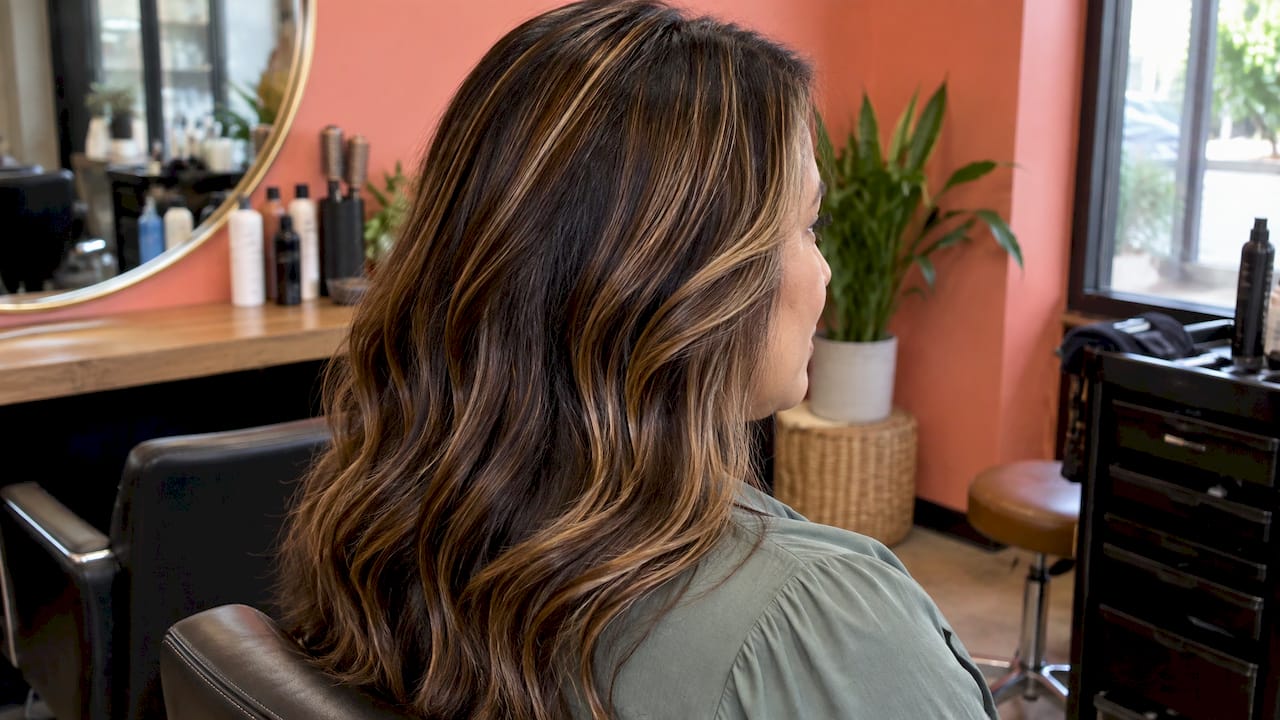
The best highlight color is the one that sits within a few shades of your base color, flatters your skin tone and is placed with a technique you can maintain. Getting there takes a real conversation with a colorist, not a photo alone. At Joel C Ma Hair Studio in La Jolla, that starts with a personalized style consultation before any color is mixed. Below: how highlights work, which shades suit which hair, how the techniques differ, what upkeep looks like, and what our highlight services cost.
TL;DR
- Highlights lighten selected pieces of hair and leave your natural color in between, so they grow out more softly than all-over color.
- Stay within about three to four shades of your base color, and pick cool or warm tones opposite your skin tone.
- Foil highlights, balayage, foilayage and babylights give different looks and need different upkeep.
- Plan on a refresh roughly every 8 to 12 weeks for most highlights, with softer hand-painted styles often stretching longer.
- Our published highlight prices run from $100 to $225, depending on the service.
Table of Contents
- What highlights are, and how they differ from all-over color
- Choosing your highlight color
- Highlight techniques compared
- What highlights cost at our La Jolla studio
- Keeping highlights fresh
- Our perspective
- Ready to book highlights in La Jolla
- FAQ
- Sources
What highlights are, and how they differ from all-over color
Highlights are pieces of hair lightened to create contrast, dimension and brightness, while your natural base color stays visible between them. All-over (single-process) color is one formula applied to the whole head. It gives a uniform shade and can cover gray, but it grows out as a visible line at the roots. That comparison comes from Byrdie’s guide to single-process color versus highlights.
That difference decides your upkeep. Because highlights keep some of your own color showing, the grow-out is softer and touch-ups come less often. All-over color is the better tool when you want a single, even shade or full gray coverage.
If you are choosing between the two, our own price list shows the range: an All Over Color is $95-$130, a Roots Touch-Up is $75-$120, and highlights are priced by how much of the head they cover.
Choosing your highlight color
Three things decide the shade: your base color, your skin tone and how much contrast you want.
Start from your base color
A common rule of thumb is to stay within four shades of your base color, according to Real Simple’s guide to highlights and lowlights. Staying close keeps the result looking like your hair, only better. Going far beyond that range is a fashion choice, and it works best when planned deliberately with your colorist.
By hair color, the same guide suggests:
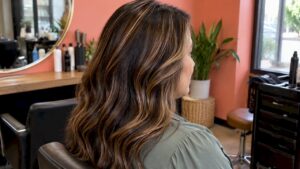
- Brunettes: caramel, golden, honey or soft baby blonde. Very dark hair suits rich auburn, chocolate or espresso, kept a shade or two from the base.
- Blondes: golden apricot or honey for warm skin, and white gold, pearl or platinum for maximum lightness.
- Redheads: strawberry blonde, amber, copper or rust.
For dark brunettes, fine woven pieces often do not show up at all in black hair, so edgier looks need larger, strategically placed sections. We have a separate piece with highlight ideas for dark hair if that is you.
Match your skin tone
The usual advice is to pick tones opposite your skin tone. Colorist George Papanikolas told AARP that warmer skin suits cooler highlights such as ash, sand, champagne, mocha and toffee. Cooler skin suits warmer ones such as golden caramel, honey, butterscotch, copper and cinnamon.
A quick home check from Woman & Home: if silver jewelry flatters you, cooler tones are likely your match. If gold does, lean warmer.
Decide how much contrast you want
Placement changes the look as much as shade does. Per the same AARP tips, the tighter together highlights are placed, the less contrast and the lighter the hair looks overall. Thicker, chunkier pieces read edgier and more fashion-forward, while thinner ones look more natural.
Hair texture matters too. Colorist Katie Allan told Woman & Home that fine hair suits delicate highlights such as babylights, while thicker hair can carry bolder techniques.
Highlight techniques compared
The same shade can look completely different depending on how it is applied. Allure’s highlights guide breaks down the main options:
| Technique | Look | Typical refresh |
|---|---|---|
| Traditional foil highlights | Bright, root-to-ends lightening | Every 6 to 8 weeks |
| Balayage | Hand-painted, soft, lived-in gradient | 3 to 6 months |
| Foilayage | Balayage blended with foils for more lift | Every 8 to 12 weeks |
| Babylights | Ultra-fine, soft glow | Varies with placement |
| Chunky highlights | High-contrast fashion statement | Varies with placement |
| Lowlights | Darker pieces that add depth | Varies with placement |
A few more terms you will hear in a consultation, from Byrdie’s nine highlight types:
- Ombré: darker roots fading to lighter ends.
- Sombré: a subtler ombré that starts around the eyebrow line.
- Face-framing: brighter pieces around the face. When they are chunky and bold, they are called money pieces.
- Dimensional color: two or more shades combined for contrast and the look of thicker hair.
Stylist Darren Anderson makes a point worth remembering: great highlights are layered with lights, mediums and darks rather than one color or bleach alone. That is where an experienced colorist earns the price.
Foils or balayage?
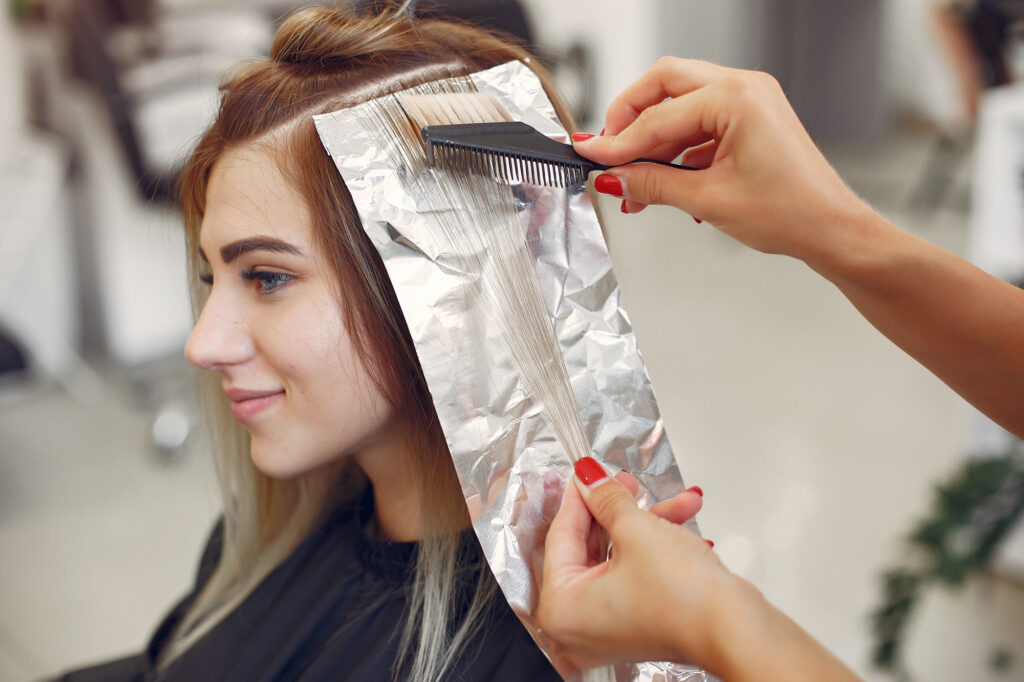
The technical difference is in the application. Foil highlights saturate a whole section from root to end. Balayage is painted by hand, so the saturation sits mainly on the mid-lengths and ends and leaves natural color near the root. That is why balayage grows out so gracefully.
If you are deciding between them, our balayage and highlights comparison goes deeper. Already have foil highlights and want a softer grow-out? See how to transition from highlights to balayage. Curious about darker pieces? Lowlights versus highlights covers when depth is the better move.
What highlights cost at our La Jolla studio
Our prices below are as published on our services page. They are given as ranges because the final amount depends on the hair and the work involved.
| Service | Price |
|---|---|
| Partial Highlights | $115-$160 |
| Full Highlights | $150-$225 |
| Full Balayage/Hair Painting | $200-$225 |
| Color Transformation | $200-$225 |
| Roots Touch-Up | $75-$120 |
| Men Highlight | $100-$155 |
| Men Color | $55-$80 |
Partial highlights usually suit people who want brightness around the face and top layers without committing the whole head. Full highlights give an even, brighter overall effect. If you are going from a very different shade, the Color Transformation service is the one designed for a bigger change.
Men are welcome to the same approach. Our guide to men’s hair highlights explains how to keep the result natural and sharp.
Keeping highlights fresh
Highlights are a maintenance commitment, and the first days matter most.
The first few days
Dermatologist Elizabeth Bahar Houshmand recommends waiting about 72 hours before shampooing, since the cuticle can take up to three days to fully close. She also recommends sulfate-free products and tepid water, with a cold rinse at the end.
Weekly routine
- Wash two to three times a week rather than daily.
- Use a heat protectant whenever you style with heat. Joico’s technical director Jeannetta Walker-Rodgers told InStyle that overheating leaches tone and creates brassiness.
- Use purple shampoo sparingly. Colorist Rita Hazan suggests about once a month to avoid dulling, per the same InStyle piece.
- Ask about a tinted gloss. Hazan compares it to a nail-polish top coat: it restores shine and a hint of color between appointments.
How often to come back
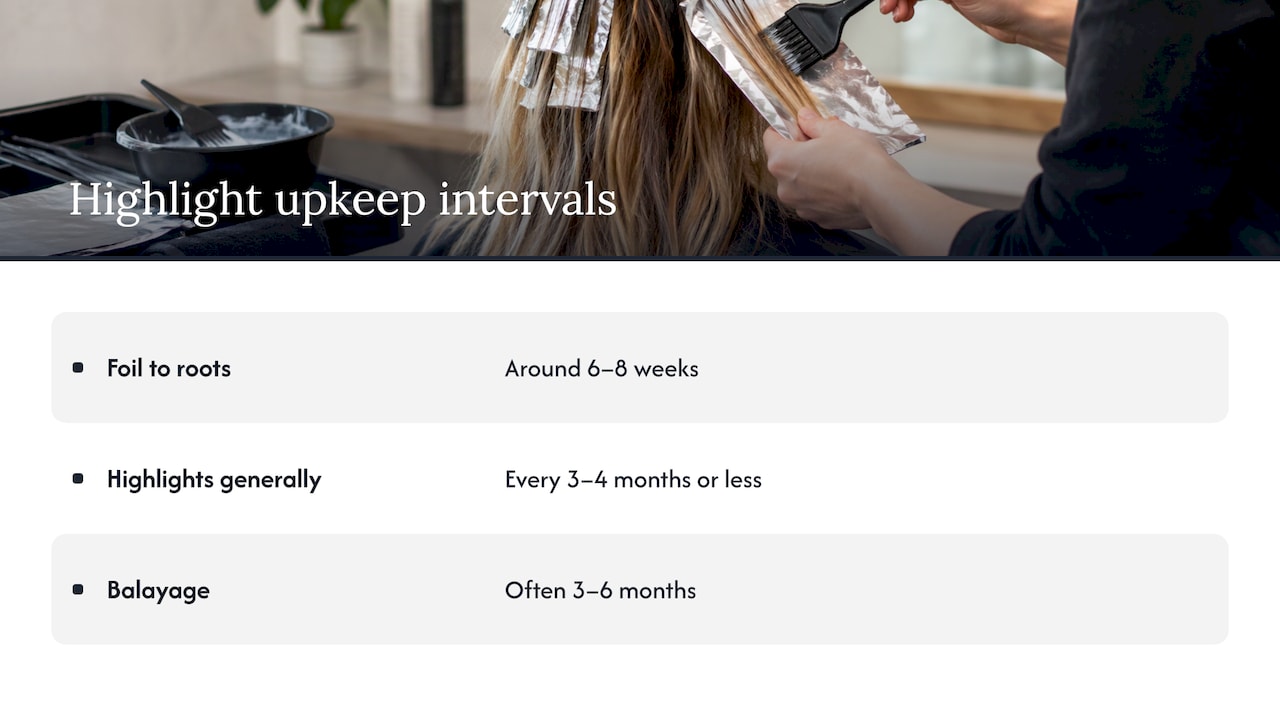
Hazan suggests retouching highlights every three to four months or less often, per InStyle. Foil highlights taken to the root generally need attention sooner, around every 6 to 8 weeks per Allure. Balayage can often wait three to six months. Your own timeline depends on how much contrast you chose and how fast your hair grows.
If yellow or orange tones creep in, our guides on fixing brassy hair and avoiding brassy hair explain why it happens and what to do about it.
Our perspective
Highlights look best when they are designed for one head of hair, not copied from a photo. Our founder has more than 25 years of experience, and our approach rests on artistic cutting, color techniques such as balayage, and a personalized style consultation before we start.
The consultation is where good highlights are made. We talk about your base color, your skin tone, how much upkeep suits your routine and whether you want a whisper or a shout. The cut matters too: highlights show best when the shape of the hair is right, and the studio is built around both skills.
Our team is handpicked, and we pay close attention to hair health and safety protocols. Whether you want soft balayage, classic foils or a bolder fashion shade, our goal is color that looks like yours and grows out well.
Juiced
Ready to book highlights in La Jolla
If you want a shade built around your base color and skin tone, our colorists can plan it with you in a consultation. Our highlight services, balayage, color transformations and cuts are all listed with prices on our services page.

Women’s haircuts are $60-$75 and men’s haircuts are $45-$50, so a cut and color can be planned in the same visit.
FAQ
Which highlight color is best for brown hair?
Caramel, golden, honey and soft baby blonde are the classic brunette choices, per Real Simple. Keep them within about three to four shades of your base for a natural, glossy look. Very dark hair looks richest with chocolate, espresso or auburn tones.
Do highlights damage hair?
Highlights lighten hair, and lightened hair never returns to its natural color. With good aftercare, gentle washing and heat protection, you keep the hair looking healthy. Regular trims and a gloss between visits help keep it shiny.
What is the difference between highlights and balayage?
Foil highlights saturate whole sections from the root for a bright, even lift. Balayage is painted by hand, mostly on the mid-lengths and ends, for a softer, lived-in gradient. Balayage typically grows out more gracefully and can go longer between visits.
How often should I refresh my highlights?
Foil highlights to the root typically need a refresh every 6 to 8 weeks, while softer balayage can last three to six months, per Allure. Foilayage sits in between, at roughly 8 to 12 weeks. Your colorist can tell you where you land once they see your hair.
Can men get highlights too?
Yes. Our men’s highlight service is $100-$155, and men’s color is $55-$80. Subtle, low-contrast placement is a popular way to add dimension while keeping a professional look.
Sources
- Single-Process Color vs. Highlights vs. Double-Process, Byrdie
- 9 Types of Highlights, Byrdie
- How to Speak Highlights, Allure
- Best Highlights and Lowlights for Every Hair Color, Real Simple
- 10 Tips to Get the Right Highlights for Your Hair, AARP
- 32 Ways to Add Highlights to Your Hair, Woman & Home
- How to Take Care of Highlights, InStyle
- How to Care for Your Highlighted Hair, Houshmand Dermatology