
Book a Consultation First to Find an Asian Hair Salon Near Me
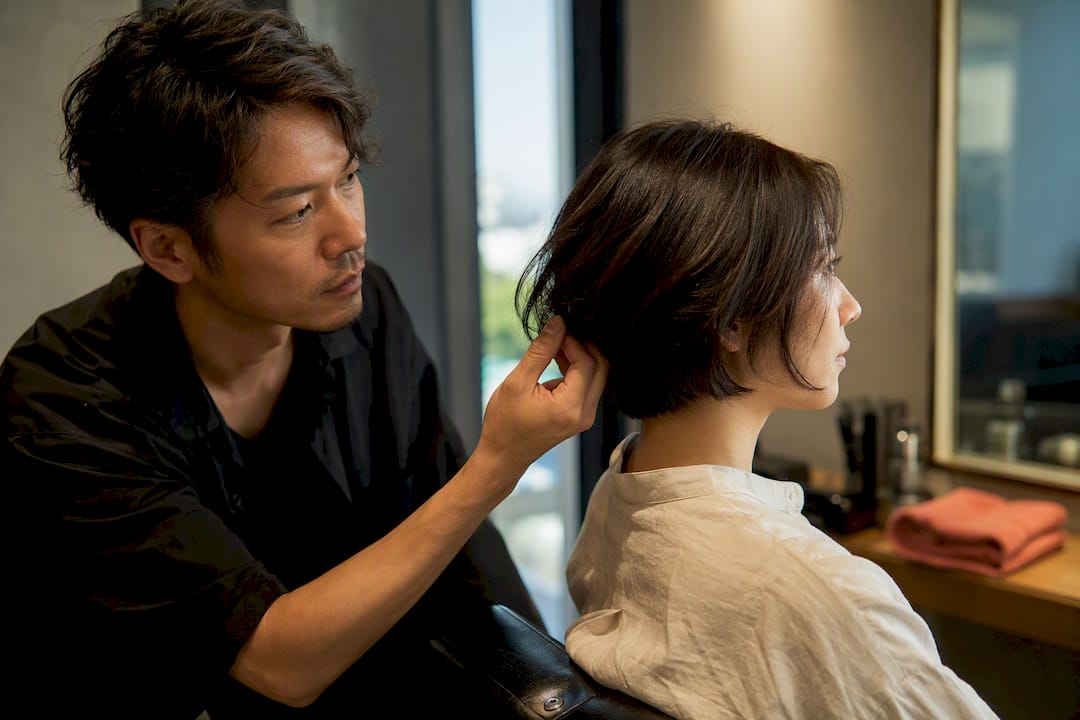
The best move is a nearby salon that openly advertises Asian or Korean hair specialization, whether through stylist bios mentioning training in Japan, Korea, or China, or through a portfolio full of relevant before-and-after work. Search with specific phrases, verify the portfolio on at least two platforms, then book a consultation (with a patch test if you want color or a chemical service) before committing to anything bigger.
TL;DR:
- Look for stylists with explicit experience or training in Japan, Korea, or China, and verify their specialization with a portfolio of at least 10 recent before-and-after photos.
- Expect a Japanese straightening treatment to cost around $400 and take three to five hours, especially on thicker, denser Asian hair.
- Always request a patch test for chemical services to ensure safety, and avoid salons that skip this step to save time.
- Use targeted search phrases like “Korean hair stylist near me” and check recent reviews and social media videos to confirm results specific to Asian hair types.
- Prioritize salons with detailed online listings, transparent pricing, flexible rescheduling, and loyalty programs, especially for ongoing treatments like coloring or straightening.
Table of Contents
- What Makes an Asian or Korean Hair Salon Different From a General Salon
- Services and Techniques Common at Asian and Korean Salons
- How to Search for an Asian Hair Salon Near Me and Book the Right Appointment
- What to Expect on Price and Time for Specialty Services
- Why Hair Structure Actually Changes the Technique
- Tips for Evaluating Salon Hygiene and Safety Measures
- Location and Accessibility: Parking, Transit, and Getting There
- Cancellation and Rescheduling Policies Worth Checking Before You Book
- Loyalty Programs and Membership Perks at Specialty Salons
- Why I Always Recommend Booking the Consultation First
- A Specialist You Can Book in La Jolla: Joel C Ma Hair Studio
- Sources
- FAQ
What Makes an Asian or Korean Hair Salon Different From a General Salon
Not every salon that cuts Asian hair well markets itself that way, and not every salon that uses the word “specialist” actually has the training to back it up. The gap between the two shows up in three places: the stylist’s background, the portfolio, and the service menu.
Start with bios. Stylists who trained or worked in Japan, Korea, or China tend to list that experience explicitly, because it is a selling point they know clients search for. That background usually corresponds to techniques adapted for Asian hair, including how they section hair for a perm rod or judge processing time on denser strands. A stylist who spent three years cutting hair in Seoul before opening a chair in your city is not the same as someone who took a weekend certification course. Bios on booking platforms often make this searchable, since salon profiles on appointment platforms frequently mention overseas training and specializations right in the stylist’s description.
Portfolios tell you what actually happens in the chair. A single flattering photo means nothing. What you want is a consistent stream of before-and-afters, ideally dozens, showing perm results holding curl shape, straightening jobs with even shine, and color that didn’t turn brassy three weeks later. Landing pages with strong before-and-after documentation are one of the clearest signals a stylist actually delivers repeatable results on Asian hair, rather than getting lucky once.
The service menu itself is a filter. If a salon lists digital perm, Japanese straightening, or Korean-style layered cuts by name, that’s a sign the stylist trained specifically for these techniques rather than improvising with tools built for finer, wavier Western hair textures. General salons rarely use this exact vocabulary because they don’t offer these services regularly enough to name them.
Reviews round out the picture, but only if you read past the star rating. A useful review mentions specifics: how long a perm held its shape after eight weeks, whether a straightening treatment left the ends brittle, or whether a toner actually matched the promised shade instead of drifting warm. Vague five-star reviews (“great service, loved it!”) tell you almost nothing about technical skill.
Here’s what to scan for in under two minutes on any salon’s page or profile:
- Explicit mention of training or work experience in East Asia
- A portfolio with 10+ recent before-and-after sets, not just one hero photo
- Service names like digital perm, Japanese straightening, or balayage suited for Asian hair
- Reviews that mention texture, curl longevity, or color tone rather than generic praise
- Response time and tone in reviews (does the salon address complaints professionally?)
The feed is the real portfolio. The bio is marketing copy.*
Services and Techniques Common at Asian and Korean Salons
Asian hair typically has a rounder cross-section and higher density than many other hair types, and that single structural fact changes almost everything about how a stylist approaches a cut or chemical service. Research on hair structure shows this thickness and roundness affects how hair holds a shape, how it responds to heat, and how deeply color or chemical treatments need to penetrate.
Precision cutting looks different on this hair type because the strands are heavier and don’t feather the way finer hair does. Stylists experienced with Asian hair often use more aggressive thinning or point-cutting at the ends to prevent a blunt, triangular silhouette, and they adjust layering angles to work with the hair’s natural tendency to sit close to the head rather than fall loosely.
Perms split into two main categories worth knowing before you book:
- Digital perms use heated rods and tend to produce looser, more natural-looking waves that suit thicker Asian hair better than traditional cold perms.
- Traditional or iron perms rely on chemical solution alone and can produce tighter, more defined curls, but they sometimes need adjusted processing times on denser hair to avoid an uneven result.
Japanese straightening (sometimes called thermal reconditioning) is one of the most requested specialty services, and for good reason: it can turn frizzy or wavy Asian hair permanently straight with a glossy finish that regular flat-ironing can’t replicate. It’s a multi-step chemical process, though, and processing time runs longer on thicker hair, which is part of why a specialist matters here more than almost anywhere else in the service menu.
Color work requires its own adjustments. Denser pigment in Asian hair often means staged lightening rather than one aggressive session, plus careful toning to avoid brassy or orange undertones after bleaching. A stylist who understands this will often recommend a balayage approach with a gentler lift schedule instead of pushing for maximum lightness in a single visit, and will typically pair the service with deep conditioning aftercare to protect the hair’s integrity.
How to Search for an Asian Hair Salon Near Me and Book the Right Appointment
Generic searches like “hair salon near me” surface hundreds of results with no filtering for specialization. You get better results with targeted phrases that match how these salons actually describe themselves online.
- Search with specific modifiers. Try “Asian hair salon near me,” “Korean hair stylist close to me,” or “Japanese straightening [your city]” instead of generic terms. Add your neighborhood name if you’re in a larger metro area, since salon SEO tends to be hyperlocal.
- Check Google Maps first. Look at photo counts and recent review dates, not just star averages. A salon with 200 reviews and fresh photos from the last month tells you more than one with 50 reviews from three years ago.
- Cross-reference on Yelp. Yelp reviews tend to be more detailed than Google’s, and filtering by “Asian” or “Korean” salon categories often surfaces specialists that don’t rank well organically yet.
- Scroll Instagram and TikTok before calling. Photos show final results, but short-form video reveals whether a perm has natural, bouncy movement or a stiff, “set” curl, a distinction Asian hair shows more clearly since it tends to hold less volume without the right technique.
- Call or message with a short script. Ask directly: “Have you worked with hair like mine before? Do you require a patch test for color? What’s your estimated time and price range for [service]?”
Pro Tip: Save screenshots of three or four portfolio photos that match the result you want, and bring them to the consultation. A skilled stylist will tell you honestly whether that exact look is realistic for your hair texture, which is a better sign than one who agrees to everything.
The partner resource on salon visibility notes that salons investing in accurate, detailed online listings tend to attract clients who already know what they want, which cuts down on mismatched expectations during the actual appointment.
What to Expect on Price and Time for Specialty Services
Price and timing vary more at specialty salons than at general ones, mostly because the services themselves are more involved. A senior stylist with a decade of Asian hair experience will usually charge more than a junior stylist, and city location moves the baseline too. Complexity is the biggest driver: a simple trim takes far less time and money than a full digital perm or a Japanese straightening treatment.
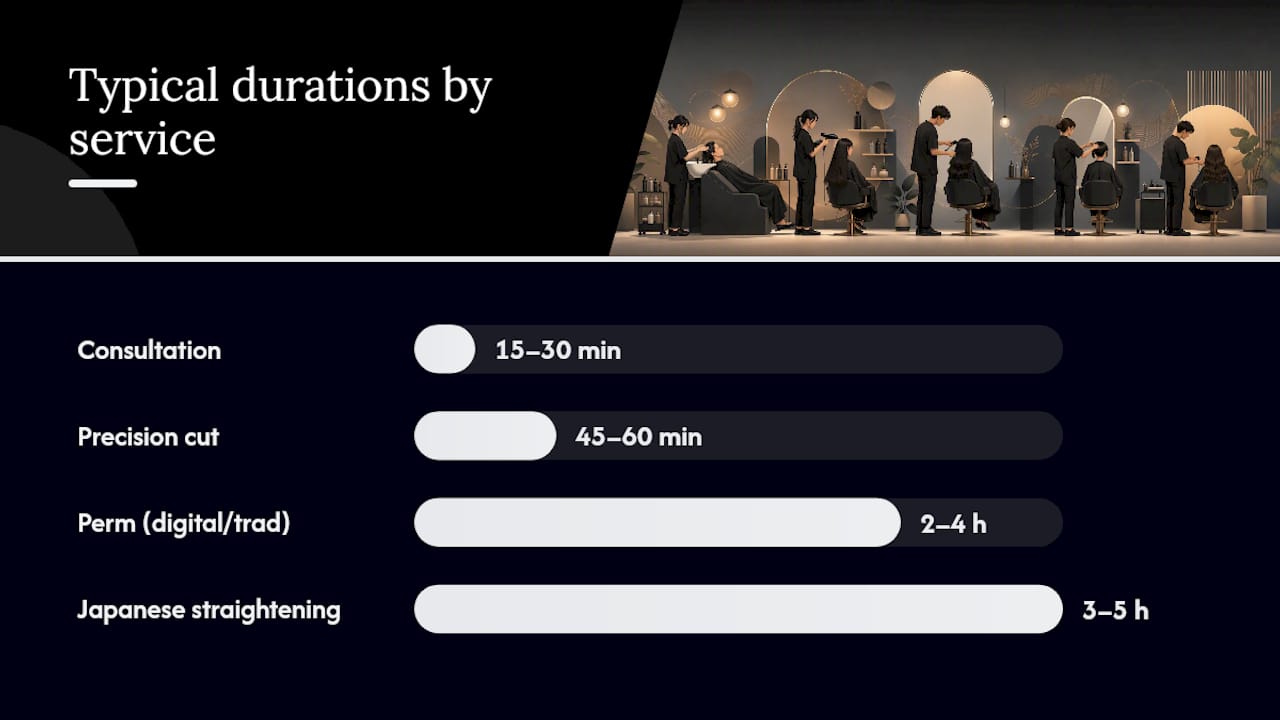
- Consultations typically run 15 to 30 minutes and should be free or low cost at most specialist salons.
- Precision cuts generally take 45 minutes to an hour.
- Perms (digital or traditional) often run two to four hours depending on hair length and density.
- Japanese straightening can take three to five hours for a first-time treatment because of the multi-step chemical process.
- Color transformations, especially staged lightening, sometimes require two or more visits rather than one long session.
Staged color work and patch tests add both time and cost, but they exist for a reason: denser, darker hair pigments often need longer processing and multiple visits to reach a target shade without compromising hair strength. A salon that pushes you toward a single aggressive session to save time is cutting a corner you’ll likely regret.
If you’re price-shopping before you commit, most salons will give you a range over the phone or through a booking message without requiring a deposit. Ask specifically, “What’s your price range for [service] on hair like mine?” rather than a generic “how much do you charge,” since the answer depends heavily on your hair’s length and density.
Why Hair Structure Actually Changes the Technique
The rounder cross-section and higher density common in Asian hair aren’t cosmetic footnotes. They change how a cut falls, how long a chemical treatment needs to sit, and how much lightener is safe to use in one pass. Stylists who’ve worked with this hair type repeatedly develop a feel for predicting the final shape of a cut before they even pick up the shears, which cuts down on rework and mismatched expectations.
Hair with a rounder cross-section and coarser texture responds differently to cutting tension, heat, and chemical processing than finer or oval-cross-section hair, which is why generic techniques often produce inconsistent results on Asian hair.
Practical adjustments show up constantly: more aggressive thinning to avoid a blunt triangle shape, longer but gentler chemical processing windows, and a firm habit of patch-testing before any color or straightening service. That last one isn’t optional caution, it’s standard practice among stylists who’ve seen what happens when it’s skipped.
Tips for Evaluating Salon Hygiene and Safety Measures
A clean-looking salon and a genuinely safe one aren’t always the same thing, so look past the décor. Tools should be sanitized between clients, and a salon comfortable with scrutiny will show you their sterilization process (autoclaves, UV cabinets, or single-use items) without hesitation if you ask.
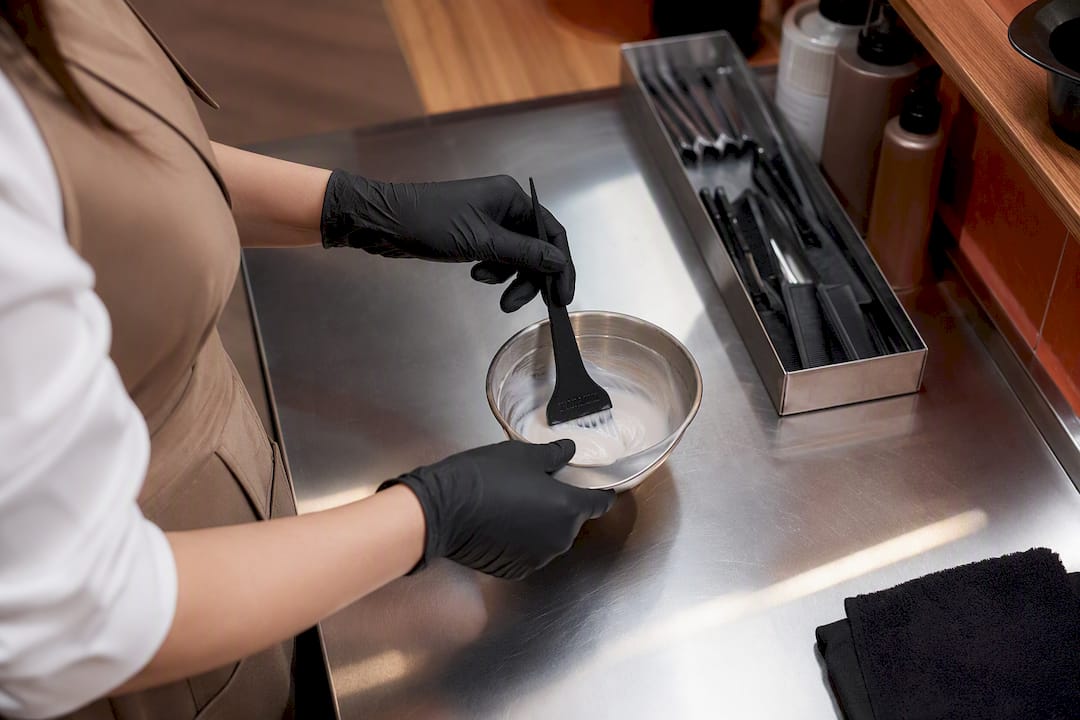
Check that stations are wiped down between appointments and that used towels aren’t reused across clients. For chemical services specifically, gloves should be a non-negotiable, and a stylist mixing color or perm solution bare handed is a warning sign regardless of how polished the rest of the salon looks.
Ventilation matters more than people realize, especially for services like Japanese straightening or strong lightening, which involve fumes that shouldn’t linger in a poorly ventilated room. If you notice a strong chemical smell that doesn’t dissipate, that’s worth mentioning or walking away from.
Patch tests are the single clearest hygiene and safety signal for chemical services. A salon that automatically offers one, especially before a first-time color or straightening treatment, is following practice that protects you from allergic reactions and unexpected damage. One that skips it to save time is prioritizing speed over your safety, and that tradeoff should concern you regardless of how good their portfolio looks.
Location and Accessibility: Parking, Transit, and Getting There
A great stylist thirty minutes away with no parking is a harder booking to keep than a good one five minutes away with a lot. Before you fall in love with a portfolio, check the practical side of getting there and back, especially for longer appointments like perms or straightening treatments that can run several hours.
Look up whether the salon has dedicated parking, validated garage parking, or relies entirely on street spots, since a three hour straightening appointment with metered parking can turn into an expensive afternoon. If you’re relying on public transit, check the walking distance from the nearest stop, not just whether a bus line technically passes nearby.
Salons in denser urban areas often list transit access directly on their booking page or Google Business profile, so it’s worth a quick check before you commit to a longer appointment. For services that take multiple hours, like a digital perm or full color transformation, easy access matters more than it does for a quick trim, since you’ll want a low-stress way to get home afterward without rushing a still-processing treatment.
Cancellation and Rescheduling Policies Worth Checking Before You Book
Specialty services take longer to prepare for than a basic trim, and salons that book senior stylists tend to have stricter cancellation policies as a result. Ask about the cancellation window before you book anything longer than a haircut. Many salons require 24 to 48 hours’ notice for cancellations or rescheduling on chemical services, and some charge a partial fee for last-minute cancellations because that slot likely can’t be filled on short notice.
Deposits are increasingly common for high-value services like Japanese straightening or full color transformations, partly because these appointments block off several hours of a stylist’s day. Ask whether the deposit is refundable, applied toward your final bill, or forfeited entirely if you cancel late.
Rescheduling flexibility matters just as much as the cancellation fee itself. A salon that lets you shift your appointment by a day or two without penalty, as long as you give reasonable notice, is generally easier to work with than one with a rigid all-or-nothing policy. Read this section of a salon’s booking page or ask directly during your consultation call, since surprises here tend to show up as unexpected charges rather than anything you’d notice walking in.
Loyalty Programs and Membership Perks at Specialty Salons
Specialty services aren’t cheap, and a fair number of Asian and Korean hair salons have responded by building loyalty programs that reward repeat visits. These usually take one of a few forms: point systems where a percentage of each visit’s cost converts into credit toward future services, punch cards that offer a free treatment after a set number of paid visits, or tiered membership plans that bundle discounted pricing for regulars.
Some salons extend perks specifically to color or perm clients, since those services carry the highest margins and the highest need for repeat maintenance. A roots touch-up membership, for instance, might offer a discounted rate if you commit to visits every six to eight weeks rather than booking sporadically.
It’s worth asking directly whether a program exists, since not every salon advertises it prominently online. If you know you’ll need ongoing maintenance, like regular touch-ups after a color transformation or period upkeep after a straightening treatment, a loyalty program can meaningfully reduce your long-term cost even if the individual service price looks similar across a few options you’re comparing.
Why I Always Recommend Booking the Consultation First
A consultation costs you almost nothing and tells you more than any portfolio scroll ever will. Photos show finished results; a consultation shows you whether the stylist actually understands your hair once they touch it. That’s the moment you find out if they ask good questions about your history with chemical services, or if they’re just nodding along to whatever you say you want.
Salons that build custom plans around individual hair health and safety protocols, rather than applying a one-size-fits-all service, tend to produce better long-term results. If a consultation leaves you with more questions than answers, or the stylist seems unsure about your hair type, that’s your signal to keep searching rather than book out of politeness.
— Juiced
A Specialist You Can Book in La Jolla: Joel C Ma Hair Studio
If your search for a nearby specialist keeps circling back to “I want someone who actually gets my hair texture,” Joel C Ma Hair Studio built its entire practice around that exact problem. The studio pairs every client with a personalized consultation before any scissors or color come near your hair.
The service menu covers exactly the kind of work this article has walked through:
- Precision cuts tailored to individual hair texture and density, priced at $60 to $75 for women and $45 to $50 for men
- Japanese Hair Straightening Treatment for smoothing and reconditioning thicker, textured hair, at $400
- Full Balayage and color transformation services, ranging from $200 to $225, adapted with staged lightening for denser pigment
At your first visit, expect the consultation to run through your hair’s history, any past chemical treatments, and a conversation about timing and results. Full service details and pricing are listed on the Joel C Ma Hair Studio services page, where you can review options and book directly.
Sources
- NAGIHAIR NEW YORK Best Japanese Hair salon Soho Chelsea NYC
- PMCID article on hair structure and properties
FAQ
How Do I Find a Good Asian Hair Salon Near Me?
Search with specific phrases like “Korean hair stylist close to me” or “Japanese straightening near me” instead of generic terms, then verify the stylist’s background and portfolio across Google Maps, Yelp, and Instagram before booking a consultation.
What Should I Look for in an Asian Hair Salon’s Portfolio?
Look for a large, consistent set of recent before-and-after photos showing perm, straightening, and color results specifically on Asian hair rather than one or two flattering shots. Short-form video on Instagram or TikTok is especially useful for judging whether a perm has natural movement.
How Much Does a Japanese Straightening Treatment Cost?
Pricing varies by salon and location. At Joel C Ma Hair Studio, the Japanese Hair Straightening Treatment is priced at $400, with typical appointments running three to five hours for a first-time treatment.
Do I Need a Patch Test Before Color or Straightening Services?
Yes, most specialist salons require or strongly recommend a patch test before any chemical color or straightening service to check for allergic reactions. A salon that skips this step to save time is cutting a safety corner worth avoiding.
What’s the Difference Between a Digital Perm and a Traditional Perm?
A digital perm uses heated rods and tends to produce looser, more natural-looking waves suited to thicker Asian hair, while a traditional perm relies on chemical solution alone and often produces tighter, more defined curls. Processing time and final texture depend heavily on hair density, so a consultation is the best way to know which fits your hair.