
25 Years’ Experience: Vet La Jolla Hair Salons and Book Joel C Ma
If you want the short answer: book with Joel C Ma Hair Studio in La Jolla. The salon’s balayage work and precision cuts come from a founder with more than 25 years behind the chair, which is the kind of track record that actually predicts a good outcome. Skip the endless scrolling and book a consultation directly, or call ahead if you need a same-week slot.
TL;DR:
- Check for multiple portfolio images of consistent results on similar hair types and styles, especially regarding balayage or color services.
- Read reviews for specific details about service quality, wait times, and response to complaints rather than relying solely on star ratings.
- Prioritize salons with specialized experience in complex services like keratin treatments or extensions, and ask to see relevant work beforehand.
- Book early for weekend slots or popular times, and always confirm policies on deposits and cancellation to avoid unexpected fees.
- Use online booking platforms to filter by service and availability, but consider calling directly for same-day appointments or extra slots not listed publicly.
Table of Contents
- How Do You Choose a Professional Hair Salon Near You?
- Which Salon Services Should You Match to a Specialist?
- What Should You Expect for Booking and Pricing?
- How Do You Use Online Tools to Book a Salon Fast?
- Why Joel C Ma Hair Studio Stands Out Among Local Options
- What Types of Hair Salons Exist, and Which Fits You?
- Does Location and Salon Access Actually Matter?
- What Health and Safety Protocols Should You Expect?
- What Payment Methods and Tipping Should You Plan For?
- Book Your Next Appointment with Joel C Ma Hair Studio
- Where Can You Verify Booking and Salon Details Yourself?
- A Note From Joel C Ma
- Sources
How Do You Choose a Professional Hair Salon Near You?
Picking a salon by star rating alone is how people end up with hair they hate. The rating tells you almost nothing about whether a stylist can execute the specific look you want. What actually predicts a good result is portfolio evidence, and it’s the first thing you should check before anything else.
Look for repetition, not variety. A stylist with ten different balayage photos showing the same soft, dimensional root-to-tip blend is a safer bet than one with a single flawless photo buried among fifty unrelated styles. Multiple examples of the exact color or cut you want tell you the results were consistent, not a lucky one-off. Verified before-and-after galleries carry more predictive weight for cosmetic services than an aggregate star rating ever will, since ratings average in every bad Tuesday while a portfolio only shows finished work.
Reviews still matter, just read them differently. A five-star review that says “loved it” tells you nothing. A three-star review that says “the color was gorgeous but I waited 40 minutes past my appointment” tells you exactly what to expect. Look for specifics, patterns across multiple reviews, and how the salon responds to complaints.
Credentials and tenure matter more for complex services than for a basic trim. Twenty-five years of experience focused on color correction and artistic cuts is a different credential than twenty-five years of general styling. Ask what the stylist specializes in, not just how long they’ve worked.
Before you book, run through this quick checklist:
- Does the portfolio show your exact desired result more than once?
- Are recent reviews specific about the actual service you want?
- Can you book or check availability online without a phone call?
- Does the stylist have a stated specialty that matches your request?
- Is pricing (even a range) listed anywhere before you commit?
Pro Tip: Screenshot two or three reference photos before your consultation. Handing a stylist a specific image removes guesswork and gives you a much better shot at leaving with the color you actually pictured.
Which Salon Services Should You Match to a Specialist?
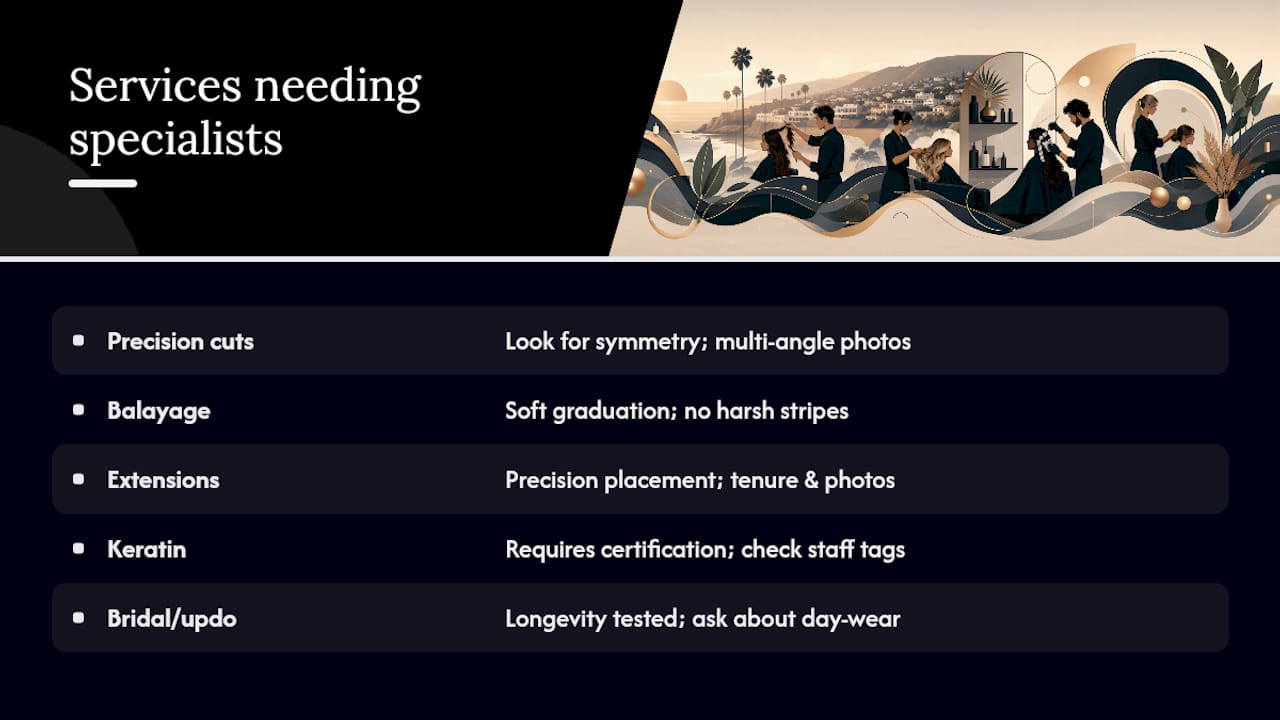
Not every stylist is equally skilled at every service, and the services that carry the most risk if done poorly deserve the most scrutiny.
Precision haircuts rely on symmetry and blending technique. A portfolio should show clean lines from multiple angles, not just a flattering front-facing shot.
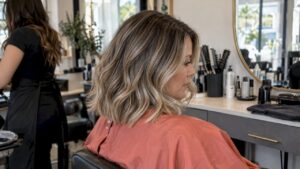
Balayage is a freehand hand-painting technique, and skill varies enormously between stylists. Look for soft, natural graduation with no harsh stripes, and check that the portfolio shows the technique on hair textures similar to yours.
Full-color services (single-process color, root touch-ups) are lower risk but still depend on tone-matching. Ask to see examples on similar starting hair colors.
Keratin and smoothing treatments require training beyond a standard color license. Service tags and staff specialty listings on booking platforms exist specifically so you can filter for a certified specialist instead of guessing.
Extensions demand technical precision in placement and blending. A rushed or undertrained stylist can cause real damage, so tenure and specific extension photos matter here more than almost anywhere else.
Bridal and updo styling is about longevity under stress, not just how the style looks in a photo taken at 9 a.m. Ask how the stylist tests a style for a full day of wear.
As a rough guide, expect appointment length and price to scale with complexity: a precision cut runs shorter and cheaper than a full balayage or keratin treatment, which can take several hours. If a stylist can’t clearly explain their process for a complex service, or the portfolio shows inconsistent results, book a consultation before committing to the full appointment.
What Should You Expect for Booking and Pricing?
Appointment length is the first thing that shapes price, and it varies more than most people expect. A precision cut might run 45 minutes to an hour. Balayage or a full color correction can easily run two to four hours once you factor in processing time, toning, and styling. Keratin treatments often take even longer.
Here’s roughly how the logic works at most professional salons:
- Base service time sets the floor. Longer chair time means higher cost, since it occupies the stylist’s whole schedule.
- Stylist seniority adds to price. A senior colorist or the salon’s founder typically charges more than a junior associate, which reflects both skill and demand.
- Service complexity stacks on top. Correcting a previous bad color job costs more than color applied to virgin hair, because it requires more strategy and product.
- Deposits protect the booking. Many salons require a deposit for longer services, and that deposit is usually non-refundable if you cancel outside the salon’s stated window.
Weekend slots go fastest. Saturdays are consistently the peak booking day, which means the best stylists’ weekend calendars fill up days or even weeks out. If you have an event coming up, book earlier than feels necessary.
Cancellation policies exist because a no-show costs the stylist real income they can’t recover that day. Most professional salons require 24 to 48 hours’ notice to avoid a fee, and that window is usually stated at booking. Read it before you confirm, not after you’ve missed it.
How Do You Use Online Tools to Book a Salon Fast?
Booking platforms exist specifically to skip the back-and-forth phone tag that used to define finding a stylist. Booking even an hour ahead of when you want an appointment often secures a slot and cuts your wait, since most platforms show real-time openings rather than requiring a callback.
The fastest path looks like this:
- Filter by service, not just location. Search specifically for balayage, precision cuts, or keratin rather than a generic “hair salon” query.
- Check the portfolio attached to each stylist profile, looking for repeated examples of your desired result.
- Confirm live availability for your preferred date and time window.
- Book and pay the deposit to lock the slot, since unconfirmed inquiries are the first ones bumped when a schedule fills.
Some salon locators also offer online check-in with estimated wait times, useful if you’re trying to fit an appointment around a tight schedule.
Pro Tip: If you need a same-day slot, call directly instead of relying only on the online calendar. Many stylists hold a short buffer between appointments that never gets listed publicly, and a quick phone call can surface it.
Why Joel C Ma Hair Studio Stands Out Among Local Options
This salon is built specifically around personalized hair care and styling, not a walk-in volume model. The distinction matters because it changes how much attention each client actually gets during a service.
A few things set the salon apart when you’re comparing it against a generic list of nearby options:
- The founder brings over 25 years of experience concentrated on artistic cuts, balayage, and customized style consultations, not general-purpose styling.
- The team consists of skilled hair artists trained in advanced coloring and cutting techniques, with an emphasis on individual expression rather than one-size-fits-all trends.
- Every visit begins with a tailored consultation, which reduces the mismatch risk that comes from booking blind based on a photo alone.
- The salon environment is built around a luxury client experience, with attention to safety protocols alongside the artistry.
That combination of tenure, specialization, and consultation-first process is exactly what the evaluation checklist above is designed to surface.
What Types of Hair Salons Exist, and Which Fits You?
Not every salon is built for the same client, and knowing the category helps you set the right expectations before you book.
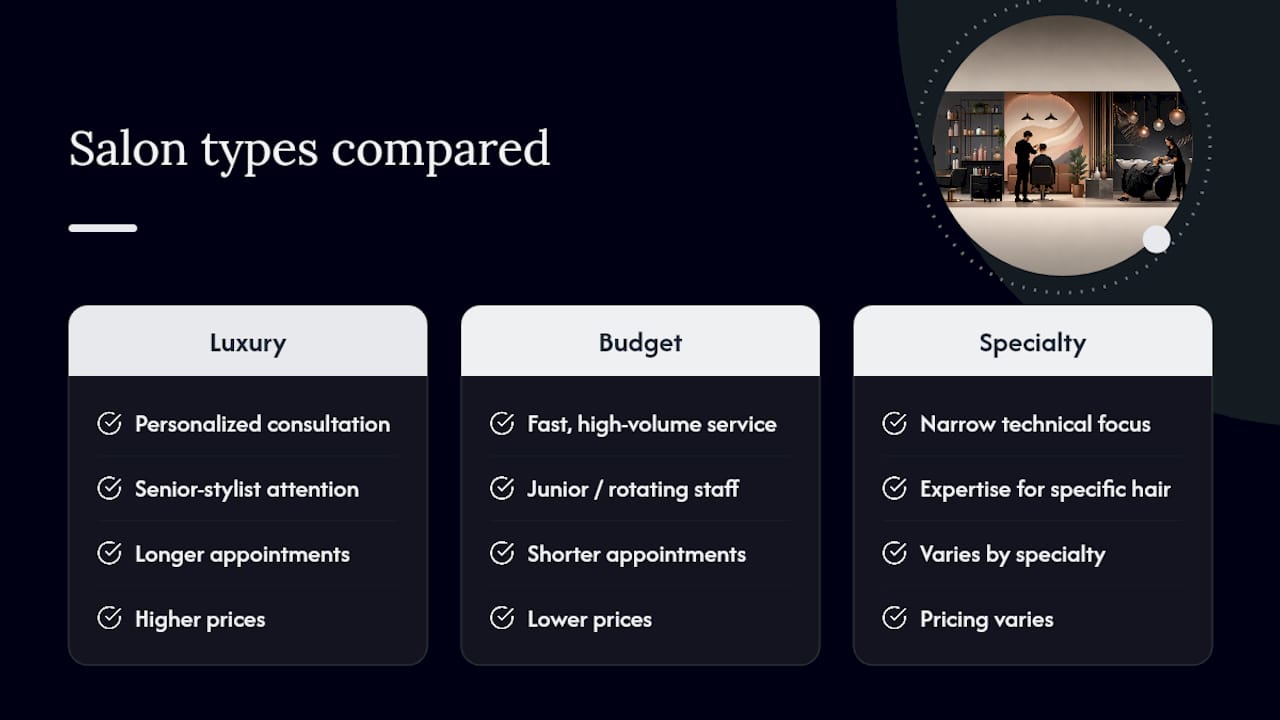
Luxury salons center on personalized consultation, senior stylist attention, and premium products. Appointments run longer, prices sit higher, and the tradeoff is precision and a lower margin for error on complex color work. These salons suit anyone planning a significant change like a full balayage transformation or color correction.
Budget-friendly salons prioritize speed and volume, often with a rotating staff of junior stylists. They work well for simple trims or basic maintenance color but carry higher risk for technical services like keratin treatments or extensions, where training gaps show up fast.
Specialty salons focus narrowly on one thing, whether that’s curly hair, men’s grooming, or a specific color technique. They’re worth seeking out when your hair type or goal is niche enough that a generalist stylist might not have the right experience.
Matching the salon type to your actual need matters more than picking whichever option is closest. A luxury salon is overkill for a quick trim, and a budget chain is a gamble for a bridal updo or full-color correction.
Does Location and Salon Access Actually Matter?
Convenience factors quietly decide whether you actually keep an appointment or reschedule it into oblivion. Parking availability, especially in dense coastal areas, can add real friction if a salon sits in a commercial district with limited spots. Ask about parking before booking if you’re unfamiliar with the neighborhood.
Public transit access matters more for longer appointments. A four-hour balayage session means you’re not walking back to a bus stop mid-process, so proximity to reliable transit or easy parking reduces the odds of a rushed or interrupted visit.
Salon hours shape whether the appointment fits your actual schedule, not just your ideal one. Salons that offer early morning or evening slots accommodate working professionals far better than a strict 9-to-5 window. If you’re booking around a job or childcare, confirm hours before you commit to a stylist you love but can never actually see.
What Health and Safety Protocols Should You Expect?
Most professional salons maintain standard sanitation practices as a baseline: sanitized tools between clients, clean capes and towels for every appointment, and proper ventilation in color and chemical treatment areas. These aren’t optional extras. They’re basic operating standards for any salon handling chemical services like color or keratin treatments.
Since the COVID-19 pandemic, many salons also adopted enhanced protocols that some have kept as standard practice: increased spacing between styling stations, hand sanitizer available at check-in, and staff trained on illness policies that keep sick employees off the floor. Ask directly if a salon still follows enhanced sanitation steps, especially if you’re immunocompromised or simply prefer extra caution.
Consultations are also a safety step, not just a styling one. A proper consultation before a chemical service checks for scalp sensitivity, previous treatments, and allergy risk, particularly with keratin or strong lightening treatments. A salon that skips this step to save time is cutting a corner that matters.
What Payment Methods and Tipping Should You Plan For?
Most professional salons accept major credit cards, debit cards, and increasingly digital wallets like Apple Pay or Google Pay. Cash is still accepted almost everywhere but is no longer required, and some smaller independent stylists may prefer it for tips specifically.
Tipping in the hair industry generally runs 15% to 20% of the service total, similar to restaurant norms. For higher-end services like balayage or color correction that involve multiple people (a colorist and a separate stylist for cut and finish), it’s common to tip each person individually rather than splitting one tip between them.
Deposits, when required, are usually charged to a card at booking and applied toward the final service cost. That’s different from a tip and should be confirmed as a stated policy before you book so there’s no confusion at checkout.
Book Your Next Appointment with Joel C Ma Hair Studio
You’ve seen what separates a salon that photographs well from one that actually delivers. Joel C Ma Hair Studio is built around the exact criteria this guide walks through: a consistent, verifiable portfolio, decades of specialized color experience, and a consultation-first process that matches the stylist to your specific goal instead of guessing.
Booking works in three simple steps. First, request a consultation so your stylist understands exactly what you want before any color or cut begins. Second, walk through your reference photos and hair history together, including any previous color treatments. Third, the actual service begins, whether that’s a precision cut or a full balayage transformation.
Bring reference photos and be upfront about your hair’s chemical history, since that shapes what’s safe to do in one visit versus what needs to be spaced over multiple appointments. If you’re preparing for a color change, it helps to review how to choose a hair color before your consultation so you walk in with a clear direction. Ready to secure a slot? Book your appointment now and skip the guesswork that comes with picking a salon blind.
Where Can You Verify Booking and Salon Details Yourself?
If you want to check availability or compare booking features directly, a few resources are worth bookmarking. Booksy’s salon search lets you filter by service and browse verified portfolios. MangoMint’s salon software overview explains how real-time booking systems actually work behind the scenes.
A Note From Joel C Ma
I built this salon around one idea: hair should be treated as personal, not procedural. Twenty-five years in, that still means sitting down with every client before a single cut or color decision gets made. Our specialties are balayage, precision cutting, and full color transformations, and we’d rather turn down a service that isn’t right for your hair than force a result that won’t hold up. If you’re on the fence, book a consultation first. No commitment beyond a conversation, and you’ll leave with a clearer sense of what’s actually possible for your hair.
— Juiced
Sources
- MangoMint blog — salon software features
- Booksy — Hair salons near me
- SmartStyle — online check-in and salon locator