
Hair Styling Tools: Your Complete 2026 Guide
TL;DR:
- Choosing the right hair styling tools and techniques helps protect hair health while achieving professional results. Using a thermal protectant and cold shot feature extends style longevity and reduces damage. Proper maintenance and understanding individual hair needs maximize styling effectiveness and tool lifespan.
Hair styling tools are devices that use heat, airflow, or mechanical action to shape, curl, straighten, and dry hair with precision. The best results come not from the most powerful device on the market, but from matching the right tool to your hair type and using it correctly. Modern professional hair styling equipment now includes intelligent heat sensors, ionic systems, and multi-attachment designs that deliver salon-quality finishes at home. This guide covers every major tool category, the technologies that separate good from great, and the techniques that protect your hair while you style.
What are the main types of hair styling tools?
The six core categories of styling devices cover every grooming need from basic drying to complex curl formation. Understanding what each tool does prevents you from buying the wrong device for your hair goals.
- Flat irons use two heated plates to straighten or create waves. Ceramic plates distribute heat evenly and seal the hair cuticle for a frizz-free finish. Titanium plates heat up faster and hold higher temperatures, making them the better choice for thick or coarse hair.
- Curling irons and wands wrap hair around a heated barrel to create curls or waves. Barrel diameter controls curl size: smaller barrels (under 1 inch) create tight ringlets, while larger barrels (1.5 inches and above) produce loose, beachy waves.
- Hair dryers use a motor-driven fan and heating element to evaporate moisture quickly. Ionic dryers emit negatively charged ions that break down water molecules faster, cutting drying time and reducing frizz.
- Hot air brushes combine a round brush shape with heated airflow to add volume and shape while drying. They work best on fine to medium hair that needs body without the weight of product.
- Rollers (heated or steam-based) set curls with minimal direct heat contact, making them a lower-damage option for frequent styling.
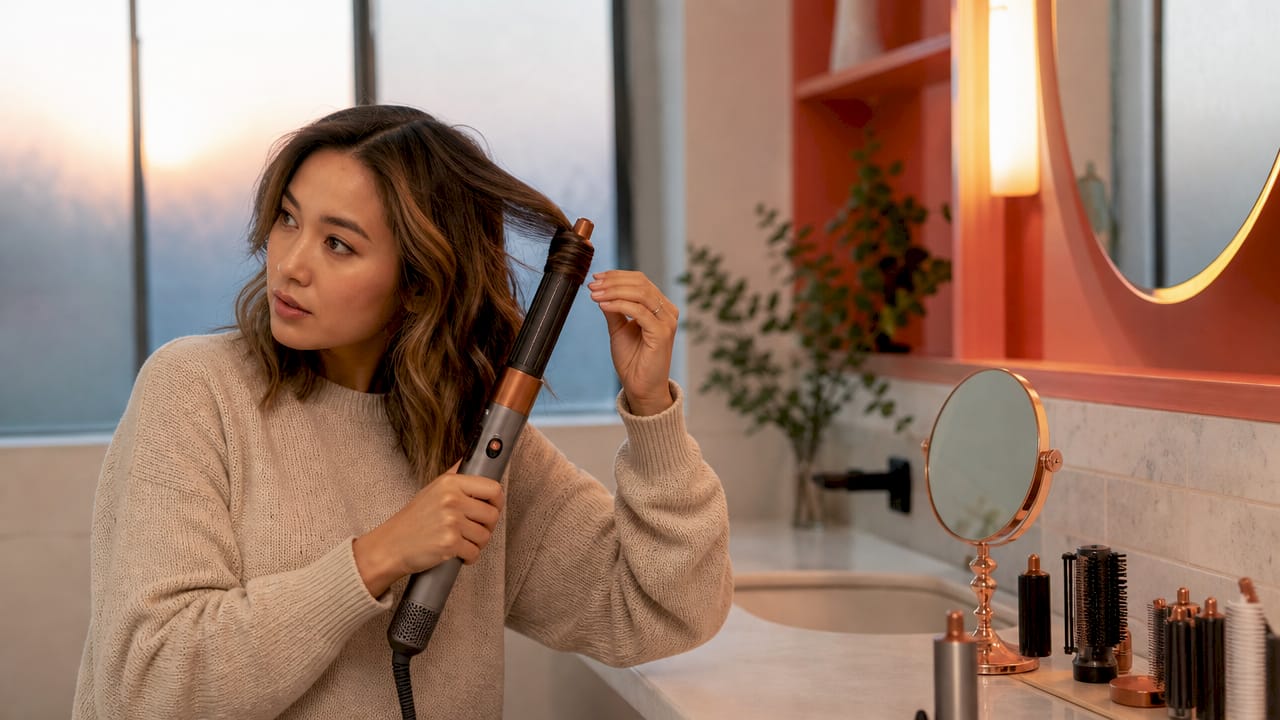
- Multi-stylers combine drying, curling, smoothing, and volumizing in one device through interchangeable attachments. Multi-stylers combine drying, curling, smoothing and volumizing features, saving time and storage space.
The material of a tool’s heating surface matters as much as its wattage. Ceramic tools evenly distribute heat and seal the cuticle for frizz-free styles, while titanium conducts heat quickly and suits thick hair best. Choosing the wrong surface material for your hair type is one of the most common and costly mistakes buyers make.
How do modern technologies enhance hair styling tools?
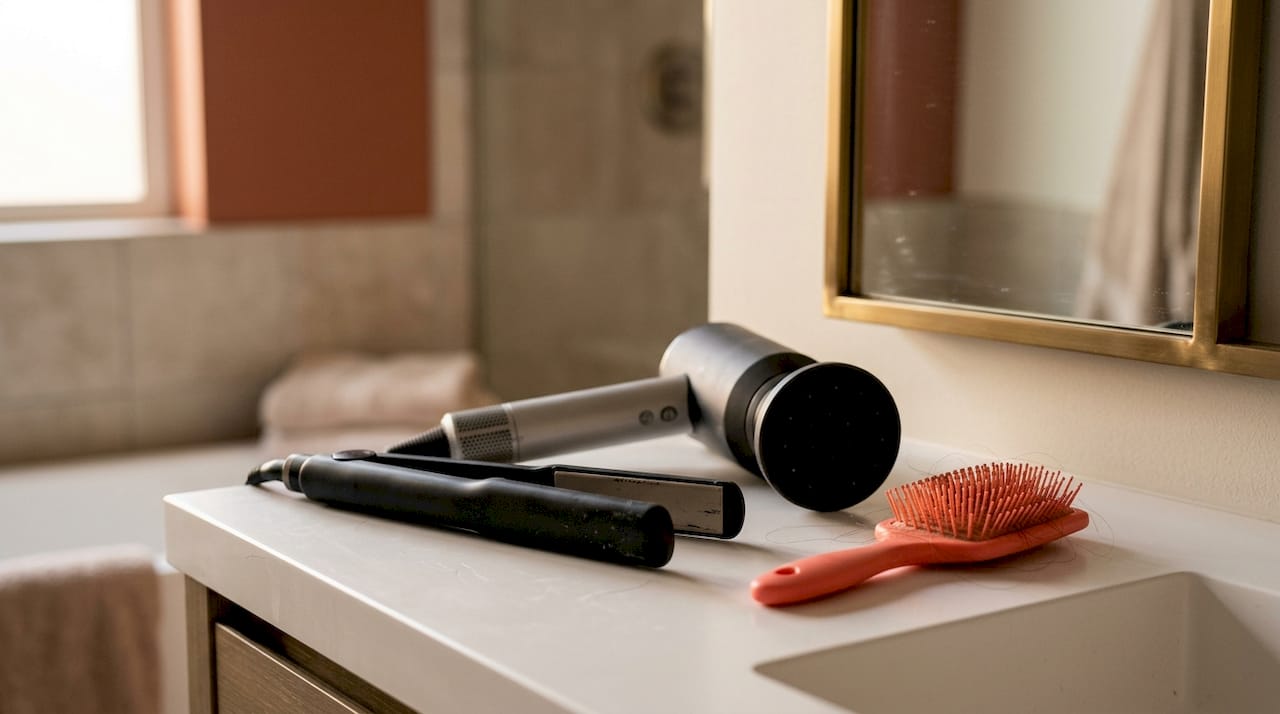
Technology has shifted the focus from raw heat to controlled heat. The most significant advances protect hair health while improving styling results.
Intelligent heat control is the most important feature in any modern styling device. Tools like the Dyson Supersonic measure airflow over 40 times per second to prevent hair temperatures from reaching damaging levels above 300°F (150°C). That constant monitoring means the tool adjusts in real time rather than relying on a fixed temperature setting.
Ionic and tourmaline technology reduces frizz by emitting negatively charged ions that neutralize the positive charge static creates in dry hair. Tourmaline, a semi-precious mineral, generates ions naturally when heated. Tools with tourmaline-infused plates or barrels produce a smoother finish than standard metal surfaces.
Airflow design matters more than wattage for air-based stylers. Higher wattage does not necessarily mean better styling. Effective heat distribution and airflow design contribute more to preventing frizz and achieving salon-quality finishes than raw power alone. A well-engineered 1,000W brush can outperform a poorly designed 1,800W dryer.
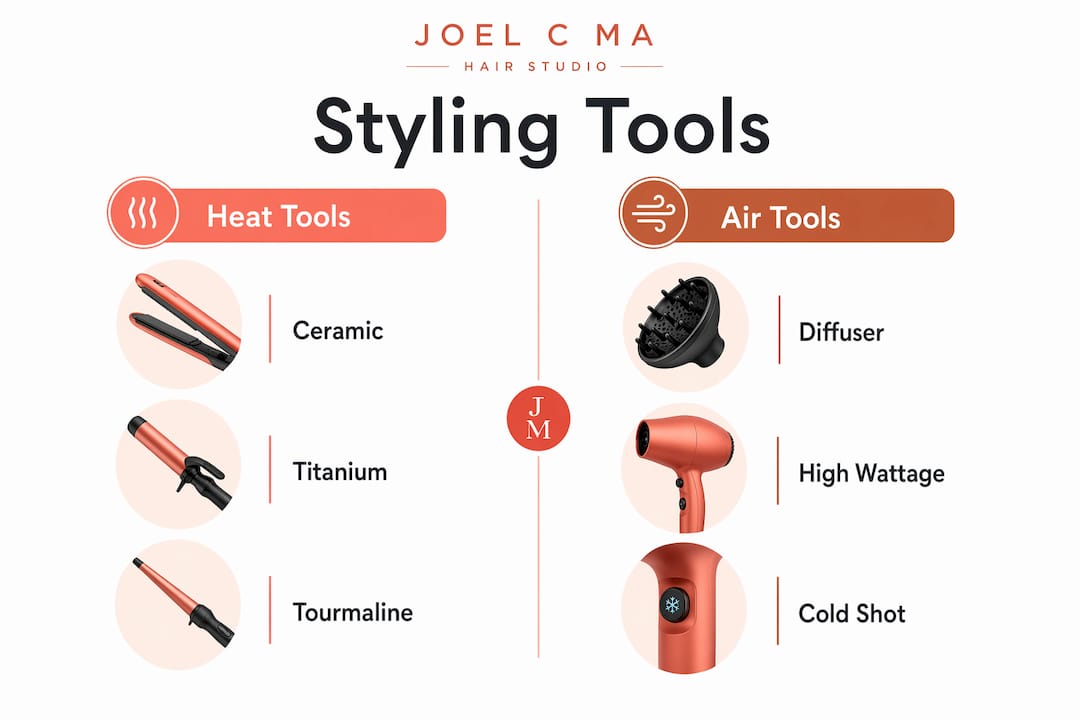
The cold shot function is the most underused feature on almost every dryer and multi-styler. Cold shot functionality locks styles by rapidly cooling hair cuticles, which sets the shape and extends how long the style holds. Skipping the cold shot is the single fastest way to lose curl definition within an hour.
Pro Tip: Always finish each section of styled hair with a 3-second blast of cold air before releasing it. This step alone can double how long your style lasts.
Key technology features to look for when buying:
- Intelligent heat sensors that adjust temperature automatically
- Ionic or tourmaline-infused surfaces for frizz control
- Multiple heat and speed settings for different hair types
- A dedicated cold shot button
- Advanced airflow designs in hot air brushes that reduce styling time
How to use hair styling tools effectively to protect your hair
Technique matters as much as the tool itself. Following a consistent pre-styling and post-styling routine reduces cumulative heat damage significantly.
-
Check your hair’s moisture level. Style hair that is about 80% dry when using air-styling tools. Hair that is too wet will not hold a style. Hair that is completely dry will not respond properly to airflow-based curling. The 80% rule applies specifically to multi-stylers and hot air brushes that rely on the Coanda effect to wrap hair around the barrel.
-
Apply a thermal protectant before heat. Thermal protectant primers act as heat buffers that distribute heat evenly and prevent hot spots. Hot spots cause frizz and breakage, especially at the ends of the hair. A cream or spray protectant applied to damp hair before drying is the most effective way to guard against this. Read more about protecting hair from heat before you start any heat styling routine.
-
Work in sections. Smaller sections allow the tool to contact all the hair evenly. Large sections mean the inner layers receive less heat, which produces uneven results and forces you to go over the same hair twice.
-
Use the cold shot to set each section. After styling each section, hold the cold shot for 3–5 seconds before moving to the next. This step locks the cuticle in its new shape.
-
Clean your tools regularly. Cleaning magnetic intake filters prevents overheating and extends tool lifespan. Clogged filters cause automatic safety shutdowns and reduce airflow, which forces the motor to work harder and shortens the device’s life. Clean filters on air-based tools at least once a month.
Pro Tip: Never style soaking wet hair with a multi-styler or hot air brush. Styling completely wet hair is the most common mistake users make. It produces poor results and increases heat damage.
Avoid holding any heated tool in one spot for more than 5 seconds. Constant movement protects the hair shaft from localized overheating. For more expert guidance on avoiding heat damage, a structured approach to tool selection and technique makes a measurable difference.
Which hair styling tools suit different hair types?
The best hair styler for one person can be the worst choice for another. Hair texture, density, and length all determine which tool and which material will deliver the best result.
For thick or coarse hair: Titanium flat irons and high-wattage dryers with concentrator nozzles work best. Titanium heats quickly and maintains temperature under the resistance of dense hair. A concentrator nozzle directs airflow precisely, reducing drying time on heavy hair.
For fine or thin hair: Ceramic tools with adjustable low heat settings protect delicate strands. Fine hair burns at lower temperatures than thick hair, so a tool with a wide heat range (ideally 250°F–410°F) gives you control. Hot air brushes add volume without the weight of product.
For curly or textured hair: Diffuser attachments on dryers preserve natural curl pattern by distributing airflow gently. Avoid flat irons with very high fixed temperatures. A wide-barrel curling wand (1.5 inches or larger) enhances natural texture without disrupting the curl structure.
For straight hair seeking curls: A multi-styler with multiple barrel sizes gives you the most flexibility. Multi-stylers with versatile attachment systems allow you to achieve various styles with one device, saving both time and storage space.
| Hair type | Recommended tool | Key feature to prioritize |
|---|---|---|
| Thick or coarse | Titanium flat iron or high-wattage dryer | Fast heat-up, high temperature range |
| Fine or thin | Ceramic flat iron or hot air brush | Low heat settings, gentle airflow |
| Curly or textured | Dryer with diffuser attachment | Even airflow, no direct heat concentration |
| Straight seeking curls | Multi-styler with barrel attachments | Multiple barrel sizes, ionic system |
| All types | Any tool with cold shot function | Style-locking capability |
Professional-grade tools differ from at-home devices mainly in motor durability and heat consistency under continuous use. For personal use, the priority is a tool with adjustable heat, a cold shot button, and a surface material matched to your hair type. The best hair styling tools for salons share those same core features, just built to withstand daily professional use.
Key Takeaways
The right hair styling tool, used correctly with a thermal protectant and the cold shot function, protects hair health while delivering consistent, professional-quality results at home or in the salon.
| Point | Details |
|---|---|
| Match tool to hair type | Ceramic suits fine hair; titanium suits thick or coarse hair for faster, safer results. |
| Use the 80% dry rule | Style with air-based tools when hair is about 80% dry for best curl formation and hold. |
| Apply thermal protectant | Use a heat primer or cream before styling to prevent hot spots and breakage at the ends. |
| Always use the cold shot | Finish each section with cold air to lock the cuticle and extend style longevity. |
| Clean tools regularly | Clear intake filters monthly to prevent overheating and extend the life of your device. |
What I’ve learned after years of watching clients style their own hair
The most consistent mistake I see is people buying the most expensive tool on the market and then using it incorrectly. A premium multi-styler used on soaking wet hair will always underperform a mid-range dryer used with proper technique. The tool is only half the equation.
The second thing I’ve noticed is that people underestimate how much maintenance their tools need. A clogged filter on an air styler does not just shorten the device’s life. It changes the airflow dynamics enough to affect your results. You start blaming your hair when the problem is actually a filter you have not cleaned in six months.
My honest opinion on multi-stylers: they are worth the investment for most people, but only if you take the time to learn each attachment. Most buyers use two out of six attachments and feel underwhelmed. The device is not the problem. The learning curve is real, and skipping it means you are paying for features you will never use.
For anyone serious about their hair health, I recommend thinking about your styling routine the way you think about skin care. Frequency matters. Daily heat styling without recovery time and conditioning treatments creates cumulative damage that no tool can fix. Build in rest days. Use a personalized styling consultation to identify which tools and techniques actually suit your specific hair condition, not just your hair type on paper.
The best investment you can make is not a new tool. It is understanding the one you already own.
— Juiced
Expert styling resources at Joelcma
Joelcma brings over 25 years of professional experience to every client at Joel C Ma Hair Studio in La Jolla, California. The team specializes in personalized styling consultations that go beyond tool recommendations to address your hair’s actual condition, texture, and goals.
Whether you are building a home styling kit or refining a professional routine, the studio’s expert styling tips cover everything from heat protection to technique. For clients who want a fully tailored approach, Joelcma’s hair styling techniques resource walks through the artistry behind modern styling methods. Book a consultation to get tool and technique recommendations built around your hair, not a generic profile.
FAQ
What are the best hair styling tools for beginners?
A ceramic flat iron with adjustable heat settings and a dryer with a diffuser attachment cover most beginner needs. Both tools are forgiving, widely available, and work across multiple hair types.
How do I choose between ceramic and titanium tools?
Ceramic tools suit fine or color-treated hair because they distribute heat gently and evenly. Titanium tools suit thick or coarse hair because they heat faster and hold higher temperatures under resistance.
Does wattage determine how good a styling tool is?
Wattage alone does not determine styling quality. Airflow design and heat control are more impactful for hair health and appearance than raw power output.
How often should I clean my styling tools?
Clean intake filters on air-based tools at least once a month. Clogged filters cause overheating, reduce performance, and trigger automatic safety shutdowns that shorten the device’s lifespan.
What is the cold shot function and why does it matter?
The cold shot button releases a burst of cool air that rapidly closes the hair cuticle after styling. Using it after each section locks the style in place and significantly extends how long the finished look holds.