
Explore types of haircuts for upscale La Jolla style
Most people don’t realize that precision haircut techniques can transform not just your appearance but your entire approach to personal style. In La Jolla’s fashion-forward scene, understanding haircut types isn’t about following trends blindly. It’s about discovering which cutting methods align with your bone structure, lifestyle, and identity. This guide breaks down precision cuts, layering techniques, texturizing methods, and freehand artistry so you can walk into your next salon appointment confident and informed. You’ll learn what makes each approach unique, how maintenance varies, and which 2026 trends suit your hair type best.
Table of Contents
- Key takeaways
- Understanding precision haircuts: structure and personalization
- Layered haircuts: adding depth, movement, and volume
- Texturizing and freehand cutting: creating soft movement and unique style
- 2026 haircut trends and personalization in La Jolla salons
- Experience personalized luxury haircuts at Joel C Ma Hair Studio
- Frequently asked questions
Key Takeaways
| Point | Details |
|---|---|
| Precision cuts | Precision cutting uses exact sectioning, measured elevation, and clean perimeter lines to create a structured look that grows out evenly and requires less daily styling. |
| Layered cuts | Layering adds movement and volume by cutting at different heights to remove weight and create dimension for your hair type. |
| Texturizing benefits | Texturizing introduces softness and natural movement by breaking up bulk and blending lines for a more lived in feel. |
| Freehand artistry | Freehand cutting enables stylist driven personalization to reflect your bone structure, lifestyle, and identity with unique shapes. |
Understanding precision haircuts: structure and personalization
Precision cutting involves exact sectioning, balanced elevation angles, and clean perimeter lines for structured, symmetrical results ideal for upscale, personalized styles. Unlike standard haircuts that rely on rough estimates, precision techniques use mathematical angles and deliberate sectioning patterns. Your stylist measures elevation degrees, creates consistent tension, and follows specific cutting lines that account for your face shape and bone structure.
This approach delivers several advantages for fashion-forward clients. The balanced structure means your cut grows out evenly, maintaining its shape between appointments. You’ll notice cleaner lines around your face, enhanced symmetry, and a polished appearance that requires less daily styling. Precision cuts work especially well for bob variations, blunt cuts, and geometric styles where sharp lines define the look.
What makes precision cutting truly upscale is the customization factor. Your stylist analyzes your facial proportions, hair density, and growth patterns before making the first cut. They adjust elevation angles based on whether you have fine, medium, or thick hair. For example, higher elevation creates more volume at the crown, while lower angles produce sleeker, closer-to-head results. This level of detail explains why 68% of clients seek personalized styling to achieve a unique look that reflects their identity.
The contrast between precision cuts and regular haircuts becomes obvious after a few weeks. Regular cuts often lose shape quickly, requiring frequent trims. Precision work maintains its integrity for 8 to 10 weeks because the foundational structure supports natural hair fall. You’re not fighting against your cut. You’re working with it.
Pro Tip: Ask your stylist about the specific elevation angles they’re using for your hair type. Understanding whether they’re working at 45, 90, or 180 degrees helps you communicate better during future appointments and recognize what works best for your texture.
Key benefits of precision cutting include:
- Structured, balanced appearance that flatters bone structure
- Better grow-out period with maintained shape integrity
- Reduced daily styling time due to intentional design
- Customized angles that account for natural hair fall patterns
- Enhanced symmetry that photographs beautifully
Layered haircuts: adding depth, movement, and volume
Layered haircuts use varying lengths with point-cutting or elevation to add movement and volume, customized for hair type through styles like butterfly, shag, or wolf cuts. The technique involves cutting hair at different heights to create dimension. Shorter layers sit closer to the scalp while longer pieces fall beneath, producing a cascading effect that adds life to flat or heavy hair.
The magic of layering lies in how it transforms texture and movement. When your stylist cuts layers, they’re strategically removing weight from specific areas. This allows hair to lift at the roots, creating natural volume without products or heat styling. The varying lengths also catch light differently, producing depth and dimension that single-length cuts can’t achieve. For thick hair, layers prevent that triangular, bottom-heavy shape. For fine hair, strategic layering creates the illusion of fuller, more abundant hair.
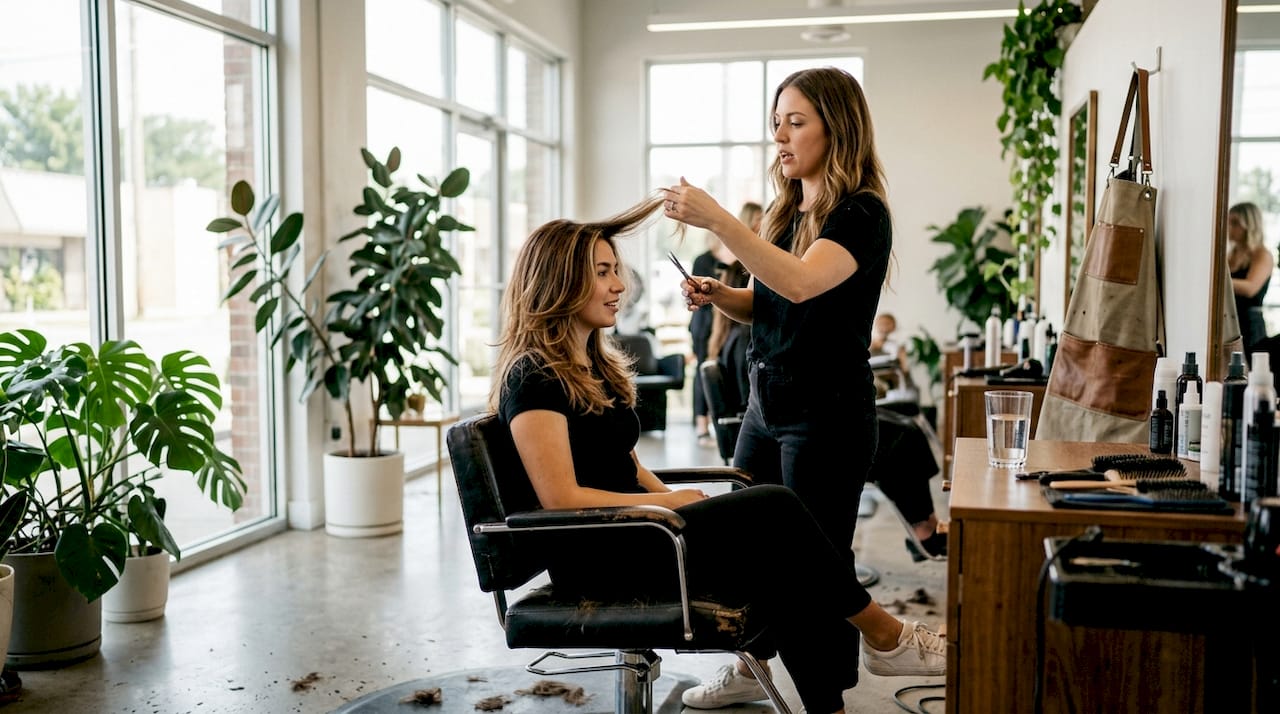
Different layering styles produce distinct results based on your goals. Butterfly cuts feature face-framing shorter layers that graduate into longer lengths, creating a flattering oval shape. Shag cuts incorporate choppy, textured layers throughout for an edgy, lived-in vibe. Wolf cuts combine shag elements with dramatic volume at the crown and wispy ends. Each variation requires specific point-cutting techniques and elevation angles to achieve the signature look.
Maintenance for layered cuts typically runs 8 to 12 weeks, depending on how quickly your hair grows and how precise you want the shape. Layers grow out more gracefully than blunt cuts, but they do require periodic reshaping to maintain dimension. The hottest hair trends in San Diego currently favor softer, lived-in layers that don’t demand frequent salon visits.
One caution for fine hair: excessive layering can create stringiness if not executed strategically. Your stylist needs to balance removing weight with maintaining enough density to prevent see-through sections. This is where customization becomes critical. What works for thick, coarse hair will destroy fine, delicate strands.
Pro Tip: Coordinate your layering service with texture treatments like waves or curls. Layers enhance curl patterns beautifully, but the combination requires careful planning to avoid removing too much weight in areas where curls need support.
Layering techniques deliver these advantages:
- Dynamic movement that prevents flat, lifeless appearance
- Customizable volume placement based on face shape
- Versatile styling options from sleek to textured
- Better weight distribution for thick, heavy hair
- Enhanced dimension that adds visual interest
Texturizing and freehand cutting: creating soft movement and unique style
Texturizing removes bulk via point cutting, razor, or slide cutting for natural movement and lived-in looks, key for fashion-forward styles. Unlike layering that changes length dramatically, texturizing works within your existing cut to refine how hair falls and moves. Your stylist uses specialized techniques to thin out dense sections, soften harsh lines, and create piece-y separation that looks effortlessly chic.
The benefits of texturizing extend beyond aesthetics. For thick hair, it eliminates that bulky, heavy feeling without sacrificing length. You’ll notice your hair dries faster, styles more easily, and holds shape better throughout the day. Texturizing also enhances natural wave patterns by removing weight that pulls curls straight. The result is bouncy, defined texture that requires minimal product or heat styling.
The contrast between texturizing and precision cutting reveals two distinct philosophies. Precision creates structure through exact angles and clean lines. Texturizing embraces softness through irregular, varied cutting patterns. Precision delivers polished, geometric results. Texturizing produces relaxed, organic movement. Both have their place in upscale styling, and many cuts combine elements of each for balanced results.
| Aspect | Precision cutting | Texturizing |
|---|---|---|
| Technique | Exact angles, clean lines | Point cutting, razor work, slide cutting |
| Result | Structured, geometric | Soft, natural movement |
| Best for | Blunt cuts, bobs, geometric styles | Lived-in looks, thick hair, wave enhancement |
| Maintenance | 8-10 weeks | 10-14 weeks |
| Styling needs | Minimal, holds shape well | Very low, air-dry friendly |
Freehand cutting takes texturizing to an artistic level. Instead of following predetermined sectioning patterns, your stylist works intuitively, responding to your hair’s natural characteristics. They might cut into the hair at varying angles, use different tools for different sections, or adjust their approach based on how each piece falls. This method requires significant experience and artistic vision, but it produces truly customized results that reflect your unique identity.
A typical texturizing process follows these steps:
- Assess hair density, texture, and existing cut structure
- Identify heavy sections that need weight removal
- Select appropriate texturizing technique (point cutting, razor, or slide cutting)
- Work through hair systematically, removing bulk while maintaining shape
- Refine edges and perimeter for soft, blended finish
- Check balance and symmetry, adjusting as needed
Pro Tip: Combine texturizing with layering for maximum dimension and movement. The layering creates structure and volume while texturizing adds softness and natural flow. This combination works beautifully for La Jolla’s go-to salons for hair transformations where clients want sophisticated, low-maintenance styles.
2026 haircut trends and personalization in La Jolla salons
2026 trends for upscale La Jolla include soft box bob, airy shag-lite, cloud crop, and liquid lengths with effortless, lived-in texture. These styles prioritize natural movement over rigid structure, reflecting a broader shift toward low-maintenance luxury. Fashion-forward clients want cuts that look intentional yet relaxed, polished yet achievable without daily heat styling.
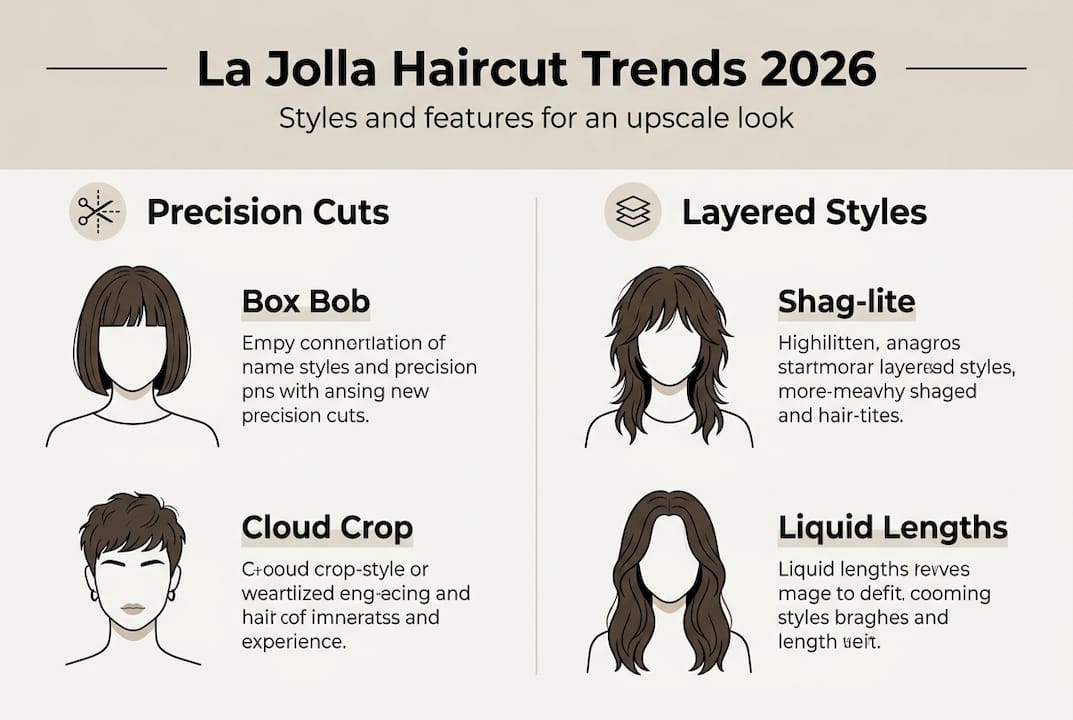
The soft box bob updates the classic with subtle layering and textured ends. It sits between chin and shoulder length, featuring a slightly rounded shape that flatters most face types. Unlike sharp, geometric bobs, this version incorporates gentle graduation and piece-y texture for modern appeal. It works beautifully with natural texture or can be styled sleek for formal occasions.
Airy shag-lite brings 1970s inspiration into 2026 with a refined twist. Think choppy layers and wispy ends, but executed with precision to avoid the messy, unkempt look of traditional shags. This cut adds significant volume at the crown while maintaining length, perfect for clients who want drama without committing to short hair. The lighter, more refined approach suits professional environments while still delivering edge.
Cloud crop revolutionizes short hair with soft, rounded layers that create a halo effect. This cut relies heavily on texturizing to achieve its signature airy quality. It’s particularly flattering for oval and heart-shaped faces, drawing attention to eyes and cheekbones. Despite its short length, the cloud crop requires less styling than you’d expect because the cut itself creates the shape.
Liquid lengths describe long hair cut with seamless, flowing layers that move like water. No harsh lines, no obvious demarcation between lengths. Just smooth, continuous gradation that enhances natural shine and movement. This trend appeals to clients who love long hair but want to avoid the heavy, one-length look.
| Trend | Characteristics | Maintenance interval | Best for |
|---|---|---|---|
| Soft box bob | Chin to shoulder length, subtle layers, textured ends | 8-10 weeks | Most face shapes, professional settings |
| Airy shag-lite | Choppy layers, crown volume, wispy ends | 10-12 weeks | Adding drama, thick hair, casual elegance |
| Cloud crop | Short, rounded layers, halo effect, soft texture | 6-8 weeks | Oval/heart faces, low-maintenance seekers |
| Liquid lengths | Long, seamless layers, flowing movement | 12-14 weeks | Long hair lovers, natural shine enhancement |
Dry cutting technique plays a crucial role in achieving these 2026 trends. By cutting hair in its natural, dry state, stylists see exactly how it falls and moves. This allows for precise adjustments that account for cowlicks, natural wave patterns, and growth direction. Wet cutting can mask these characteristics, leading to surprises once hair dries. For lived-in, natural-looking styles, dry cutting delivers superior results.
The advantages of these trending cuts extend beyond aesthetics. They require minimal daily styling, often looking best when air-dried with light product. They grow out gracefully, maintaining shape between appointments. They work with your natural texture instead of fighting it. For busy professionals and active lifestyles common in La Jolla, these cuts offer luxury without high-maintenance demands.
Personalization remains paramount in upscale salon experiences. Custom hair consultations in La Jolla analyze your bone structure, lifestyle, and personal style before recommending specific cuts. Your stylist considers factors like:
- Face shape and how different lengths frame your features
- Hair texture and density, which affect how cuts fall
- Lifestyle demands and realistic styling time
- Personal style preferences and fashion sensibility
- Growth patterns and natural hair characteristics
This consultative approach ensures your cut enhances your unique features rather than forcing you into a generic trend. The best luxury hair salons in La Jolla prioritize this personalization, recognizing that upscale service means tailoring techniques to individual clients.
Experience personalized luxury haircuts at Joel C Ma Hair Studio
Understanding haircut types empowers you to make informed decisions, but experiencing expert execution transforms that knowledge into stunning results. Joel C Ma Hair Studio specializes in precision cutting, artistic layering, and customized texturizing that reflects La Jolla’s sophisticated aesthetic. With over 25 years of experience, the team combines technical mastery with artistic vision to create cuts that enhance your natural beauty and fit seamlessly into your lifestyle.
Every service begins with a thorough consultation analyzing your bone structure, hair characteristics, and style goals. This personalized approach ensures your cut complements your features while remaining practical for daily life. Whether you’re drawn to structured precision, flowing layers, or soft texturizing, the studio’s upscale haircut services deliver results that turn heads. The team stays current with 2026 trends while maintaining the classic techniques that create timeless elegance. Customized hair styling goes beyond following trends to creating signature looks that express your unique identity. Book a consultation to discover how expert cutting techniques can elevate your personal style and simplify your daily routine. Experience the difference that hair consultation benefits bring to achieving your ideal look.
Frequently asked questions
What are the different types of haircuts and who are they best for?
Precision cuts use exact angles for structured, geometric styles ideal for clients wanting polished, low-maintenance looks. Layered cuts add volume and movement, working well for thick hair or anyone seeking dimension. Textured cuts remove bulk and create natural flow, perfect for thick hair or enhancing waves. Freehand cuts offer artistic, customized results for clients prioritizing unique, personalized style.
How do I know which haircut type suits my hair texture?
Fine hair benefits from strategic layering that creates volume illusion without excessive thinning. Thick hair responds well to texturizing and layering to remove weight and add movement. Curly hair needs specialized cutting, often dry cutting to see natural curl patterns. Straight hair showcases precision cuts beautifully, highlighting clean lines and geometric shapes.
How often should I get different types of haircuts trimmed?
Precision cuts maintain shape for 8 to 10 weeks before needing reshaping. Layered cuts typically require maintenance every 8 to 12 weeks depending on growth rate. Textured cuts grow out gracefully, often lasting 10 to 14 weeks. Short styles like cloud crop need more frequent trims every 6 to 8 weeks to maintain shape.
What should I ask during a haircut consultation?
Inquire about which cutting technique (precision, layering, texturizing, or freehand) best suits your hair type and goals. Ask about elevation angles and how they affect volume and shape. Discuss maintenance requirements and realistic styling time. Request recommendations for products that enhance your specific cut. Clarify how the cut will grow out and when you’ll need your next appointment.
Can I combine different haircut techniques in one style?
Absolutely. Most upscale cuts blend multiple techniques for optimal results. You might have precision perimeter lines with textured interior layers. Or structured layering with soft, texturized ends. Combining techniques allows stylists to address multiple goals like structure, volume, and natural movement simultaneously. This customized approach creates sophisticated, multidimensional results that reflect your unique style preferences.
Recommended
- How to choose the best hair salon in CA for luxury styles – Joel C Ma Hair Studio
- Best hair salon near me in La Jolla for luxury styles – Joel C Ma Hair Studio
- Best hair salon near me in La Jolla for luxury style – Joel C Ma Hair Studio
- 7 Expert Tips for Children’s Haircuts in La Jolla – Joel C Ma Hair Studio