

Small Businesses in La Jolla: Navigating Local Success

Choosing the right small business for your needs in La Jolla can redefine the way you experience style and self-care. With over 90% of private business establishments in California classified as small businesses, the community relies on independent salons and creative studios that value individuality. Whether you seek a signature cut, color expertise, or personalized advice on the latest trends, understanding what sets these specialized businesses apart helps you find the luxury hair services that truly fit your lifestyle.
Table of Contents
- Defining Small Businesses In La Jolla
- Business Categories And Local Demographics
- Zoning Laws And Permit Requirements
- Licenses, Taxes, And Registration Steps
- Financial Costs, Common Mistakes, And Alternatives
Key Takeaways
| Point | Details |
|---|---|
| Small Business Definition | Small businesses in La Jolla dominate the economy, representing over 90% of private businesses in California, typically defined by employee count and revenue. |
| Comprehensive Understanding of Business Structure | Choosing the right business structure—such as sole proprietorship, LLC, or corporation—is critical, as it impacts liability protection and tax treatment. |
| Affluent Demographics | La Jolla’s high-income residents expect quality and personalized services, creating opportunities for specialized businesses that cater to this market. |
| Navigating Regulations | Understanding zoning laws and obtaining the necessary permits is essential to avoid costly mistakes and ensure compliance when starting a business. |
Defining Small Businesses in La Jolla
La Jolla’s economy thrives on small businesses. Understanding what qualifies as a small business matters for anyone thinking about starting or operating one here.
Small businesses form the backbone of La Jolla’s community. Over 90% of private business establishments in California are small businesses, making them the dominant force in the region’s economy. These enterprises range from independent salons and boutiques to professional service providers and creative studios.
The definition of “small business” varies depending on context. In California, the classification typically depends on the number of employees, annual revenue, and industry type. What counts as small in one sector might not in another.
Employee Count and Business Structure
Most small businesses in La Jolla operate with fewer than 20 employees. This compact team size allows for personalized service and direct owner involvement in daily operations.
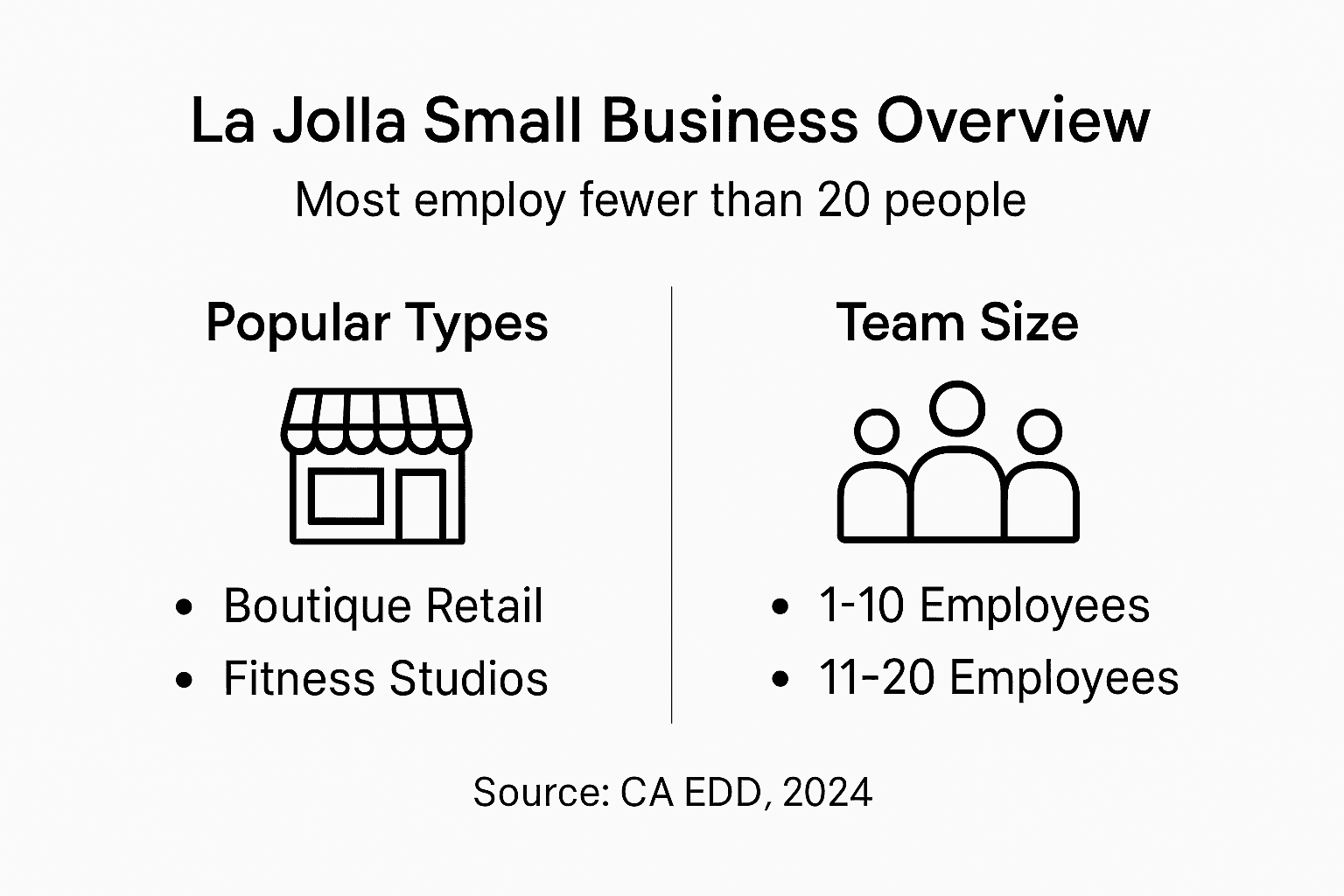
Business structure matters significantly. Business entities in California include sole proprietorships, partnerships, limited liability companies (LLCs), and corporations. Each structure offers different tax implications and legal protections.
Here’s what distinguishes common structures:
Here is a comparison of common business structures and their key considerations for La Jolla small businesses:
| Structure Type | Startup Complexity | Liability Protection | Tax Treatment |
|---|---|---|---|
| Sole Proprietorship | Easiest to form | Owner personally liable | Income taxed once |
| Partnership | Simple to moderate | Shared partner liability | Income taxed once |
| LLC | Moderate paperwork | Strong separation | Flexible options |
| Corporation | Most complex | Highest protection | Possible double taxation |
- Sole proprietorship: Single owner operates the business; simplest structure but offers no legal separation between personal and business liability
- Partnership: Two or more owners share responsibility; profits split as agreed but partners face joint liability
- Limited liability company (LLC): Combines flexibility of partnerships with liability protection of corporations; moderately complex to establish
- Corporation: Separate legal entity with formal structure; more complex but offers strongest liability protection
Revenue and Service Focus
La Jolla’s small businesses often emphasize specialized services over high-volume operations. A luxury hair salon, for example, prioritizes expert craftsmanship and personalized client experiences rather than rapid throughput.
Revenue requirements vary by industry and business model. Some small businesses generate millions annually while maintaining intimate, selective client bases. Others operate profitably at lower revenue levels through efficient operations and focused market positioning.
Small businesses succeed in La Jolla by specializing deeply rather than competing broadly across multiple services or products.
The distinction between small and larger businesses often comes down to operational philosophy. Small business owners typically maintain direct control over service quality, client relationships, and day-to-day decision making.

Why Definitions Matter for La Jolla Operators
Clear definitions impact your business licensing requirements, tax obligations, and eligibility for certain resources or programs. Local regulations may apply different rules based on your business classification.
Consulting legal or tax advisors helps you select the appropriate entity type for your specific needs. They’ll account for your revenue projections, liability concerns, and growth plans.
Pro tip: Establish your business structure early by consulting with a California-based business attorney or accountant familiar with La Jolla’s upscale market; this prevents costly restructuring later.
Business Categories and Local Demographics
La Jolla’s small business ecosystem reflects the community’s upscale character and affluent demographics. Understanding who lives here directly shapes what businesses thrive.
The La Jolla population consists predominantly of high-income households with substantial purchasing power. La Jolla’s median income levels reveal a wealthy consumer base that values quality, expertise, and personalized service over budget options.
This affluent demographic creates distinct business opportunities. Upscale salons, boutique fitness studios, fine dining establishments, and specialized professional services flourish here. Mass-market retailers struggle because residents expect premium quality and customization.
Primary Business Categories
La Jolla’s business landscape concentrates in several key sectors:
Below is a summary showing how La Jolla’s primary business categories align with local demographics and consumer priorities:
| Business Category | Target Demographic | Key Consumer Expectation |
|---|---|---|
| Personal Services | Affluent professionals | Expertise and luxury experience |
| Boutique Retail | High-income households | Unique, high-quality products |
| Hospitality | Established adults | Premium dining and exclusivity |
| Real Estate | Wealthy property owners | Discretion and in-depth knowledge |
| Creative Studios | Style-conscious residents | Custom, visionary service |
- Personal services: Hair salons, spas, fitness studios, and wellness centers catering to discerning clients
- Retail: High-end boutiques, jewelry stores, and specialty shops featuring curated merchandise
- Professional services: Law firms, accounting practices, consultants, and medical specialists
- Hospitality: Upscale restaurants, wine bars, and exclusive clubs
- Real estate: Luxury property sales and property management services
- Creative studios: Design firms, photography studios, and artistic services
Income and Consumer Expectations
The median income in La Jolla substantially exceeds county and state averages. This purchasing power means residents spend generously on premium services and aren’t price-sensitive for quality offerings.
Consumers here expect personalized attention and expert credentials. A hair salon thrives by offering advanced techniques, artistic vision, and individualized consultations rather than quick, standardized cuts.
Business success depends on matching these high expectations. Mediocrity gets overlooked quickly when customers have abundant choices and substantial budgets.
La Jolla’s affluent demographics reward specialization, expertise, and personalized service over volume-based business models.
Age and Lifestyle Demographics
La Jolla attracts established professionals, business owners, and successful entrepreneurs. The age distribution skews toward adults with career stability and disposable income.
This demographic invests in self-care, professional development, and lifestyle enhancement. They value businesses that align with their identity and aspirations.
Pro tip: Research your specific target demographic within La Jolla’s affluent population—whether successful professionals, business owners, or established families—and position your services to match their lifestyle values and aesthetic preferences.
Zoning Laws and Permit Requirements
La Jolla’s zoning regulations significantly impact where and how you can operate a small business. Navigating these rules correctly prevents costly mistakes and delays.
The La Jolla Community Planning Association oversees land use in the area. La Jolla’s zoning and land use regulations determine which business types are permitted in specific locations. Understanding these restrictions before selecting your site saves time and money.
Zoning violations can force business relocations or closures. Many entrepreneurs discover zoning issues only after investing in a location, making early research critical.
What You Need Before Opening
Most small businesses in La Jolla require multiple permits and approvals. The specific requirements depend on your business type, location, and intended operations.
Common permits include:
- Business tax certificate: Required for all businesses operating in San Diego
- Zoning compliance verification: Confirms your intended use matches the zone designation
- Coastal Development Permit: Required for properties within coastal areas (La Jolla qualifies)
- Building permits: Needed if you’re modifying the space or installing equipment
- Health permits: Required for food service businesses
- Sign permits: Necessary if displaying exterior signage
The Permit Application Process
La Jolla’s project review process involves multiple steps and approvals. The La Jolla Community Planning Association reviews projects to ensure compliance with community plans.
The process typically takes 4-8 weeks depending on complexity. Coastal Development Permits often require longer review periods due to environmental considerations.
You’ll submit applications to the City’s Development Services department. They coordinate with planning, coastal resources, and other relevant departments.
Getting zoning verification before signing a lease prevents the heartbreak of discovering your business cannot legally operate at your chosen location.
Coastal Zone Considerations
La Jolla’s coastal location triggers additional regulations. Coastal Development Permits protect marine resources and beach access while allowing reasonable business activity.
Coastal permits examine impacts on:
- Water quality and marine habitat
- Public beach and trail access
- Visual aesthetics and neighborhood character
- Traffic and parking implications
Coastal businesses often navigate stricter approval processes. However, legitimate service businesses like salons typically receive approval when designed thoughtfully.
Pro tip: Contact the La Jolla Community Planning Association before committing to a lease location—a quick zoning check confirms your business type is permitted and identifies specific permits you’ll need, preventing expensive surprises later.
Licenses, Taxes, and Registration Steps
Registering your business properly protects you legally and ensures you’re operating within the law. The registration process involves multiple steps at state and local levels.
California requires specific documentation before you can legally operate. Starting a California business involves selecting a structure, filing documents, and obtaining necessary identification numbers. Each step builds the foundation for compliant operations.
Skipping registration steps exposes you to fines, penalties, and potential business closure. Investment in proper registration protects your business from legal complications.
Essential Registration Requirements
You’ll need several key documents and accounts to operate legally in La Jolla:
- Employer Identification Number (EIN): Required by the IRS for tax purposes and hiring employees
- Business license: San Diego requires all businesses to register and obtain a tax certificate
- Seller’s permit: Needed if you sell tangible goods subject to sales tax
- Business bank account: Separates personal and business finances for tax and accounting purposes
- State tax account: Registers your business with California’s Department of Tax and Fee Administration
- County registration: Local filing with San Diego County if required by your business type
Step-by-Step Registration Process
Follow this order to streamline your registration:
- Choose your business structure (sole proprietorship, LLC, corporation, or partnership)
- Develop a basic business plan outlining your services, target market, and financial projections
- Apply for an EIN through the IRS website (takes minutes for online applications)
- Register with California using California’s business registration portal
- Obtain a San Diego business tax certificate from the City’s Financial Services Department
- Apply for seller’s permit if selling products (California Department of Tax and Fee Administration)
- Open a business bank account with your EIN documentation
Tax Obligations You’ll Face
La Jolla businesses handle multiple tax types. Understanding your obligations prevents costly mistakes.
Common tax requirements include:
- Sales tax: Collected from customers if selling tangible goods
- Income tax: California state income tax on business net income
- Payroll tax: Withheld from employee paychecks if you have staff
- Quarterly estimated taxes: Paid if you’ll owe more than $1,000 in taxes
- Annual business tax: Renewal required each year with San Diego
Proper registration and tax setup costs time upfront but prevents expensive penalties, audits, and operational disruptions later.
Timeline and Costs
Registration typically takes 2-4 weeks from start to finish. Costs vary by business type but generally range from $150-$500 for initial registration and licensing.
EIN applications process immediately at no cost. California registration fees depend on your business structure and projected income.
Pro tip: Hire a business accountant or bookkeeper familiar with California and San Diego regulations before registering—they’ll ensure you choose the right structure, identify all required licenses, and set up compliant tax accounting from day one, saving money on potential corrections later.
Financial Costs, Common Mistakes, and Alternatives
Starting a business requires realistic financial planning. Understanding costs upfront prevents cash flow crises that derail promising ventures.
La Jolla’s premium market means higher operational costs than other areas. Rent, skilled labor, and quality materials command premium prices. Budget accordingly to avoid undercapitalization during the critical launch phase.
Typical Startup Expenses
Calculating startup costs is essential before investing money or seeking funding. Most service businesses require less capital than retail operations but still need significant investment.
Common expenses for La Jolla service businesses include:
- Lease deposit and buildout: First month’s rent, security deposit, and renovations (often $5,000-$20,000)
- Equipment and furnishings: Chairs, mirrors, stations, and professional tools ($3,000-$15,000)
- Licensing and permits: Business registration, professional licenses, and certifications ($500-$2,000)
- Initial inventory: Products, supplies, and materials for first 3 months ($1,000-$5,000)
- Insurance: Liability coverage and worker’s compensation ($1,500-$3,000 annually)
- Marketing and signage: Website, business cards, and exterior signage ($2,000-$5,000)
- Working capital: Cash reserves for 3-6 months of operations ($10,000-$30,000)
Critical Mistakes to Avoid
Common small business mistakes derail many startups before they gain traction. Learning from others’ failures saves time and money.
Top mistakes include:
- Insufficient market research: Launching without understanding your actual target audience
- No written business plan: Operating without clear goals, strategies, or financial projections
- Undercapitalization: Starting with too little money for realistic runway periods
- Ignoring regulatory requirements: Skipping licenses, permits, or tax obligations
- Poor financial management: Not tracking expenses or maintaining separate business accounts
- Hiring too quickly: Adding payroll before revenue justifies the expense
- Neglecting customer feedback: Ignoring what clients actually want or need
The most successful La Jolla small businesses plan thoroughly before spending money, then adjust based on real market feedback.
Financial Planning Strategies
Smart financial planning maximizes limited resources during startup. Conservative estimates prevent overcommitment.
Create a detailed budget covering:
- One-time startup costs needed before opening
- Monthly operating expenses for rent, utilities, insurance, and payroll
- Variable costs that fluctuate with business volume
- Revenue projections based on realistic client acquisition rates
- Break-even analysis showing when profitability begins
- Cash flow forecast tracking money in and out monthly
Funding Alternatives
You don’t necessarily need all startup capital from personal savings. Explore these options:
- SBA microloans: Small loans up to $50,000 from lenders approved by the Small Business Administration
- Personal savings: Your own capital without debt obligations
- Friends and family loans: Informal loans with flexible terms (document everything)
- Equipment financing: Loans specifically for purchasing tools and furniture
- Lines of credit: Flexible access to funds when needed
Pro tip: Create a detailed 3-year financial projection before seeking funding or opening—lenders and investors require realistic numbers, and the exercise forces you to think through every cost category, revealing gaps in your planning before they become expensive problems.
Elevate Your Small Business Presence with Expert Style in La Jolla
Navigating the unique demands of La Jolla’s upscale market requires a commitment to quality and personalized experiences just like the small businesses in this community strive for. If your goal is to reflect the area’s high standards through your personal or professional image, partnering with specialists who understand the value of artistry and tailored service is essential. At Joel C Ma Hair Studio, we embrace this philosophy by delivering expert-driven hair care that emphasizes creativity and individual expression, helping you present your best self to clients and colleagues alike.
Discover how strategic attention to your appearance complements your business ambitions. Visit our Uncategorized Archives – Joel C Ma Hair Studio to see client transformations and expert tips that align with La Jolla’s emphasis on personalized service and luxury. Take the next step today and book your personalized style consultation at Joel C Ma Hair Studio. Elevate your brand image with refined artistry that matches the standards of La Jolla’s thriving small business community.
Frequently Asked Questions
What qualifies as a small business in La Jolla?
A small business in La Jolla typically operates with fewer than 20 employees and can take various forms, including sole proprietorships, partnerships, LLCs, and corporations.
How do zoning laws affect small businesses in La Jolla?
Zoning laws determine where and how businesses can operate in La Jolla. It’s crucial to understand these regulations before selecting a location to avoid costly complications such as relocations or business closures.
What are the typical startup costs for small businesses in La Jolla?
Startup costs can vary significantly but generally include lease deposits, equipment, licensing fees, initial inventory, and working capital, often totaling between $15,000 to $75,000 depending on the business type.
How can small businesses succeed in La Jolla’s competitive market?
Success often stems from specializing in niche markets and providing personalized, high-quality services rather than competing on price. Understanding the affluent demographics and tailored offerings can also greatly enhance business opportunities.
Recommended
- La Jolla Lifestyle: Embracing Elegance and Creativity – Joel C Ma Hair Studio
- Experience the Difference: Why La Jolla Salons Define Luxury
- Discover La Jolla’s Go-To Salons for Beautiful Hair Transformations
- Healthy Eating for Hair: Nourish Your Look in La Jolla – Joel C Ma Hair Studio
- Sustainable Business Scaling Guide for Lasting Success
- Business Growth With Effective Digital Strategies